
Kitchen drawers are among the most frequently used—and most quickly disorganized—spaces in the home. Utensils, gadgets, twist ties, and takeout condiments pile up until opening a drawer feels like triggering a minor avalanche. The good news? You don’t need hours or expensive organizers to fix it. With a focused strategy, you can declutter your kitchen drawers in under 30 minutes and create a system that actually lasts.
The key isn’t just cleaning—it’s designing a functional layout that matches how you cook and store items daily. This approach prevents future clutter by making everything easy to access and return to its place. Whether you're dealing with a junk drawer full of mystery items or a utensil drawer where spoons and spatulas wage silent war, this guide delivers practical steps that work immediately and endure over time.
Why Most Kitchen Decluttering Fails (And How to Avoid It)
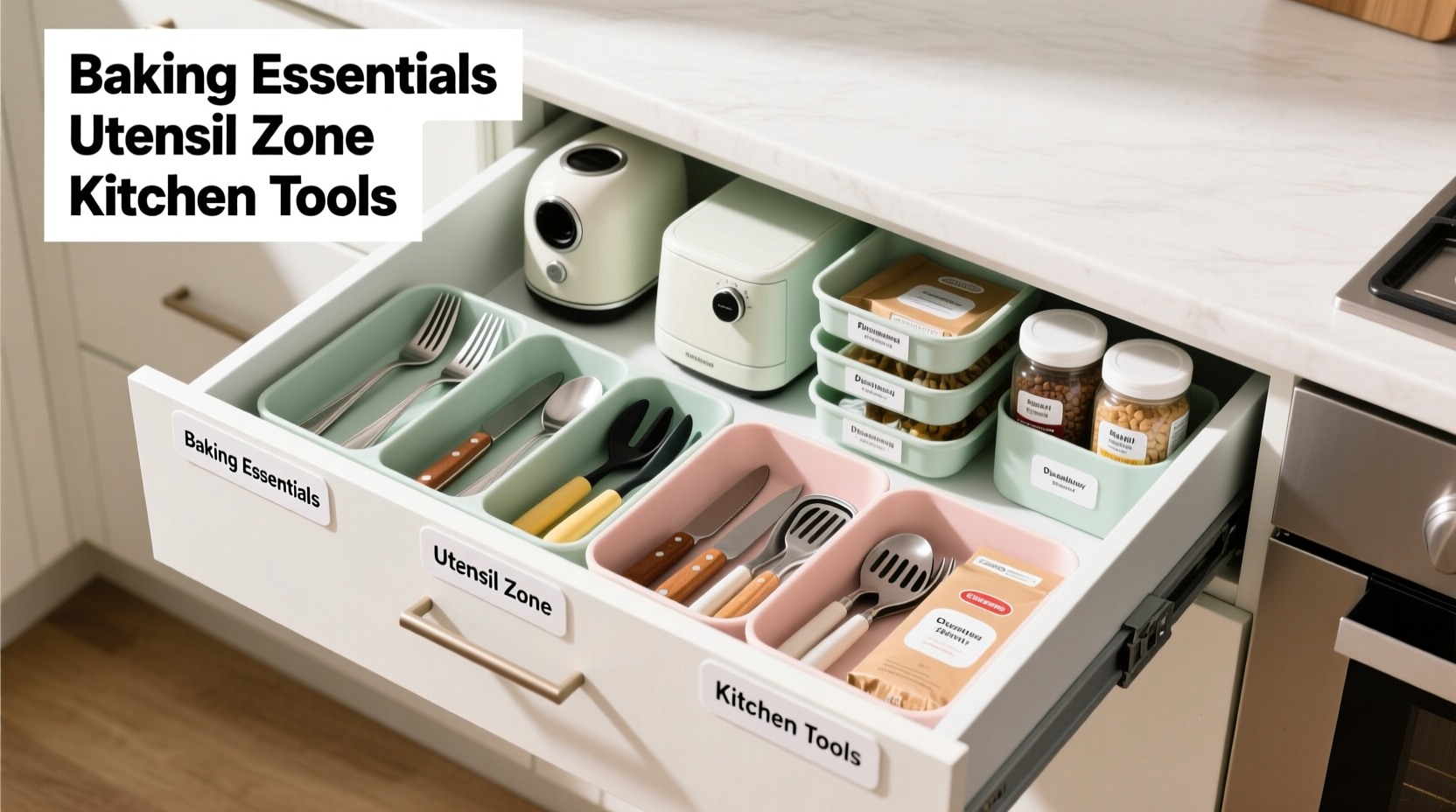
Many people attempt to organize their kitchen drawers only to find them chaotic again within weeks. The root cause? They focus on rearranging clutter instead of eliminating it. Tossing items into new dividers without first evaluating what’s truly necessary only creates a neater mess.
Lasting organization requires two critical phases: elimination and categorization. Without removing duplicates, broken tools, and unused gadgets, any new system becomes overcrowded almost instantly. Similarly, grouping similar items ensures each category has a logical home, reducing decision fatigue when putting things away.
“Organization isn’t about fitting more in—it’s about making space for what matters.” — Marie Kondo, organizing consultant and author
A common mistake is keeping items “just in case.” That avocado slicer used once three years ago? The mismatched measuring spoons from takeout? These occupy valuable real estate. A better rule: if it hasn’t been used in the past six months and doesn’t serve a clear purpose, let it go.
Step-by-Step: The 30-Minute Decluttering Timeline
This method follows a precise sequence designed to maximize efficiency and minimize overwhelm. Stick to the timeline, and you’ll finish organized—not exhausted.
- Minute 0–3: Gather Supplies
Collect a trash bag, donation bin, damp cloth, and empty container (like a baking sheet or box) to hold items during sorting. - Minute 3–7: Empty One Drawer Completely
Start with the most problematic drawer. Remove every item and place it on the counter. Wipe down the empty drawer with the cloth. - Minute 7–15: Sort & Eliminate
Create four piles: Keep, Donate/Sell, Trash, Relocate. Ask: Is it useful? Is it broken? Do I already have a duplicate? Be ruthless. - Minute 15–20: Group Like Items
Cluster remaining items into categories: cooking utensils, wrapping supplies, cutlery, gadgets, etc. - Minute 20–27: Assign Homes & Use Organizers
Return items to the drawer using simple dividers (cut cardboard, silicone mats, or repurpose small containers). Prioritize frequent-use items near the front. - Minute 27–30: Repeat (Optional) or Finalize
If time allows, repeat with a second drawer. Otherwise, label sections if helpful, and close the drawer with intention.
By breaking the process into timed segments, you maintain momentum and avoid getting stuck on minor decisions. The goal isn’t perfection—it’s progress that sticks.
Smart Storage: What Works (and What Doesn’t)
Not all organizers are created equal. Some save space; others waste it. The right tools depend on drawer depth, frequency of use, and item size.
| Organizer Type | Best For | Avoid If… |
|---|---|---|
| Adjustable acrylic dividers | Utensil drawers with varied tool lengths | Your drawer is shallow or frequently reconfigured |
| Silicone tray inserts | Preventing sliding; gentle on knife edges | You need rigid separation for bulky items |
| Cardboard or foam board DIY dividers | Budget-friendly customization | You’re prone to moisture or spills in drawers |
| Magnetic strips (side-mounted) | Storing foil, wrap, or scissors vertically | Drawer sides aren’t metal or accessible |
| Stackable bins | Deep drawers needing vertical zones | You lack clearance to open cabinet doors fully |
One often-overlooked principle: vertical storage saves horizontal space. Instead of laying wraps flat, roll them in a narrow jar or cup. Hang small scissors from a magnet strip on the drawer side. Store long-handled tools upright in a cereal container.
Real Example: Transforming a “Junk Drawer” in 25 Minutes
Sarah, a working parent of two, opened her kitchen’s center drawer one morning to find it overflowing: batteries, loose pens, expired coupons, a cracked garlic press, and a tangle of rubber bands. She decided to tackle it before breakfast.
Using the 30-minute method, she emptied the drawer and sorted contents. In seven minutes, she filled half a trash bag: broken gadgets, dried-up markers, and multiple sets of takeout soy sauce packets. She relocated batteries to the utility closet and donated an unopened jar opener.
With 12 minutes left, she grouped the keepers: kitchen twine and scissors in one corner, reusable produce bags in a small fabric pouch, and a single multi-bit screwdriver. She used a cut-to-size piece of corrugated cardboard as a divider between tools and paper goods.
The result? A functional drawer that stayed tidy for over eight months. Sarah reported saving time daily because she could grab what she needed without digging. “I didn’t buy a single organizer,” she said. “Just deciding what mattered made all the difference.”
Checklist: Your Quick Decluttering Action Plan
Use this checklist to stay on track during your 30-minute session:
- ✅ Choose one drawer to start (usually the most chaotic)
- ✅ Set a timer for 30 minutes
- ✅ Gather trash bag, donation bin, and cleaning cloth
- ✅ Remove everything from the drawer
- ✅ Wipe down interior surfaces
- ✅ Sort items into Keep, Donate, Trash, Relocate
- ✅ Discard broken, duplicate, or unused items
- ✅ Group remaining items by function (utensils, wraps, tools, etc.)
- ✅ Use low-cost or repurposed dividers to separate categories
- ✅ Place frequently used items in easy-to-reach spots
- ✅ Close drawer and assess ease of access
- ✅ Label sections if helpful (e.g., “Wrap & Foil”)
Repeat with additional drawers only after confirming the first stays organized for a week. Momentum builds confidence—but sustainability comes from consistency.
Frequently Asked Questions
What if I don’t have money for drawer organizers?
No problem. Effective organization doesn’t require spending. Use empty yogurt containers, toilet paper rolls for cords, folded cardboard, or small boxes from deliveries. The goal is separation, not store-bought solutions.
How do I stop the drawer from getting messy again?
Implement a “one in, one out” rule: whenever you add a new kitchen tool, remove an old or unused one. Also, perform a 2-minute weekly scan: open the drawer, remove misplaced items, and reset dividers if shifted.
Should I organize all drawers at once?
Not recommended. Focus on one high-traffic drawer first. Master the system, then apply it elsewhere. Trying to fix everything at once leads to burnout and inconsistent results.
Designing for Long-Term Success
Sustained order depends less on perfect containers and more on behavioral design. The most effective systems align with your natural habits. For example, if you always set your phone on the counter while cooking, don’t place a utensil holder where it will get knocked over. If you open the same spice jar daily, keep it in the front row.
Also consider workflow. Store cooking utensils near the stove, serving tools near the dining area, and food storage items close to leftovers. When placement supports routine, maintenance becomes effortless.
Finally, schedule a quarterly “drawer audit.” Five minutes twice a year prevents slow creep. During this check, ask: Is this still useful? Is there a better way to group these? Has my cooking routine changed?
“The best organizing systems disappear into your life—they don’t demand constant attention.” — Darcy Lockman, organizational psychologist
Final Thoughts: Small Change, Lasting Impact
Decluttering kitchen drawers in under 30 minutes isn’t about speed—it’s about smart prioritization. By focusing on elimination first, categorization second, and sustainable placement last, you create order that endures beyond the initial effort.
The benefits extend beyond tidiness. A clear drawer reduces meal prep stress, saves time, and even encourages healthier cooking when tools are visible and accessible. And because the process is fast and low-cost, it’s repeatable across other areas of the home—from bathroom cabinets to office supplies.
You don’t need a complete kitchen overhaul to make a meaningful change. One drawer, thirty minutes, and a clear plan are enough to shift your relationship with clutter for good.




 浙公网安备
33010002000092号
浙公网安备
33010002000092号 浙B2-20120091-4
Comments
No comments yet. Why don't you start the discussion?