
Decluttering a closet is rarely just about fabric and hangers. For many, clothing carries invisible weight—memories of milestones, relationships, past selves, and moments of confidence or comfort. When emotional attachment meets physical clutter, the process of letting go becomes less about organization and more about identity, grief, and self-awareness. Yet, holding onto clothes that no longer serve you can create mental fatigue, decision paralysis, and a wardrobe that feels disconnected from who you are today. The key isn’t to force detachment, but to approach the process with compassion, intention, and structure.
This guide offers a thoughtful, step-by-step method for clearing your closet without dismissing the emotional significance of what you own. It blends psychological insight with practical tactics so you can create a functional, joyful wardrobe that honors both your past and your present.
Understanding Emotional Attachment to Clothing
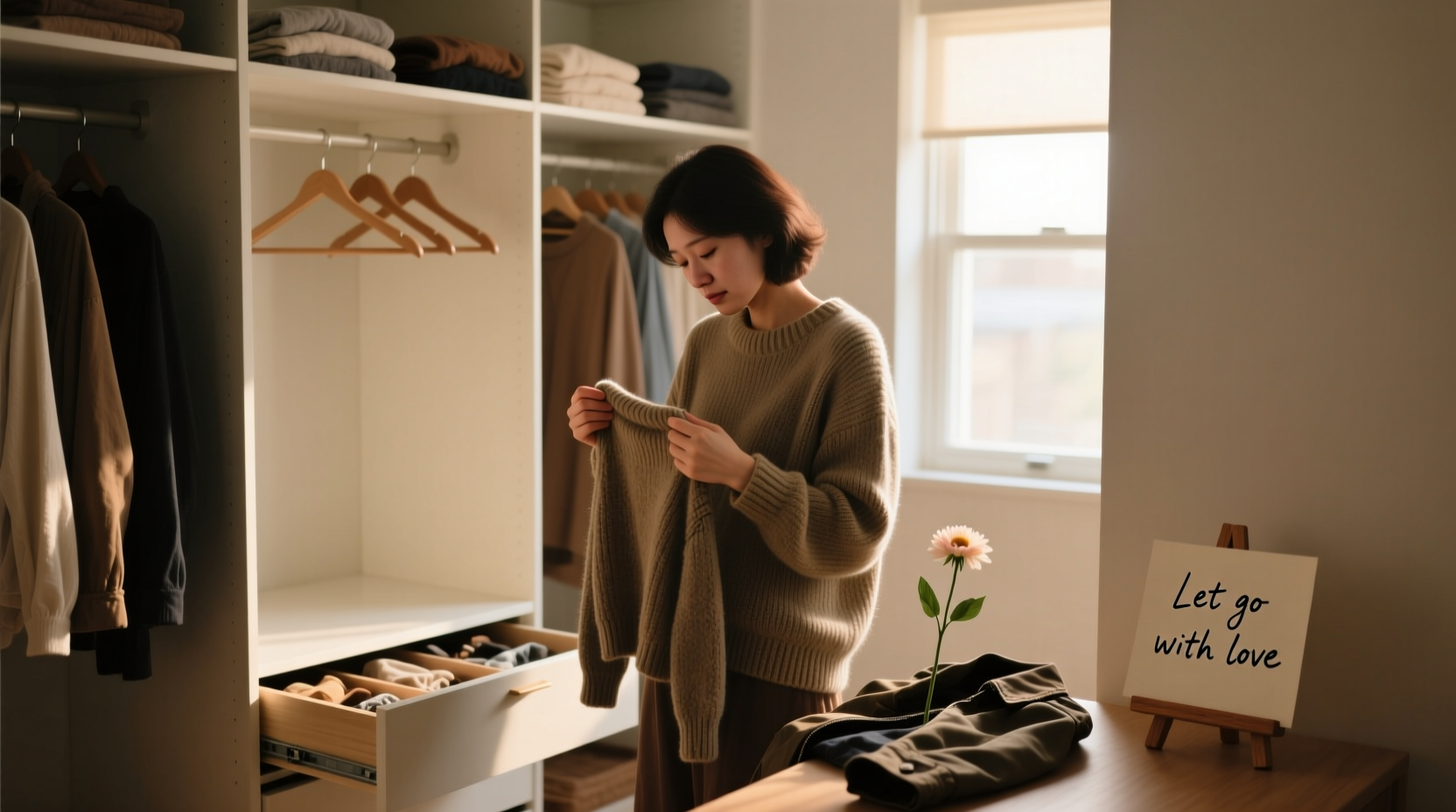
Clothing often functions as a personal archive. A dress worn on a first date, a jacket from a study abroad year, or even pajamas from a difficult period in life—these items aren’t merely textiles; they’re vessels of emotion. Psychologists refer to this phenomenon as “material anchors,” objects that tether us to specific times, feelings, or people. While this connection can be comforting, it can also prevent necessary change.
The problem arises when emotional attachment overrides practicality. Keeping a size-zero dress “just in case” may reflect hope rather than reality. Holding onto an ex-partner’s sweater out of nostalgia might subtly reinforce unresolved feelings. When garments outnumber usable space, or when choosing an outfit feels overwhelming, it’s time to reevaluate—not by rejecting sentimentality, but by creating a new relationship with it.
“Clothing holds memory, but it doesn’t have to hold you back. The goal isn’t to erase the past, but to make room for the present.” — Dr. Lena Torres, Clinical Psychologist specializing in behavioral organization
A Step-by-Step Guide to Emotionally Intelligent Decluttering
Effective closet decluttering when emotions are involved requires patience and a structured approach. Rushing through the process often leads to regret or resistance. Instead, follow this seven-phase timeline designed to balance emotional sensitivity with tangible results.
- Prepare Your Space (Day 1): Clear a large area—your bed or living room floor—where you can lay out all your clothes. Remove everything from your closet. This visual impact helps you confront the volume honestly.
- Categorize by Type (Day 1): Sort items into piles: tops, bottoms, dresses, outerwear, shoes, accessories. This reduces overwhelm and allows focused evaluation.
- Pause Before Sorting (Day 2): Don’t start discarding immediately. Let the sight of your full collection settle. Journal briefly: What emotions arise? Which pieces feel essential? This builds self-awareness before action.
- First Pass: The Worn Test (Day 3): Ask: “Have I worn this in the last 12 months?” If not, set it aside. Exceptions apply only if the item has a confirmed future use (e.g., a wedding guest dress next month).
- Second Pass: Emotional Audit (Day 4–5): Go through reserved items. For each, ask: “Does this represent who I am now, or who I was?” “Does wearing this bring joy or burden?” Write down the story behind pieces you hesitate to release.
- Create Alternatives to Discarding (Day 6): For high-sentiment items, explore keepsake options: photograph the garment, repurpose fabric into a pillow or quilt, or store one box of “memory clothes” separately from your active wardrobe.
- Final Edit & Reorganize (Day 7): Place kept items back in the closet with care. Use consistent hangers, group by category and color, and leave breathing room. A well-organized space reinforces your effort.
Do’s and Don’ts When Letting Go of Sentimental Clothes
Navigating emotional decisions requires clear boundaries. The following table outlines common pitfalls and better alternatives.
| Do’s | Don’ts |
|---|---|
| Take photos of meaningful outfits before donating | Keep an entire wardrobe “just because” |
| Label storage boxes with dates and occasions (e.g., “Graduation 2015”) to preserve context | Store sentimental items in damp basements or attics where they degrade |
| Donate to causes that align with the garment’s history (e.g., professional attire to job readiness programs) | Throw away cherished items impulsively after a bad day |
| Wear a nostalgic piece occasionally to reconnect respectfully | Force yourself to keep something that causes guilt or sadness every time you see it |
| Start small—clear one shelf or category first to build momentum | Try to declutter during periods of high stress or emotional upheaval |
Real Example: How Sarah Reclaimed Her Closet After Loss
Sarah, a 42-year-old teacher, held onto her late husband’s wool coat for three years after his passing. It hung untouched in the back of her closet, a silent tribute. But each time she opened the door, the sight triggered grief—and prevented her from using that space for her own growing need for winter layers.
With guidance from a grief counselor, Sarah decided to honor the coat differently. She took a photo of herself holding it outside their favorite park in autumn light. Then, she worked with a tailor to turn the lining into a small cushion embroidered with his initials. The outer shell was donated to a shelter for men rebuilding their lives—a gesture that felt aligned with his generous spirit.
“Letting go wasn’t forgetting,” she said later. “It was making space to remember him in a way that didn’t weigh me down physically. Now, when I touch the cushion, I smile instead of cry.”
Her experience underscores a vital truth: transformation, not elimination, often provides the deepest healing.
Actionable Checklist: Your Emotional Decluttering Roadmap
Use this checklist to stay grounded and productive throughout the process. Print it or save it digitally for reference.
- ☐ Choose a calm week with minimal external stressors to begin
- ☐ Clear physical space to sort clothes outside the closet
- ☐ Gather supplies: trash bags, donation bins, camera, notebook, storage boxes
- ☐ Sort all clothing by category (tops, pants, etc.)
- ☐ Remove anything unworn in the past year (excluding seasonal or ceremonial wear with near-future plans)
- ☐ Identify 3–5 most emotionally charged items and write a short story about each
- ☐ Decide on a preservation method for irreplaceable pieces (photo, repurposing, archival storage)
- ☐ Donate usable items to a meaningful organization
- ☐ Clean and reorganize the empty closet with intention
- ☐ Schedule a 3-month review to assess satisfaction and adjust
Frequently Asked Questions
What if I feel guilty about getting rid of gifts?
Guilt over discarding gifted clothing is common, especially if the giver is still present in your life. Remember: the gift was an act of kindness in a moment. You honoring it by wearing it once fulfills that exchange. Holding onto it indefinitely doesn’t increase gratitude—it only adds clutter. If needed, express thanks verbally or in writing to mentally close the loop before letting go.
How do I handle inherited clothing from family members?
Inherited clothes carry layered meaning. Start by acknowledging their significance. Photograph pieces you admire, even if unwearable. Consider preserving fabric swatches or buttons in a memory journal. If the garments are wearable and suit your lifestyle, integrate one or two thoughtfully. Otherwise, donating to heritage-focused charities (e.g., vintage costume collections) or historical societies can feel like a dignified continuation of their story.
Can I keep sentimental clothes without cluttering my daily wardrobe?
Absolutely. Designate a single, small container—like a cedar-lined trunk or vacuum-sealed bag—labeled “Memory Archive.” Store only a few high-significance items there. Keep it separate from your everyday closet. This honors the past while protecting your present functionality.
Conclusion: Create Space for Who You Are Now
Decluttering a closet entangled with emotion isn’t about ruthless minimalism. It’s about curation with care. Every item you release makes room—not just in your wardrobe, but in your mind—for clarity, choice, and comfort. You don’t need to forget the moments your clothes represent. You simply need to stop letting them occupy space meant for your current life.
When you approach the process with patience and purpose, you transform clutter into closure, and nostalgia into narrative. The clothes you keep should reflect not only your history, but your present self—the person who deserves a closet that feels light, accessible, and true.




 浙公网安备
33010002000092号
浙公网安备
33010002000092号 浙B2-20120091-4
Comments
No comments yet. Why don't you start the discussion?