
A cluttered closet doesn’t just make mornings stressful—it reinforces habits of overconsumption and disorganization. The good news? You don’t need a weekend or professional organizer to regain control. With focused effort and a clear system, you can transform your closet in under 60 minutes. The key lies in combining speed with sustainability: a rapid purge followed by the implementation of the “one in, one out” rule. This approach not only clears space quickly but prevents future buildup by creating a self-regulating wardrobe.
The one in one out rule is simple: every time you bring a new clothing item into your home, one old item must leave. It’s a principle borrowed from minimalism and behavioral psychology, designed to maintain balance. When applied after a thorough declutter, it turns organization from a one-time chore into a lifelong habit. What follows is a complete guide to executing this process efficiently, sustainably, and without overwhelm.
Step-by-Step: Declutter Your Closet in 50 Minutes
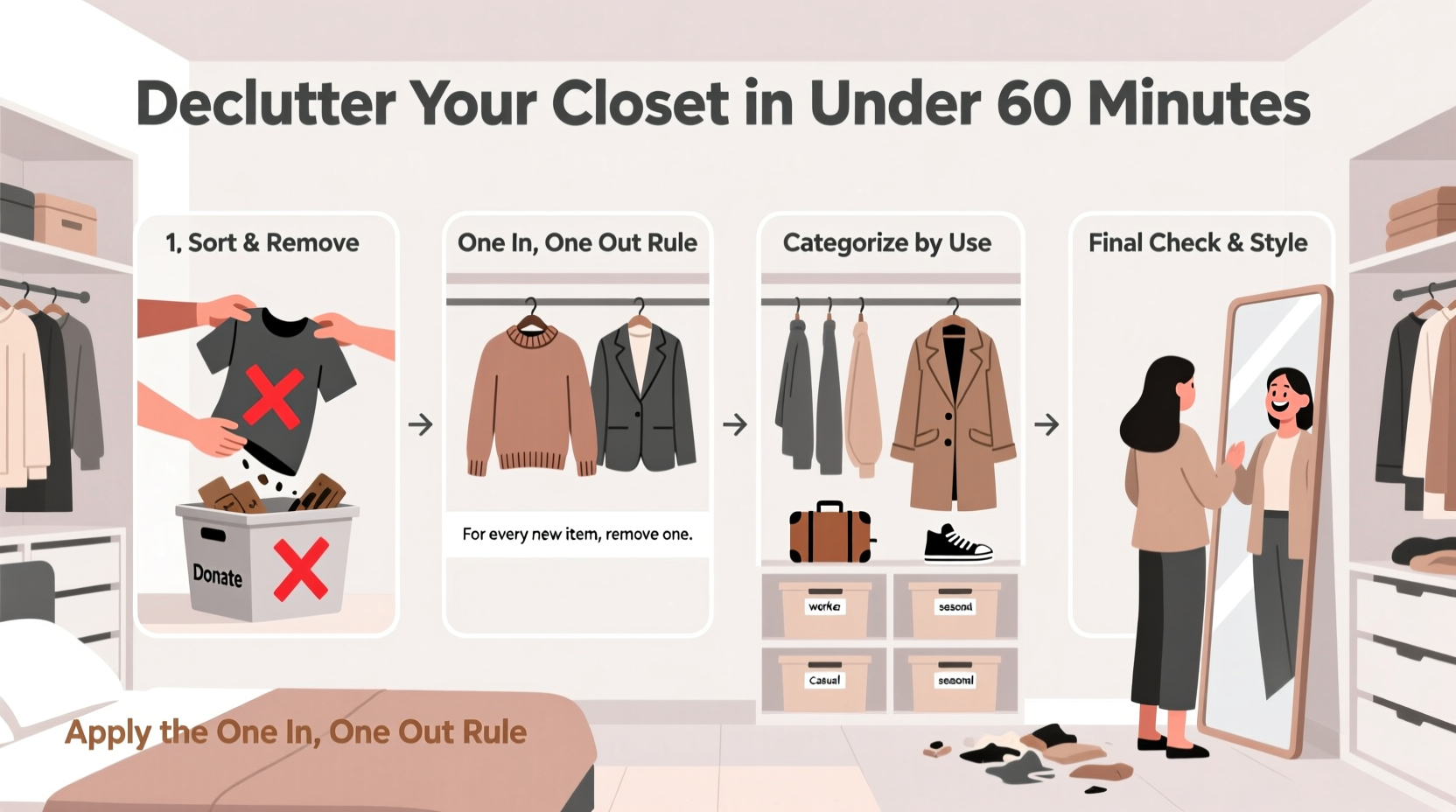
Time is your ally when used strategically. By breaking the process into timed segments, you maintain momentum and avoid decision fatigue. Follow this five-phase timeline to finish strong in under an hour.
- Prep (5 minutes): Remove everything from your closet that isn’t clothing—shoes on the floor, accessories on hooks, laundry baskets. Clear a flat surface like your bed to sort items. Grab three large bins or bags labeled: Donate, Repair/Repurpose, Trash.
- Pull Everything Out (10 minutes): Take every single piece of clothing off hangers and out of drawers. Seeing it all together makes it easier to assess volume and identify duplicates. Yes, even the items “you’ll wear someday.”
- Sort Ruthlessly (20 minutes): Hold each item and ask: Have I worn this in the past year? Does it fit well? Does it reflect my current style or lifestyle? If the answer is no to any, it goes into a bin. Be honest, not sentimental. Keep only what serves you now.
- Reorganize Strategically (10 minutes): Return only the kept items. Group by category (tops, bottoms, dresses), then by frequency of use. Place everyday items at eye level. Use slim hangers for uniformity and better space use.
- Implement One In, One Out (5 minutes): Tape a small note inside your closet: “One in, one out.” Set a phone reminder for weekly check-ins. This mental shift ensures long-term success.
How the One In One Out Rule Prevents Future Clutter
Most people declutter once and relapse within months. The root cause? No system to regulate inflow. Buying a new sweater feels rewarding until it joins nine others unworn. The one in one out rule interrupts this cycle by forcing conscious consumption.
When you adopt this rule, shopping becomes intentional. Before purchasing, you must decide what will leave. That decision creates friction—which is exactly what’s needed to break impulsive habits. Over time, this builds awareness of your actual usage patterns. You begin to notice which pieces get worn repeatedly and which gather dust.
The psychological benefit is equally important. Instead of feeling guilty about unused clothes, you feel empowered by maintaining balance. There’s no shame in letting go when it’s part of a structured system. As author and tidying expert Marie Kondo wrote:
“The goal is not just a tidy space, but a life where everything has purpose and place.” — Marie Kondo, The Life-Changing Magic of Tidying Up
This rule also aligns with sustainable fashion principles. The average person buys 60% more clothing than they did 15 years ago, yet wears each item fewer times. By limiting intake, you reduce waste, save money, and support ethical consumption—all while keeping your closet manageable.
What to Keep, What to Let Go: A Practical Guide
Deciding what stays and what goes is often the hardest part. Emotions cloud judgment—sentimentality, guilt, or false hopes (“I’ll lose weight and fit into these jeans”). Use objective criteria instead.
| Category | Keep If… | Let Go If… |
|---|---|---|
| Tops | Worn at least 3 times in past 6 months; fits well; complements current wardrobe | Stained, stretched, or missing buttons; hasn’t been worn in a year |
| Bottoms | Comfortable to sit, walk, and move in; matches multiple tops | Doesn’t zip or button comfortably; requires constant adjustment |
| Dresses & Suits | Worn to recent events; still professional or appropriate for occasions | Outdated style; altered poorly; associated with negative memories |
| Shoes | Supportive, clean, and worn seasonally | Cracked soles, broken heels, or cause discomfort |
| Special Occasion | Borrowed or rented alternatives aren’t available; worn in last 18 months | Haven’t worn in 2+ years; too tight/loose; emotionally burdensome |
Be especially cautious with “maybe” items. If you’re hesitating, try this test: turn all hangers backward. After wearing an item, return it facing forward. In three months, donate anything still facing backward. This data-driven method removes guesswork.
Real Example: How Sarah Cleared Her Closet in 55 Minutes
Sarah, a 34-year-old project manager, had a closet overflowing with clothes she rarely wore. She’d buy workwear during sales, keep workout gear “in case,” and hold onto dresses from her early twenties. Every morning, she spent 10–15 minutes deciding what to wear, often defaulting to the same three outfits.
After reading about the one in one out rule, she set a timer and followed the 50-minute plan. She pulled out 87 items. Of those, 42 went to donation (including two blazers she’d never worn), 5 needed tailoring (she scheduled repairs), and 4 were trashed due to stains or holes. She kept 36 pieces—fewer than half.
The change was immediate. Getting dressed took less than five minutes. She felt lighter, both physically and mentally. Three weeks later, when she bought a new cardigan, she automatically removed an old sweater to make space. The rule had become second nature.
“It wasn’t about having less,” Sarah said. “It was about making room for what actually matters. My closet finally reflects who I am now—not who I was trying to be.”
Common Mistakes to Avoid
- Keeping things “for someday”: Hope is not a storage strategy. If you haven’t worn it in a year, you won’t suddenly start.
- Decluttering in stages: Partial efforts create clutter zones. Do it all at once for full visibility.
- Ignoring fit changes: Bodies change. Holding onto smaller sizes delays acceptance and wastes space.
- Forgetting accessories: Belts, scarves, and bags contribute to visual clutter. Apply the same rule.
- Not setting up exit pathways: Have donation bags ready. Storing “to-donate” items in your closet defeats the purpose.
“Clarity comes from engagement, not thought. You don’t need to think your way into a new way of living. You need to clean your way there.” — James Clear, author of Atomic Habits
Checklist: Your One-Hour Closet Reset
Print or save this checklist to stay on track:
- ☐ Clear non-clothing items from the closet
- ☐ Prepare three bins: Donate, Repair, Trash
- ☐ Remove every clothing item from shelves and hangers
- ☐ Sort each piece using the one-year rule and fit test
- ☐ Discard damaged items immediately
- ☐ Place repair candidates in a separate bag with instructions
- ☐ Fold or hang remaining clothes neatly by category
- ☐ Label donation bin and schedule drop-off (same week)
- ☐ Write “One In, One Out” on a sticky note and place inside closet
- ☐ Set a monthly reminder to review unused items
Frequently Asked Questions
What if I want to keep something sentimental?
Sentimental items deserve respect—but not prime closet real estate. Limit yourself to one memory box stored outside the closet. Rotate photos or keepsakes annually. A wedding dress, for example, can be preserved and boxed, freeing daily space for functional clothing.
Does the one in one out rule apply to shoes and accessories?
Absolutely. The rule works best when applied universally. If you buy a new pair of boots, retire an older pair that’s worn out or underused. This maintains spatial balance and prevents accessory sprawl.
What if I’m between sizes or transitioning my style?
Transitional phases are normal. Keep only what fits *now* and supports your current lifestyle. If you're building a capsule wardrobe, allow a short grace period (e.g., 30 days) to adjust. Then reapply the rule strictly. Flexibility is useful; inconsistency is not.
Make It Stick: Turning Decluttering Into a Lifestyle
The true value of a one-hour closet reset isn’t just the physical space gained—it’s the mindset shift. You begin to see your wardrobe as a curated collection, not a dumping ground. Each addition earns its place by displacing something less useful.
To reinforce the habit, pair the one in one out rule with micro-routines. For example, every Sunday, scan your closet for one item that didn’t get worn. If it’s still unworn next week, donate it. Or, link the rule to purchases: before checkout online, confirm which item will be removed at home.
Over time, this practice extends beyond clothing. You may find yourself applying similar logic to kitchen gadgets, books, or digital files. The principle is universal: sustainability requires equilibrium.
Take Action Today
You don’t need perfect conditions to start. Set a timer for 60 minutes. Pull out your clothes. Make decisions with confidence. And when you’re done, tape up that reminder: “One in, one out.”
Clarity begins with a single choice. Today, choose to own less and live better. Your future self—standing in front of a calm, functional closet—will thank you.




 浙公网安备
33010002000092号
浙公网安备
33010002000092号 浙B2-20120091-4
Comments
No comments yet. Why don't you start the discussion?