
Decluttering a closet often feels like more than just organizing clothes—it can be an emotional journey. Sentimental items, in particular, complicate the process. A child’s first pair of shoes, a scarf from a late relative, or a concert T-shirt from college may not fit anymore, but letting go can feel like losing a memory. The good news: you don’t have to choose between a clutter-free space and honoring what matters. With thoughtful strategies, it’s possible to simplify your wardrobe while preserving meaning.
Why Sentimental Clutter Is Hard to Release
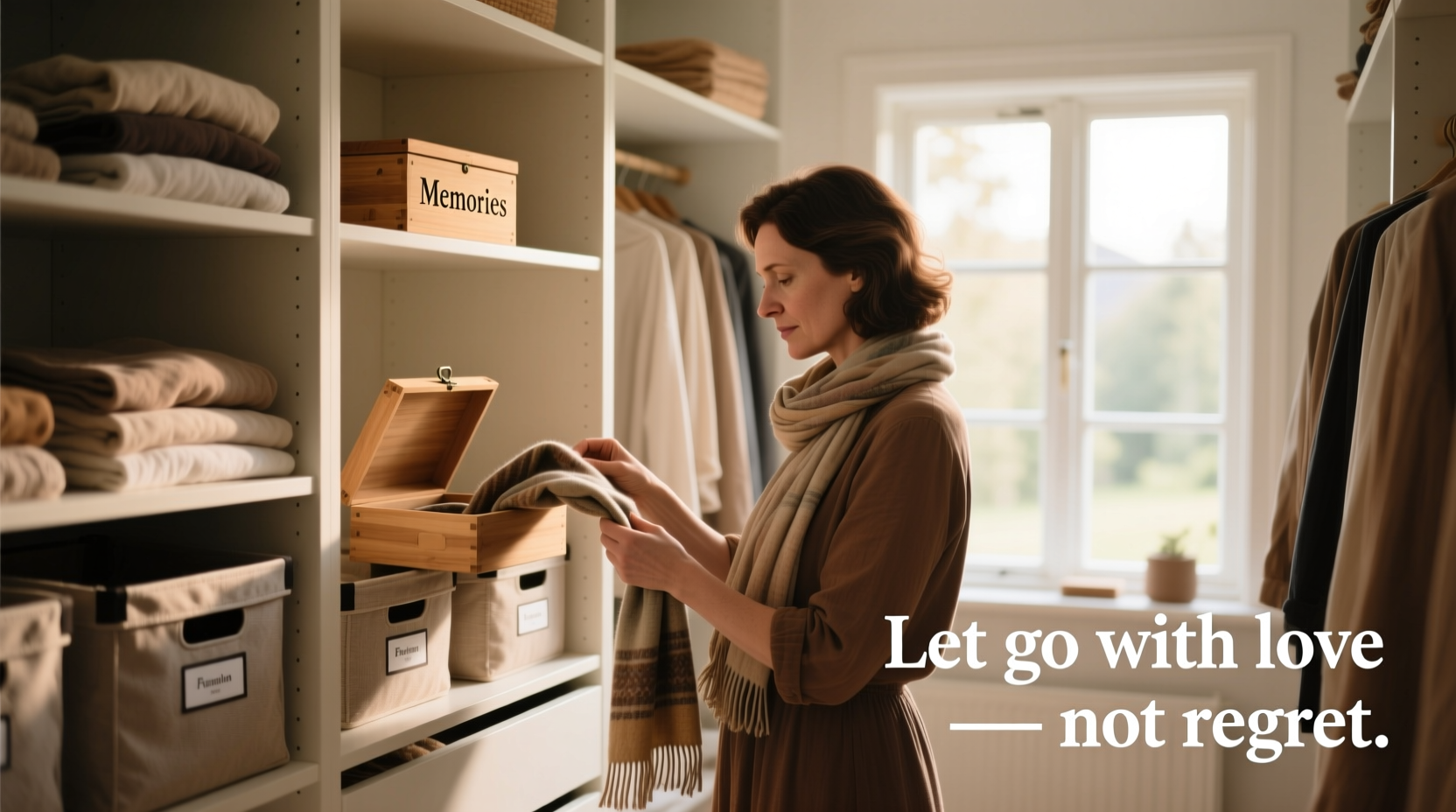
Sentimental clutter isn’t just fabric or thread—it’s tied to identity, relationships, and life milestones. Psychologically, we attach objects to memories because they serve as tangible proof that moments mattered. This is why tossing a high school letterman jacket might feel like erasing part of your adolescence.
The challenge lies in distinguishing between keeping the memory and hoarding the object. Many people hold onto items “just in case” they feel nostalgic later, but research shows that most regret comes not from letting go, but from living with visual and mental clutter.
“Sentimental items gain their value from our stories, not their physical presence. You can honor the past without storing it in your closet.” — Dr. Lena Pruitt, Clinical Psychologist & Author of *Mindful Living*
Understanding this distinction allows for intentional release. The goal isn’t to discard emotion but to curate it thoughtfully.
A Step-by-Step Guide to Declutter Without Regret
Approaching sentimental items requires patience and structure. Follow this six-step timeline over several days or weeks to avoid emotional burnout and ensure lasting results.
- Set Your Intentions (Day 1): Define why you’re decluttering. Is it to create space? Reduce stress? Prepare for a move? Write down your purpose and keep it visible.
- Isolate Sentimental Items (Day 2–3): Remove all emotionally charged pieces from your closet—photos, gifts, heirlooms, memorabilia—and place them in a separate box or area. This creates psychological distance.
- Review Mindfully (Day 4–6): Handle each item one at a time. Ask: “Does this represent a memory I actively want to preserve?” If yes, proceed. If no, consider releasing it.
- Create Keepsake Alternatives (Ongoing): For items too meaningful to discard but impractical to keep, take photos, frame labels, or repurpose fabrics into small tokens like pillow inserts.
- Categorize What Stays (Day 7): Group remaining items by theme—family, travel, career milestones—and assign them limited storage (e.g., one memory box per decade).
- Donate or Pass On (Day 8+): Responsibly release items. Donate clothing to shelters, gift mementos to relatives, or host a “memory swap” with friends.
Do’s and Don’ts When Handling Sentimental Clothing
| Do | Don't |
|---|---|
| Take a photo of the item worn or displayed before letting go | Try to clear everything in one day |
| Involve family members when deciding on shared heirlooms | Keep something out of guilt (e.g., “Aunt May gave it to me”) |
| Repurpose fabric into quilts, patches, or framed art | Store sentimental items in damp basements or attics |
| Label keepsakes with dates and stories | Assume future generations will want everything you save |
| Limit yourself to one dedicated memory box | Hide items in hopes of forgetting the decision later |
Real Example: How Sarah Let Go of Her Late Husband’s Wardrobe
Sarah, a 52-year-old teacher from Portland, held onto her husband’s entire wardrobe for three years after his passing. His suits still hung untouched, his shoes lined up neatly. She avoided the closet, associating it with grief.
With guidance from a therapist, she began by photographing each piece. She wore his favorite flannel shirt during morning coffee and took a selfie. Then, she cut a square from the collar and sewed it into a cushion for her reading chair. The rest she donated to a men’s recovery shelter, writing a note: “This belonged to someone kind. Wear it well.”
Today, Sarah has a simplified closet and a small memory display on her dresser: the cushion, a wedding tie clip, and a framed photo of them dancing. “I realized,” she said, “that I carry him with me—not in polyester blends, but in how I live.”
Tips for Preserving Memory Without the Mess
You don’t need to keep every object to honor its significance. Creative alternatives allow you to retain emotional value while freeing physical space.
- Digital archiving: Scan letters, tags, or tickets and store them in a labeled cloud folder named “Memories – Hawaii Trip 2014” or “Graduation 2003.”
- Memory quilting: Sew swatches from baby clothes, uniforms, or event shirts into a single blanket. Many tailors offer this service affordably.
- Shadow boxes: Display small items like medals, pins, or jewelry in framed cases mounted on walls—turning clutter into decor.
- Story journals: Write a short paragraph about each item before releasing it. Include names, dates, and emotions. Re-reading these later evokes stronger memories than seeing a dusty jacket.
Checklist: Declutter Your Closet Mindfully
Use this checklist to stay focused and compassionate throughout the process:
- ☐ Set a clear intention for decluttering (e.g., “Create space for new beginnings”)
- ☐ Gather all sentimental clothing and accessories in one designated area
- ☐ Schedule short, timed sorting sessions (20–30 minutes max)
- ☐ Ask key questions: “Have I used this in the last year?” “Would I buy this today?” “Does it reflect who I am now?”
- ☐ Take photos of meaningful items before letting go
- ☐ Decide on a preservation method for top-tier keepsakes (digital, repurposed, framed)
- ☐ Assign a limit: e.g., “One box for childhood memories,” “Three outfits from past relationships”
- ☐ Label donation bags immediately and schedule pickup or drop-off
- ☐ Celebrate progress—even if only three items were released
- ☐ Reflect afterward: Journal how the space—and you—feel different
FAQ: Common Concerns About Letting Go
What if I regret donating something later?
Regret is common, but studies show it usually fades within weeks. To minimize risk, document items through photos or notes. Most people regret holding on more than letting go—especially when clutter affects daily life.
How do I handle family pressure to keep things?
Be honest but kind. Say, “I want to honor Grandma’s legacy, so I’m choosing to keep her brooch where I can see it every day, rather than storing ten dresses I’ll never wear.” Offer photos or small tokens to relatives who may also want mementos.
Can I keep sentimental items without them taking over my closet?
Absolutely. Designate a single memory box, shadow frame, or digital album. Physical limits force mindful curation. Rotate seasonal items if needed—e.g., display holiday sweaters only in December.
Conclusion: Make Space for What Matters Now
Decluttering isn’t about discarding the past—it’s about making room for your present self to breathe. Sentimental items deserve respect, but they don’t need to occupy prime real estate in your closet. By approaching the process with patience, creativity, and clarity, you transform clutter into continuity.
Every item you release with intention becomes a quiet act of self-awareness. And every inch of reclaimed space becomes an invitation—to dress freely, move easily, and live presently.




 浙公网安备
33010002000092号
浙公网安备
33010002000092号 浙B2-20120091-4
Comments
No comments yet. Why don't you start the discussion?