
The holiday season brings joy, warmth, and the irresistible glow of a beautifully decorated Christmas tree. But for cat owners, that same festive centerpiece can quickly become a feline playground—or worse, a hazard. Cats are naturally curious, agile climbers, and drawn to dangling objects, flickering lights, and soft textures. A traditional tree setup may look stunning, but it risks broken ornaments, toppled trees, and even danger if your cat chews on wires or swallows tinsel.
The good news? You don’t have to choose between safety and style. With thoughtful planning, creative alternatives, and a few strategic adjustments, you can design a Christmas tree that’s both visually striking and completely cat-friendly. This guide walks through proven methods to balance aesthetics with pet safety, so your home radiates holiday cheer—without the stress.
Understanding the Risks: Why Cat-Safe Trees Matter
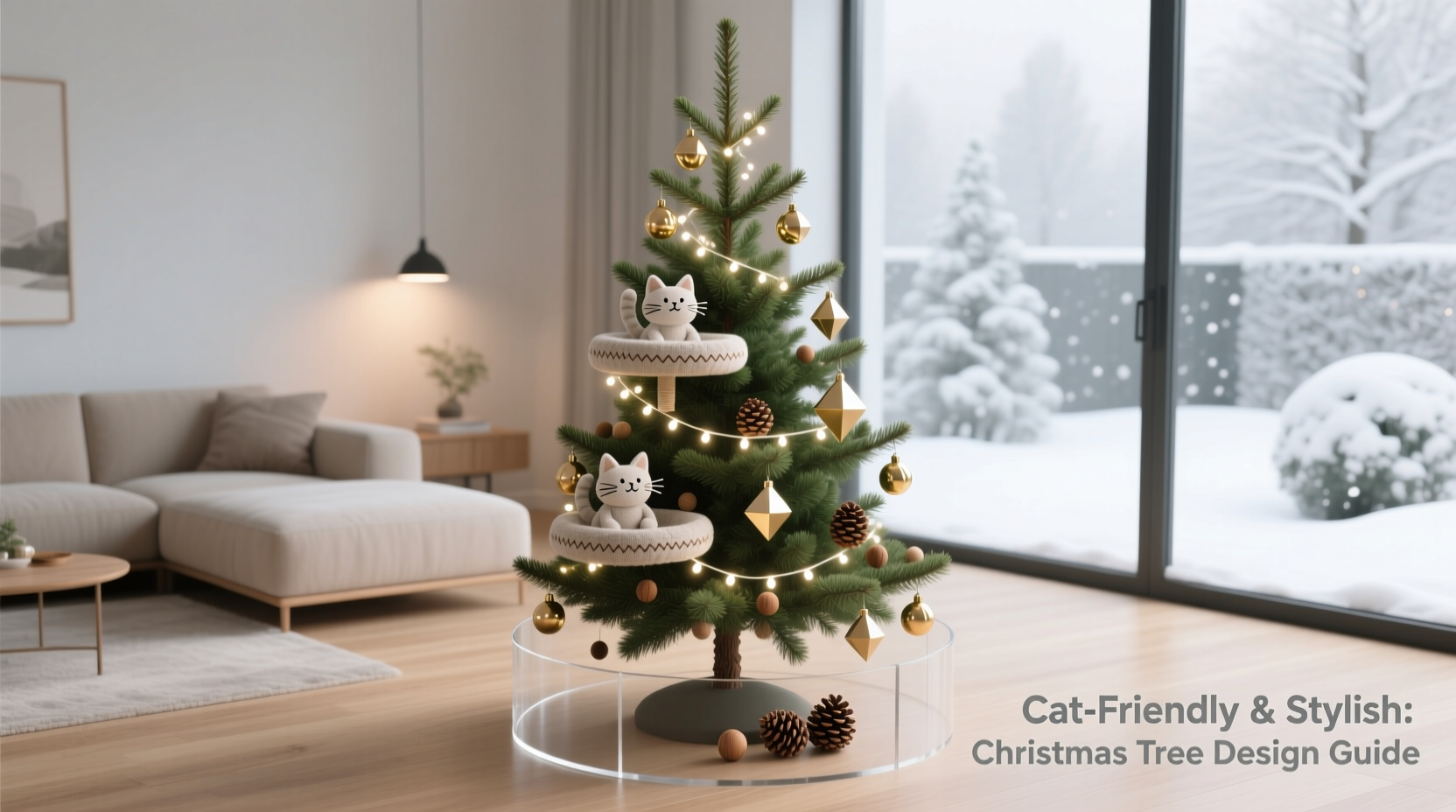
Cats interact with their environment through touch, taste, and movement. A Christmas tree is essentially a vertical jungle gym filled with tempting stimuli. The primary concerns include:
- Tree instability: Jumping or climbing can cause the tree to fall, risking injury to pets and people.
- Toxic materials: Tinsel, certain ornament coatings, and some artificial snow sprays can be harmful if ingested.
- Electrical hazards: Chewing on light cords poses a risk of electrocution or fire.
- Broken glass or sharp pieces: Traditional ornaments can shatter, creating dangerous debris.
According to Dr. Lena Peterson, a veterinary behaviorist at the Urban Pet Wellness Clinic, “Cats aren’t being destructive—they’re responding to instinct. The key is not to punish curiosity, but to redirect it safely.”
“Designing a cat-friendly space doesn’t mean giving up elegance. It means designing with empathy—and a little creativity.” — Lena Peterson, DVM, Veterinary Behavior Consultant
Strategic Tree Selection and Placement
Your first step in creating a stylish yet safe tree begins before decoration even starts. The type of tree and where you place it sets the foundation for everything else.
Choose the Right Tree Type
Artificial trees offer more control over stability and materials. Look for models with a wide base and sturdy construction. Pre-lit trees reduce the need for loose cords, though ensure lights are LED and cool to the touch.
If using a real tree, secure it firmly in a heavy stand and keep water out of reach (additives in tree water can be toxic). Avoid spraying artificial snow or flocking, which may contain chemicals cats react poorly to.
Location Is Key
Place the tree in a room with limited access if possible, or at least away from furniture your cat uses as a launchpad. Avoid corners where walls can aid climbing, and never position it near curtains, shelves, or drapes that could assist an ascent.
Ornament Strategy: Style Meets Safety
This is where most people worry about compromising aesthetics. But cat-safe ornaments can be just as beautiful—if not more unique—than traditional ones. The goal is to minimize temptation while maximizing visual appeal.
Ditch the Delicate, Embrace the Durable
Swap fragile glass balls for shatterproof options made from acrylic, felt, wood, or fabric. These materials are safer and often lend a modern, artisanal charm. Consider handmade ornaments in neutral tones, metallic finishes, or minimalist shapes that add texture without risk.
Zoning Your Decor
Create a “cat zone” and a “display zone” on your tree. Keep lower branches (within three feet) minimally decorated or use only soft, non-breakable items like knitted stars or stuffed felt animals. Reserve the upper two-thirds for delicate or sentimental ornaments.
| Ornament Type | Safety Level | Style Potential | Best For |
|---|---|---|---|
| Acrylic geometric shapes | High | Modern, chic | Entire tree |
| Felt or fabric ornaments | Very High | Cozy, rustic | Lower branches |
| Wooden carvings | High | Warm, natural | Mixed placement |
| Glass baubles | Low | Classic, elegant | Top half only |
| Tinsel or garland | Very Low | Sparkly, traditional | Avoid entirely |
One common mistake is overloading the tree with shiny, dangling items. Instead, opt for subtle sparkle using matte metallics, iridescent ribbons, or small mirrored discs that reflect light without inviting batting.
Lighting Without the Danger
Lights bring magic to any tree, but exposed cords are a major hazard. The solution lies in smart lighting choices and cord management.
Use LED string lights—they produce less heat and are more energy-efficient. Choose pre-lit artificial trees when possible, or wrap cords tightly around the trunk and conceal them with fabric sleeves or cord covers painted to match the tree stand.
For real trees, run cords along baseboards and secure them under rugs or with cord clips. Never leave lights unattended, especially when pets are unsupervised.
Alternative Lighting Ideas
Consider supplementing tree lights with ambient room lighting. Uplighting from floor lamps, fairy lights on adjacent shelves, or candles (flameless, of course) can enhance the tree’s glow without increasing risk.
Step-by-Step: Building Your Cat-Friendly Tree
Follow this timeline to assemble a tree that’s safe, stable, and stunning.
- Day 1: Select and anchor the tree. Choose a sturdy artificial model or secure a real tree in a heavy stand. Attach it to the wall using a nearly invisible support.
- Day 2: Plan your zones. Mark lower (under 3 ft), middle (3–5 ft), and upper (5+ ft) sections. Decide which ornaments go where based on safety and sentimentality.
- Day 3: Install lights safely. Weave LED strings from top to bottom, securing excess cords against the trunk or routing them away from paw level.
- Day 4: Decorate by section. Start with durable, soft ornaments on lower branches. Add mixed materials in the middle, saving fragile or meaningful pieces for the top.
- Day 5: Final inspection. Walk around the tree at cat-eye level. Remove anything dangling, noisy, or easily dislodged. Test stability by gently shaking the trunk.
This methodical approach ensures no detail is overlooked and gives you time to source alternative decorations if needed.
Real Example: Emma’s Scandinavian-Inspired Cat-Safe Tree
Emma Rivera, a graphic designer and cat owner in Portland, wanted a minimalist, Nordic-style tree that wouldn’t tempt her two playful rescue cats, Miso and Nori.
She chose a slim, pre-lit artificial tree in frosted white, anchoring it to the wall behind a bookshelf. Her ornament palette included hand-dyed linen stars, wooden reindeer, and matte gold spheres made of recycled plastic. She avoided tinsel entirely and used wide bands of cream-colored velvet ribbon looped vertically.
On the lower third, she added only soft felt mice and knitted snowflakes—items her cats could bat without consequence. “If they knock something down, it’s meant to be played with,” she said. “It actually makes the tree feel more alive.”
The result was a serene, gallery-worthy display that blended seamlessly into her living room—while keeping her cats engaged and safe.
Proactive Enrichment: Redirecting Feline Energy
Even the safest tree may attract attention. Rather than discourage play entirely, give your cat a better option nearby.
Set up a “cat tree” or cardboard scratcher beside the Christmas tree, decorated with a few safe ornaments, crinkly toys, or catnip. Some owners even create a mini holiday setup just for their pets—complete with tiny stockings and plush presents.
Interactive feeding toys or puzzle feeders placed nearby can also distract during high-curiosity moments, like when you first decorate.
Checklist: Cat-Friendly Tree Setup
Use this checklist to ensure every safety and style element is covered:
- ✅ Tree is anchored securely to the wall or ceiling
- ✅ No toxic materials (tinsel, flocking, lead-containing paints)
- ✅ Lights are LED and cords are concealed or protected
- ✅ Lower branches feature only soft, unbreakable ornaments
- ✅ Fragile or valuable ornaments are placed above 5 feet
- ✅ No dangling ribbons or strings within paw reach
- ✅ Water reservoir (if real tree) is covered or inaccessible
- ✅ Alternative cat-friendly distractions are provided nearby
- ✅ Room layout prevents easy climbing via furniture
- ✅ Final walk-through completed from cat’s eye level
Frequently Asked Questions
Can I still use my family’s heirloom ornaments?
Yes—but reserve them for the upper third of the tree, beyond your cat’s reach. If you’re concerned, consider displaying one or two in a shadow box on the wall instead, where they can be admired safely.
Are there any safe alternatives to tinsel?
While no strand-like decor is completely risk-free, wide satin ribbons used in controlled loops (not loose strands) can mimic the look. Better yet, try beaded garlands made of large, fixed beads that won’t come apart if batted. Avoid anything that resembles string or thread, as these can cause intestinal blockages if swallowed.
What if my cat still tries to climb the tree?
Discouragement works better than punishment. Use double-sided tape on the trunk or place aluminum foil around the base—most cats dislike the texture. Motion-activated air sprayers (like Ssscat) can also deter approach without harming your pet. Most importantly, ensure your cat has other vertical spaces to explore, like cat shelves or a tall scratching post.
Conclusion: Beauty and Safety Can Coexist
A cat-friendly Christmas tree isn’t a compromise—it’s a smarter, more thoughtful version of tradition. By understanding feline behavior and making intentional design choices, you can create a centerpiece that delights both humans and pets. Style doesn’t come from perfection; it comes from harmony. When your decor respects the needs of every household member—including the four-legged ones—it feels more authentic, warm, and truly festive.
The holidays are about connection, comfort, and shared joy. With a little planning, your Christmas tree can symbolize all of that—without a single claw mark or emergency vet call.




 浙公网安备
33010002000092号
浙公网安备
33010002000092号 浙B2-20120091-4
Comments
No comments yet. Why don't you start the discussion?