
A small entryway is often the first space guests encounter in a home, yet it’s frequently overlooked in terms of both function and design. With limited square footage, every inch counts. A well-decorated entry sets the tone for the rest of the house—inviting, organized, and intentional. The challenge lies in balancing practicality with aesthetic appeal: storing shoes, keys, bags, and coats without making the space feel cluttered. Fortunately, with thoughtful planning and clever design choices, even the tiniest foyer can become a highly functional and visually striking transition zone between the outside world and your personal sanctuary.
Assess Your Entryway’s Potential
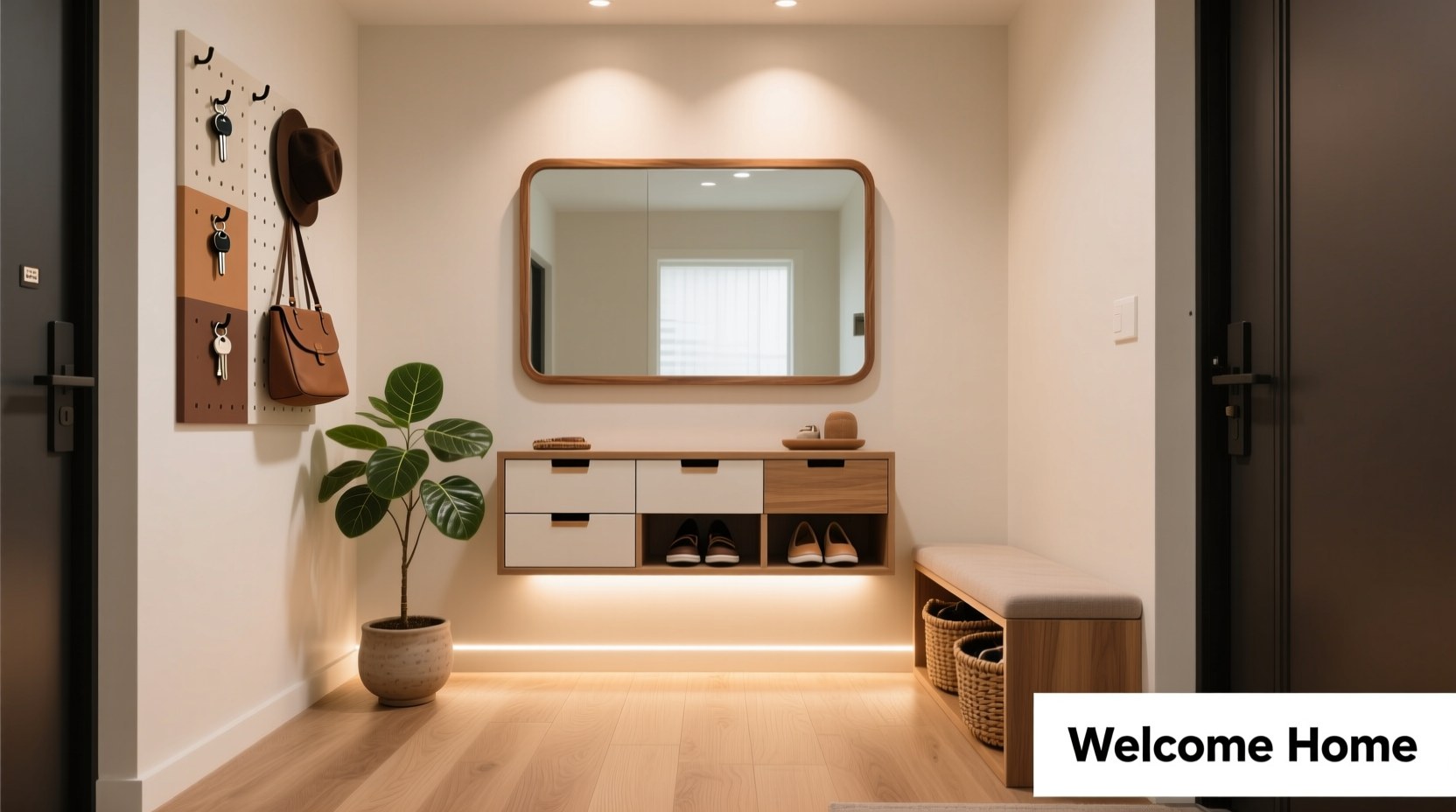
Before adding any furniture or decor, evaluate the actual dimensions and traffic flow of your entry. Measure the width, depth, and ceiling height. Note where doors swing open, light sources are located, and whether there’s access to power outlets (useful for charging stations). Determine how many people use the space daily and what their primary needs are—do you need space for pet leashes? Umbrellas? Mail organization?
Understanding these factors helps prioritize functionality. For example, if your family removes shoes at the door, a compact shoe cabinet becomes essential. If you're constantly misplacing keys, a designated tray near the door makes sense. Avoid forcing oversized furniture into tight spaces. Instead, think vertically and multi-functionally.
Maximize Storage with Smart Furniture Choices
Furniture in a small entryway must earn its place by serving multiple purposes. Prioritize pieces that combine seating, storage, and surface area. Here are several effective options:
- Bench with built-in storage: Ideal for removing shoes comfortably while hiding away scarves, gloves, or extra footwear.
- Wall-mounted drop zone: Floating shelves paired with hooks keep essentials off the floor and within reach.
- Mirror console table: A narrow table topped with a mirror adds depth and provides a spot for keys, mail, and decor.
- Over-the-door organizers: Utilize the back of the door for lightweight items like sunglasses, hats, or reusable shopping bags.
When selecting furniture, opt for slim profiles—ideally under 12 inches deep. Light-colored finishes reflect light and make the space feel larger. Glass or Lucite materials offer visual transparency, reducing perceived bulk.
“Small spaces demand intentionality. Every object should either serve a purpose or bring joy.” — Lena Torres, Interior Designer & Small Space Specialist
Recommended Multi-Functional Furniture
| Furniture Type | Primary Function | Secondary Benefit | Ideal Size (Depth) |
|---|---|---|---|
| Storage Bench | Seat + Shoe Storage | Discourages clutter | 14–18 inches |
| Narrow Console Table | Surface for Keys/Mail | Holds lamp or basket | 10–12 inches |
| Wall-Mounted Shelves | Display & Organization | Adds vertical interest | 8–10 inches |
| Leaning Ladder Shelf | Towel/Bag Storage | Modern decorative element | Minimal footprint |
| Hook Rail System | Coat & Bag Hanging | Customizable layout | Zero floor space |
Create a Strong First Impression with Design Elements
The entryway should reflect your home’s personality from the moment someone steps inside. Even in a confined space, impactful design cues can elevate the experience.
Start with lighting. A statement pendant or flush mount fixture draws the eye upward and adds warmth. If wiring isn’t feasible, consider plug-in wall sconces or a battery-powered LED mirror with integrated lighting. Natural light is ideal—if possible, avoid blocking windows with bulky furniture.
A full-length mirror not only creates the illusion of more space but also serves a practical purpose for last-minute outfit checks. Position it opposite a window or light source to amplify brightness.
Color and texture play key roles. Paint the walls in a bold hue or apply peel-and-stick wallpaper for instant character. A small indoor plant—like a snake plant or ZZ plant—adds life without demanding much care. A textured doormat sets a welcoming tone and traps dirt before it spreads indoors.
Step-by-Step Guide to Transforming a Small Entryway
Follow this five-step process to turn a cramped or neglected entry into an efficient and inviting space:
- Clear and Clean: Remove all items currently in the entry. Wipe down surfaces, vacuum corners, and assess what belongs and what should be relocated.
- Define Zones: Assign areas for specific functions—e.g., a “drop zone” for bags and coats, a “prep station” for keys and accessories.
- Select Key Pieces: Choose one main furniture item (bench, console, or shelf unit) based on available space and primary need.
- Install Vertical Storage: Add hooks, floating shelves, or a peg rail system at varying heights to accommodate different items.
- Add Finishing Touches: Incorporate a mirror, artwork, lighting, greenery, and a cohesive color scheme to unify the look.
This sequence ensures a logical progression from decluttering to decoration, avoiding haphazard additions that lead to visual chaos.
Real-Life Example: Transforming a 3x5 Foot Apartment Foyer
Sophie, a graphic designer living in a downtown studio apartment, struggled with her narrow entryway. Measuring just 3 feet wide by 5 feet deep, it was dominated by a towering coat rack that blocked movement and collected dust. Her shoes piled near the door, and keys vanished daily.
She reimagined the space using vertical solutions. She installed a slim, wall-mounted console (10 inches deep) with a built-in outlet for charging devices. Above it, she mounted three staggered walnut shelves—one holding a ceramic dish for keys, another displaying a small succulent, and the third storing folded scarves. A set of matte black hooks accommodated her jacket, work bag, and umbrella. A full-length mirror leaned against the adjacent wall, reflecting light from the hallway window.
The result? A streamlined, stylish entry that took less than a weekend to complete. Sophie now spends less time searching for essentials and receives compliments from guests about the “hotel lobby vibe.”
Avoid Common Pitfalls
Even with good intentions, small entryways can go wrong. Watch out for these frequent missteps:
- Overcrowding: Resist the urge to fill every inch. Empty space is necessary for movement and visual breathing room.
- Ignoring scale: Large furniture overwhelms tiny entries. Always measure twice and choose proportionally smaller pieces.
- Poor lighting: A dark entry feels unwelcoming. Layer ambient, task, and accent lighting when possible.
- Lack of cohesion: Mixing too many styles or colors creates visual noise. Stick to a consistent palette and material theme.
- No maintenance plan: Without a daily reset habit, clutter returns quickly. Encourage household members to return items to their designated spots.
“In small-space design, discipline is as important as decor. Systems fail without habits to support them.” — Marcus Reed, Urban Home Consultant
Checklist: Building a Functional and Stylish Entryway
Use this checklist to ensure your small entryway transformation covers all bases:
- ✅ Measure the space (width, depth, height)
- ✅ Identify primary user needs (shoes, coats, keys, etc.)
- ✅ Choose one multi-functional furniture piece (bench, console, or shelf)
- ✅ Install wall-mounted storage (hooks, rails, or floating shelves)
- ✅ Add a mirror to enhance light and space
- ✅ Include adequate lighting (ceiling, sconce, or table lamp)
- ✅ Place a durable doormat inside and out
- ✅ Designate a tray or bowl for everyday essentials
- ✅ Incorporate one decorative element (art, plant, or sculpture)
- ✅ Establish a nightly reset routine to maintain order
Frequently Asked Questions
Can I have a seating area in a very small entryway?
Yes, but choose wisely. A narrow bench that doubles as storage fits better than a chair. Consider a lift-top ottoman or a built-in seat under a window if structural modifications are possible. Ensure at least 24 inches of clearance around the seating for comfortable movement.
What if my entryway has no closet?
No closet doesn’t mean no storage. Wall-mounted solutions are your best bet. Install a robust hook rail for coats, add over-the-door organizers, and use baskets on open shelves to contain smaller items. A freestanding coat stand with a base for shoes can also serve as a minimalist alternative.
How do I keep the entryway from looking cluttered?
Limit visible items to three to five curated objects—such as a bowl, a plant, and a framed photo. Store everything else out of sight. Adopt a “one in, one out” rule: if you add a new item, remove an old one. Daily tidying prevents buildup.
Final Thoughts: Design with Purpose and Personality
A small entryway doesn’t need to be a compromise between storage and style. When designed with intention, it becomes one of the most efficient and expressive parts of a home. The key is to balance utility with aesthetics—choosing pieces that store, organize, and inspire. From a thoughtfully placed mirror to a sleek bench with hidden compartments, each decision contributes to a seamless transition from street to sanctuary.
First impressions matter, and your entryway speaks volumes before you say a word. By maximizing storage and enhancing visual appeal, you create a space that welcomes, organizes, and reflects who you are. Don’t let size limit your vision—let it focus it.




 浙公网安备
33010002000092号
浙公网安备
33010002000092号 浙B2-20120091-4
Comments
No comments yet. Why don't you start the discussion?