
In compact living environments—be it a studio apartment, a narrow hallway, or a tiny bedroom—every square foot counts. The challenge isn’t just storage or furniture layout; it’s also about perception. A space can feel cramped not because it’s objectively small, but because it lacks visual depth. One of the most effective, time-tested solutions? Mirrors. When used strategically, mirrors don’t just reflect—they transform. They manipulate light, extend sightlines, and trick the eye into seeing more than what’s physically there. This guide explores how to use mirrors in small spaces to amplify openness, brightness, and spatial flow without relying on structural changes.
Understanding How Mirrors Influence Perception
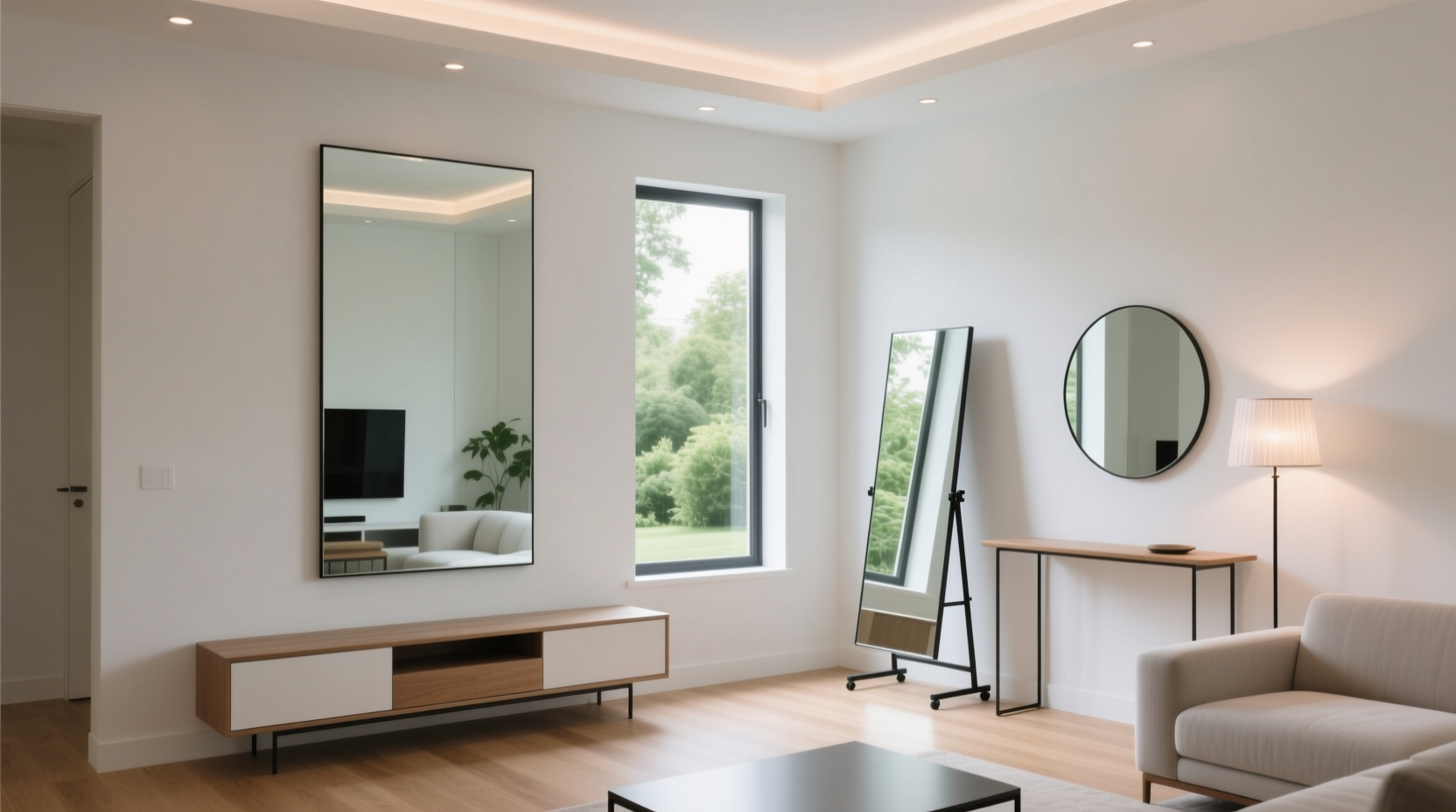
Mirrors work by reflecting both natural and artificial light, which increases luminosity and reduces shadows that make rooms feel enclosed. But their impact goes beyond illumination. A well-placed mirror duplicates elements within a space—a window, a piece of art, or even an open doorway—creating a sense of continuity. This duplication tricks the brain into perceiving doubled dimensions, effectively expanding the room visually.
The science behind this lies in human visual processing. Our brains interpret reflections as extensions of reality unless cues (like frame edges or angles) signal otherwise. Interior designers have long leveraged this phenomenon, especially in urban dwellings where square footage is limited but aesthetic comfort is essential.
“Mirrors are silent architects of space. They don’t add square feet, but they redefine volume through reflection.” — Lena Torres, Interior Design Consultant at Urban Habitat Studio
Strategic Mirror Placement for Maximum Impact
Not all mirror placements yield the same results. To truly expand a small space, consider the room’s light sources, traffic flow, and focal points. The goal is to reflect desirable views—not clutter or blank walls.
Opposite Windows or Light Sources
Positioning a mirror directly across from a window multiplies natural light throughout the day. This doubles the brightness and casts light deeper into corners that would otherwise remain dim. In north-facing rooms with limited sunlight, this technique can significantly uplift the atmosphere.
Above Mantels or on Feature Walls
Mounting a mirror above a fireplace or on a prominent wall draws the eye upward and outward. Choose a statement piece with a decorative frame to anchor the space while enhancing depth. This works especially well in studio apartments where one wall serves multiple functions.
At the End of Narrow Hallways
A mirror placed at the end of a tight corridor prevents the area from feeling like a dead-end tunnel. It visually extends the passage, making it appear longer and less confining. Opt for vertical or horizontal elongated designs depending on ceiling height and wall proportions.
Across from Focal Points
Reflect something worth seeing: a piece of artwork, a houseplant, or an attractive bookshelf. This creates a symmetrical balance and enriches the visual narrative of the room. Avoid reflecting doorways leading to cluttered areas unless those spaces are intentionally styled.
Choosing the Right Mirror Type and Style
The shape, size, and frame of a mirror influence both function and aesthetics. While any reflective surface adds light, the right choice enhances spatial illusion without overwhelming the room.
| Mirror Type | Best For | Avoid If |
|---|---|---|
| Floor-to-ceiling panel | Tiny bedrooms, narrow bathrooms | Ceiling too low or wall has doors/windows |
| Oversized round mirror | Breaking up boxy layouts, adding softness | Room already has dominant curves |
| Cluster of small mirrors | Accent walls, creative expression | Space feels chaotic or cluttered |
| Lean-to full-length mirror | Temporary setups, renters | Frequent foot traffic (safety hazard) |
| Beveled edge framed mirror | Adding elegance and depth | Budget is very tight or space is ultra-minimalist |
For maximum expansion effect, larger mirrors outperform smaller ones. A single 36x48 inch mirror typically delivers better spatial illusion than three 12x16 inch mirrors combined, due to uninterrupted reflection. However, grouped mirrors can work in hallways or entryways where movement patterns break line-of-sight anyway.
Advanced Techniques for Multi-Dimensional Illusion
Once the basics are mastered, advanced applications can elevate the effect from subtle to transformative.
Create a False Window
In interior rooms without windows—such as windowless bathrooms or basement offices—install a backlit mirror framed like a traditional window. Add sheer curtains on either side and position it where a real window would make sense. The combination of reflection and soft lighting mimics daylight streaming in, producing a convincing illusion of outdoor access.
Use Mirrored Furniture
Tables, dressers, or closet doors with mirrored surfaces contribute to the overall reflective strategy without dominating the wall space. A mirrored coffee table, for example, reflects ceiling lights and overhead decor, reducing visual weight and making the seating area feel airier.
Incorporate Angled Mirrors
Placing a mirror at a 45-degree angle to a light source or corner captures reflections from multiple planes. This dynamic reflection shifts with movement, creating a lively sense of expanded space. Ideal locations include alcoves, beside sofas, or near entryway corners.
Double Up with Glass or Glossy Surfaces
Pair mirrors with other reflective materials: high-gloss paint, glass-top tables, metallic finishes. These surfaces bounce light in tandem, creating layered reflections that deepen the sense of space. Be cautious not to overdo it—too many shiny surfaces can feel cold or disorienting.
Mini Case Study: Transforming a 300-Sq-Ft Studio Apartment
When Maria, a graphic designer in downtown Chicago, moved into her compact studio, she struggled with the constant feeling of confinement. The single room served as bedroom, office, and living area, with minimal natural light due to adjacent buildings.
Her solution? A floor-to-ceiling mirror installed on the wall opposite the only window. She paired it with a mirrored side table and chose glossy white cabinetry in the kitchenette. She avoided placing the mirror directly across from her bed to prevent nighttime glare but angled it slightly to reflect the city view during daytime.
Within days, friends commented that the apartment “felt twice as big.” Natural light reached previously dark corners, and the reflection of the skyline created a panoramic effect. By focusing on strategic reflection rather than furniture reduction, Maria maintained functionality without sacrificing comfort.
“I didn’t need to downsize my life—I just needed to reflect it better.” — Maria Lin, Studio Resident
Step-by-Step Guide: Implementing Mirror Magic in 5 Days
You don’t need a renovation to benefit from mirror illusions. Follow this timeline to see measurable improvements in your space’s perceived size.
- Day 1: Assess Light and Sightlines
Walk through your space at different times of day. Note where light enters and where the eyes naturally travel. Identify under-lit zones and bottlenecks in visual flow. - Day 2: Choose Primary Mirror Location
Select one wall opposite a window, doorway, or attractive feature. Measure the area and determine if a single large mirror or grouped pieces fit best. - Day 3: Select and Purchase Mirror
Prioritize size and clarity. Look for distortion-free glass. Consider renting a professional for heavy installations. - Day 4: Install and Test Reflections
Hang the mirror securely. Step back and observe how it interacts with light and furnishings. Adjust angle slightly if needed. - Day 5: Enhance Supporting Elements
Add glossy finishes, streamline nearby decor, and introduce plants or art that benefit from reflection. Evaluate the new spatial perception.
Common Mistakes to Avoid
- Reflecting clutter: A mirror doubling a messy shelf only emphasizes disorder. Style the reflected area first.
- Using too many small mirrors: Fragmented reflections can create visual noise instead of expansion.
- Ignoring safety: Heavy mirrors must be anchored properly, especially in earthquake-prone areas or homes with children.
- Overlooking frame style: Bulky frames can dominate small walls. Opt for slim or frameless designs when space is tight.
- Blocking wall space needed for furniture: Ensure the mirror doesn’t interfere with sofa placement or cabinet access.
Frequently Asked Questions
Can mirrors make a room feel too bright or glaring?
Yes, especially in south-facing rooms with intense sunlight. To mitigate glare, use tinted or antiqued mirrors, adjust the angle slightly, or pair with sheer curtains that diffuse light before it hits the surface.
Are there mirror alternatives for renters who can’t drill holes?
Absolutely. Lean full-length mirrors against walls, use adhesive-backed lightweight options (on smooth surfaces), or place freestanding mirrored screens. These offer flexibility and require no permanent installation.
Do mirror placements affect Feng Shui?
According to traditional Feng Shui principles, mirrors should not face beds or front doors directly, as they may disrupt rest or cause energy (chi) to bounce out. Instead, position them to reflect calming scenes like plants or artwork. Balance is key.
Final Checklist: Mirror Optimization for Small Spaces
- ☐ Identify primary light source
- Determine where natural and artificial light enters the room.
- ☐ Select focal wall for mirror
- Choose a wall opposite a window, doorway, or attractive feature.
- ☐ Measure and choose appropriate size
- Larger mirrors generally perform better; aim for at least 70% of wall width.
- ☐ Style the reflected area
- Ensure the mirror reflects something pleasing—never clutter.
- ☐ Secure proper installation
- Use wall anchors and level tools; hire help for heavy pieces.
- ☐ Pair with complementary finishes
- Add glossy surfaces, light colors, and minimal decor to enhance reflection.
- ☐ Evaluate daily impact
- Observe how the mirror affects light and mood at different times.
Conclusion: Reflect Your Space, Expand Your Mind
Decorating small spaces isn’t about minimizing life—it’s about maximizing perception. Mirrors offer a simple, elegant, and cost-effective way to unlock hidden spatial potential. With thoughtful placement, the right style, and attention to detail, even the tiniest room can feel airy, inviting, and expansive. You don’t need to move walls to change how a space feels. Sometimes, all you need is a clear reflection and a fresh perspective.




 浙公网安备
33010002000092号
浙公网安备
33010002000092号 浙B2-20120091-4
Comments
No comments yet. Why don't you start the discussion?