
A well-decorated workspace does more than look good—it shapes how you think, feel, and perform. Whether you're working from home, in a corporate office, or managing a creative studio, the design of your environment directly influences cognitive function, emotional state, and productivity. Cluttered surfaces drain mental energy. Poor lighting strains attention. And uninspired decor can dull motivation before you even open your laptop.
The goal isn’t to create a Pinterest-perfect setup but to craft a space that supports deep work while sparking original thought. This means balancing functionality with personal inspiration, using color psychology, optimizing lighting, minimizing distractions, and incorporating elements that engage the senses in a positive way. The most effective workspaces aren’t flashy—they’re intentional.
Use Color Psychology Strategically
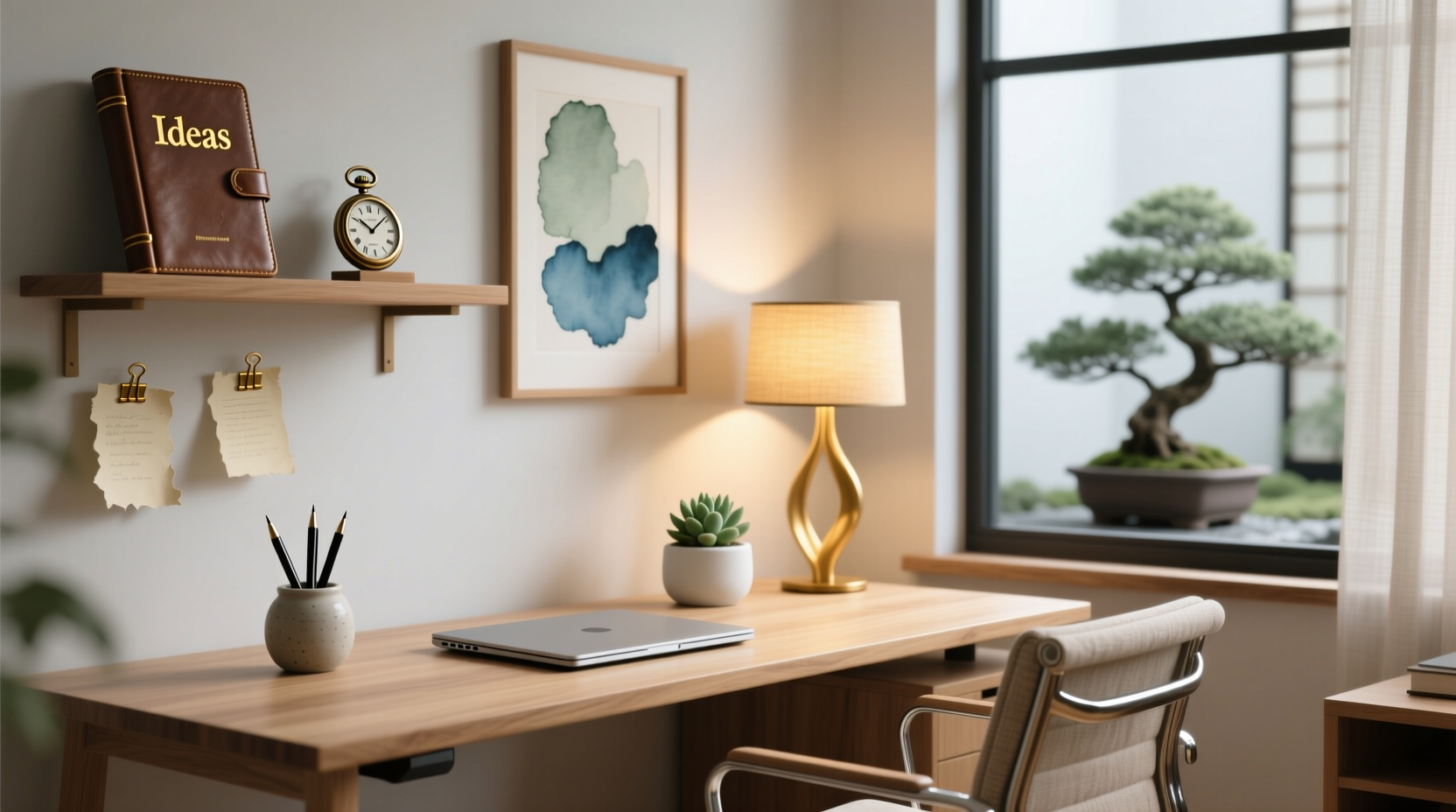
Color is one of the most powerful yet underutilized tools in workspace design. Different hues trigger distinct psychological responses. While bright red may increase heart rate and alertness, it can also heighten anxiety if overused. Cool tones like soft blue or sage green promote calm concentration, making them ideal for tasks requiring sustained attention.
Consider painting an accent wall in a muted teal or adding accessories in warm yellow—a color linked to optimism and idea generation. Avoid overwhelming neutrals like flat gray or beige unless balanced with texture or pops of energizing color. If you’re unsure where to start, limit bold colors to small elements: a desk mat, chair cushion, or framed artwork.
Recommended Colors and Their Cognitive Effects
| Color | Psychological Effect | Best For |
|---|---|---|
| Soft Blue | Promotes calm and focus | Deep work, writing, analysis |
| Sage Green | Reduces mental fatigue | Long sessions, coding, reading |
| Warm Yellow | Stimulates creativity | Brainstorming, ideation, design |
| Neutral Gray | Provides balance | Background tone, minimalist setups |
| Burgundy or Deep Red | Increases alertness | Short bursts of high-energy tasks |
Optimize Lighting for Mental Clarity
Lighting is not just about visibility—it affects circadian rhythms, mood, and cognitive performance. Natural light is the gold standard. Studies show that workers near windows report higher energy levels, better sleep, and improved focus compared to those in artificially lit environments.
If natural light is limited, layer your lighting: combine ambient ceiling lights with task lighting (like an adjustable desk lamp) and subtle accent lighting (such as LED strips behind a monitor). Choose bulbs with a color temperature between 4000K and 5000K—this mimics daylight and supports alertness without the harsh glare of cool white LEDs.
“Exposure to natural light during the day improves both concentration and emotional regulation.” — Dr. Lena Torres, Environmental Psychologist
Avoid relying solely on overhead fluorescent lights, which can cause eye strain and mental fog. Instead, position your desk perpendicular to a window to reduce glare while maximizing indirect sunlight. Use sheer curtains or blinds to diffuse brightness during peak hours.
Declutter with Purpose
Clutter competes for your attention. A study from Princeton University found that physical disarray forces the brain to process multiple stimuli simultaneously, reducing its ability to focus. But minimalism doesn’t mean sterility. The key is curated simplicity—keeping only what serves function or inspiration.
Start by removing anything not used daily. Store supplies in labeled drawers or boxes. Use cable organizers to eliminate tangles. Then, reintroduce only a few meaningful items: a plant, a sketch, or a photo that evokes calm or curiosity. These become anchors for positive emotion, not distractions.
One common mistake is treating decluttering as a one-time event. Instead, build maintenance into your routine. Spend five minutes at the end of each day resetting your desk. This micro-habit prevents clutter from accumulating and signals the brain that work time has ended.
Create Zones for Different Modes of Work
Not all work requires the same mindset. Coding demands intense focus. Brainstorming benefits from openness and movement. Meetings need engagement. Your workspace should support these shifts—not force you to adapt to a single rigid setup.
If space allows, divide your area into functional zones:
- Focus Zone: Quiet corner with minimal distractions, noise-canceling headphones, and task lighting.
- Creative Zone: Open space with a whiteboard, sticky notes, and inspirational visuals.
- Collaboration Zone: Comfortable seating, accessible tech, and shared surfaces for discussions.
Even in a small home office, you can simulate zoning through furniture arrangement or visual cues. Rotate your chair to face a different wall depending on the task. Use a standing desk converter to shift posture and mindset. Place a notebook and pen in one area, your laptop in another—each location signaling a different mode of thinking.
Mini Case Study: A Freelance Designer’s Transformation
Maria, a graphic designer working from her apartment, struggled with procrastination and creative blocks. Her desk was crowded with supplies, half-finished projects, and personal items. After reading about environmental psychology, she restructured her 8x10 ft office into two zones: a clean, minimalist desk for client work and a nearby table covered in mood boards, sketches, and textured materials for ideation.
Within two weeks, she reported a 40% reduction in time spent switching tasks and a noticeable increase in original concepts presented to clients. “I realized I was trying to brainstorm in a space designed for execution,” she said. “Separating the functions changed everything.”
Incorporate Nature and Sensory Elements
Biophilic design—the practice of bringing natural elements into indoor spaces—has been shown to reduce stress, enhance cognitive function, and improve creativity. You don’t need a garden view. Even small touches make a difference.
Add a low-maintenance plant like a snake plant or pothos. Use natural materials: a wooden desk organizer, a stone paperweight, or a wool felt mouse pad. Consider textures that invite touch—soft fabrics, smooth ceramics, or woven baskets. These tactile experiences ground the mind and reduce digital fatigue.
Sound also plays a role. Background noise can either disrupt or enhance focus. Some people concentrate better with silence; others thrive with ambient sounds like rainfall, café chatter, or instrumental music. Experiment with soundscapes through apps or a small speaker placed out of sight.
Personalize Without Overloading
Your workspace should reflect who you are—but selectively. Personal items that evoke positive memories or professional pride can boost motivation. A diploma, a travel souvenir, or a child’s drawing can serve as emotional anchors. But too many personal objects turn your desk into a museum, increasing cognitive load.
Choose three to five meaningful items max. Rotate them monthly to keep the space feeling fresh. Frame quotes or mantras that align with your current goals, but avoid generic platitudes. Opt instead for specific, actionable reminders: “Ask one clarifying question” or “Prototype before perfecting.”
Artwork is another powerful tool. Abstract pieces can stimulate imagination; landscapes promote calm. Hang pieces at eye level and within your peripheral vision—not so close they distract, not so far they’re ignored.
Step-by-Step Guide: Transform Your Workspace in One Weekend
- Saturday Morning – Clear and Clean: Remove everything from your desk. Wipe down surfaces. Discard broken or unused items.
- Saturday Afternoon – Assess Layout: Evaluate lighting, chair comfort, and screen height. Reposition desk if needed to face natural light.
- Sunday Morning – Declutter & Organize: Sort supplies into categories. Store frequently used items within arm’s reach. Label containers.
- Sunday Afternoon – Decorate with Intent: Add one plant, one piece of art, and one personal item. Paint an accent wall or apply removable wallpaper if desired.
- Sunday Evening – Test and Adjust: Simulate a work session. Note any discomfort or distractions. Make final tweaks before Monday.
Workspace Decoration Checklist
- ✅ Maximize natural light or install daylight-spectrum bulbs
- ✅ Choose a calming or energizing color scheme based on your work type
- ✅ Remove unnecessary items and organize essentials
- ✅ Add at least one plant or natural element
- ✅ Include 3–5 meaningful personal or inspirational items
- ✅ Define zones for focus, creativity, and collaboration (if space allows)
- ✅ Use cable management to reduce visual clutter
- ✅ Test lighting and ergonomics with a full work session
Frequently Asked Questions
Can a small workspace still be effective for creativity?
Absolutely. Small spaces can enhance focus by limiting distractions. Use vertical storage, mirrors to create depth, and multi-functional furniture. Prioritize quality over quantity in decor—every item should earn its place.
How often should I update my workspace decor?
Every 3–6 months is ideal. Refreshing your environment prevents habituation—the brain stops noticing familiar stimuli, reducing their positive impact. Swap out artwork, rearrange furniture, or introduce a new plant to reignite engagement.
Is it okay to have digital-only decorations, like desktop wallpapers?
Limited use is fine, but physical elements have stronger psychological effects. A real plant reduces stress more than a nature screensaver. However, a carefully chosen digital background with calming imagery can complement your physical space—just don’t rely on it alone.
Final Thoughts: Design for How You Want to Work
Your workspace shouldn’t just accommodate your work—it should elevate it. The right decor doesn’t distract; it directs attention, calms the nervous system, and invites curiosity. It turns routine tasks into rituals and challenges into opportunities.
You don’t need a renovation or a budget. Start small: clear your desk tonight, add a plant tomorrow, adjust your lamp this week. Each change compounds. Over time, you’ll notice fewer distractions, quicker focus, and moments of unexpected insight.




 浙公网安备
33010002000092号
浙公网安备
33010002000092号 浙B2-20120091-4
Comments
No comments yet. Why don't you start the discussion?