
Yoga is a practice of mindfulness, balance, and self-care—but even the most intentional routines can overlook one crucial element: mat hygiene. Over time, your yoga mat accumulates sweat, oils, bacteria, and environmental debris. While many reach for commercial cleaners, you don’t need synthetic sprays or expensive products to restore your mat’s freshness. With simple items already in your kitchen—white vinegar, baking soda, lemon juice, and castile soap—you can perform a thorough, eco-friendly deep clean that extends your mat’s life and keeps your practice space safe and hygienic.
The beauty of using pantry staples lies not only in their accessibility but also in their effectiveness. These ingredients are naturally antimicrobial, deodorizing, and gentle on both rubber and PVC-based mats when used correctly. This guide walks you through every step, from assessing your mat’s material to drying it properly, ensuring a clean surface without damaging its integrity.
Why Deep Clean Your Yoga Mat?
Your yoga mat is more than just a piece of equipment—it’s a personal sanctuary where your body meets the ground during movement and stillness. But with regular use, it becomes a breeding ground for odor-causing bacteria, fungi, and grime. A 2020 study published in the Journal of Applied Microbiology found that fitness equipment, including yoga mats, can harbor staphylococci and other pathogens if not cleaned regularly.
Signs your mat needs a deep clean include:
- Persistent musty or sour smell
- Visible dirt or discoloration
- Slippery or sticky texture
- Increased slipping during poses
Regular wipe-downs after practice help, but they don’t penetrate deep into the pores of the mat. A monthly deep cleaning routine removes embedded residue, restores grip, and prevents premature wear. Plus, using non-toxic, biodegradable ingredients means you’re caring for your health and the planet simultaneously.
Understanding Your Mat Material
Not all yoga mats respond the same way to cleaning agents. Before applying any solution, identify your mat’s material. Using the wrong cleaner—even natural ones—can degrade cushioning, cause cracking, or strip away texture.
| Mat Type | Common Features | Safe Pantry Cleaners | Avoid |
|---|---|---|---|
| Open-cell (natural rubber, TPE) | Eco-friendly, grippy when damp, porous | Diluted vinegar, mild castile soap | Excessive water immersion, undiluted citrus |
| Closed-cell (PVC, neoprene) | Non-porous, durable, sweat-resistant | Baking soda paste, vinegar spray, lemon mist | Soaking for long periods |
| Cork | Natural antimicrobial, textured surface | Vinegar-water spray, light lemon rinse | Submerging, abrasive scrubbing |
| Foam (child’s pose mats) | Soft, lightweight, often used by beginners | Very dilute soap, quick wipe | Water saturation, strong acids |
If unsure, check the manufacturer’s tag or website. When in doubt, test any cleaning solution on a small, inconspicuous area first. Wait 15 minutes to ensure no discoloration or texture change occurs.
“Natural cleaning agents like vinegar and baking soda are excellent for yoga mats because they disinfect without leaving harmful residues. Just remember: less is more.” — Dr. Lena Patel, Environmental Health Scientist
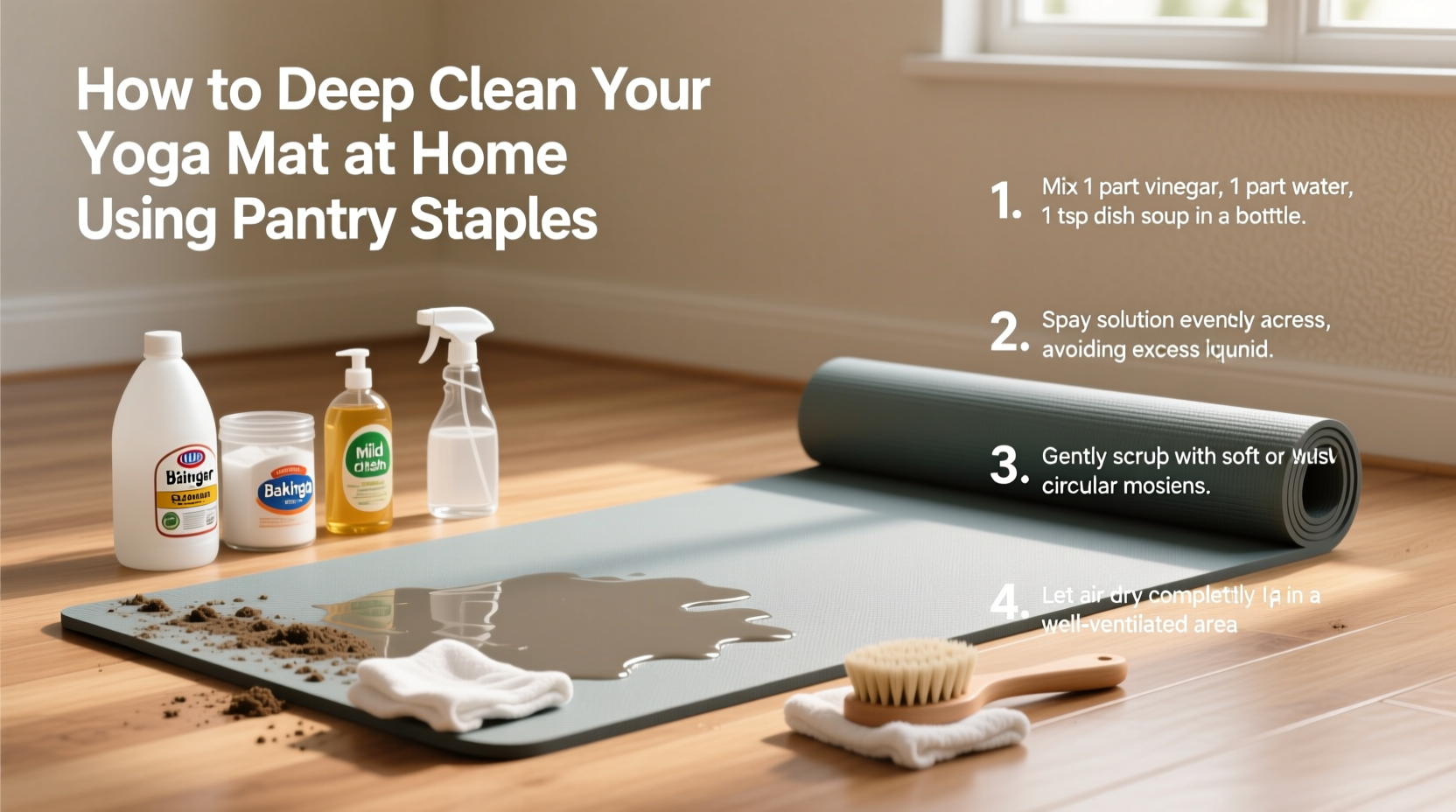
Step-by-Step Guide to Deep Cleaning Your Mat
This comprehensive method works for most mat types except fully porous natural rubber or cork, which require gentler handling. Follow these steps once a month—or more often if you practice daily or in heated environments.
- Gather Supplies
You’ll need:- White vinegar (distilled)
- Baking soda
- Lemon (optional, for scent)
- Mild liquid castile soap
- Spray bottle
- Soft sponge or microfiber cloth
- Large towel
- Well-ventilated drying area
- Shake Off Loose Debris
Take your mat outside or over a trash can. Give it a firm shake to remove dust, hair, and dry particles. Use a dry brush or lint roller if needed. - Prepare the Cleaning Solution
For general deep cleaning:
Mix in a spray bottle:- 1 cup water
- 1/3 cup white vinegar
- 1 tablespoon castile soap
- 10 drops lemon essential oil (or juice of half a lemon strained)
- Apply the Solution
Lay the mat flat on a non-slip surface (like a bathtub or outdoor deck). Spray the solution evenly across the entire surface. Avoid oversaturating—especially for open-cell mats. Flip and repeat on the reverse side. - Scrub Gently
Dip a soft sponge or cloth into a paste made of 2 tablespoons baking soda and a splash of water. Gently scrub areas with visible buildup, sweat stains, or odors. Focus on high-contact zones: hands, feet, and knees. Do not use abrasive pads or brushes. - Rinse Thoroughly
Wipe the mat with a clean, damp cloth to remove all soap and baking soda residue. For closed-cell mats, you can briefly rinse under lukewarm running water, keeping it flat to avoid creasing. Never submerge open-cell mats. - Dry Completely
Roll the mat loosely in a dry towel to absorb excess moisture. Then unroll and hang vertically over a shower rod, railing, or drying rack. Ensure airflow on both sides. Avoid direct sunlight or heat sources, which can warp or fade the mat. Drying typically takes 6–12 hours.
Real Example: Reviving a Heavily Used Travel Mat
Sarah, a vinyasa instructor in Portland, Oregon, noticed her travel-sized PVC mat had become slippery during flow classes. Despite weekly wipes, it developed a faint sour odor after hot sessions. She avoided chemical sprays due to sensitivities but didn’t want to replace the mat after only eight months.
Following this pantry-cleaning method, she mixed vinegar, castile soap, and lemon juice in a spray bottle. After scrubbing with a baking soda paste and rinsing thoroughly, she hung the mat outdoors in the shade. Within 10 hours, it was dry and noticeably grippier. “It felt like a brand-new mat,” she said. “The smell was gone, and my students commented on how stable it felt. I now deep clean it every six weeks.”
This example illustrates how consistent, natural maintenance can significantly extend a mat’s usability—especially under heavy conditions.
Do’s and Don’ts of Natural Yoga Mat Care
To maximize results and prevent damage, follow this checklist of best practices.
| ✅ Do | ❌ Don’t |
|---|---|
| Use distilled white vinegar—it’s mild and effective | Use apple cider vinegar—it can leave residue and attract pests |
| Dilute all solutions (max 1:1 vinegar-to-water ratio) | Apply undiluted vinegar or lemon juice directly |
| Hang mat to dry with airflow on both sides | Leave it rolled up while damp (invites mold) |
| Spot-clean weekly with a vinegar-water mist | Use bleach, ammonia, or industrial degreasers |
| Store flat or loosely rolled with a strap | Compress tightly in a bag for long periods |
FAQ: Common Questions About Natural Mat Cleaning
Can I use baking soda on a rubber yoga mat?
Yes, but cautiously. Natural rubber mats are porous and sensitive to abrasives. Use a very light baking soda paste and apply with a soft cloth—never scrub aggressively. Rinse immediately and dry in the shade. Avoid soaking.
Will vinegar damage my mat over time?
When properly diluted (no more than 50% vinegar), it’s safe for most closed-cell mats. However, frequent use on open-cell materials may degrade elasticity over years. Limit deep vinegar cleans to once per month and opt for plain water or castile soap wipes in between.
How can I deodorize my mat between deep cleans?
Create a daily-refresh spray: mix 3/4 cup water, 1/4 cup vinegar, and 5 drops of tea tree oil (a natural antifungal) in a spray bottle. Mist lightly after practice and wipe dry. Tea tree oil enhances odor control without harsh chemicals.
Final Checklist: Your Monthly Deep Clean Routine
Keep this actionable list handy for stress-free maintenance:
- ☐ Shake out loose debris outdoors
- ☐ Check manufacturer care instructions
- ☐ Mix cleaning solution: 1 cup water, 1/3 cup vinegar, 1 tbsp castile soap, lemon juice (optional)
- ☐ Spray both sides evenly—don’t soak
- ☐ Scrub stained areas with baking soda paste and soft sponge
- ☐ Wipe clean with damp cloth or brief rinse (if closed-cell)
- ☐ Towel-dry, then hang to air-dry completely (6–12 hrs)
- ☐ Store flat or loosely rolled in a dry, ventilated space
Conclusion: Make Cleanliness Part of Your Practice
Your yoga mat supports every asana, breath, and moment of stillness. Treating it with care isn’t just about longevity—it’s an extension of your practice. By using simple, non-toxic ingredients from your pantry, you honor your body, your environment, and your intention to live mindfully. Deep cleaning doesn’t have to be complicated or costly. With vinegar, baking soda, and a few minutes of attention each month, you can maintain a fresh, safe, and supportive surface for your journey.




 浙公网安备
33010002000092号
浙公网安备
33010002000092号 浙B2-20120091-4
Comments
No comments yet. Why don't you start the discussion?