
The traditional red-and-green Christmas tree has its place, but for those drawn to the dramatic, the mysterious, and the beautifully macabre, a goth Christmas tree offers a compelling alternative. Far from being merely “dark,” this style embraces depth, texture, and intentionality—a celebration of winter’s shadows as much as its light. With careful curation, a goth tree becomes a statement piece: elegant, atmospheric, and deeply personal. It’s not about rejecting tradition; it’s about reimagining it through a lens of moody sophistication.
Designing a goth Christmas tree isn’t just slapping black ornaments on a green spruce. It’s an exercise in contrast, symbolism, and aesthetic harmony. Whether you lean into Victorian gothic revival, romantic decay, or modern minimalist noir, the goal is cohesion—creating a tree that feels intentional, luxurious, and quietly rebellious.
Embrace a Moody Color Palette
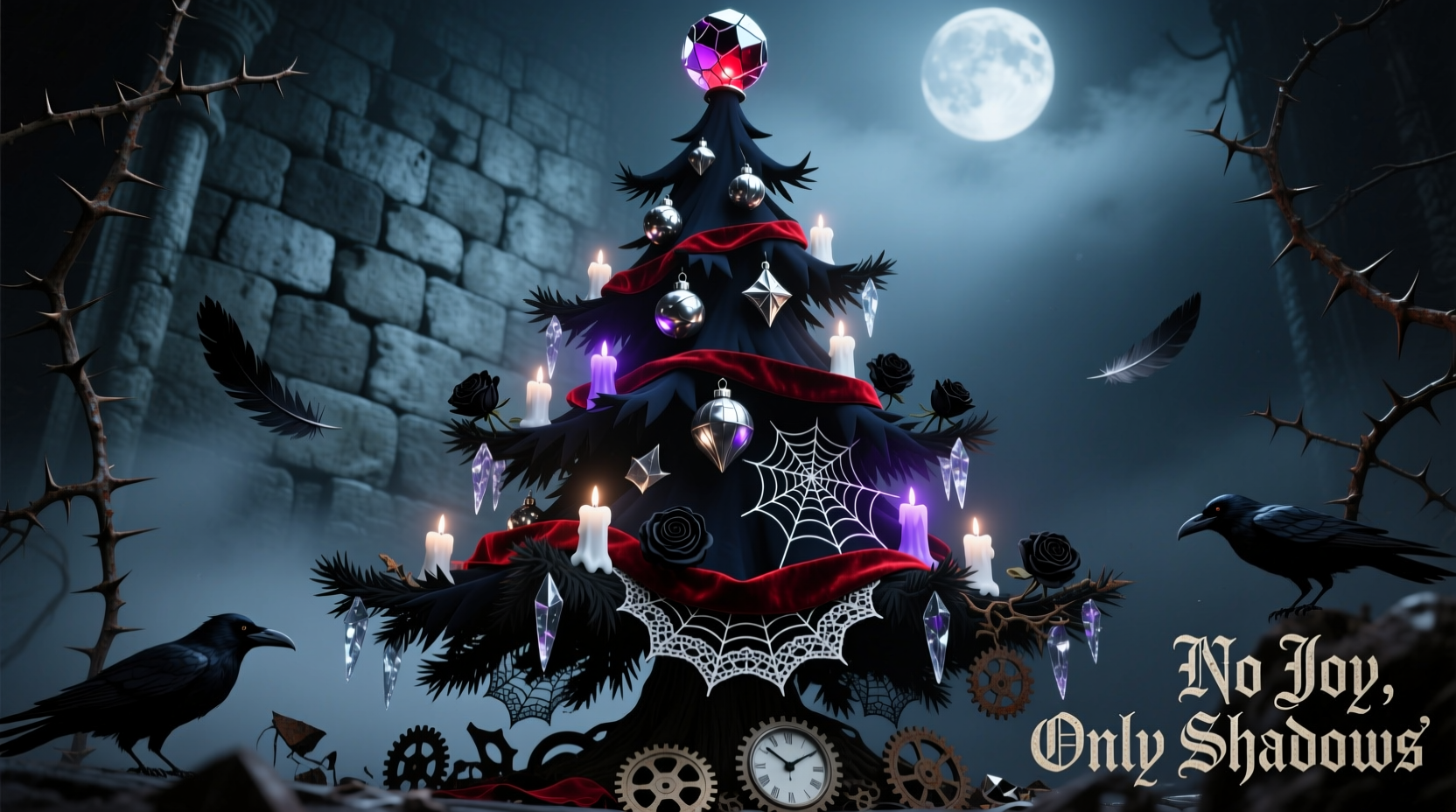
The foundation of any goth Christmas tree lies in its color scheme. Move beyond basic black and consider how shades interact to create dimension. A monochromatic approach can be stunning when layered thoughtfully.
- Deep blacks and charcoals: Serve as your base. These absorb light, creating a sense of depth and mystery.
- Burgundy and wine: Add warmth without sacrificing mood. These tones evoke velvet drapes and aged wine, perfect for a vintage goth feel.
- Plum and eggplant: Introduce subtle richness. These work well in satin ribbons or glass baubles.
- Gunmetal, silver, and antique brass: Provide reflective contrast. Use metallics sparingly to highlight rather than dominate.
- White and ivory: When used strategically, they mimic frost, bone, or moonlight—adding eerie elegance.
Avoid neon or overly bright colors unless used ironically or in very small doses (e.g., a single cracked red ornament to symbolize blood or passion). The palette should feel cohesive, like a still from a Tim Burton film or a page from a Bram Stoker novel.
Select the Right Tree and Base
The tree itself sets the tone. While a classic evergreen works, many goth decorators opt for alternatives that enhance the aesthetic from the start.
| Tree Type | Best For | Styling Tips |
|---|---|---|
| Natural Fir or Spruce | Organic, forest-goth or pagan-inspired themes | Pair with dried botanicals, feathers, and wrought-metal accents |
| Black-Dyed Artificial Tree | Dramatic, high-contrast looks | Use with iridescent or matte finishes; avoid shiny plastic |
| White or Silver Tree | Frostbitten, wintery necropolis themes | Decorate with black, deep purple, and clear crystal elements |
| Bare Branches (wired) | Industrial or avant-garde goth styles | Add hanging candles, chains, and draped fabrics |
For the base, choose a planter that complements the theme. A distressed iron bucket, a cracked ceramic urn, or a wooden crate stained black can elevate the presentation. Wrap the base with burlap, lace, or faux cobwebs for added texture.
Curate Decor with Intention
Goth decor thrives on symbolism and narrative. Each ornament should feel like a deliberate choice—not random darkness, but meaningful expression.
- Ornaments: Opt for materials like blown glass, ceramic, tarnished metal, or hand-blown crackle finish. Shapes might include ravens, skulls, moons, spiders, keys, or Victorian mourning jewelry replicas. Hand-painted designs add authenticity.
- Garlands: Replace tinsel with more tactile options. Try:
- Strands of black pearls or hematite beads
- Dried citrus slices dipped in black ink
- Miniature books bound in black leather
- Woven black ribbon with silver lettering
- Tree Topper: Skip the star or angel. Instead, consider:
- A crow or bat silhouette in wrought iron
- A black candle in a wrought holder
- A crescent moon with dangling crystals
- A miniature stained-glass window
- Lighting: Crucial for atmosphere. Use warm white or amber LED string lights to avoid a cold, clinical look. For extra drama, incorporate flickering flameless candles nestled within branches. Dimmable lights allow you to shift the mood throughout the evening.
“A goth Christmas tree isn’t about being spooky—it’s about honoring the beauty in melancholy, the elegance in shadow. It’s where memory and myth converge.” — Lila Voss, Interior Stylist & Gothic Design Curator
Step-by-Step Guide: Building Your Goth Tree
Follow this sequence to ensure a balanced, visually striking result:
- Prepare the space: Clear the area and lay down a dark cloth or runner to protect flooring and contain stray needles or debris.
- Assemble and shape the tree: Fluff each branch layer by layer, working from bottom to top. For artificial trees, take time—rushing leads to a flat, unconvincing silhouette.
- Add lighting first: Weave string lights evenly through the core and outer layers. Plug in temporarily to check coverage and brightness.
- Incorporate structural garlands: Drape heavier garlands (beads, fabric) before adding ornaments to avoid imbalance.
- Hang ornaments by size and weight: Start with largest at the base, medium in the middle, smallest near the top. Distribute colors and themes evenly but not symmetrically—organic asymmetry feels more authentic.
- Layer in texture: Tuck in dried flowers, feathers, or small fabric banners. These add depth and movement.
- Install the topper: Secure carefully. If using a flame element (real or simulated), ensure safety clearance.
- Final review: Walk around the tree in dim light. Adjust any sparse areas and remove anything that feels out of place.
Real Example: The Velvet Catacombs Tree
Maria, a librarian in Portland, wanted a tree that reflected her love of 19th-century literature and dark romanticism. She started with a medium-height natural fir and dyed select tips with food-safe black dye for a smudged, shadowed effect. Her palette was black, deep oxblood, and antique gold.
She wrapped the base in crushed velvet and surrounded it with old leather-bound books. Ornaments included miniature pocket watches, porcelain cameos with black veils, and handmade paper bats. Garlands were strands of black lace and dried rosemary for scent. At night, she lit battery-operated black candles nestled in the lower branches.
The result? A tree that felt like a page from a Poe story—rich, quiet, and slightly haunted. Guests described it as “a whisper in a cathedral.” Maria didn’t just decorate; she told a story.
Common Pitfalls and How to Avoid Them
Even with strong vision, missteps happen. Here’s what to watch for:
| Do | Don’t |
|---|---|
| Balance heavy ornaments with lighter ones for visual stability | Cluster all dark items on one side, creating a lopsided look |
| Use varied ornament sizes and shapes for depth | Fill the tree with only round baubles—this flattens the design |
| Incorporate scent subtly (e.g., pine, clove, myrrh) | Overpower the space with synthetic “witchy” fragrances |
| Let negative space breathe—gaps can enhance mood | Overcrowd every inch; clutter kills elegance |
| Test electrical components before final setup | Wait until the tree is fully decorated to discover a dead light strand |
FAQ: Goth Tree Questions Answered
Can I mix goth decor with traditional elements?
Yes—but do so intentionally. A single red velvet bow or a gilded frame can create powerful contrast if framed by darker tones. The key is control: let the goth aesthetic dominate, with traditional pieces serving as accents, not anchors.
Is a goth tree appropriate for family gatherings?
That depends on your family. Many appreciate the creativity and artistry once explained. Frame it as a tribute to winter’s quieter, reflective side. If concerned, place it in a dedicated room rather than the main gathering space.
How do I store my goth ornaments safely?
Treat them like delicate antiques. Use divided ornament storage boxes with soft lining. Wrap fragile pieces in acid-free tissue. Store in a cool, dry place away from sunlight to prevent fading or warping. Label containers clearly for next year.
Essential Checklist Before You Begin
Before unwrapping a single ornament, ensure you have the following:
- ✅ A tree (natural or artificial) that fits your vision
- ✅ String lights (warm white or amber, dimmable preferred)
- ✅ Ornament hooks (black-coated or wire)
- ✅ Garlands (textured: beads, fabric, natural elements)
- ✅ Themed ornaments (skulls, ravens, moons, etc.)
- ✅ Tree topper (non-traditional: candle, bat, moon)
- ✅ Base cover or skirt (velvet, lace, burlap)
- ✅ Storage plan for post-holiday care
- ✅ Time—allow at least 2–3 hours for full styling
Conclusion: Make It Meaningful
A goth Christmas tree is more than a decoration—it’s a declaration of identity. It says you honor complexity, embrace contrast, and find beauty in the overlooked corners of the season. This isn’t about shock value; it’s about authenticity. When done with care, your tree becomes a sanctuary of dark elegance, a place where shadow and light coexist in harmony.
Don’t aim to impress—aim to express. Let your tree reflect your tastes, your reading list, your music, your memories. Whether inspired by Victorian mourning culture, modern witchcraft, or simply a love of midnight hues, your goth Christmas tree can be the most honest and captivating part of your holiday.




 浙公网安备
33010002000092号
浙公网安备
33010002000092号 浙B2-20120091-4
Comments
No comments yet. Why don't you start the discussion?