
A monochrome Christmas tree offers a sophisticated alternative to traditional multicolored decor. Stripped of chromatic clutter, it emphasizes texture, form, and light—creating a serene yet striking centerpiece for the holidays. Far from being dull, a well-executed monochrome palette can radiate luxury, calm, and modern elegance. Whether you choose white, black, silver, gray, or even deep navy, the key lies in intentional layering, tonal variation, and thoughtful ornamentation. This guide walks you through crafting a cohesive, visually rich monochrome tree that feels intentional, not incomplete.
Why Choose Monochrome? The Aesthetic Advantage
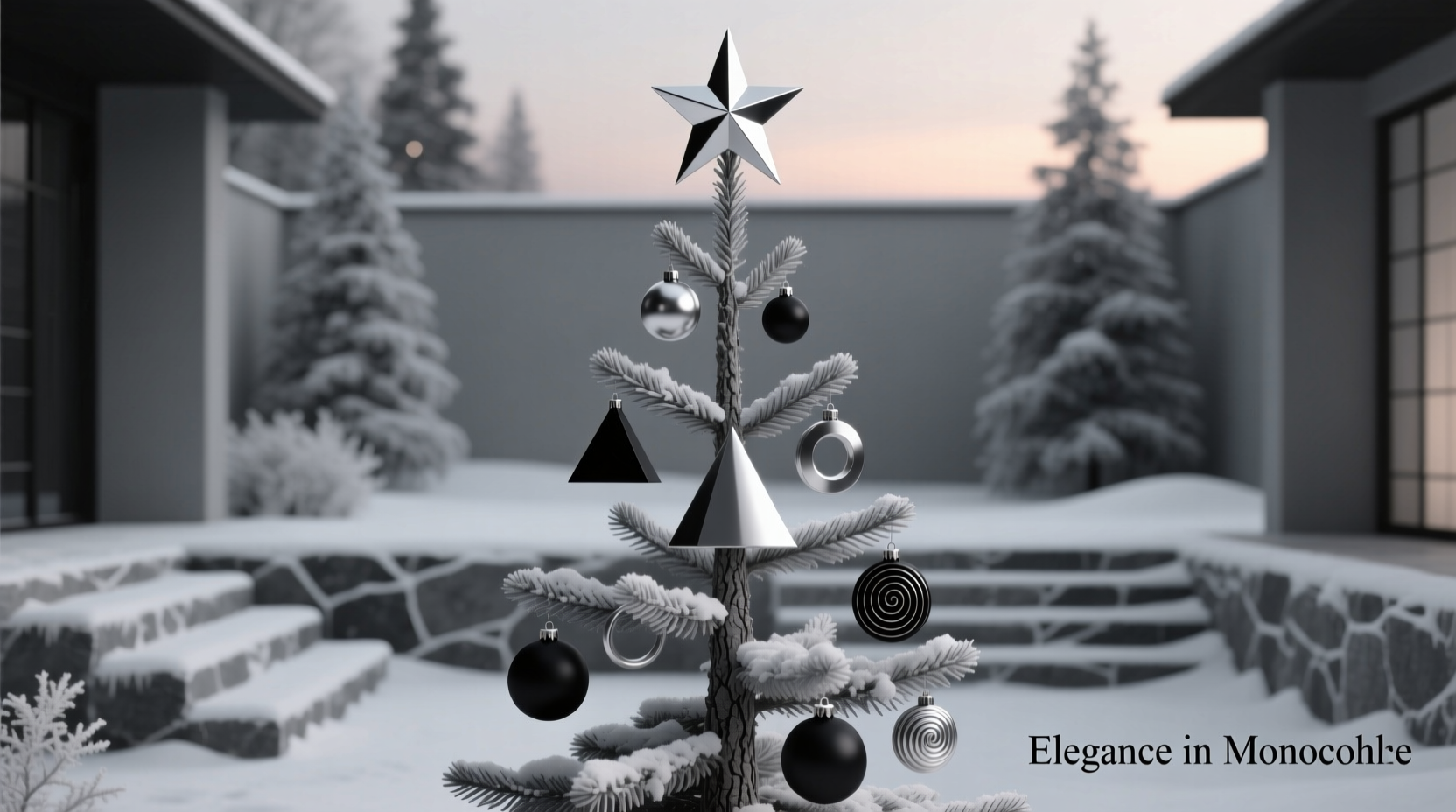
Monochrome design leverages a single hue across varying shades, tints, and textures to create depth without relying on color contrast. In holiday decorating, this approach shifts focus from festive chaos to curated harmony. It’s ideal for modern homes, minimalist interiors, or anyone seeking a more tranquil holiday atmosphere.
Designers often praise monochrome schemes for their versatility. “A single-color tree isn’t limiting—it’s focusing,” says interior stylist Clara Nguyen.
“When you remove competing colors, you invite attention to detail: the sheen of glass, the softness of velvet bows, the way light reflects off metallics. That’s where true elegance lives.” — Clara Nguyen, Interior Stylist & Holiday Design Consultant
Beyond aesthetics, monochrome trees are easier to coordinate with existing décor. They integrate seamlessly into living rooms, entryways, or dining spaces without clashing with furniture or artwork. Plus, they photograph beautifully, making them ideal for social media or holiday cards.
Selecting Your Base Color: Beyond Just White
While white is the most common choice for monochrome trees, it’s far from the only option. Each base color sets a different mood and works best in specific environments. Consider your space’s lighting, wall colors, and overall style before deciding.
| Color | Mood & Vibe | Best For | Tips for Depth |
|---|---|---|---|
| White | Pure, airy, wintery | Traditional homes, bright rooms | Use frosted, matte, and glossy finishes; add clear crystal or mirrored ornaments |
| Silver | Modern, glamorous, icy | Contemporary spaces, evening lighting | Mix polished chrome, brushed nickel, and mercury glass; include LED icicle lights |
| Black | Dramatic, bold, luxurious | Loft apartments, moody interiors | Incorporate gold or platinum accents sparingly; use textured fabrics like velvet |
| Gray | Neutral, balanced, understated | Mid-century modern, urban settings | Layer charcoal, dove, and slate tones; combine wool pom-poms with metal stars |
| Ivory/Cream | Warm, vintage, cozy | Rustic or farmhouse styles | Add burlap ribbons, wooden beads, and antique brass touches |
For maximum impact, consider pairing your base color with a complementary secondary finish—such as gold leaf on a white tree or matte black with smoked glass. These subtle contrasts elevate the scheme without breaking monochrome integrity.
Building Depth with Texture and Finish Variation
The secret to avoiding a flat, lifeless monochrome tree lies in texture. Since color contrast is minimal, tactile differences become the primary source of visual interest. Think beyond ornaments—consider the tree itself, garlands, ribbon, lights, and even the skirt.
Start with the tree. Real fir has natural variation in green tones, but for monochrome, an artificial tree in your target shade often works better. Look for models with multi-tonal tips—e.g., a white tree with frosted branch ends and cream-colored inner layers.
Ornaments should vary widely in material:
- Glass: Clear, frosted, or tinted in your base hue
- Metallic: Polished, brushed, hammered, or antiqued
- Fabric: Velvet, satin, felt, or lace-wrapped spheres
- Natural: Dried citrus slices, bleached pinecones, or salt-dough shapes painted uniformly
- Translucent: Acrylic, resin, or ice-effect pieces that catch light differently
Spacing matters. Cluster similar textures in odd-numbered groupings (3 or 5) for rhythm, then scatter contrasting ones throughout. Avoid uniform rows—organic placement feels more luxurious.
Garlands and ribbons further enhance dimension. Try:
- A braided jute ribbon dipped in white paint for a weathered look
- Strands of matte ceramic beads interspersed with glossy orbs
- A hand-tied bow using double-faced satin—its reverse side subtly differs in sheen
Step-by-Step Guide: Assembling Your Monochrome Tree
Follow this sequence to ensure balance, cohesion, and professional results.
- Choose and position the tree. Use a high-quality artificial tree in your selected color. Place it away from direct sunlight to prevent fading and near a power source for lights.
- Add premium lighting. String LED lights first—warm white for cream/ivory trees, cool white for silver/black. Use 100 lights per foot of tree height. Wrap spirally from bottom to top, weaving deep into branches.
- Layer large statement ornaments. Begin with 5–7 oversized pieces (4+ inches) placed evenly around the tree. These anchor the design and set the tone—e.g., a large mercury glass globe or a sculptural wire star.
- Fill in with mid-size ornaments. Distribute 3-inch pieces in varied textures, spacing them outward from the center. Focus on areas with less foliage density.
- Add specialty accents. Tuck in unique items: feather quills, origami shapes, or miniature books wrapped in matching paper. Limit these to 10–12 for subtlety.
- Incorporate vertical elements. Hang elongated ornaments—teardrops, icicles, or tassels—from higher branches to draw the eye upward.
- Wrap with ribbon or garland. Use a continuous strand, gently draping it in an S-curve from top to bottom. Secure discreetly with floral wire.
- Top the tree. Select a finial that complements but doesn’t overpower—a crystal spike, geometric shape, or delicate angel silhouette in your theme.
- Add the skirt. Choose fabric that echoes your palette: faux fur for white, crushed velvet for black, linen for gray. Avoid busy patterns.
- Final review. Step back at eye level and from multiple angles. Adjust any sparse areas and dim the room lights to evaluate glow and shadow balance.
Real Example: A Silver-and-White Tree for a Modern Loft
Jessica M., a graphic designer in Chicago, wanted a tree that matched her industrial-modern apartment without feeling cold. She chose a silver-frosted artificial tree with layered branch tips to mimic snow accumulation.
She began with 600 warm-white micro LED lights, creating a soft glow against exposed brick walls. Ornaments included mercury glass balls in three sizes, matte silver cubes, and hand-blown glass icicles. To add warmth, she introduced ivory velvet bows tied with silver thread and scattered a few antique silver picture frames (miniature, empty) among the branches.
The final touch was a garland made of folded white linen triangles strung on clear fishing line—visible only by shadow. “People thought I hired a decorator,” Jessica said. “But it was just about mixing finishes and trusting negative space.” Her tree became the backdrop for holiday photos and stayed up two weeks longer than usual because, as she put it, “It didn’t scream ‘Christmas’—it whispered ‘celebration.’”
Do’s and Don’ts: Common Pitfalls to Avoid
| Do | Don't |
|---|---|
| Use at least 3–5 different textures in your ornament selection | Stick to one material (e.g., all plastic or all glass) |
| Balance shiny and matte finishes for visual rhythm | Overuse reflective surfaces, which can look gaudy |
| Incorporate subtle pattern through texture (e.g., ribbed or fluted ornaments) | Add printed designs or polka dots unless they match your tone exactly |
| Let some negative space remain for elegance | Overcrowd the tree trying to “fill every branch” |
| Test lighting intensity before finalizing decor | Use colored bulbs or warm LEDs on a cool-toned tree without testing |
Essential Checklist for a Flawless Monochrome Tree
- ☐ Choose a base color aligned with your room’s ambiance
- ☐ Select a high-quality artificial tree with tonal variation
- ☐ Purchase sufficient LED lights (100 per foot of height)
- ☐ Gather ornaments in at least 3 different materials
- ☐ Include one oversized statement piece per major section
- ☐ Prepare a coordinating tree skirt and stand cover
- ☐ Use a mix of round, elongated, and geometric ornament shapes
- ☐ Add a textural garland or ribbon in a complementary finish
- ☐ Install the tree in its final location before decorating
- ☐ Step back frequently to assess balance and flow
Frequently Asked Questions
Can I mix metals in a monochrome tree?
Yes, but keep them within the same family. For a silver tree, combine chrome, nickel, and platinum—but avoid warm tones like brass or copper unless intentionally contrasting (e.g., black tree with gold highlights). Consistency in undertone preserves unity.
How do I keep a white tree from looking sterile?
Introduce warmth through texture: ivory-toned fabrics, wood accents painted white, or vintage lace. Soft lighting (2700K–3000K) also prevents a clinical feel. Consider adding a faint scent—like pine or vanilla—to engage more senses.
Is it okay to add one accent color?
Purists say no—but a single restrained pop (e.g., one deep red berry on an ivory bow) can work if it’s intentional and minimal. However, for true monochrome impact, avoid any color breaks. Let light and texture be your accent.
Conclusion: Elevate Your Holiday Style with Intentional Simplicity
A monochrome Christmas tree is not a compromise—it’s a declaration of taste. It shows confidence in restraint, appreciation for craftsmanship, and a desire for celebration without sensory overload. By focusing on tonal variation, material richness, and balanced composition, you create a tree that feels both festive and timeless.
Unlike trend-driven decorations that age quickly, a well-designed monochrome tree can be reused and reimagined year after year. Store ornaments carefully in divided containers, label by texture, and save your ribbon for next season. With minimal updates, your tree can evolve—adding a new finish, adjusting the light temperature, or introducing sustainable elements like handmade paper stars.




 浙公网安备
33010002000092号
浙公网安备
33010002000092号 浙B2-20120091-4
Comments
No comments yet. Why don't you start the discussion?