
A truly memorable Christmas tree does more than sparkle—it tells a story. Whether it’s the quiet elegance of a Nordic forest, the nostalgic warmth of a 1940s parlour, or the bold drama of a midnight-blue celestial theme, a thoughtfully designed tree becomes the emotional anchor of your holiday season. Yet most people approach tree decorating reactively: grabbing ornaments from storage bins, layering lights haphazardly, and hoping for harmony. The result? A tree that feels busy, disjointed, or unintentionally chaotic. Designing a themed tree isn’t about rigid rules or expensive purchases—it’s about intentionality, rhythm, and visual hierarchy. It begins long before the first ornament is hung: with a clear concept, a deliberate palette, and a lighting strategy that supports—not competes with—the overall narrative.
1. Choose a Theme That Resonates—Not Just a Trend
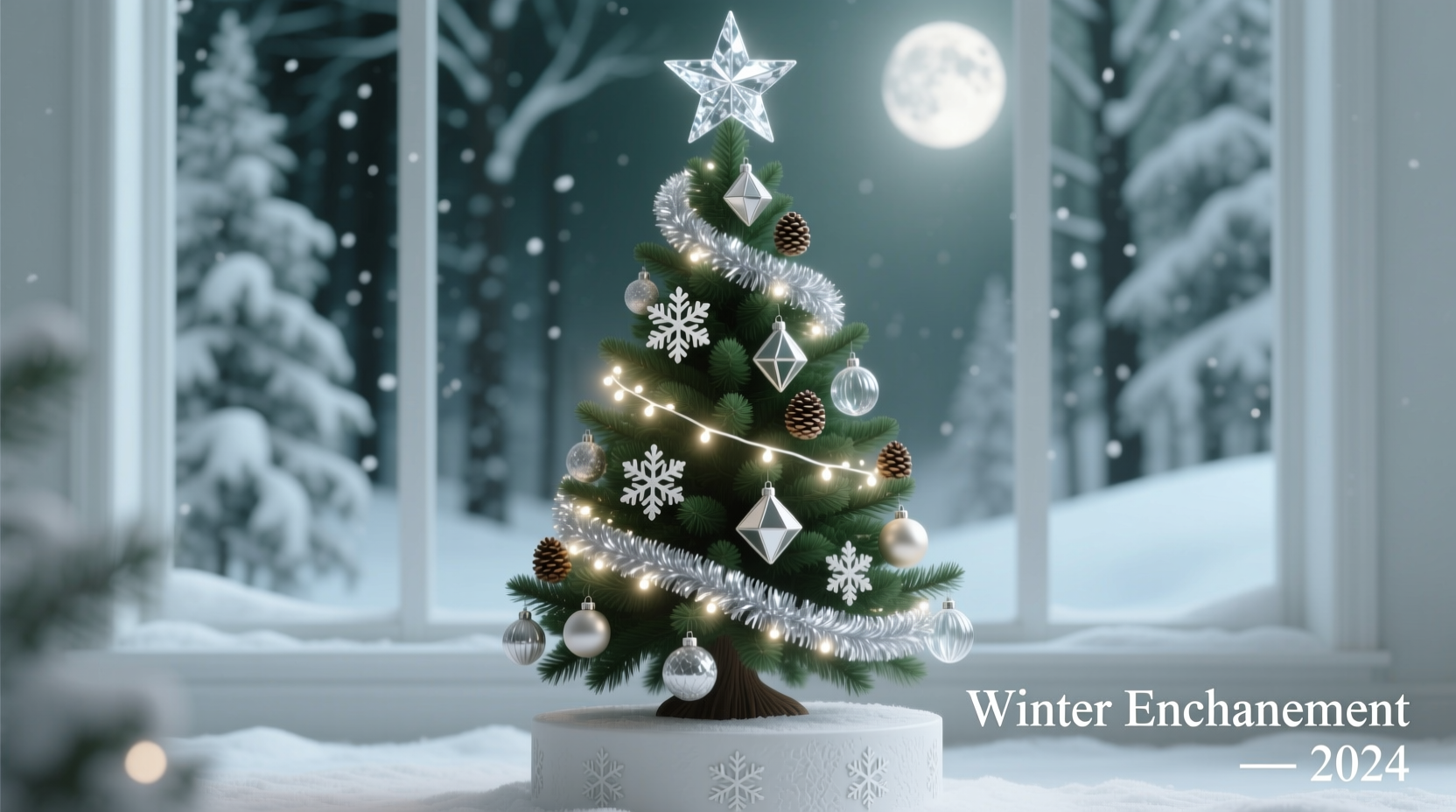
Themes shouldn’t be chosen from a list of seasonal clichés. Instead, start with what evokes genuine feeling: a childhood memory, a favourite travel destination, a beloved book or film, or even a specific texture or scent (like pine resin, aged brass, or vanilla-scented candles). Strong themes have three defining qualities: a dominant colour family (not just “red and green”), a consistent material language (e.g., matte ceramics, brushed metal, raw wood), and an underlying mood (serene, playful, opulent, rustic).
Consider these real-world anchors:
- Nordic Minimalism: White, charcoal, pale birch, and muted sage; materials include unfinished wood, wool felt, and frosted glass; mood is calm, grounded, and uncluttered.
- Vintage Library: Deep burgundy, forest green, and brass; materials include leather-bound books, antique keys, dried citrus slices, and parchment tags; mood is scholarly, warm, and layered with history.
- Midnight Celestial: Navy, silver, iridescent pearl, and deep plum; materials include mercury glass, star-shaped cut metal, velvet ribbons, and hand-blown glass orbs; mood is mysterious, elegant, and quietly dramatic.
2. Build Your Palette Using the 70-20-10 Rule
Colour coordination is the single most overlooked lever in themed tree design. Relying solely on “Christmas colours” guarantees visual noise. Instead, apply the 70-20-10 rule—a principle borrowed from interior design—to establish balance and depth:
| Proportion | Role | Examples |
|---|---|---|
| 70% | Base tone: sets the backdrop and defines the theme’s foundation | White ceramic ornaments for Nordic; deep navy velvet bows for Celestial; rich burgundy velvet for Library |
| 20% | Secondary tone: adds contrast and dimension without overwhelming | Charcoal wood slices for Nordic; antique brass for Library; silver mercury glass for Celestial |
| 10% | Accent tone: delivers focal points and subtle surprise | Pale gold thread-wrapped pinecones for Nordic; ivory parchment tags for Library; iridescent abalone shell fragments for Celestial |
This ratio ensures cohesion while allowing room for variation. Note: “70%” refers to visual weight—not literal count. A single large velvet bow carries more weight than twelve tiny glass beads. Also, avoid pure white or black unless they’re integral to your theme (e.g., black-dyed eucalyptus for Celestial); instead, opt for tonal variations—oatmeal, ash grey, or ink blue—to preserve warmth and depth.
3. Light Strategically—Not Just Abundantly
Lights are the circulatory system of your tree: they carry energy, define form, and unify disparate elements. Yet most trees suffer from “light layering”—strings added after the fact, resulting in uneven brightness, tangled cords, and glare that washes out delicate ornaments.
Follow this sequence for professional-grade illumination:
- Start with the trunk and inner branches. Use warm-white (2700K–3000K) LED micro-lights on thin, flexible wire. Wrap them spirally from base to tip *before* adding any ornaments—this creates depth and prevents dark voids.
- Add directional accent lighting. For high-impact themes (e.g., Celestial or Vintage Library), incorporate 3–5 battery-operated puck lights or mini spotlights aimed upward at key clusters—behind a large ornament, beneath a ribbon cascade, or inside a hollowed-out wooden star.
- Layer with purpose—not quantity. A 7.5-foot tree needs no more than 300–400 warm-white lights for base illumination. Add only one secondary light type: either amber fairy lights for warmth (Nordic), vintage-style Edison bulbs for nostalgia (Library), or cool-white twinkle LEDs for shimmer (Celestial).
- Hide all cords. Use twist ties and green floral wire—not tape or staples—to secure wires flush against branches. Never let cords dangle visibly.
“Lighting isn’t decoration—it’s architecture. It sculpts the tree’s volume and guides the eye through your narrative. Skip the ‘more is better’ mindset. Ten well-placed lights outperform fifty scattered ones.” — Lena Torres, Lighting Designer & Holiday Stylist, featured in Architectural Digest Holiday Edition
4. Curate Decor with Intentional Repetition and Scale Variation
A themed tree thrives on rhythm—not randomness. Ornament selection should follow three non-negotiable criteria: material consistency, intentional repetition, and deliberate scale progression.
Material consistency means choosing ornaments made from 2–3 complementary materials maximum. For example, a Nordic tree might use only matte ceramic, raw-edge wood, and undyed wool felt—never mixing in glitter, plastic, or mirrored glass. This creates tactile harmony that reads as unified, even from across the room.
Intentional repetition builds visual confidence. Select one signature shape (e.g., teardrop, sphere, or star) and repeat it in 3–5 sizes and 2–3 finishes within your palette. A Celestial tree might feature small mercury glass spheres, medium iridescent orbs, and one large faceted crystal star—all sharing the same reflective quality.
Scale variation prevents monotony. Arrange ornaments in graduated clusters: large pieces (8–10 cm) near the trunk and base; medium (5–7 cm) mid-canopy; small (2–4 cm) at branch tips and front-facing surfaces. Always place larger ornaments deeper into the tree—never just on the surface—so they anchor the composition.
Real example: When stylist Maya Chen designed a “Coastal Solstice” tree for a Portland home, she committed to just three materials—sea-worn ceramic, bleached driftwood, and hand-dyed indigo linen—and repeated a single wave-form motif across all three. She placed oversized ceramic waves low and deep, medium linen pouches mid-canopy, and tiny driftwood stars at the tips. Guests consistently described it as “calming but never empty”—a testament to disciplined curation over abundance.
5. Final Layering: Texture, Movement, and Narrative Details
The final 15 minutes of decorating make or break the theme. This is where you add movement, texture, and storytelling cues that transform a coordinated tree into a resonant one.
Begin with your tree topper—not as an afterthought, but as the thematic exclamation point. A Nordic tree deserves a simple birch ring wrapped in linen; a Vintage Library tree calls for a miniature brass typewriter or leather-bound book stack; a Midnight Celestial tree demands a sculptural crescent moon in brushed nickel.
Then introduce movement through ribbon or fabric. Avoid pre-cut bows. Instead, use 2.5-inch-wide wired ribbon in your 70% base colour and hand-loop it into organic, asymmetrical cascades—starting at the top third of the tree and flowing downward. Let ends drape naturally; trim only if they obscure ornaments or create visual clutter.
Finally, embed narrative details: tiny brass compasses nestled among Library ornaments; miniature ceramic pinecones dusted with fine white mica for Nordic; or star-shaped cinnamon sticks tucked beside Celestial glass orbs. These aren’t “extras”—they’re quiet affirmations of your theme’s authenticity.
Essential Themed Tree Checklist
- ✅ Defined theme with three anchoring adjectives (e.g., “serene, grounded, uncluttered”)
- ✅ Colour palette locked in using the 70-20-10 ratio (written down, not just in your head)
- ✅ Lights installed *before* ornaments—base layer + one intentional accent type
- ✅ Ornaments selected from ≤3 materials and arranged by scale (large-deep, medium-mid, small-tip)
- ✅ Ribbon or fabric added last, in hand-looped, asymmetrical cascades
- ✅ Topper chosen as thematic punctuation—not decorative filler
- ✅ Three narrative details embedded (e.g., brass key, dried orange slice, abalone shard)
FAQ
How many ornaments do I really need for a 7.5-foot tree?
Quantity matters less than placement. Aim for density—not coverage. A well-themed 7.5-foot tree typically uses 60–80 ornaments total: 20 large (8–10 cm), 30 medium (5–7 cm), and 10–20 small (2–4 cm). Overcrowding obscures shape and light. If your tree looks “full” before reaching those numbers, stop—you’ve achieved visual saturation.
Can I mix warm-white and cool-white lights in one tree?
Only if cool-white is a deliberate, minimal accent (e.g., 3–5 cool-white puck lights in a Midnight Celestial tree) and never as a base layer. Warm-white (2700K–3000K) provides the inviting glow essential to holiday ambiance. Mixing base layers creates visual dissonance—like wearing clashing patterns—and undermines theme cohesion.
What if I already own ornaments that don’t fit my theme?
Repurpose—not discard. Spray-paint metal or wooden ornaments in your base tone (matte finish only). Dip glass ornaments halfway in dye or chalk paint for ombre effect. Or group non-matching pieces together on a separate “memory branch” near the base—labelled with a small tag (“Family Travels, 2012–2023”). This honours sentiment while preserving thematic integrity elsewhere.
Conclusion
A themed Christmas tree is one of the few domestic acts that merges craft, memory, and quiet intention. It asks nothing of you but attention—attention to colour’s emotional weight, to light’s sculptural power, to texture’s tactile honesty. You don’t need a decorator’s budget or decades of experience. You need a clear idea, a disciplined palette, and the willingness to edit ruthlessly. Start small: choose one adjective that captures how you want your space to feel this season. Then build outward—from that single word to a colour, a material, a light temperature, a shape. Let each decision reinforce the last. When you step back and feel that quiet resonance—that sense of “yes, this is exactly right”—you’ll know the theme has taken root. Not as decoration, but as atmosphere. Not as trend, but as truth.




 浙公网安备
33010002000092号
浙公网安备
33010002000092号 浙B2-20120091-4
Comments
No comments yet. Why don't you start the discussion?