
Decorating a holiday tree doesn’t have to mean buying new boxes of matching baubles. In fact, some of the most memorable and visually striking trees are built entirely from secondhand finds. By sourcing ornaments exclusively from thrift stores, estate sales, and flea markets, you not only reduce waste but also create a one-of-a-kind display rich with history and character. This approach rewards patience, creativity, and a sharp eye for detail—but when done well, the result is far more compelling than any mass-produced set.
Designing a cohesive tree from vintage and pre-loved decorations requires strategy. Without a clear theme or organizing principle, the collection can easily become chaotic. The key lies in curating with intention: selecting pieces that harmonize in color, era, texture, or mood—even if they weren’t made to go together. With thoughtful planning, your tree becomes a narrative centerpiece, telling a story through its ornaments.
Start with a Clear Theme
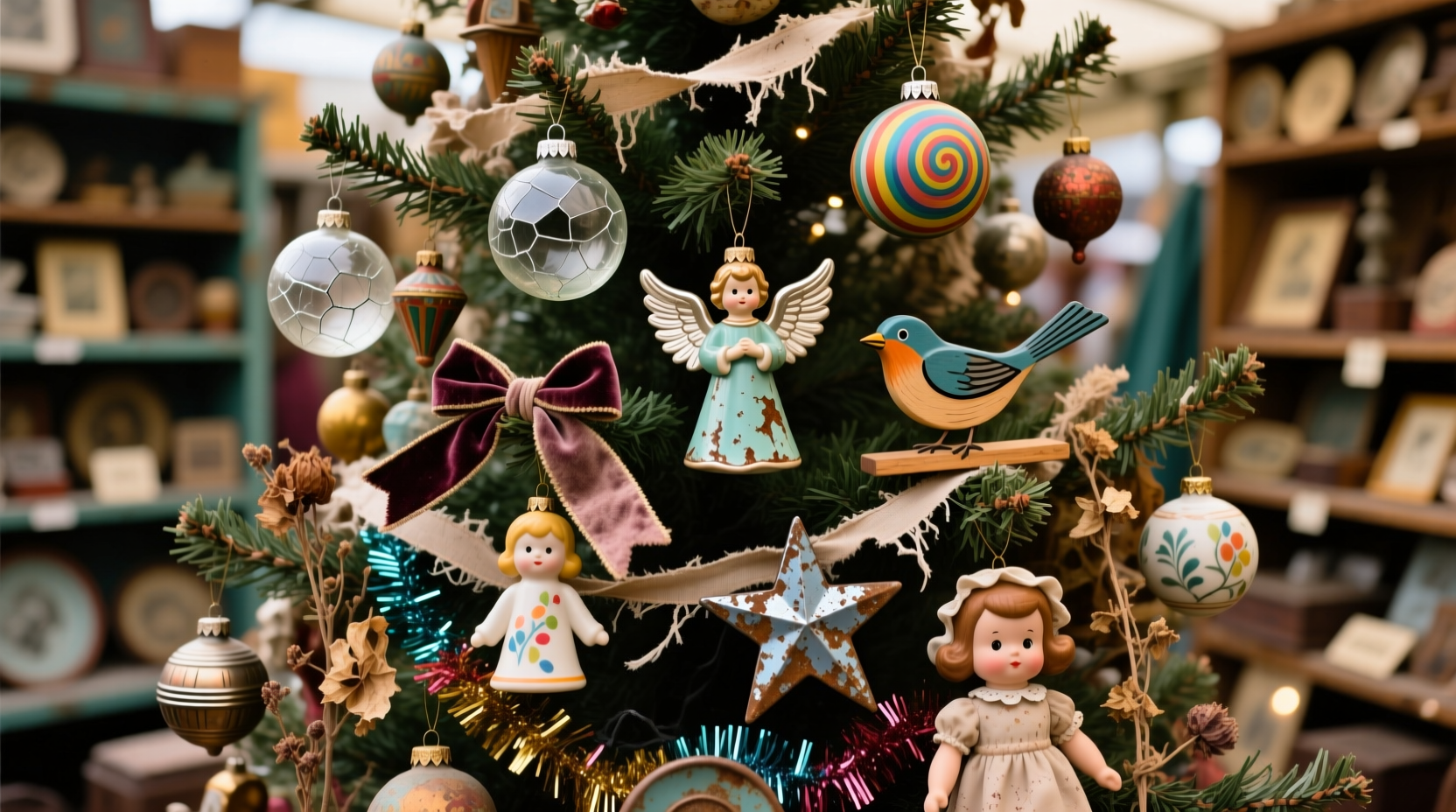
The foundation of any successful secondhand tree is a strong, focused theme. Unlike store-bought sets that come color-coordinated and stylistically unified, thrifted ornaments span decades, materials, and design philosophies. To avoid visual clutter, choose a unifying concept before you begin shopping.
Popular themes include:
- Vintage Hollywood Glamour: Gold, silver, crystal, and mirrored ornaments from the 1950s–70s.
- Nostalgic Childhood: Cartoon characters, toy-shaped ornaments, and colorful handmade glass.
- Winter Forest: Natural wood, pinecones, faux fur, and animal figurines in muted greens and browns.
- Mid-Century Modern: Geometric shapes, atomic starbursts, and minimalist forms in bold primary colors.
- All-White Elegance: A monochromatic display of frosted glass, ceramic snowmen, and lace-wrapped balls.
A theme acts as a filter. When you walk into a crowded thrift store, it helps you instantly identify what fits and what doesn’t. For example, if you’re building a “Vintage Travel” tree, you’ll look for globes, tiny suitcases, postcard-style ornaments, or anything with old airline logos—even if they’re not labeled as Christmas decor.
The Thrifting Strategy: Where and How to Shop
Not all thrift stores are created equal. Success depends on knowing where to go and when to go there. Flea markets offer the best chance for rare, high-quality vintage ornaments, especially on vendor-heavy weekends. Estate sales often yield entire collections of mid-century decorations still in original packaging. Local charity shops vary widely, but those in affluent neighborhoods tend to receive higher-end donations.
Visit stores early in the week. New inventory typically arrives on Mondays and Tuesdays, giving you first pick before popular items are snapped up. Ask staff about “discount days”—many stores rotate markdowns weekly, which can lead to significant savings on bulk purchases.
When browsing, inspect each ornament carefully. Look for:
- Cracks or chips in glass
- Rusted or broken hooks
- Faded paint or peeling finishes
- Signs of mold (especially on fabric-covered pieces)
Minor wear can add charm, but structural damage may make an ornament unsafe to hang. Prioritize durability, especially if children or pets will be near the tree.
“Some of my favorite finds were overlooked because they didn’t ‘look like Christmas.’ A 1970s avocado-green ceramic bird? Perfect for a retro kitchen-themed tree.” — Lila Monroe, Vintage Decor Curator
Curate with Intention: Building Visual Harmony
Once you’ve gathered a selection of ornaments, lay them out on a table or floor to assess cohesion. At this stage, edit ruthlessly. Even within a theme, some pieces will clash in tone or scale. Remove anything that feels off, no matter how much you paid for it.
To create balance, consider these design principles:
- Color Distribution: Limit your palette to 3–4 dominant colors. Use accent hues sparingly.
- Texture Variation: Mix glossy, matte, shiny, and rough surfaces to keep the eye engaged.
- Size Gradation: Combine large statement pieces with smaller fillers to avoid monotony.
- Era Consistency: Stick to a 10–20 year range (e.g., 1965–1985) for a tighter historical feel.
If your theme is “Retro Kitchen,” focus on utensil-shaped ornaments, miniature appliances, and food-themed trinkets. A “Sea Glass & Nautical” tree might feature blue glass floats, tiny anchors, and rope-wrapped balls—all collected over several months from coastal thrift shops.
| Design Principle | Do | Avoid |
|---|---|---|
| Color | Stick to a limited palette; use metallics as neutrals | Mixing too many bright primaries without balance |
| Spacing | Distribute large ornaments evenly; cluster small ones | Clumping similar items in one area |
| Era | Focus on one decade or design movement | Combining Art Deco with 1990s pop culture |
| Lighting | Use warm white or vintage Edison bulbs | Bright multicolor LEDs that overpower subtle details |
Step-by-Step: Assembling Your Themed Tree
Building the tree itself is both an art and a process. Follow this sequence for a polished, intentional result:
- Choose the Right Tree: Opt for a simple, full artificial tree in natural green or white. Avoid flocked or heavily textured styles that compete with ornament detail.
- Add Lights First: String warm white lights evenly, wrapping around branches rather than just draping down. Use 100 lights per foot of tree height.
- Hang Largest Ornaments: Place big statement pieces deep within the branches, near the trunk, to create depth.
- Layer Mid-Sized Decor: Distribute medium ornaments throughout the middle canopy, spacing them several inches apart.
- Fill Gaps with Small Pieces: Use tiny or delicate ornaments to fill sparse areas, especially toward the outer tips.
- Top with a Themed Finial: Choose a vintage angel, star, or unexpected item (like a 1950s cocktail shaker) that reflects your theme.
- Final Walk-Around Check: View the tree from all angles, adjusting placement to eliminate bald spots or overcrowding.
For added cohesion, wrap gifts under the tree in paper that matches your theme—kraft paper with twine for a rustic look, vintage map pages for travel, or metallic foil for glamour.
Real Example: The “Lost Library” Tree
Jessica R., a librarian in Portland, Oregon, designed a tree themed around forgotten books and literary nostalgia. Over three months, she collected miniature hardcover replicas, antique bookplates, tiny spectacles, and vintage inkwells from thrift stores across the state. She painted her tree’s base to resemble weathered wood shelves and wrapped presents in repurposed library card pockets.
The result was a deeply personal tribute to her profession and love of reading. Guests commented that it felt “like stepping into a cozy study from 1948.” Jessica didn’t spend more than $40 total, proving that emotional resonance matters more than price.
Her secret? She waited until November to start, giving herself time to find the right pieces without rushing. She also kept a digital folder of photos of every potential ornament, reviewing them weekly to ensure consistency before purchasing.
Care and Storage for Long-Term Use
Because secondhand ornaments are often older or more fragile, proper storage ensures they last for future seasons. After the holidays, clean each piece gently and pack them in compartmentalized containers. Egg cartons work well for small or oddly shaped items.
Store boxes in a climate-controlled space—avoid attics or basements where temperature and humidity fluctuate. Wrap delicate items in acid-free tissue paper, not newspaper, which can transfer ink over time.
Label each box by theme and year. This makes it easy to build on your collection season after season. You might even rotate themes annually—a “Jazz Age” tree one year, a “Space Race” tree the next—using the same curated inventory in fresh combinations.
Frequently Asked Questions
Can I mix eras if they fit the color scheme?
Yes, but with caution. Mixing eras works best when there’s another unifying element—such as shape, material, or cultural reference. For example, 1940s glass balls and 1980s plastic spheres both in cobalt blue can coexist if the overall aesthetic leans toward “bold and shiny.” Avoid pairing highly specific period pieces (like a Victorian Santa) with modern pop-culture icons unless irony is part of your theme.
What if I can’t find enough ornaments in my theme?
Be patient. Start small and expand over time. You don’t need 100 ornaments to make an impact. A sparsely decorated tree with meaningful pieces can feel more elegant than an overloaded one. Also consider modifying items: painting a ceramic duck to match your palette or restringing a faded ball with a new ribbon.
Are secondhand ornaments safe to use?
Most are perfectly safe, but exercise caution with very old items. Pre-1970s glass ornaments may contain lead in the paint or coating. Wash hands after handling, and keep them out of reach of young children who might chew on hooks or fragments. If in doubt, seal painted surfaces with a clear, non-toxic varnish.
Final Thoughts: Embrace the Imperfect
A tree made entirely of secondhand ornaments will never look “perfect” in the traditional sense—and that’s the point. Its value lies in authenticity, sustainability, and the stories embedded in each piece. One chipped bell might have hung on a soldier’s tree in 1953. A lopsided hand-painted ball could have been a child’s handmade gift. These imperfections aren’t flaws; they’re layers of meaning.
By choosing secondhand, you’re not just decorating—you’re preserving history, reducing consumption, and challenging the notion that holiday beauty requires spending more. Every scratch, fade, and mismatch tells a story richer than any catalog image.




 浙公网安备
33010002000092号
浙公网安备
33010002000092号 浙B2-20120091-4
Comments
No comments yet. Why don't you start the discussion?