
Long hair carries elegance, strength, and personal expression—but it also demands careful maintenance. One of the most common challenges for people with long hair is managing tangles without causing breakage or discomfort. Pulling through knots with force may seem efficient, but over time, it weakens the hair shaft, damages the cuticle, and leads to split ends and thinning. The good news: with the right approach, detangling can be gentle, effective, and even soothing. This guide outlines science-backed methods, expert-recommended tools, and real-world strategies to keep long hair smooth, strong, and tangle-free.
Understanding Why Hair Tangles
Tangles don’t happen randomly. They are often the result of friction, dryness, environmental exposure, and mechanical stress. Hair strands—especially curly, wavy, or chemically treated types—are prone to overlapping and knotting when the cuticle layer is raised. This rough surface increases friction between strands, making them more likely to catch on one another.
Common causes of tangles include:
- Sleeping with loose hair – Movement on cotton pillowcases creates friction.
- Dryness – Lack of moisture reduces slip, increasing resistance during brushing.
- Skipping conditioner – Conditioner smooths the cuticle and adds lubrication.
- Using the wrong brush – Dense bristles or fine-tooth combs can snag and pull.
- Wet detangling without prep – Wet hair is up to 30% weaker than dry hair and highly vulnerable to breakage.
The Right Tools for Gentle Detangling
Using proper tools is half the battle. Not all brushes and combs are created equal, and choosing the wrong one can turn a simple grooming session into a damaging ordeal.
| Tool Type | Best For | Avoid If |
|---|---|---|
| Wide-Tooth Comb | Wet detangling, curly/coily textures | You need volume styling (not ideal for finishing) |
| Paddle Brush with Flexible Bristles | Straight to wavy hair, daily maintenance | Hair is wet or severely tangled |
| Denman Brush (with spacers) | Curly hair definition and detangling | You have very fine or fragile hair |
| Tangle Teezer or Wet Brush | All hair types, especially wet or knotted hair | You prefer firm tension (these are designed for glide) |
The key is flexibility and spacing. Brushes like the Tangle Teezer use uniquely angled, soft bristles that separate knots gradually rather than yanking through them. These are particularly effective because they mimic finger-combing but with greater efficiency.
“Detangling should never hurt. If you’re wincing, your tool or technique is too aggressive.” — Dr. Linette Williams, Trichologist and Hair Health Specialist
Step-by-Step Guide to Pain-Free Detangling
Follow this structured routine to minimize damage and maximize results. Whether you're dealing with post-shower snarls or morning bedhead, this method works for all long-hair types.
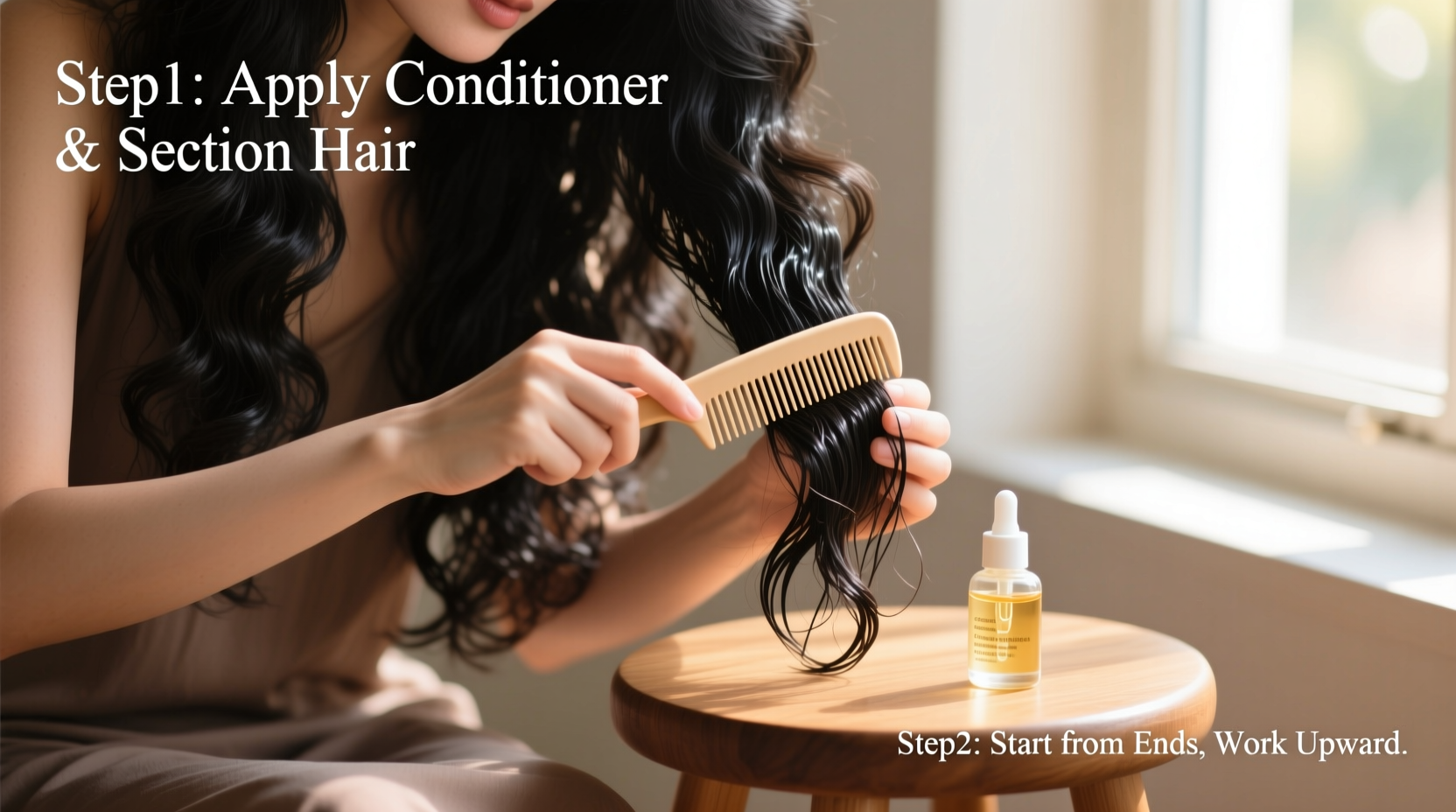
- Start with damp, conditioned hair: After shampooing, apply a generous amount of leave-in conditioner or detangling cream. Focus on mid-lengths to ends—the oldest, driest parts of your hair.
- Use your fingers to loosen large knots: Begin by gently separating major tangles with your fingertips. This prevents the brush from catching and pulling entire sections at once.
- Section your hair: Clip the top half of your hair up and work on the bottom layers first. Divide each layer into 1–2 inch subsections using clips.
- Begin at the ends: Take a small section and start combing from the very tips. Gradually move upward, only progressing an inch or two as the lower portion becomes smooth.
- Work slowly upward: Never start at the roots if tangles are present. This forces the knot tighter and increases breakage risk.
- Rinse and repeat: Once one section is smooth, secure it in a loose twist or clip. Move to the next until all hair is detangled.
- Style or air-dry: Avoid heat styling immediately after detangling unless necessary. Let hair rest in its strengthened state.
Choosing the Right Products for Slip and Strength
Product choice plays a crucial role in reducing friction and reinforcing hair integrity. Look for formulas rich in slip agents and protective ingredients.
Ideal components in detangling products include:
- Behentrimonium methosulfate – A gentle, effective conditioner that detangles without buildup.
- Hydrolyzed proteins – Strengthen the hair shaft temporarily during manipulation.
- Natural oils (jojoba, argan, coconut) – Provide lubrication and seal in moisture.
- Humectants (glycerin, honey extract) – Attract moisture, improving elasticity.
Coconut oil, in particular, has been studied for its ability to penetrate the hair cortex and reduce protein loss during washing and combing. A 2003 study published in the *Journal of Cosmetic Science* found that coconut oil significantly reduced hygral fatigue—the damage caused by repeated swelling and drying of hair.
Avoid products with heavy silicones (like dimethicone) if you don’t clarify regularly—they can build up and make hair feel slippery on the surface while masking underlying dryness.
Real Example: Maria’s Transition to Healthy Detangling
Maria, a 29-year-old teacher with waist-length wavy hair, used to spend 20 minutes every morning fighting through knots with a standard paddle brush. She frequently lost hair in the sink and noticed thinning near her crown. After experiencing scalp tenderness and increased shedding, she consulted a trichologist.
She switched to a nighttime routine: loosely braiding her hair before bed, using a satin bonnet, and applying a leave-in conditioner with shea butter. In the morning, she spritzed water and a detangling spray, then used a wide-tooth comb starting from the ends. Within three weeks, her brushing time dropped to under 8 minutes, and hair fall decreased noticeably.
“I didn’t realize I was damaging my hair every day,” Maria said. “Now detangling feels like care, not combat.”
Do’s and Don’ts of Long-Hair Detangling
| Do’s | Don’ts |
|---|---|
| Detangle when hair is damp and coated with conditioner | Brush hair vigorously when dry and tangled |
| Use a heat protectant before styling after detangling | Use fine-tooth combs on wet, untreated hair |
| Trim ends every 8–12 weeks to prevent splitting | Ignore persistent tangles—address them early |
| Store brushes clean—oil and product buildup reduce effectiveness | Leave wet hair down overnight on cotton pillowcases |
| Invest in quality tools designed for detangling | Use regular plastic combs on thick or curly hair |
Frequently Asked Questions
Can I detangle hair when it’s completely dry?
Yes, but with caution. Dry detangling should only be done with a brush designed for dry hair, such as a boar bristle brush, and after applying a lightweight detangling serum or oil. Start from the ends and work up slowly. However, damp detangling with conditioner is generally safer and more effective for removing stubborn knots.
How often should I detangle long hair?
It depends on your routine and hair type. Most people benefit from detangling every time they wash their hair (typically 2–3 times per week). For daily maintenance, a quick pass with fingers or a wide-tooth comb on damp or conditioned hair can prevent buildup of tangles. Over-brushing dry hair daily can lead to unnecessary stress and frizz.
Why does my hair tangle more after coloring or bleaching?
Chemical treatments lift the cuticle and strip natural lipids, leaving hair porous and rough. This increases friction between strands. To counteract this, increase protein treatments to strengthen hair, use acidic rinses (like diluted apple cider vinegar) to close the cuticle, and always apply a leave-in conditioner post-wash. Consider using a UV-protectant spray if spending time outdoors—sun exposure further degrades damaged hair.
Building a Sustainable Long-Hair Care Routine
Prevention is more effective than correction. A consistent care strategy reduces tangles before they form. Incorporate these habits into your weekly regimen:
- Nightly protective styles: Loose braids, buns, or twists minimize movement and friction while sleeping.
- Weekly deep conditioning: Use a mask with ceramides or shea butter to restore lipid barriers.
- Monthly protein treatments: Balance moisture and protein to maintain elasticity and reduce snagging.
- Regular trims: Even ¼ inch every 3 months prevents splits from traveling up the hair shaft.
Conclusion: Treat Your Hair With Intention
Detangling long hair shouldn’t be a daily struggle. By understanding your hair’s needs, using the right tools, and adopting a patient, methodical approach, you can preserve length, strength, and shine. Remember: every tug and pull accumulates over time. Small changes—like switching to a better brush, adding a leave-in conditioner, or adjusting your brushing technique—can dramatically extend the life and beauty of your hair.




 浙公网安备
33010002000092号
浙公网安备
33010002000092号 浙B2-20120091-4
Comments
No comments yet. Why don't you start the discussion?