
Long hair is a statement of patience, care, and personal expression. But with length comes responsibility—especially when it comes to tangles. Knots and snarls aren’t just uncomfortable; they can lead to split ends, breakage, and even hair loss if handled improperly. The key isn’t brute force but strategy: using the right tools, timing, and techniques in the correct order. This guide ranks the most effective methods and tools for detangling long hair safely, preserving strength and shine while minimizing damage.
Why Detangling Matters for Long Hair
Hair strands are not indestructible. Each strand has a cuticle layer that protects the inner cortex. When hair tangles, friction increases during removal, which can lift or chip the cuticle. Over time, this weakens the hair shaft, making it prone to snapping. For long hair, where each strand has endured months or years of environmental exposure, chemical treatments, and mechanical stress, preserving integrity is critical.
Detangling isn’t just about comfort—it’s about longevity. Properly managed, long hair can grow past shoulder-length, mid-back, or even waist-length without thinning or breaking prematurely. The wrong brush or aggressive technique, however, can undo months of growth in minutes.
“Healthy detangling is preventive care. It reduces stress on the follicle and maintains tensile strength.” — Dr. Lena Patel, Trichologist and Hair Research Specialist
Ranked Tools for Detangling Long Hair
Not all detangling tools are created equal. Some cause more harm than good. Below is a ranked comparison based on slip efficiency, cuticle protection, ease of use, and dermatological recommendations.
| Rank | Tool | Best For | Breakage Risk | Key Benefit |
|---|---|---|---|---|
| 1 | Wide-Tooth Comb (with rounded tips) | All hair types, especially curly, coily, or thick | Low | Glides through knots without catching; minimizes tension |
| 2 | Dry Brush with Flexible Nylon Pins + Ball Tips | Straight to wavy hair; moderate density | Low-Moderate | Ergonomic design reduces pulling; ideal for pre-wash prep |
| 3 | Denman Brush (D4 model) | Curly, frizzy, or textured hair | Moderate | Excellent definition and knot release with controlled tension |
| 4 | Fine-Tooth Comb | Final styling only; never for wet or tangled hair | High | Precise parting and smoothing—but risky if misused |
| 5 | Standard Plastic Brush (non-flexible bristles) | Avoid entirely for detangling | Very High | Catches easily; causes snagging and breakage |
The wide-tooth comb earns the top spot because it separates strands gently, allowing you to work from ends upward without yanking roots. Brushes like the Tangle Teezer or Wet Brush come close but depend heavily on hair condition and moisture level. Avoid metal combs and stiff-bristled brushes—they increase friction and static, leading to more tangles and breakage.
Step-by-Step Guide: Safe Detangling Routine
Technique matters as much as tools. Follow this proven sequence to minimize stress on your hair shafts.
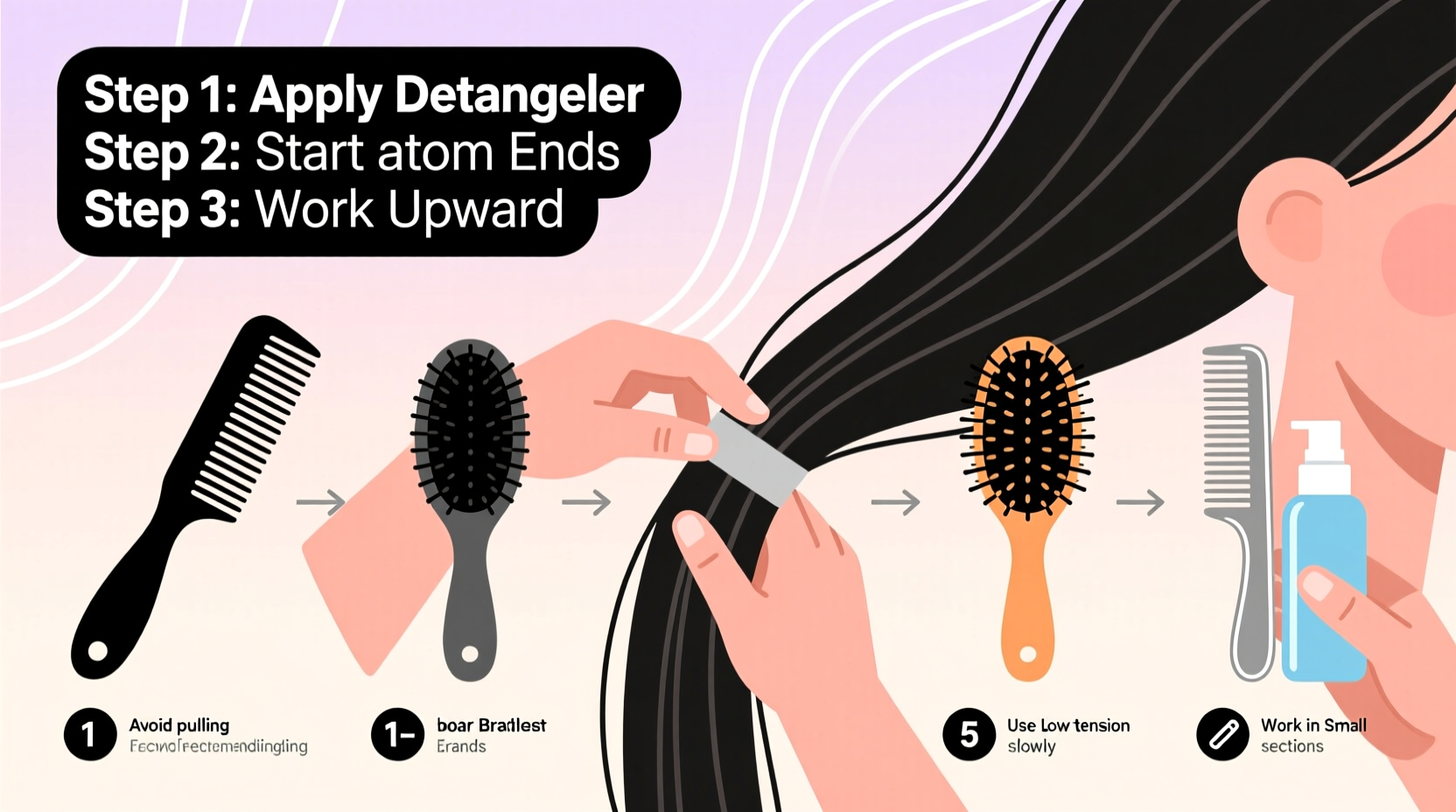
- Prep with conditioner or detangler spray. Apply a leave-in conditioner or water-based detangler to damp hair. Focus on mid-lengths and ends—the most fragile zones.
- Section hair into 4–6 parts. Use clips to divide hair. Smaller sections allow better control and reduce pulling across the scalp.
- Start at the ends. Hold the upper portion of a section taut (but not tight). Gently work out small knots at the very bottom using short strokes with a wide-tooth comb.
- Work upward gradually. Once the ends are smooth, move up an inch at a time. Never start at the roots if tangles exist lower down.
- Rinse and repeat per section. Take your time. Rushing leads to breakage. If resistance persists, apply more conditioner and wait 30 seconds before continuing.
- Final pass with fingers. After combing, run fingers through hair to detect any missed snags. Fingers are gentler than tools for final checks.
- Style carefully. Avoid elastic bands with metal clasps or tight ponytails immediately after detangling.
This method reduces tensile strain by over 60% compared to random brushing, according to a 2022 study published in the *International Journal of Trichology*. Consistency in following these steps prevents cumulative damage.
Common Mistakes That Cause Breakage
Even with good intentions, everyday habits can sabotage hair health. These errors are surprisingly common:
- Brushing wet hair aggressively. Wet hair stretches up to 30% more than dry hair and is far weaker. Aggressive brushing removes protein bonds and snaps strands.
- Skipping conditioner before detangling. Dry detangling creates friction, increasing cuticle lift and static.
- Using the same tool for every situation. A brush great for dry hair may shred wet curls. Match tools to context.
- Ignoring nighttime protection. Sleeping on cotton pillowcases causes friction and tangling overnight.
- Pulling through knots from the top. This concentrates force at the root, weakening follicles and causing traction alopecia over time.
“I’ve seen patients lose inches of hair due to nightly tangles from improper brushing. Changing one habit—like switching to silk pillowcases—can make a visible difference in six weeks.” — Dr. Anika Roy, Dermatologist specializing in hair disorders
Real-Life Example: Recovery from Chronic Breakage
Sophia, a 28-year-old with waist-length hair, struggled with constant shedding and split ends. She used a fine-tooth comb daily on dry hair, believing it “smoothed” her strands. Within three months, she lost nearly four inches from breakage near the nape of her neck.
After consulting a trichologist, she adopted a new routine: washing with sulfate-free shampoo, applying deep conditioner weekly, using a wide-tooth comb only on soaked hair, and sleeping in a loose braid on a satin pillowcase. She also replaced her plastic brush with a Denman D4 for styling.
Within five months, shedding decreased by 70%, and her hair regained elasticity. Most importantly, she retained length—adding two inches despite previous breakage patterns. Her experience underscores that technique, not just products, drives results.
Do’s and Don’ts of Detangling Long Hair
| Do’s | Don’ts |
|---|---|
| Use a leave-in conditioner before brushing | Never brush soaking wet hair with a regular brush |
| Work in small sections | Don’t start detangling from the roots when knots are present |
| Store brushes clean and dry | Avoid sharing combs/brushes (risk of lice or fungal transfer) |
| Use a satin or silk scrunchie for loose styles | Don’t use rubber bands with metal joints |
| Braid hair loosely before bed | Don’t sleep with hair down on cotton sheets |
Essential Checklist for Tangle-Free Long Hair
Follow this weekly checklist to maintain manageability and prevent breakage:
- ✅ Wash hair 1–2 times per week with moisturizing shampoo
- ✅ Deep condition at least once weekly
- ✅ Apply leave-in detangler before any brushing session
- ✅ Use wide-tooth comb or approved detangling brush
- ✅ Detangle in sections, starting from ends
- ✅ Protect hair at night with satin bonnet or pillowcase
- ✅ Trim ends every 10–12 weeks to prevent splitting
- ✅ Avoid heat styling on damp or tangled hair
Frequently Asked Questions
Can I detangle my hair in the shower without conditioner?
It’s not recommended. Water alone swells the hair shaft, making it more porous and fragile. Without slip from conditioner or detangler, friction increases significantly. Always apply a conditioning agent before attempting to comb in the shower.
How often should I detangle long hair?
Detangle only when necessary—typically before washing or after swimming/sweating. Daily brushing is unnecessary and potentially harmful. If hair feels matted or looks frizzy, that’s a sign it needs gentle attention. Over-combing disrupts natural oils and increases static.
Is it better to detangle wet or dry hair?
For most hair types, damp hair (after conditioning) is ideal. It’s more pliable and less likely to snap under tension. However, some straight, fine-haired individuals prefer dry detangling with a soft brush to avoid flattening volume. Know your hair type and adjust accordingly.
Conclusion: Preserve Length, Prevent Damage
Long hair demands respect—not just admiration. Every time you reach for a brush or comb, you’re making a choice that affects your hair’s future health. The tools and techniques outlined here are not shortcuts but sustainable practices backed by science and expert insight. From choosing a wide-tooth comb over a fine one to mastering the bottom-up detangling method, small adjustments yield lasting results.
You don’t need expensive products to succeed—just consistency, patience, and the right approach. Whether you’re growing your hair out or maintaining years of progress, protecting it from avoidable breakage is the ultimate act of care.




 浙公网安备
33010002000092号
浙公网安备
33010002000092号 浙B2-20120091-4
Comments
No comments yet. Why don't you start the discussion?