
Text messaging has become a primary form of communication, making it especially confusing when replies stop coming. While people may go silent for many reasons—busy schedules, emotional distance, or personal issues—a sudden cutoff can raise a pressing question: Did they block me? Unlike social media, where blocking is often visible, SMS and messaging apps handle blocks more discreetly. Understanding the technical and behavioral cues can help clarify the situation without jumping to conclusions.
Understanding How Blocking Works Across Platforms
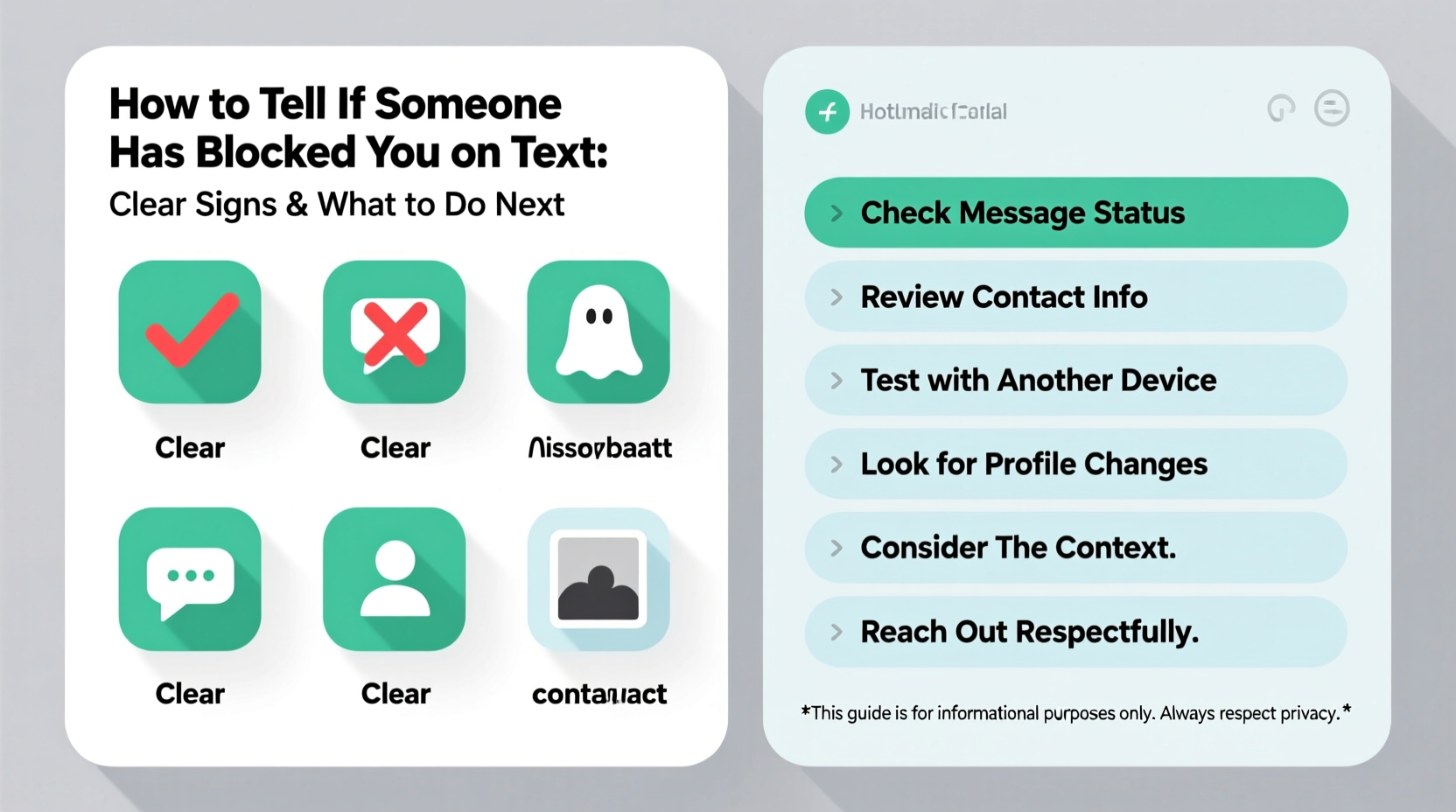
Before analyzing signs, it's important to recognize that blocking functions differently depending on the device and app. The two most common ecosystems—iOS (iMessage) and Android (SMS/RCS)—handle message delivery and read receipts in distinct ways. Third-party apps like WhatsApp, Signal, or Facebook Messenger add further complexity.
On iMessage (iPhone), messages sent to a blocked number appear as blue bubbles but never deliver. On Android, standard SMS messages usually go through but don’t receive delivery confirmations. In contrast, apps like WhatsApp show specific indicators such as missing “last seen” status or inability to send messages.
Because blocking doesn’t always come with an alert, users must interpret indirect signals. These clues vary by platform but often include message behavior, profile changes, and call outcomes.
Clear Signs You’ve Been Blocked on Text
No single indicator guarantees a block, but a combination of these signs increases the likelihood significantly:
- Messages remain undelivered: On iMessage, a blocked message stays blue but never shows “Delivered” or “Read.” On WhatsApp, you may see only one checkmark instead of two.
- Calls go straight to voicemail: If your calls to the person consistently go to voicemail after one ring—or don’t ring at all—it’s a strong signal.
- No “last seen” or online status: In apps like WhatsApp or Instagram, if their last active time disappears entirely and remains hidden across multiple sessions, it could mean you’re blocked.
- Profile photo or info no longer visible: Sudden disappearance of a profile picture, bio, or customization options on messaging platforms often indicates a block.
- Inability to add them to group chats: On iPhone, if you try to start a group message and the person’s name doesn’t appear or turns green (SMS), they may have blocked you.
It’s worth noting that some behaviors—like disabling read receipts or turning off online status—are privacy choices, not necessarily signs of being blocked. That’s why isolated symptoms shouldn’t be taken as definitive proof.
Platform-Specific Indicators: A Comparison
| Platform | Signs of Being Blocked | What It Might Also Mean |
|---|---|---|
| iMessage (iPhone) | Messages stay blue, no \"Delivered\"; calls go straight to voicemail | Recipient turned off iMessage or lost connection |
| SMS (Android) | Messages send but no delivery reports; no response over time | Phone off, poor signal, or app settings |
| One gray check only; no last seen, photo, or status updates | User disabled visibility settings | |
| Signal | Messages fail to send; contact disappears from chat list | Contact deleted account or app issue |
| Instagram DM | Can't send message; previous messages show \"Seen\" but new ones don’t | Blocked or restricted user |
Use this table as a reference, but avoid relying on a single symptom. Consistency across multiple indicators increases confidence in your conclusion.
Step-by-Step Guide to Confirm a Block
- Send a simple message: Use a neutral text (“Hey, did you get my last message?”). Avoid emotional content.
- Check delivery status: On iMessage, look for “Delivered” or “Read.” On WhatsApp, watch for two blue checks.
- Make a voice call: Listen for how many rings occur before voicemail. One ring or immediate voicemail suggests a block.
- Verify profile details: On WhatsApp or Instagram, check if their photo, bio, or “last seen” is visible.
- Test from another number: Ask a trusted friend to message or call the person. If they connect normally, it strengthens the case for a block.
- Wait 24–48 hours: Rule out temporary issues like phone damage, travel, or app glitches.
This method minimizes assumptions and reduces emotional reactivity. Jumping to conclusions too quickly can lead to unnecessary conflict or distress.
“Digital silence isn’t always personal. Before assuming a block, rule out technical causes and respect the other person’s right to disengage.” — Dr. Lena Torres, Digital Communication Psychologist
What to Do If You’ve Been Blocked
Being blocked can feel like rejection, but it’s often less about you and more about the other person’s boundaries or emotional capacity. Here’s how to respond constructively:
Respect the Boundary
A block is a digital boundary. Pushing past it—through alternate numbers, mutual contacts, or public messages—can escalate tension and damage relationships further. Accepting the block as a form of closure allows you to focus on healing rather than confrontation.
Reflect Without Obsessing
Ask yourself: Was there unresolved conflict? Did communication patterns shift before the silence? Reflection helps identify patterns without blaming yourself or others. Journaling can provide clarity and emotional release.
Focus on Self-Care
Unanswered messages can trigger anxiety or self-doubt. Redirect energy into activities that reinforce self-worth: exercise, creative projects, or spending time with supportive friends.
Consider Your Own Messaging Habits
If repeated blocks occur across relationships, evaluate your communication style. Are messages overly frequent, intense, or boundary-crossing? Adjusting tone or frequency can improve future interactions.
Mini Case Study: When Silence Speaks Volumes
Sarah noticed her texts to Mark stopped getting replies. At first, she assumed he was busy—he’d mentioned work stress. But after three weeks of unanswered messages, she tried calling. Each call rang once and went to voicemail. She checked WhatsApp: his “last seen” had vanished, and his profile photo was gone. She asked a mutual friend to message him—the friend received a quick reply.
After reviewing the evidence, Sarah concluded she’d been blocked. Instead of confronting Mark, she reflected on their last conversation, which involved a heated disagreement. She decided to accept the block as his way of setting distance. Over time, she focused on rebuilding her confidence through therapy and hobbies. Months later, Mark reached out apologetically. Their friendship didn’t resume, but Sarah felt at peace with the outcome.
This case illustrates how combining technical clues with emotional maturity leads to healthier resolutions.
FAQ
Can you unblock yourself if someone blocked you?
No. Only the person who initiated the block can reverse it. Attempting to bypass a block through alternative accounts or devices may violate platform policies and harm your reputation.
Does a blocked text ever go through later?
No. Blocked messages are typically filtered at the server level and never reach the recipient’s device. They won’t appear even if the person unblocks you in the future—unless you send a new message after unblocking.
Will I know if someone unblocks me?
Not directly. However, you may notice changes: messages suddenly deliver, calls connect normally, or their profile becomes visible again. These shifts suggest the block has been lifted.
Final Checklist: What to Do When You Suspect a Block
- ✅ Send one test message and observe delivery status
- ✅ Make a brief call to check ringing behavior
- ✅ Review profile visibility on relevant apps
- ✅ Rule out technical issues (network, app updates)
- ✅ Avoid contacting through third parties
- ✅ Accept the possibility of being blocked without confrontation
- ✅ Focus on emotional well-being and personal growth
Conclusion
Discovering you’ve been blocked can be unsettling, but understanding the signs empowers you to respond with dignity. Technology reflects human behavior—not just connection, but disconnection too. Recognizing when someone has chosen to withdraw allows you to honor their decision while protecting your own peace. Instead of chasing answers, invest in self-awareness and meaningful relationships that thrive on mutual respect.




 浙公网安备
33010002000092号
浙公网安备
33010002000092号 浙B2-20120091-4
Comments
No comments yet. Why don't you start the discussion?