
Understanding where you come from can be one of the most meaningful journeys of self-discovery. Your heritage is more than just a list of names and dates—it's a living narrative that connects you to past generations, cultural traditions, and historical events. Whether you're curious about your ethnic background or seeking to uncover long-lost relatives, tracing your ancestry is both an emotional and intellectual pursuit. With the right tools and approach, anyone can begin uncovering their family history.
Start with What You Know: Gather Family Information
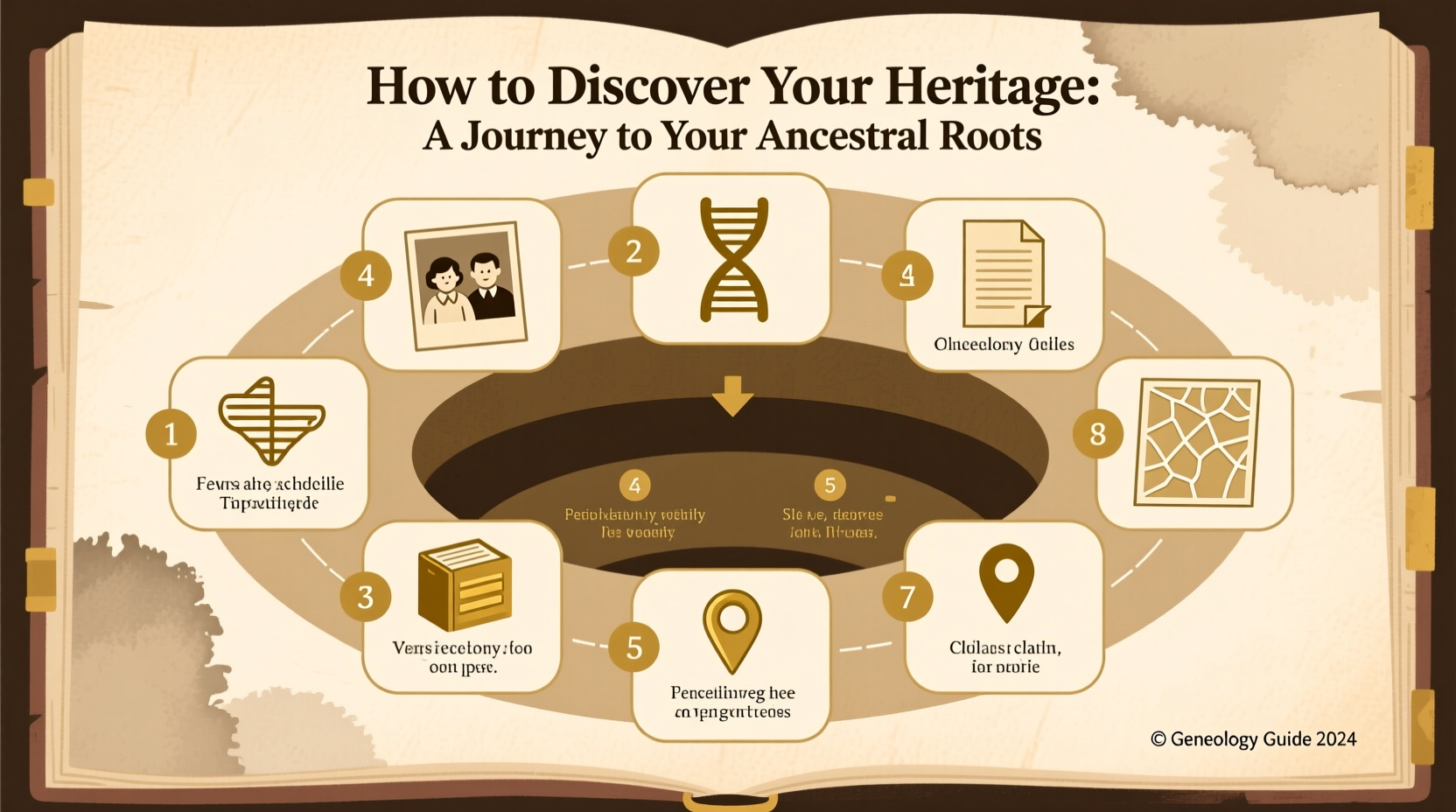
The foundation of any genealogical research begins at home. Before diving into databases or DNA tests, collect everything you already have access to. Speak with older relatives, scan old photo albums, and search through personal documents like birth certificates, marriage licenses, and obituaries.
Ask specific questions during family conversations: Where were your grandparents born? What languages did your ancestors speak? Were there any notable occupations, migrations, or wartime experiences? These details often provide critical clues for deeper investigation.
Create a Preliminary Family Tree
Begin sketching a basic family tree using pen and paper or digital tools like Ancestry.com, MyHeritage, or FamilySearch. Start with yourself and work backward generation by generation. Include full names, birth and death dates, places of residence, and known relationships.
- Parents
- Grandparents
- Great-grandparents (if known)
- Siblings, aunts, uncles, cousins
This initial structure will serve as a roadmap for further research and help identify gaps in your knowledge.
Explore Public Records and Historical Documents
Once you’ve compiled what’s known within the family, it’s time to turn to external sources. Governments, churches, and institutions have preserved vast archives of personal data that are now accessible online.
Census records are particularly valuable—they typically include names, ages, occupations, birthplaces, and household compositions every 10 years. U.S. federal censuses from 1790 to 1950 (with privacy restrictions on recent ones) are available through platforms like Ancestry and FamilySearch.
Other key records include:
- Vital records (birth, marriage, death)
- Immigration and naturalization papers
- Military service files
- Land deeds and wills
- Newspaper obituaries
“Genealogy isn’t just about facts—it’s about restoring voices that were silenced by time.” — Dr. Henry Louis Gates Jr., historian and host of *Finding Your Roots*
Use Online Genealogy Platforms Effectively
Websites such as Ancestry.com, MyHeritage, and Findmypast offer powerful search engines and digitized record collections. While some features require subscriptions, others—like FamilySearch.org—are completely free and backed by The Church of Jesus Christ of Latter-day Saints.
When searching databases, consider alternate spellings of surnames, especially if your ancestors came from non-English-speaking countries. Names were often anglicized or misspelled by clerks.
Take a DNA Test to Unlock Ethnic Origins
DNA testing has revolutionized genealogy by offering biological insights into your ancestry. Companies like 23andMe, AncestryDNA, and MyHeritage DNA analyze your genetic markers to estimate your ethnic breakdown and connect you with potential relatives.
An autosomal DNA test, which examines chromosomes inherited from both parents, is ideal for exploring ancestry within the last five to eight generations. It can reveal unexpected connections—such as distant cousins who share segments of DNA—and confirm or challenge existing family narratives.
| Company | Best For | Reference Populations | Relative Matching |
|---|---|---|---|
| AncestryDNA | Broad database & historical records integration | 30+ global regions | Yes – largest user base |
| 23andMe | Detailed health + ancestry reports | 1700+ sub-regions | Yes – includes maternal/paternal lineage |
| MyHeritage DNA | European ancestry focus | 42 ethnicities | Yes – strong in Europe |
Trace Migration Patterns and Cultural Context
Names and dates only tell part of the story. To truly understand your ancestors, place them in historical context. Why did they move? What political, economic, or social forces shaped their lives?
For example, Irish immigration surged in the mid-1800s due to the Great Famine; Germans migrated to the Midwest in the 19th century seeking farmland; Italians arrived in large numbers through Ellis Island between 1880 and 1920.
Research local histories, ship manifests, and passenger lists to reconstruct migration paths. Websites like EllisIsland.org allow you to search arrival records and even view scanned images of original documents.
Mini Case Study: Maria’s Discovery of Her Galician Roots
Maria always believed her father’s family was “just Spanish.” After taking a DNA test, she discovered strong genetic links to Eastern Europe. Confused, she dug deeper and found her paternal great-grandfather had been adopted and raised in Barcelona. Through church baptismal records and municipal archives, she traced him back to a small village in Galicia, Ukraine—not Spain. Further research revealed he was orphaned during World War I and relocated during refugee resettlement efforts. This discovery reshaped Maria’s understanding of her identity and led her to reconnect with distant cousins still living in the region.
Step-by-Step Guide to Finding Your Ancestral Roots
- Interview living relatives and gather oral histories, photos, and documents.
- Build a starter family tree with at least three generations.
- Search public records including census, vital, and immigration data.
- Order a DNA test from a reputable provider and review ethnicity estimates.
- Compare DNA matches with shared surnames and geographic origins.
- Verify findings using primary source documents to avoid false leads.
- Expand internationally by accessing foreign archives, language-specific resources, or hiring local researchers if needed.
Common Challenges and How to Overcome Them
Genealogical research rarely follows a straight path. Common obstacles include missing records, name changes, and dead-end branches. When progress stalls:
- Double-check spelling variations and phonetic equivalents.
- Look for alternative record types (e.g., tax rolls, school registers).
- Join genealogy forums or Facebook groups focused on your ancestral region.
- Consider hiring a professional genealogist for complex cases.
FAQ
How far back can I trace my ancestry?
Most people can reliably trace their direct lineage back 150–200 years with documentation. With dedicated research and access to international archives, some extend this to the 1700s or earlier. DNA may suggest deeper origins thousands of years ago, but precise lineage beyond 8–10 generations becomes increasingly speculative.
Are DNA ancestry tests accurate?
Ethnicity estimates are approximations based on current reference populations and algorithms. While generally reliable at continental levels (e.g., African, European), finer regional breakdowns (e.g., “North Italian” vs. “Central Italian”) can vary between companies. Relative matching, however, is highly accurate and useful for identifying close and distant kin.
Can I trace ancestry if I’m adopted?
Yes. Many adoptees successfully use DNA testing combined with adoption registries, birth parent searches, and investigative techniques to locate biological families. Organizations like DNAAdoption.com offer specialized guidance for navigating these journeys.
Conclusion: Begin Your Journey Today
Discovering your heritage is not reserved for historians or the wealthy—it’s a deeply personal exploration open to everyone. Each document uncovered, each relative connected, and each story remembered adds another thread to the tapestry of your identity. The tools have never been more accessible, and the rewards—understanding, belonging, healing—can last a lifetime.




 浙公网安备
33010002000092号
浙公网安备
33010002000092号 浙B2-20120091-4
Comments
No comments yet. Why don't you start the discussion?