
Utility boxes—those unassuming but essential metal or concrete enclosures for electrical, telecom, or gas infrastructure—are functional necessities that rarely align with seasonal charm. Yet in neighborhoods where curb appeal peaks during the holidays, a bare utility box can disrupt festive cohesion, draw unwanted attention, or even invite vandalism. Disguising these units isn’t about hiding infrastructure—it’s about thoughtful integration: honoring safety requirements while expressing community spirit through design. This approach balances municipal compliance, material durability, and aesthetic warmth. Unlike temporary decorations slapped onto surfaces, effective utility box camouflage requires structural awareness, weather-resilient materials, and intentional visual hierarchy. Done right, it transforms an eyesore into a subtle conversation piece—one that respects utility access, withstands winter conditions, and enhances rather than competes with surrounding decor.
Why Standard Decorations Fail—and What Works Instead
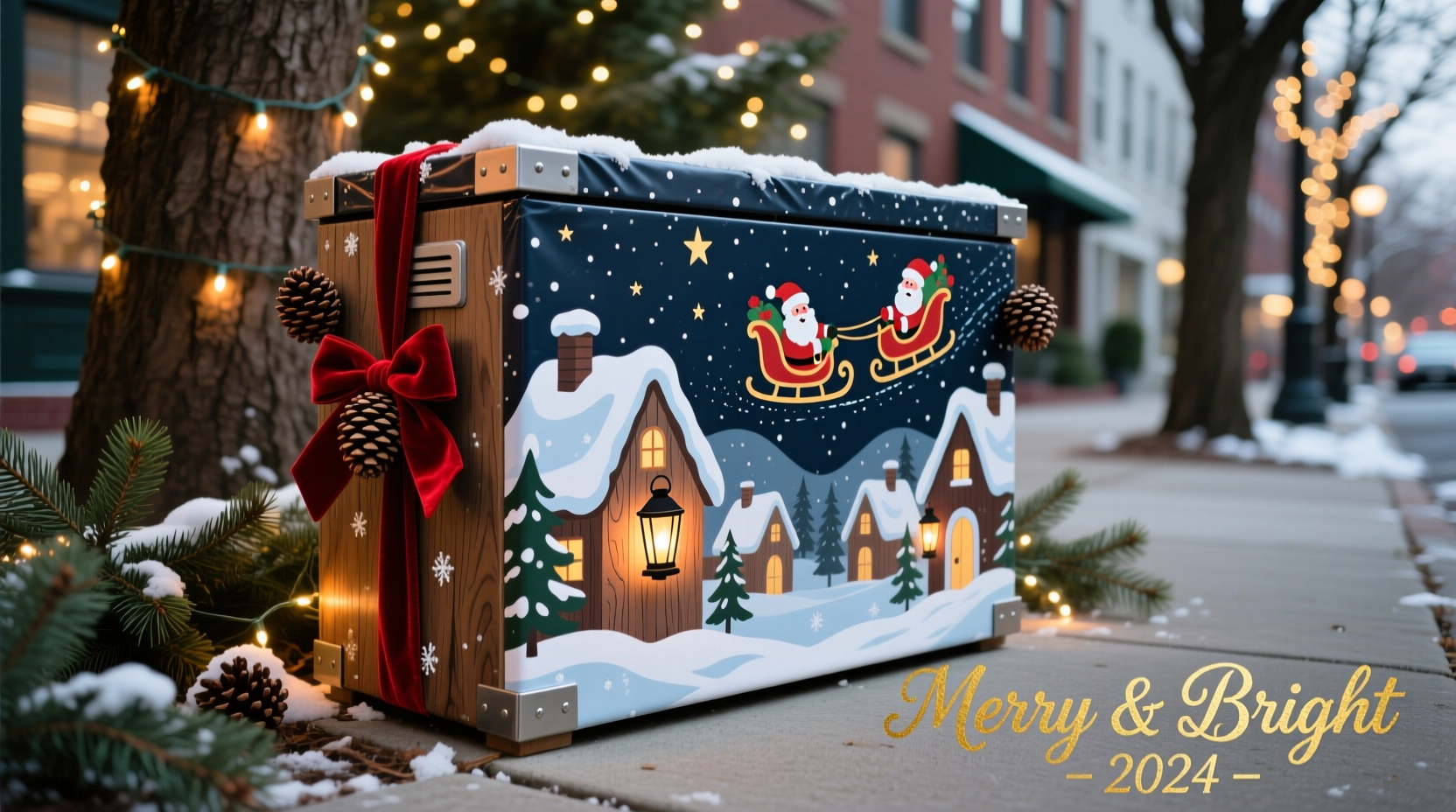
Most holiday attempts at covering utility boxes rely on string lights, garlands, or fabric swags anchored with tape or zip ties. These fail for three consistent reasons: they obstruct technician access, degrade rapidly under moisture and temperature swings, and violate utility company guidelines—some of which carry fines for unauthorized modifications. A 2023 survey by the National Electrical Manufacturers Association found that 68% of reported service delays during December were linked to obstructed or improperly wrapped utility enclosures. What distinguishes successful disguises is intentionality: using rigid, ventilated panels instead of draped fabrics; anchoring with non-penetrating, removable hardware; and designing with full panel removal in under 90 seconds. The goal isn’t concealment—it’s contextualization. A well-executed wrap doesn’t scream “look away,” but invites quiet appreciation: “Ah—this belongs here.”
Material Selection: Safety, Durability, and Seasonal Realism
Choosing materials isn’t about aesthetics first—it’s about layered risk assessment. Every component must pass three filters: fire resistance (ASTM E84 Class A rating), wind load tolerance (minimum 90 mph uplift resistance), and freeze-thaw stability (no delamination below -20°F). Below is a comparison of common options against these criteria:
| Material | Fire Rating | Wind Resistance | Winter Performance | Installation Method |
|---|---|---|---|---|
| Corrugated PVC Panels (1/4″) | Class A | Excellent (rigid, low surface area) | Stable to -40°F; no warping | Clamp-and-rail system |
| Foam-Core Board (3mm) | Class C (requires flame-retardant coating) | Poor (flexes in gusts; high sail area) | Becomes brittle below 25°F; absorbs moisture | Tape or Velcro (not recommended) |
| Recycled PET Felt Panels | Class B (with FR treatment) | Good (textured surface breaks wind) | Retains shape; wicks condensation | Magnetic backing + edge clamps |
| Exterior-Grade Birch Plywood (1/2″) | Class B (treated) | Excellent (heavy, stable) | Requires sealed edges; prone to swelling if untreated | Non-penetrating corner brackets |
For most residential applications, corrugated PVC panels strike the optimal balance: lightweight yet rigid, impervious to salt spray and ice melt residue, and printable with UV-stable inks for custom designs. They’re also fully recyclable—critical when planning for post-holiday removal. Avoid wood-based composites near coastal or high-salt areas; chloride exposure accelerates corrosion of embedded fasteners and degrades laminates within weeks.
A Step-by-Step Installation Framework (Under 90 Minutes)
This sequence prioritizes technician access, wind integrity, and modular adaptability. It assumes a standard 30″ × 36″ × 18″ pad-mounted transformer box—a common residential utility enclosure.
- Measure & Map Access Points: Identify all hinged doors, ventilation grilles, and lock mechanisms. Note their exact locations and dimensions. Mark a 3″ buffer zone around each on your panel template—no decorative elements may overlap these zones.
- Design Panels with Removable Sections: Divide your wrap into four vertical panels (front, back, left, right) plus a separate top cap. Design the front panel with a hinged or slide-out lower section (12″ tall) that reveals the main door without removing the entire wrap.
- Build the Clamp-and-Rail System: Cut aluminum U-channel rails (1″ × 1″) to match panel heights. Attach them vertically to the box using heavy-duty rubber-coated C-clamps—no drilling, no adhesion. Rails serve as anchor tracks for panel insertion.
- Mount Panels Securely: Slide each PVC panel into its rail, then secure with two stainless-steel L-brackets per panel—mounted only to the rail, not the box. Brackets must allow 1/8″ vertical play to accommodate thermal expansion.
- Add Thematic Elements Safely: Apply vinyl decals (not paint) for snowflakes, reindeer silhouettes, or evergreen motifs. Use only outdoor-rated, air-release vinyl with permanent acrylic adhesive. Avoid raised textures or 3D ornaments—they trap snow, increase wind load, and complicate emergency access.
This framework ensures full technician access in under 45 seconds: unclip two brackets, lift the panel, and proceed. No tools beyond a hex key are needed. It also eliminates the need for seasonal re-taping or re-gluing—panels store flat and reinstall identically year after year.
Real-World Application: The Maplewood Neighborhood Initiative
In Maplewood, NJ, a 2022 pilot program engaged 14 homeowners to disguise utility boxes along a single cul-de-sac. Rather than individual efforts, residents collaborated on a unified “Winter Forest” theme: deep green PVC panels printed with birch bark textures, silver foil pine bough accents, and frosted glass-effect decals applied only to non-access zones. Each panel included a discreet QR code linking to a city-approved maintenance guide. Over the 2022–2023 holiday season, PSE&G reported zero access-related service delays on the street—compared to three incidents on adjacent blocks using traditional garland wraps. More significantly, the township received 17 unsolicited compliments from passing drivers, and the local historical society featured the project in its “Modern Civic Stewardship” newsletter. As homeowner liaison Lena Torres noted: “We didn’t try to make the boxes disappear. We made them feel like part of the neighborhood’s story—not an interruption.”
“Permanent infrastructure shouldn’t be seasonal camouflage. It should be seasonal *conversation*—respectful of function, rooted in safety, and generous in spirit.” — Carlos Mendez, Senior Infrastructure Designer, American Public Power Association
Themed Design Principles: Beyond Red and Green
Effective themes avoid cliché by anchoring visuals in local context, architectural harmony, and tactile authenticity. A Victorian-era neighborhood might use deep burgundy panels with gold-foil scrollwork echoing porch ironwork. A mid-century modern street could feature matte charcoal panels with geometric white snowflake patterns inspired by vintage wallpaper. Key principles include:
- Color Restraint: Limit palettes to three core colors maximum. Utility boxes sit at eye level—oversaturation causes visual fatigue. Deep forest green, slate gray, and warm ivory create cohesion without competing with home lighting or wreaths.
- Texture Over Pattern: Subtle embossed textures (e.g., linen, hammered metal, or woodgrain) read as sophisticated from a distance and hide minor scuffs better than bold prints.
- Night Visibility: Integrate reflective elements—microprismatic silver decals, not blinking LEDs—that catch porch light without glare. This satisfies municipal visibility requirements while adding quiet sparkle.
- Scale Integrity: Motifs should scale to the box’s proportions. A 6″ snowflake on a 36″ panel feels deliberate; a 2″ motif repeated 30 times reads as cluttered and cheap.
Do’s and Don’ts: A Compliance-Focused Checklist
Before purchasing materials or cutting panels, verify compliance with your local utility provider. Most require written notification—but never approval—for exterior modifications. Use this checklist to preempt rejection:
- ☑ Confirm your utility’s seasonal modification policy (many publish guidelines online—search “[Utility Name] holiday enclosure policy”)
- ☑ Measure clearance requirements: minimum 36″ unobstructed front access, 18″ side clearance
- ☑ Verify panel weight: total wrap must not exceed 40 lbs (prevents tipping in high winds)
- ☑ Test fire rating: request ASTM E84 test report from supplier—don’t accept “fire resistant” marketing claims
- ☑ Document installation: take timestamped photos showing access zones unobstructed before and after
FAQ
Can I wrap a utility box if it’s owned by my HOA?
Yes—but HOAs often impose stricter aesthetic rules than utilities. Submit your panel design, material specs, and installation method in writing before proceeding. Include photos of similar installations in comparable neighborhoods. Most HOAs approve designs that demonstrate professional fabrication, neutral color palettes, and documented utility compliance.
What happens if technicians need emergency access at night?
Properly installed panels allow full door access without removal. Technicians carry universal hex keys and recognize clamp-and-rail systems as industry-standard temporary enclosures. If your design includes a removable front panel, ensure it unlatches with one hand in darkness—test this yourself before final installation. Never use keyed locks or complex latching mechanisms.
How do I store panels for reuse next year?
Wipe panels clean with a damp microfiber cloth and mild dish soap. Air-dry completely, then stack flat between sheets of acid-free tissue paper. Store in a climate-controlled space (ideally 40–70°F) away from direct sunlight. Avoid stacking heavy objects on top—PVC panels can develop permanent bends under sustained pressure.
Conclusion
Disguising utility boxes with themed Christmas wraps isn’t decoration—it’s civic design. It asks us to consider infrastructure not as an afterthought, but as a canvas for collective care: respectful of workers who maintain our power, mindful of neighbors who share our streets, and intentional about the stories our exteriors tell during the year’s most visible season. When you choose corrugated PVC over foam board, design access-first over ornament-first, and select a palette that echoes your home’s trim rather than chasing trends, you’re doing more than masking metal. You’re practicing quiet stewardship—turning obligation into opportunity, and function into form with integrity. Start small: measure one box this week. Sketch a single panel. Then build it—not to hide, but to harmonize. Because the most enduring holiday magic isn’t in what we cover up, but in how thoughtfully we belong.




 浙公网安备
33010002000092号
浙公网安备
33010002000092号 浙B2-20120091-4
Comments
No comments yet. Why don't you start the discussion?