
Anime figures are more than collectibles—they're expressions of passion, artistry, and personal identity. For many collectors, displaying them prominently is a source of pride. However, placing these figures in direct sunlight poses a serious threat: irreversible color fading. Ultraviolet (UV) radiation breaks down pigments in plastics, paints, and resins over time, dulling vibrant colors and diminishing the visual impact of even the most meticulously crafted pieces. While natural light enhances visibility and ambiance, unfiltered exposure can degrade your collection within months. The good news is that with informed strategies, you can enjoy both illumination and preservation. This guide outlines practical, science-backed methods to display anime figures in sunlit areas while minimizing or eliminating UV damage.
Understanding How Sunlight Damages Anime Figures
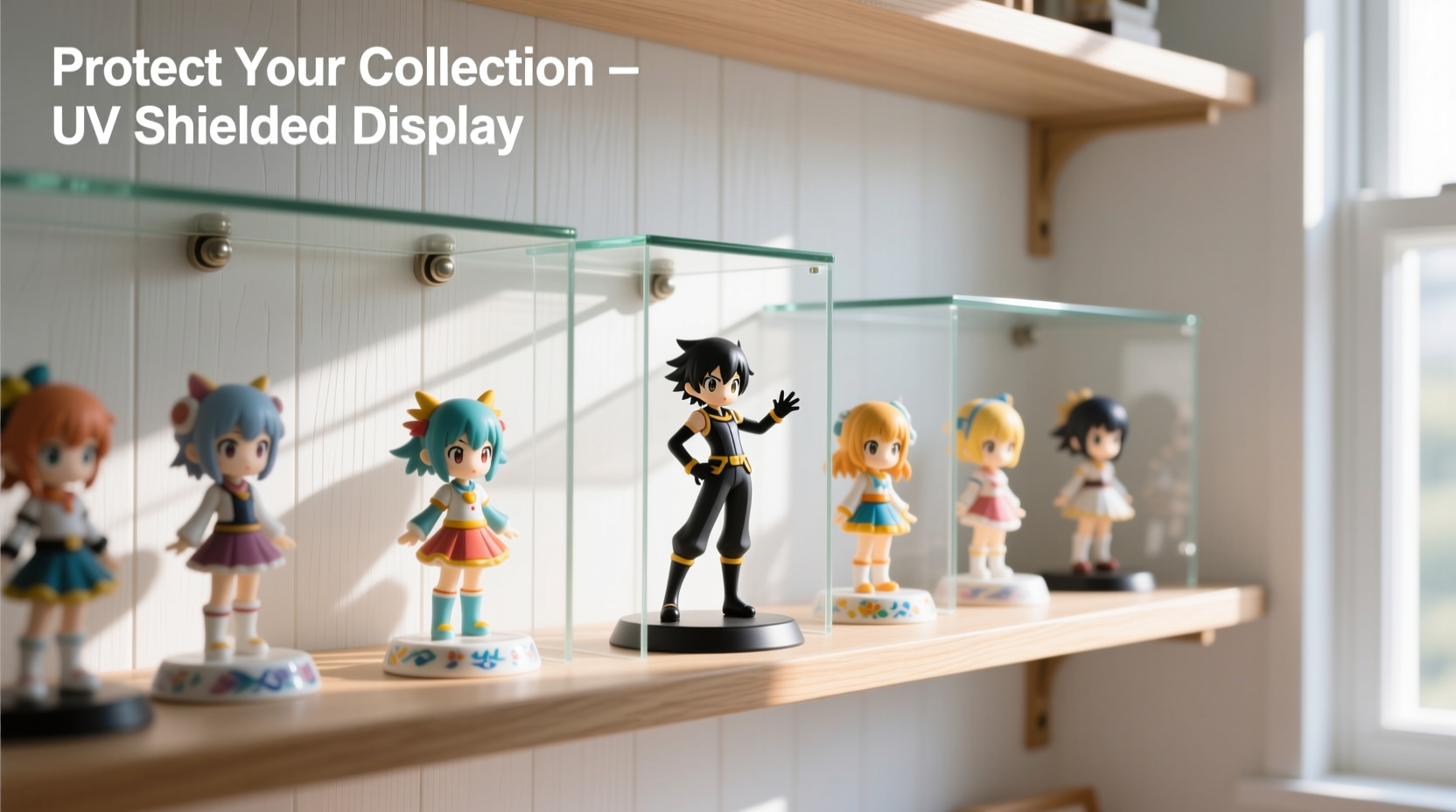
Sunlight consists of visible light, infrared radiation, and ultraviolet (UV) rays. Of these, UV radiation—particularly UVA and UVB—is the primary culprit behind pigment degradation in collectible figures. When UV photons strike painted surfaces, they excite molecules in the dye or paint, causing chemical bonds to break. This process, known as photodegradation, leads to fading, yellowing, and chalking of surfaces. Materials commonly used in anime figures—such as polyvinyl chloride (PVC), polystone, and ABS plastic—are especially vulnerable because their dyes and surface coatings lack inherent UV resistance.
The rate of fading depends on several factors:
- Duration of exposure: Continuous sunlight accelerates damage.
- Intensity of light: South-facing windows receive the strongest UV exposure in the Northern Hemisphere.
- Figure finish: Glossy coatings may reflect some light but offer minimal UV protection; matte finishes often absorb more heat and degrade faster.
- Ambient temperature: Sunlight increases local temperature, which compounds material stress.
According to conservation experts at the International Council of Museums (ICOM), \"Even moderate UV exposure over six months can cause noticeable fading in polymer-based artworks.\" This makes proactive protection essential for long-term display.
“UV radiation doesn’t just fade colors—it weakens the molecular structure of plastics, making figures brittle over time.” — Dr. Lena Torres, Conservation Scientist, National Collectibles Preservation Lab
Strategies to Display Figures Safely in Sunlit Areas
Eliminating all light isn't the solution—after all, part of a figure’s appeal is its visual presence. Instead, the goal is to allow light in while filtering out harmful components. Below are proven approaches to balance aesthetics and preservation.
1. Install UV-Filtering Window Films
One of the most effective long-term solutions is applying UV-blocking window film to glass surfaces near display areas. These transparent adhesive films can block up to 99% of UV radiation while maintaining natural light transmission. They come in various tints and clarity levels, allowing customization based on room lighting needs.
2. Use UV-Protective Display Cases
Invest in acrylic or polycarbonate display cases treated with UV inhibitors. Unlike standard plastic, UV-stabilized acrylic resists yellowing and blocks up to 98% of harmful rays. Look for products labeled “UV-filtering” or “museum-grade,” which are designed specifically for artifact preservation.
When selecting a case:
- Ensure it has tight seals to reduce dust and humidity fluctuations.
- Opt for front-opening designs to minimize handling stress.
- Avoid metal hinges or fasteners that could corrode and stain figures.
3. Apply UV-Resistant Sprays (With Caution)
Some collectors use commercial UV-protective sprays designed for models and miniatures. These form an invisible barrier over the figure’s surface, absorbing or reflecting UV energy. However, this method requires careful application:
- Clean the figure thoroughly with isopropyl alcohol wipes.
- Test the spray on a small, inconspicuous area first.
- Apply in thin, even coats in a well-ventilated space.
Note: Not all sprays are reversible or safe for delicate finishes. Overuse can create a cloudy residue or alter texture. Reserve this technique for mass-produced PVC figures, not limited-edition or hand-painted pieces.
Do’s and Don’ts of Sunlight Exposure for Anime Figures
| Do’s | Don’ts |
|---|---|
| Use curtains or blinds during peak sunlight hours (10 AM – 4 PM) | Leave figures uncovered on south-facing shelves |
| Rotate displayed figures seasonally to distribute light exposure | Assume “indirect sunlight” is completely safe—reflected UV still causes damage |
| Monitor color changes with time-lapse photos every 3 months | Use regular glass display cabinets—standard glass blocks only ~25% of UV |
| Place desiccant packs inside cases to control humidity | Apply household cleaners or polishes that may contain UV-sensitive chemicals |
| Choose LED lighting instead of halogen or incandescent bulbs near displays | Ignore temperature spikes—heat amplifies UV damage |
Real-World Example: Preserving a Limited-Edition Figure in a Sunlit Living Room
Takashi M., a collector from Osaka, owns a rare 1:7 scale Fate/stay night Saber figure valued at over $600. He wanted to display it in his living room, which features large east-facing windows. Initially, he placed the figure on an open shelf, and within five months, the white armor began showing yellow undertones, and the red cape lost saturation.
He took corrective action:
- Installed UV-blocking window film (clear type, 99% UV rejection).
- Purchased a museum-grade acrylic case with UV stabilizers.
- Moved the figure away from direct beam paths and added a sheer curtain for morning sun control.
- Began photographing the figure monthly under consistent lighting to track changes.
After one year, no further fading occurred. Takashi now rotates his display every three months, keeping other prized figures in a dark, climate-controlled cabinet when not on view. His experience underscores that proactive measures—not complete darkness—are key to sustainable display.
Step-by-Step Guide to Safe Sunlight Display Setup
Follow this sequence to protect your figures while maintaining visual appeal:
- Assess Light Exposure: Observe your space for 2–3 days. Note when and where direct sunlight hits potential display zones. Use a UV index meter app or handheld sensor for accuracy.
- Install UV Barriers: Apply UV-blocking window film or install shades with UV filtration. Alternatively, position bookshelves or partitions to cast protective shadows.
- Select Protective Enclosures: Choose display cases made from UV-resistant acrylic. Avoid wooden enclosures unless sealed, as off-gassing can tarnish paint.
- Position Figures Strategically: Place figures at least 3 feet from windows or in corners receiving only reflected light. Avoid spotlighting with natural beams.
- Implement Monitoring: Take high-resolution photos under consistent conditions every 90 days. Compare them side-by-side to detect early fading.
- Supplement with Artificial Lighting: Use warm-white LEDs (2700K–3000K) inside or around cases to enhance visibility without adding UV risk.
- Establish Rotation Schedule: Limit continuous display of sensitive figures to 3–6 months before retiring them to dark storage for recovery.
Frequently Asked Questions
Can I leave my anime figures in a car on a sunny day?
No. Interior temperatures in parked cars can exceed 160°F (70°C), causing warping, cracking, and rapid UV degradation. Even 30 minutes of exposure can result in permanent damage. Never store or transport figures in vehicles under direct sun.
Are all acrylic display cases UV-protected?
No. Standard acrylic transmits UV radiation. Only cases explicitly labeled “UV-filtering” or “UV-stabilized” offer protection. Check manufacturer specifications or request spectral transmission data before purchasing.
Does indirect sunlight still cause fading?
Yes. Indirect sunlight contains diffused UV rays that can accumulate damage over time. While less intense than direct exposure, prolonged contact still leads to fading—especially in rooms with multiple reflective surfaces like mirrors or white walls.
Final Recommendations and Long-Term Care Mindset
Displaying anime figures in direct sunlight doesn’t have to mean sacrificing their condition. The key lies in interrupting the UV pathway before it reaches the figure’s surface. Combining architectural modifications (like window films), physical barriers (UV-safe cases), and smart display habits creates a robust defense against fading.
Think of your collection not just as decoration, but as preserved art. Museums don’t banish paintings from light—they manage it meticulously. You can do the same. Regular inspection, environmental control, and preventive shielding ensure your figures remain vibrant for years, regardless of room brightness.
Remember: fading is cumulative and irreversible. Once a color shifts, it cannot be restored to factory condition. Prevention is always more effective—and economical—than restoration.
“The best display protects the object while honoring its beauty. That balance is achievable with thoughtful planning.” — James Reed, Curator of Pop Culture Artifacts, Pacific Heritage Archive
Take Action Today
Your figures deserve more than guesswork. Audit your current display setup: Is any piece receiving direct sun? Are your cases offering real UV protection? Make one improvement this week—install a film, move a shelf, or invest in a proper case. Small steps today prevent regret tomorrow. Share your display solutions with fellow collectors and help build a culture of preservation in the anime community.




 浙公网安备
33010002000092号
浙公网安备
33010002000092号 浙B2-20120091-4
Comments
No comments yet. Why don't you start the discussion?