
In an age where digital communication dominates, the ability to find accurate phone number information remains essential. Whether reconnecting with old contacts, verifying business details, or identifying unknown callers, knowing how to access phone data efficiently can save time and reduce frustration. While traditional directory assistance once ruled the landscape, today’s tools offer faster, more detailed, and often free alternatives. This guide explores every practical method—from classic 411 services to cutting-edge online lookup platforms—so you can confidently navigate the world of phone number research.
Understanding Directory Assistance: The Foundation
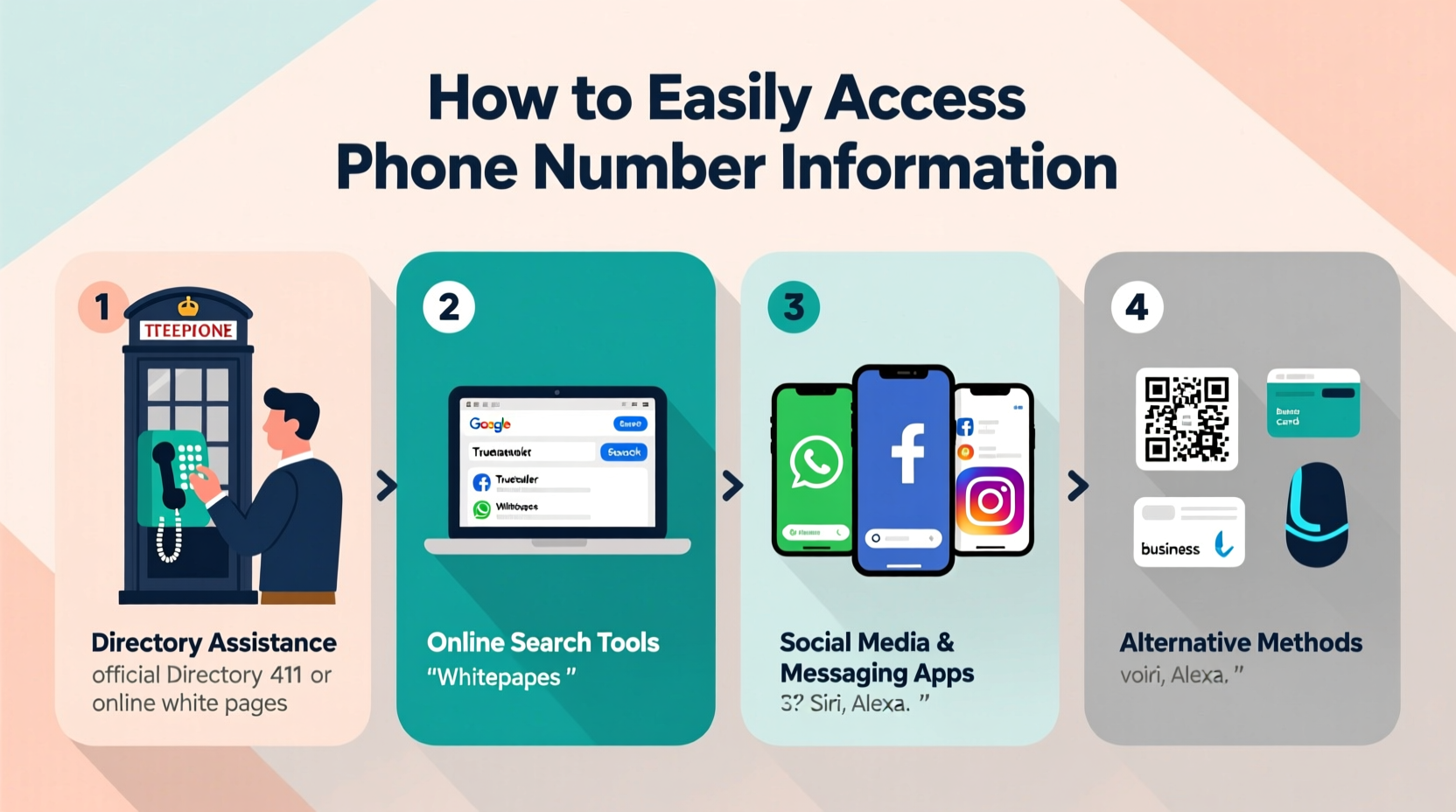
Directory assistance, commonly known as “411,” has been a staple of telecommunications for over a century. Originally a human-operated service, it allowed users to call a central number and request contact details for individuals or businesses. Though largely automated today, the core function remains: helping people locate phone numbers when they lack other means of contact.
To use traditional directory assistance:
- Dial 411 (or your local area’s equivalent).
- Follow voice prompts to enter the person’s name and city.
- Listen as the system reads the number aloud.
- Optionally, request a callback or connection to the number.
While accessible from any phone, including landlines without internet, standard 411 calls often incur per-use fees ranging from $1 to $2. Some carriers include limited directory access in plans, but usage-based charges are common.
Modern Alternatives to 411 Services
The rise of the internet has transformed how we access contact information. Today, numerous online tools outperform traditional 411 in speed, accuracy, and depth of data. These platforms allow users to search by name, address, or even reverse-lookup a number to uncover its owner.
Key advantages of digital alternatives include:
- Free basic searches
- Access to mobile and unlisted numbers (in some cases)
- Additional details like location history, social media links, and associated names
- Batch searching capabilities for businesses or researchers
Popular websites such as Whitepages, Truecaller, and Spokeo have become go-to resources. Each offers unique features:
| Service | Best For | Free Tier? | Paid Plan Starting At |
|---|---|---|---|
| Whitepages | Residential landline lookups | Yes | $5/month |
| Truecaller | Mobile number identification | Yes (app-based) | $2.50/month |
| Spokeo | Comprehensive background checks | No (7-day trial) | $14.95/month |
| ZabaSearch | Quick public record scans | Yes | N/A (ad-supported) |
“Digital directories now aggregate data from public records, carrier databases, and user contributions, making them far more dynamic than legacy 411 systems.” — Daniel Reyes, Telecommunications Analyst at NetInsight Research
Reverse Phone Lookup: Identifying Unknown Callers
One of the most valuable tools in modern phone number research is reverse phone lookup. Instead of starting with a name, you begin with a number—especially useful for screening spam calls, robocalls, or missed connections.
Here’s how to perform a reverse lookup effectively:
- Gather the full number: Include area code and country code if international.
- Use a trusted platform: Enter the number into Whitepages, Truecaller, or CocoFinder.
- Analyze results: Look for name matches, location data, carrier info, and user-reported labels (e.g., “telemarketer” or “scam”).
- Cross-reference: Check multiple sources to confirm accuracy, especially for mobile numbers.
Be cautious with free results. While many sites display partial information upfront, full reports often require a subscription. Also, privacy laws limit access to certain data, particularly for cell phones registered under wireless carriers.
Mini Case Study: Recovering a Lost Contact
Sarah hadn’t spoken to her former colleague, Mark, in five years. After finding his old business card with only a phone number, she tried calling—no answer. Instead of giving up, she used a reverse lookup on ZabaSearch. The search returned a partial profile: “Mark T., Chicago, IL.” She cross-checked the result on LinkedIn using the location and approximate age, confirmed the match, and reconnected via email. The entire process took under 15 minutes.
This example highlights how combining reverse lookup with social verification can yield results even when minimal data exists.
Legal and Ethical Considerations
While accessing phone information is legal for personal, non-harassing purposes, misuse can lead to serious consequences. The U.S. Fair Credit Reporting Act (FCRA) restricts the use of aggregated personal data for employment, credit, or tenant screening unless obtained through compliant channels.
Always follow these guidelines:
- Do not use lookup services to stalk, harass, or impersonate others.
- Avoid purchasing bulk databases that may contain illegally sourced data.
- Respect opt-out requests if you’re using data for outreach.
- Understand that mobile numbers are less publicly available due to carrier privacy policies.
Publicly available information—including landline listings and some directory entries—is fair game for personal use. However, inferring private details (like home addresses from phone data alone) crosses ethical boundaries.
Checklist: Responsible Phone Number Research
- ✅ Define your purpose: Reconnect, verify, or screen only.
- ✅ Start with free tools before upgrading to paid services.
- ✅ Cross-check results across two or more platforms.
- ✅ Avoid sharing sensitive findings publicly.
- ✅ Comply with privacy laws and terms of service.
Frequently Asked Questions
Can I find someone’s cell phone number online?
Directly finding a current cell phone number by name is difficult due to privacy protections. Wireless carriers do not release mobile numbers to public directories. However, reverse lookups may reveal mobile numbers if they’ve been shared publicly on social media, forums, or business sites.
Are free phone lookup services reliable?
Free services can provide accurate results for landlines and older listings. However, mobile numbers, unlisted lines, and recent moves are often missing or outdated. For higher accuracy, consider short-term subscriptions to premium services like Spokeo or Intelius.
Is it safe to use my own number on lookup sites?
Most reputable sites do not expose your number to others during searches. However, avoid entering your number on obscure or ad-heavy platforms that may harvest data. Stick to well-known providers with clear privacy policies.
Conclusion: Take Control of Your Communication Intelligence
Accessing phone number information no longer requires memorizing 411 or enduring robotic voice menus. With a blend of traditional knowledge and modern digital tools, anyone can quickly and ethically retrieve the contact details they need. From free reverse lookups to advanced background services, the options are broader than ever—yet responsibility remains key. Use these tools wisely, prioritize accuracy over convenience, and always respect personal boundaries.




 浙公网安备
33010002000092号
浙公网安备
33010002000092号 浙B2-20120091-4
Comments
No comments yet. Why don't you start the discussion?