
Managing a Facebook Page effectively requires the right people in the right roles. Whether you're stepping down, restructuring your team, or onboarding a new marketing manager, knowing how to transfer administrative access is essential. Unlike personal accounts, Facebook Pages don’t “belong” to one person—they’re managed through assigned roles. This means ownership isn’t fixed, and changing admins doesn’t require transferring ownership in the traditional sense. Instead, it’s about adjusting user permissions with precision and care.
Missteps in admin management can lead to loss of access, security risks, or operational delays. A smooth transition ensures continuity in content scheduling, customer engagement, and ad campaigns. This guide walks you through every detail—from prerequisites to post-transfer checks—so you can confidently reassign admin rights without compromising your page’s integrity.
Understanding Facebook Page Roles
Before changing an admin, it's critical to understand the different permission levels Facebook offers. These roles determine what each team member can do on your page. The hierarchy ranges from full control to limited visibility:
- Admin: Full access to all settings, posts, insights, ads, and the ability to assign roles.
- Editor: Can create and manage posts, respond to messages, and view insights—but cannot add or remove other admins.
- Modulator: Manages comments and messages, removes unwanted content, but cannot publish posts.
- Advertiser: Runs and manages ads, views ad performance, but can't modify page content.
- Analyst: Views insights only; no posting or editing capabilities.
Only existing Admins can assign or remove these roles. This structure prevents unauthorized changes and maintains accountability across teams.
“Page roles are not just about access—they reflect responsibility. Assigning the right role ensures both efficiency and security.” — Sarah Lin, Digital Marketing Strategist at SocialPulse Agency
Step-by-Step: How to Change a Page Admin
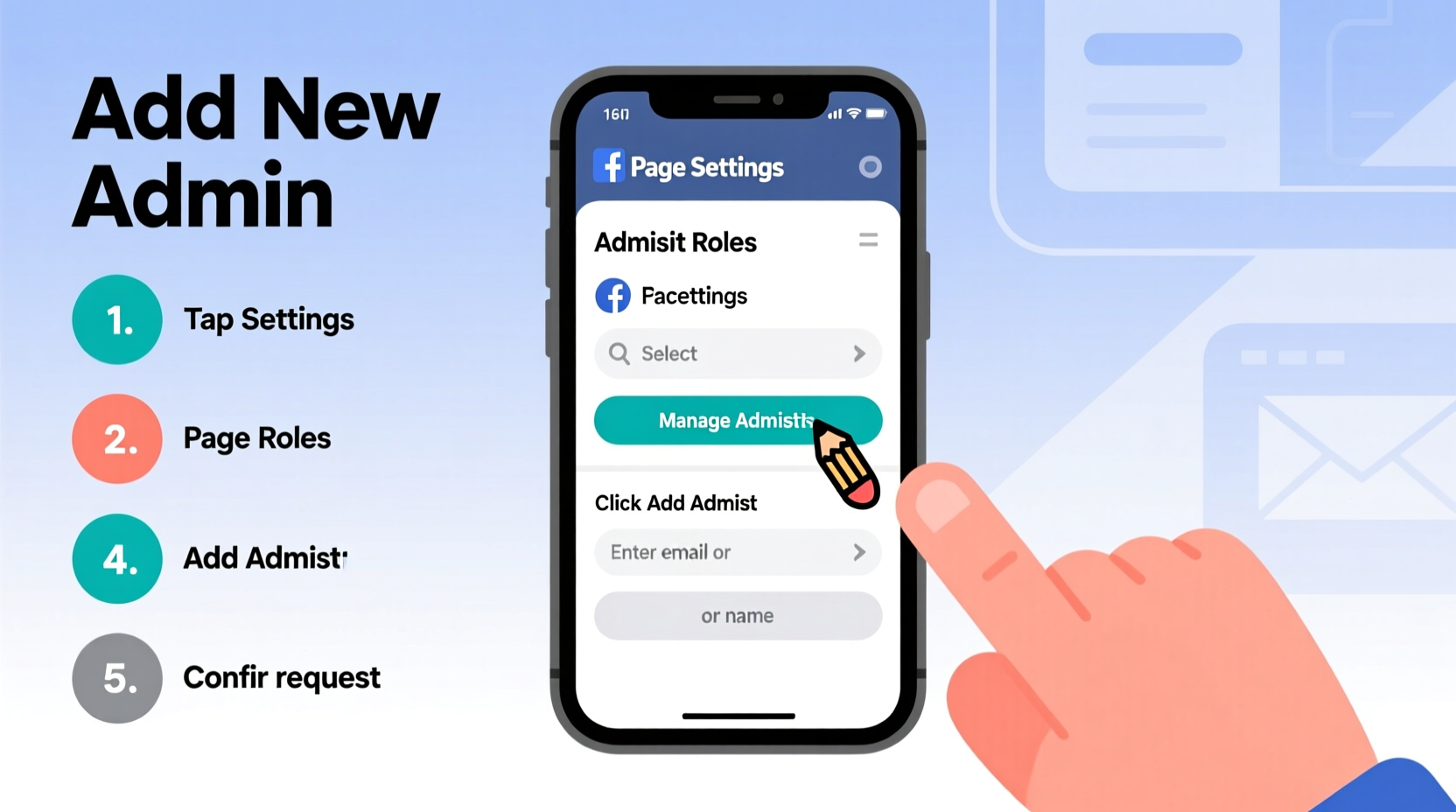
Changing an admin involves removing current privileges and assigning them to another trusted individual. Follow this sequence carefully to avoid accidental lockouts.
- Log into Facebook using the account currently holding Admin rights to the page.
- Navigate to your Facebook Page by clicking “Pages” in the left menu or searching for the page name.
- Click on the Settings button in the top-right corner of the page.
- In the left sidebar, select Page Roles.
- Under “Assign a New Page Role,” enter the name or email of the person you want to promote to Admin.
- Select Admin from the dropdown menu next to their name.
- Click Add, then confirm using your password or two-factor authentication if prompted.
- To replace yourself, scroll down to “Existing Page Roles,” find your name, click the pencil icon, and change your role to Editor—or remove access entirely if stepping away completely.
This process typically takes effect instantly. The new admin will receive a notification and gain full access immediately.
Essential Checklist Before Making Changes
To maintain security and operational continuity, complete this checklist before modifying any roles:
- ✅ Verify the new admin has a confirmed, secure Facebook account linked to a valid email or phone number.
- ✅ Confirm they’ve enabled two-factor authentication (2FA) for added protection.
- ✅ Ensure they understand their responsibilities and have been trained on your brand guidelines.
- ✅ Back up important page assets—such as scheduled posts, ad creatives, and contact info—before making changes.
- ✅ Communicate the change internally so all team members are aware of updated leadership.
- ✅ Test access after the change by having the new admin perform a simple task like creating a draft post.
Common Pitfalls and How to Avoid Them
Even experienced managers make mistakes when handling admin transitions. Here’s a breakdown of frequent errors and how to sidestep them.
| Pitfall | Consequence | How to Prevent |
|---|---|---|
| Removing your own admin access before adding a replacement | Immediate lockout with no recovery path unless another admin exists | Always add the new admin first, then adjust your role afterward |
| Adding someone via unverified email | Invitation fails; access never granted | Use the person’s primary Facebook-registered email or tag their profile directly |
| Granting admin rights to personal profiles instead of business accounts | Risk of access loss if the individual deactivates their personal account | Use Business Manager whenever possible for institutional control |
| Failing to update ad account access | New admin can’t run or edit paid campaigns | Link the page to a Business Manager and assign ad account permissions separately |
Real-World Example: Smooth Transition at Bloom & Vine Café
Bloom & Vine Café, a local coffee shop with a growing online presence, recently shifted digital responsibilities from the owner to a hired social media coordinator. The owner, Maria, had been managing the page alone for over two years but wanted to focus on operations.
She followed the steps outlined above: first adding her assistant as an Editor to test reliability, then promoting her to Admin after two weeks of consistent performance. Only after confirming the new admin could schedule posts, respond to messages, and access insights did Maria downgrade her own role.
The transition was seamless. No posts were missed, customer inquiries remained promptly answered, and upcoming promotions stayed on track. By planning ahead and verifying access, Maria avoided disruption during a critical holiday season.
Using Facebook Business Suite for Advanced Management
For organizations managing multiple pages or working with external agencies, relying solely on individual page settings is inefficient. Facebook Business Suite (now integrated into Meta Business Suite) provides centralized control.
Through Business Suite, you can:
- Manage admin roles across multiple pages from one dashboard
- Assign team members to specific pages or ad accounts
- Monitor activity logs to track changes made by any user
- Restrict sensitive actions like deleting the page or removing admins
Setting up Business Suite requires linking your page to a Business Manager account. Once connected, role assignments become more scalable and auditable—ideal for agencies, franchises, or growing brands.
Frequently Asked Questions
Can I transfer a Facebook Page to someone else?
Not exactly. Facebook Pages don’t have a single owner. Instead, you can assign Admin roles to others and remove your own access, effectively handing over control. However, the original creator retains certain residual ties unless the page is merged into a Business Manager with full delegation.
What happens if all admins leave the page?
If no Admin remains, the page becomes inaccessible. Facebook does not provide a recovery option in such cases. This is why maintaining at least two trusted admins is crucial for business continuity.
Can I assign admin rights to a business email or shared account?
No. Facebook requires all roles to be assigned to verified personal profiles. Shared logins violate Facebook’s terms and pose significant security risks. Use Business Manager to grant institutional access without sharing passwords.
Final Thoughts and Action Steps
Changing a Facebook Page admin isn’t just a technical task—it’s a strategic decision that impacts your brand’s digital stewardship. Done correctly, it empowers your team, enhances collaboration, and safeguards your online presence. Done poorly, it can result in lost access, halted campaigns, or even reputational damage.
Take a moment to review your current page roles. Are the right people in the right positions? Is there a backup admin in place? If you're preparing for a transition, follow the steps methodically: add first, remove later, verify access, and document the change.




 浙公网安备
33010002000092号
浙公网安备
33010002000092号 浙B2-20120091-4
Comments
No comments yet. Why don't you start the discussion?