
In today’s digital world, streaming video is a daily habit for millions. But what happens when you’re on a flight, commuting through a dead zone, or traveling in an area with limited connectivity? The solution lies in downloading videos for offline viewing. Whether it’s your favorite show, educational content, or travel vlogs, knowing how to store videos locally ensures uninterrupted entertainment and learning—anytime, anywhere.
The good news: most major platforms now support official offline downloads. Even for those that don’t, there are practical, ethical ways to prepare ahead of time. This guide walks through reliable methods, platform-specific tools, best practices, and important considerations to keep your offline viewing experience smooth and secure.
Why Download Videos for Offline Use?
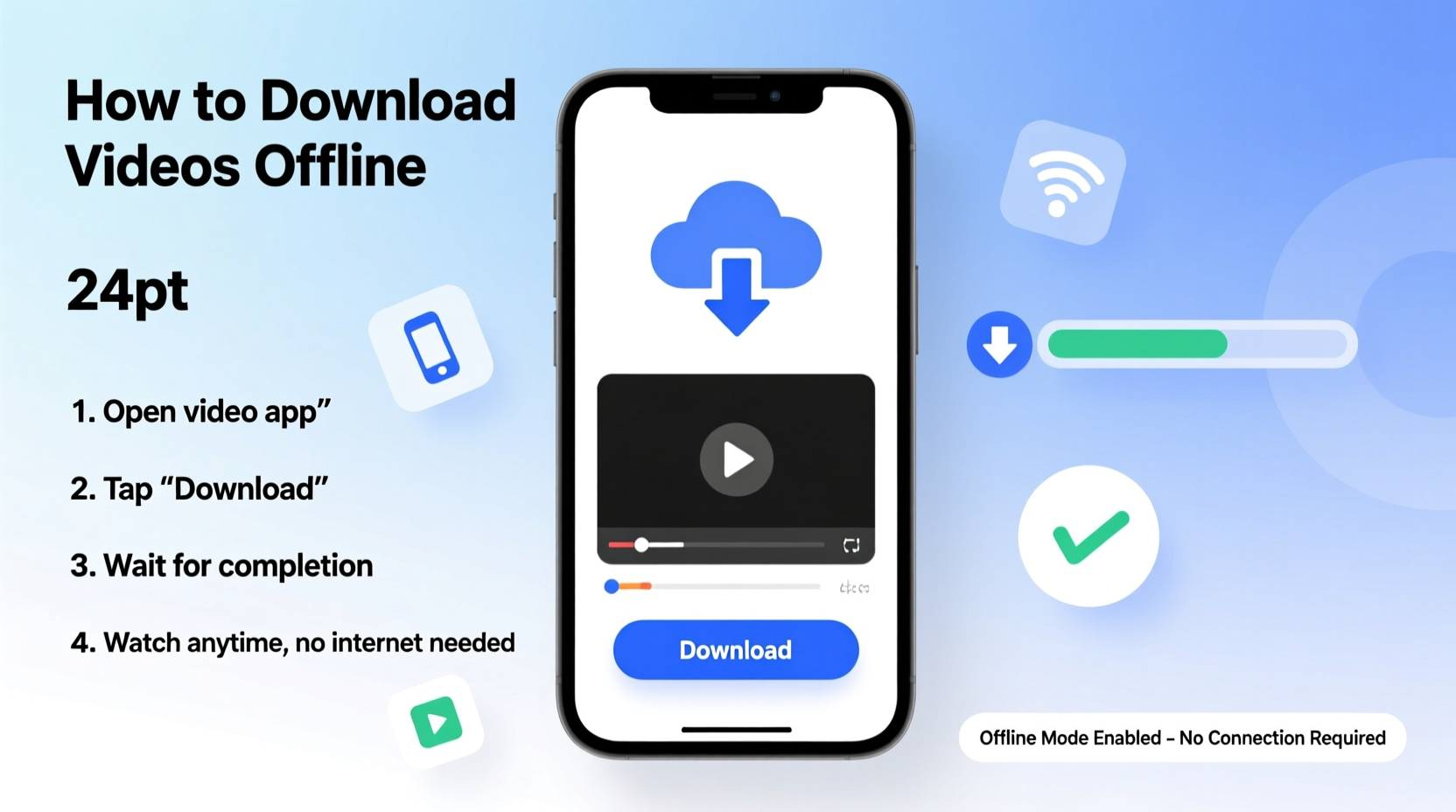
There are compelling reasons to go offline. Data limits on mobile plans can make streaming costly. In remote areas, consistent internet access may not exist. And during long flights or train rides, being able to watch content without buffering enhances comfort and convenience.
Downloading also reduces reliance on real-time network performance. It allows parents to pre-load children’s shows before road trips, students to review lecture videos without Wi-Fi, and professionals to study training materials during downtime.
“Offline access transforms media from a luxury dependent on connectivity into a portable resource.” — Dr. Lena Patel, Digital Media Researcher at MIT
Step-by-Step Guide to Downloading Videos Legally
Most popular platforms offer built-in download features. These are the safest and most user-friendly options available. Follow this timeline to get started:
- Choose your platform: Identify where the video content lives—Netflix, YouTube, Amazon Prime, etc.
- Check device compatibility: Ensure your phone, tablet, or laptop supports offline playback.
- Connect to Wi-Fi: Always download over a stable, unlimited connection to avoid data charges.
- Navigate to the video: Open the app and find the episode or movie you want.
- Tap the download icon: Usually a downward arrow next to the play button.
- Wait for completion: Larger files take longer; ensure your device stays awake and charged.
- Verify availability: Go to “Library” or “Downloads” section to confirm the video is ready.
- Enable airplane mode: Test playback without internet to confirm successful download.
Platform Comparison: Official Download Features
Not all services work the same way. Here's a breakdown of key platforms offering native offline capabilities:
| Platform | Downloadable? | Expiration Policy | DRM Protection | Max Devices |
|---|---|---|---|---|
| Netflix | Yes (Premium & Standard plans) | 30 days after download; 48 hours once started | Yes | 4 devices |
| YouTube Premium | Yes (videos, playlists, music) | Expires if removed by uploader or license ends | Yes | Offline sync across 10 devices |
| Amazon Prime Video | Yes (select titles) | 30 days to start; 48 hours to finish once begun | Yes | 2–3 devices |
| Disney+ | Yes (all content eligible) | 30 days idle; 48 hours upon start | Yes | 10 profiles across devices |
| HBO Max | Limited (select originals) | 30 days; 48-hour playback window | Yes | 5 devices |
Note: Free versions of these apps typically do not allow downloads. A subscription is required. Also, downloaded content uses Digital Rights Management (DRM), meaning files cannot be copied, shared, or played outside the app.
For Non-Supported Platforms: Ethical Alternatives
Some websites like TED Talks, BBC iPlayer, or educational portals don’t offer direct downloads. However, many provide downloadable transcripts, companion PDFs, or audio versions. As a workaround:
- Use screen recording tools (with permission) for personal archival of public lectures or webinars.
- Bookmark articles or summaries related to video content to reinforce memory without rewatching.
- Look for official podcasts or audio exports—many creators release audio-only versions compatible with offline players.
Be cautious with third-party downloaders claiming to extract videos from any site. Many violate terms of service, distribute malware, or infringe copyright. Stick to tools endorsed by educators or institutions when possible.
Mini Case Study: Preparing for International Travel
Sophia, a freelance designer based in Barcelona, frequently travels between Europe and South America for client meetings. On one recent trip, she faced a 14-hour flight with spotty in-flight Wi-Fi and no entertainment system. To prepare, she spent two evenings downloading:
- Three seasons of her favorite drama series via Netflix
- A playlist of creative tutorials from YouTube Premium
- Two documentaries on sustainable design from Amazon Prime
She organized downloads by folder tags in each app and used a power bank to keep her tablet charged. During the flight, she watched continuously for eight hours without interruption. “Having everything pre-loaded gave me peace of mind,” she said. “I didn’t waste time searching or stressing about connectivity.”
Her strategy highlights the importance of planning ahead—and proves how seamless offline viewing can be with the right preparation.
Essential Checklist Before You Download
Follow this checklist to maximize efficiency and avoid common pitfalls:
- ✅ Confirm your subscription includes offline access
- ✅ Connect to a high-speed Wi-Fi network
- ✅ Check available storage space on your device
- ✅ Enable auto-brightness and battery saver to extend playback time
- ✅ Organize downloads by category (e.g., “Workshops,” “Kids Shows,” “Travel Docs”)
- ✅ Delete old downloads regularly to free up space
- ✅ Verify subtitles are embedded or available offline
Frequently Asked Questions
Can I transfer downloaded videos to another device?
No. Due to DRM restrictions, videos downloaded through apps like Netflix or YouTube cannot be transferred. They remain locked within the original app and device profile. You must download separately on each device using the same account.
Are downloaded videos lower quality?
It depends on the app settings. Most platforms default to standard definition (SD) for downloads to save space. However, you can usually change this in the app settings to “High Quality” or “Maximum” if storage permits. YouTube Premium, for example, allows up to 1080p downloads on select devices.
What happens when my subscription expires?
All downloaded content becomes unplayable. Apps automatically remove offline files when your subscription lapses. Once renewed, you’ll need to redownload everything. Keep this in mind when canceling temporary subscriptions.
Final Thoughts and Next Steps
Being able to watch videos offline isn’t just convenient—it’s a form of digital preparedness. Whether you're conserving data, avoiding boredom on transit, or accessing critical information without signal, offline viewing empowers autonomy over your media consumption.
The key is leveraging official tools responsibly. Avoid risky software, respect content licenses, and focus on platforms designed for portability. With a little foresight, your entire library can fit in your pocket—ready whenever inspiration or downtime strikes.




 浙公网安备
33010002000092号
浙公网安备
33010002000092号 浙B2-20120091-4
Comments
No comments yet. Why don't you start the discussion?