
Facebook Stories offer a quick, engaging way to share moments with friends and followers. Unlike regular posts, stories disappear after 24 hours—unless saved—but they still leave behind valuable engagement data. One of the most common questions users have is: Who actually saw my story? While Facebook doesn’t provide every detail, it does allow you to see exactly who viewed your content, under certain conditions. Understanding this feature can help you gauge interest, strengthen relationships, and refine your sharing habits.
How Facebook Story Viewers Work
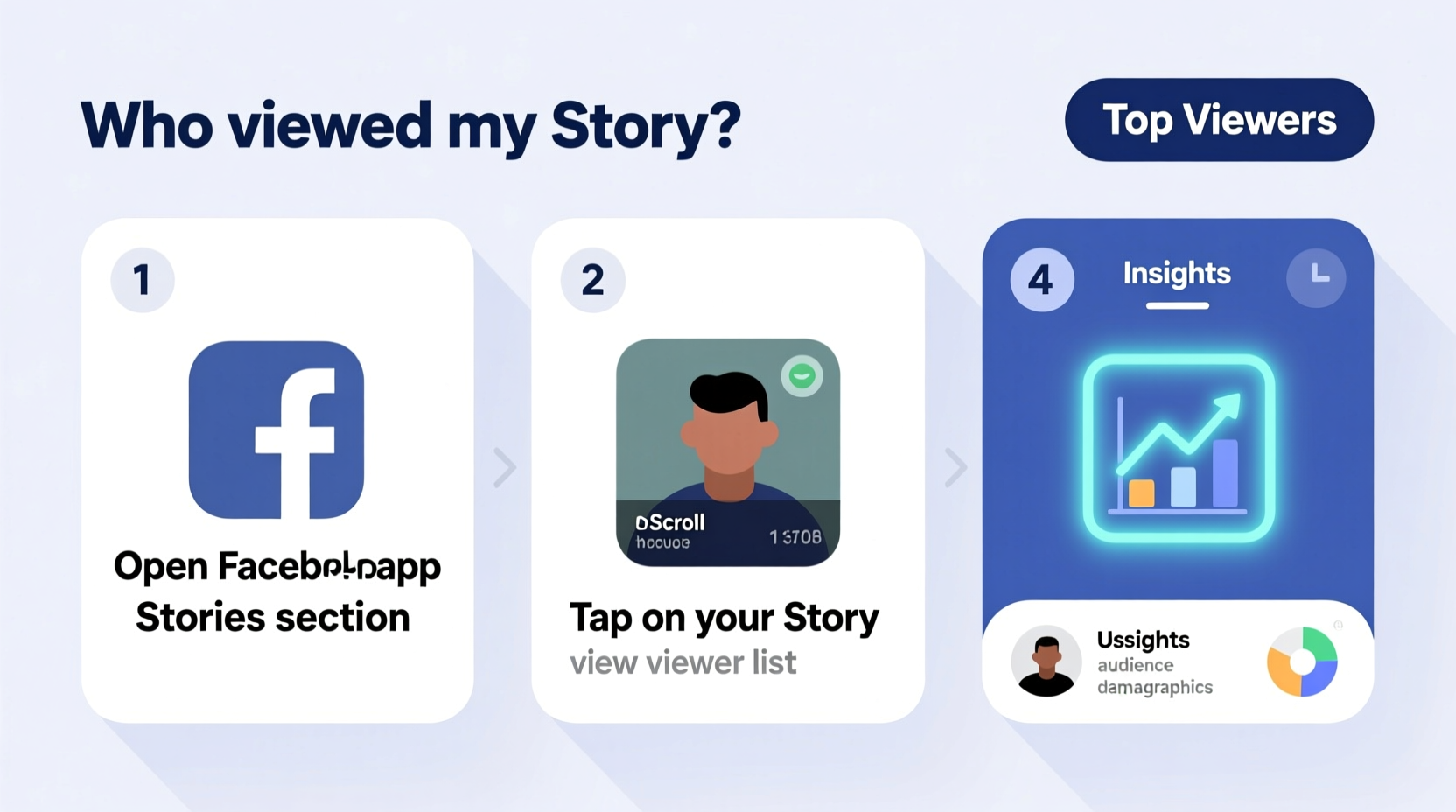
When you post a story on Facebook, whether it’s a photo, video, or text-based update, the platform tracks who sees it. This tracking is limited to people you're connected with—friends, followers (if your profile allows public follow), or members of groups where the story was shared. Importantly, only the story creator can view the list of people who watched it. No one else can access that information, preserving user privacy.
The viewer list appears in chronological order based on when each person viewed your story. It updates in real time, so if someone watches your story an hour after posting, their name will appear toward the bottom of the list. You’ll also see reaction emojis if viewers responded directly to your story—a heart, laugh, or surprise face, for example.
“Knowing who engages with your content helps build more meaningful digital interactions. It’s not about surveillance—it’s about connection.” — Dr. Lena Patel, Social Media Behavior Researcher at Digital Insight Lab
Step-by-Step Guide to Check Who Viewed Your Facebook Story
Finding out who viewed your story is simple and built directly into the Facebook app and desktop interface. Follow these steps to access the viewer list:
- Open the Facebook app (iOS or Android) or log in via desktop browser.
- Navigate to your active story by tapping your profile picture in the top-left (mobile) or Stories section (desktop).
- Once your story is displayed, look for the eye icon or number in the bottom-left corner. This shows the total number of unique views.
- Tap on the screen while your story is playing. On mobile, swipe up gently from the center of the screen.
- A list will appear showing each viewer’s name, profile picture, and the time they viewed your story.
- If any viewers reacted, you’ll see their emoji response next to their name.
This process works the same whether your story has one viewer or hundreds. However, if your story has been shared publicly or to a large audience, the list may be long—scroll carefully to review all names.
What the Viewer List Does—and Doesn’t—Show
While Facebook provides transparency about who sees your story, there are important limitations to keep in mind. Understanding these boundaries prevents misinterpretation and protects both your expectations and others’ privacy.
| What You CAN See | What You CANNOT See |
|---|---|
| Names and profile pictures of viewers | How many times someone replayed your story |
| Time of view (approximate) | Whether someone took a screenshot |
| Reactions sent (emoji responses) | Viewership details for anonymous accounts or restricted profiles |
| Total number of views | Location or device used by the viewer |
| Differentiation between direct friends and followers (if applicable) | Hidden views from people who muted your stories |
One notable restriction: If someone has deactivated their account or blocked you, their activity won’t appear. Similarly, if you’ve restricted someone, they may still view your public story—but you won’t see them in the viewer list unless they’re a confirmed friend.
Interpreting Viewer Behavior: Patterns That Matter
Seeing names is useful, but interpreting what those views mean adds real value. For instance, consistent viewers are likely your closest connections. They engage regularly, even without reacting. Others may only appear during major life updates—birthdays, vacations, emotional posts—which suggests passive rather than active interest.
Consider this realistic scenario:
💬 Mini Case Study: Sarah Notices a Trend
Sarah posts weekly stories about her dog, cooking experiments, and weekend hikes. Over time, she notices two friends—Mark and Lisa—appear in nearly every viewer list. Others show up sporadically. She replies to Mark’s comment on a hiking story, and he messages back immediately. Lisa reacts with hearts frequently. Sarah realizes these two are genuinely interested in her life. She begins tagging them in relevant posts and starts a private group chat. Their offline friendship deepens as a result of this digital attention.
This demonstrates how viewer data, when observed over time, can guide relationship-building. It's not just about vanity metrics; it's about identifying reciprocity in attention.
Common Mistakes to Avoid When Reviewing Story Views
- Overanalyzing absence: Just because someone didn’t view your story doesn’t mean they’re ignoring you. They might be busy, have notifications off, or simply use Facebook less.
- Misreading reactions: A single heart doesn’t always indicate deep engagement. Context matters—was it a funny pet video or a serious personal update?
- Assuming visibility equals approval: High view counts don’t necessarily mean positive reception. Some people watch out of curiosity or obligation.
- Comparing viewer counts across posts: Timing, content type, and audience size affect reach. A weekday morning story may get fewer views than a Friday evening one, regardless of quality.
FAQ: Common Questions About Facebook Story Viewers
Can someone tell if I viewed their Facebook story?
Yes, if you’re friends with them and they check their viewer list, your name and profile picture will appear. The only exceptions are if you've been restricted, blocked, or if your account is set to private and not connected.
Why can’t I see all the people who viewed my story?
If your story was shared in a group or through a Page, viewer data may be limited. Additionally, Facebook sometimes aggregates views from non-friends into a general count without listing individual names for privacy reasons.
Does Instagram’s viewer system work the same way?
Very similarly. Instagram Stories (linked to Facebook via Meta) also show a viewer list with names, timing, and reactions. However, if your account is public, anyone can view your story without being listed individually—only followers appear by name.
Checklist: How to Effectively Monitor and Use Your Story Viewer Data
- ✅ Post stories consistently to gather reliable viewer patterns.
- ✅ Check the viewer list within 24 hours before the story expires.
- ✅ Note frequent viewers and consider deeper engagement (comments, DMs).
- ✅ Pay attention to reactions—not just views—to assess emotional impact.
- ✅ Avoid jumping to conclusions about absent viewers.
- ✅ Use insights to tailor future content (e.g., more pet photos if animal posts get high views).
- ✅ Respect privacy—don’t call out viewers publicly unless they’ve engaged openly.
Conclusion: Turn Visibility Into Meaningful Connection
Understanding who views your Facebook story isn’t about monitoring or judgment—it’s about awareness. Every tap on your story is a silent nod of attention in a noisy digital world. By learning who pays attention and when, you gain insight into your social circle’s dynamics. Use this knowledge thoughtfully: reconnect with distant friends, acknowledge loyal supporters, and refine what you share. In doing so, your stories become more than fleeting updates—they become bridges to real connection.




 浙公网安备
33010002000092号
浙公网安备
33010002000092号 浙B2-20120091-4
Comments
No comments yet. Why don't you start the discussion?