
Distinguishing between silver and white gold in Cuban link bracelets is essential whether you're shopping, reselling, or simply verifying your own jewelry. Though both metals share a similar silvery-white appearance, they differ significantly in value, durability, and maintenance. Without proper knowledge, it's easy to mistake one for the other—especially when rhodium plating makes silver look like high-end white gold. This guide breaks down the most reliable methods to tell them apart, helping you make informed decisions with confidence.
Understanding the Key Differences Between Silver and White Gold
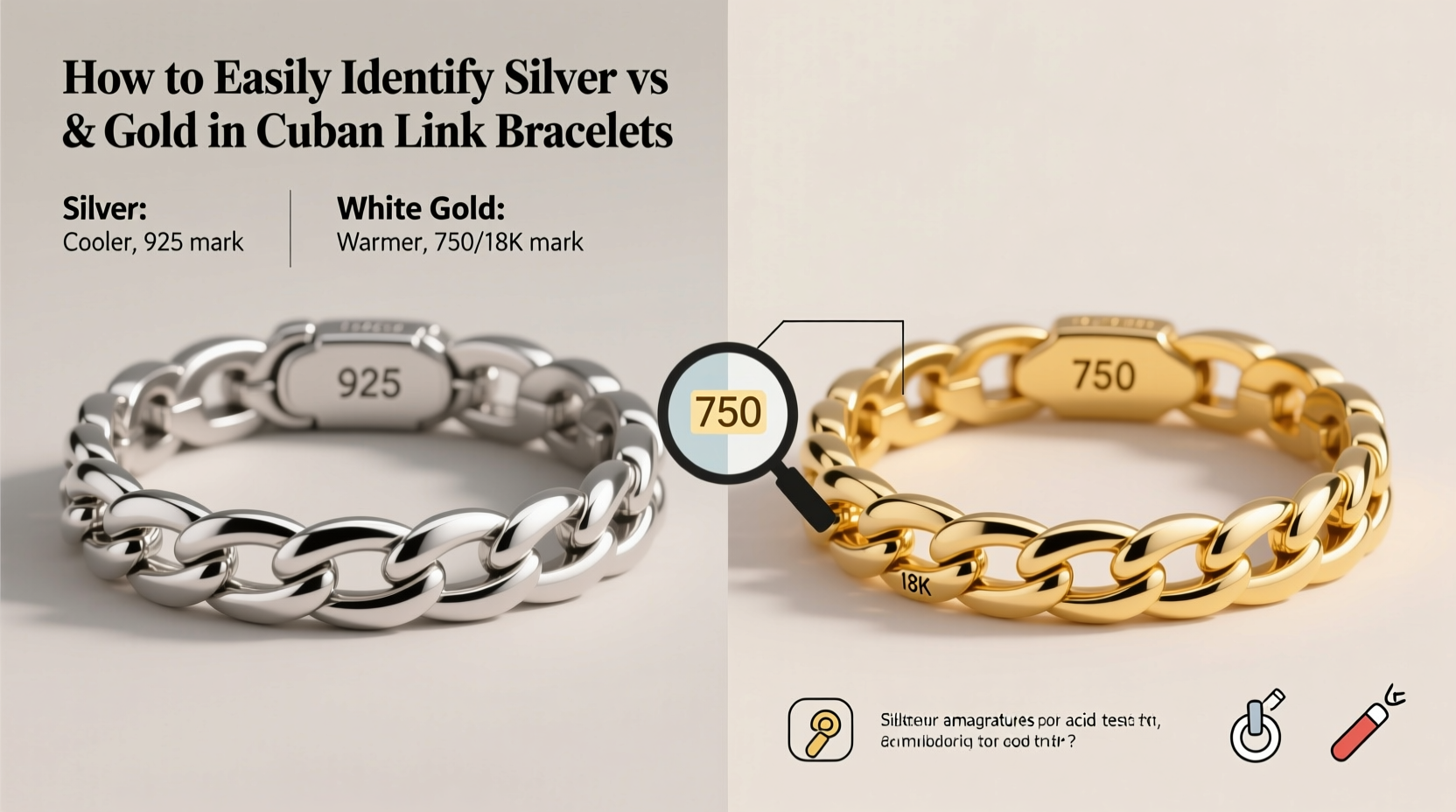
Silver and white gold are fundamentally different in composition, price, and longevity. Sterling silver is an alloy made of 92.5% pure silver and 7.5% other metals, usually copper, to increase strength. It’s affordable but prone to tarnishing and scratching over time. White gold, on the other hand, is typically composed of 75% gold mixed with white metals like palladium, nickel, or manganese, then plated with rhodium for extra shine and scratch resistance. Because it contains gold, white gold is far more valuable and durable.
The visual similarities stem from the rhodium plating commonly applied to both metals. Many sterling silver pieces are also rhodium-plated to enhance their luster and mimic the look of pricier white gold. This cosmetic trick makes identification challenging at first glance—but with the right techniques, you can confidently determine which metal you're dealing with.
Color and Luster: What to Look For
While both metals appear bright and shiny when new, subtle differences in tone become apparent over time. Freshly polished white gold tends to have a slightly warmer undertone beneath its rhodium layer, especially near clasps or worn areas where plating wears thin. Silver, even when rhodium-coated, often develops a cooler, bluish-gray patina as it oxidizes.
Watch for signs of tarnish. If the bracelet shows dark spots, yellowish discoloration, or a dull film after regular wear, it’s likely sterling silver. White gold does not tarnish—it may lose its rhodium shine and appear slightly yellowish if re-plating is overdue, but it won’t develop the grime-like oxidation typical of silver.
Weight as a Reliable Indicator
One of the most practical ways to differentiate silver from white gold is by weight. Gold is significantly denser than silver. Pure gold has a specific gravity of about 19.3 g/cm³, while silver measures around 10.5 g/cm³. Even when alloyed, white gold remains heavier per volume than sterling silver.
If you have two Cuban link bracelets of identical size and design, the white gold version will feel noticeably heavier in hand. This test works best when comparing similar styles—if one feels unexpectedly light for its size, it’s likely silver.
For precise assessment, use a digital jewelry scale. A 20-inch, 10mm-wide Cuban link in white gold can weigh 80–100 grams depending on karat, whereas the same design in silver might only reach 40–60 grams. That nearly 50% difference is often perceptible even without instruments.
Checking for Hallmarks and Stamps
Jewelry manufacturers typically stamp metal type on the clasp or inner side of the chain. These small engravings are among the fastest ways to confirm authenticity. Look closely with a magnifying glass or jeweler’s loupe.
| Metal Type | Common Stamps | What It Means |
|---|---|---|
| Sterling Silver | 925, .925, SS, Sterling | 92.5% pure silver |
| White Gold (14K) | 14K, 14KT, 585 | 58.5% gold content |
| White Gold (18K) | 18K, 18KT, 750 | 75% gold content |
| No Stamp | None visible | Potentially unverified; proceed with caution |
A \"925\" stamp strongly indicates sterling silver. Meanwhile, \"585\" or \"750\" signals white gold. Be cautious of missing stamps—some counterfeit pieces omit markings entirely or fake them poorly. Always cross-reference stamp evidence with other tests.
Professional Testing Methods You Can Trust
When in doubt, professional testing removes all uncertainty. Jewelers use several accurate, non-destructive methods:
- Acid Test Kits: A small file mark is made on an inconspicuous spot, then treated with nitric or testing acid. Silver reacts with a creamy white or green tint, while gold shows little to no reaction depending on karat.
- XRF (X-ray Fluorescence) Analyzers: Handheld devices that scan the metal’s elemental composition instantly. Highly accurate and widely used in pawn shops and appraisal centers.
- Specific Gravity Test: Measures density by weighing the piece in air and submerged in water. Gold sinks faster due to higher density.
“Even experienced buyers get fooled by high-polish finishes. When value is at stake, always verify with a professional assay.” — Rafael Mendez, Certified Gemologist & Jewelry Appraiser
Step-by-Step Guide: How to Identify Your Cuban Link Bracelet
Follow this systematic process to accurately determine whether your Cuban link is silver or white gold:
- Inspect the Clasp Area: Use a magnifier to search for stamps like “925,” “14K,” or “750.” Record any findings.
- Assess the Weight: Compare how heavy the bracelet feels. If possible, weigh it on a precision scale.
- Examine Color Changes: Look for tarnish, dark spots, or uneven wear. Check inner links for underlying yellow or gray tones.
- Perform a Scratch Test (Optional): In a hidden area, lightly scratch the surface and apply a drop of testing acid. Observe the reaction—white/green suggests silver; minimal change points to gold.
- Consult a Professional: Take the piece to a certified jeweler for XRF analysis or full appraisal, especially if resale or insurance is involved.
Real-World Example: A Buyer’s Close Call
Carlos purchased a 22-inch Cuban link online advertised as “luxury white gold” for $800. The photos looked convincing—bright, thick, and mirror-polished. But when it arrived, something felt off. The box was flimsy, and the clasp lacked any stamp. He noticed faint black smudges forming after just two days of wear. Suspecting silver, he visited a local jeweler. An XRF scan confirmed it: the chain was sterling silver with a thin rhodium coating. Carlos saved himself from future disappointment—and potential loss—by acting quickly. His story underscores why visual appeal alone isn't enough.
Do’s and Don’ts When Evaluating Metal Type
| Do’s | Don’ts |
|---|---|
| Check for official hallmarks | Trust glossy photos without verification |
| Weigh the piece before buying | Assume “white metal” means white gold |
| Look for signs of tarnish or wear | Clean aggressively before testing |
| Get a professional appraisal for high-value items | Rely solely on magnet tests (both metals are non-magnetic) |
Frequently Asked Questions
Can a Cuban link bracelet be made of both silver and white gold?
No—not as a single continuous piece. However, some counterfeit chains are constructed with silver cores later electroplated with white gold. True solid white gold pieces are homogeneous throughout. Layered or filled metals must be disclosed legally in many countries.
Does white gold require more maintenance than silver?
In some ways, yes. While white gold doesn’t tarnish, its rhodium plating wears down every 1–3 years and needs re-plating to maintain brightness. Silver requires regular polishing to prevent oxidation but doesn’t need re-plating unless originally coated.
Is it safe to clean silver and white gold the same way?
Not exactly. Both can be cleaned with mild soap and warm water, but avoid abrasive cloths on rhodium-plated surfaces. Ultrasonic cleaners are generally safe for white gold but can damage softer silver if debris is trapped in crevices. Always dry thoroughly.
Final Thoughts: Confidence Starts with Knowledge
Knowing whether your Cuban link bracelet is silver or white gold isn’t just about pride in ownership—it affects care routines, insurance value, and resale potential. By combining visual inspection, weight assessment, hallmark checks, and professional verification, you gain the clarity needed to protect your investment.
Whether you’re building a collection, gifting a statement piece, or verifying authenticity, these practical steps empower you to move forward with certainty. Don’t let appearances deceive you. Arm yourself with facts, trust verified sources, and never hesitate to seek expert help when the stakes are high.




 浙公网安备
33010002000092号
浙公网安备
33010002000092号 浙B2-20120091-4
Comments
No comments yet. Why don't you start the discussion?