
Losing a smartphone is more than just an inconvenience—it can mean losing access to personal data, photos, banking apps, and communication tools. For users of Android devices powered by Google services, there’s a powerful built-in solution: Google’s Find My Device. This tool enables you to track, lock, or erase your phone remotely—often in real time. Whether your phone was misplaced at home, left in a café, or taken during a theft, this guide walks you through the exact steps to recover it quickly and efficiently.
How Google’s Find My Device Works
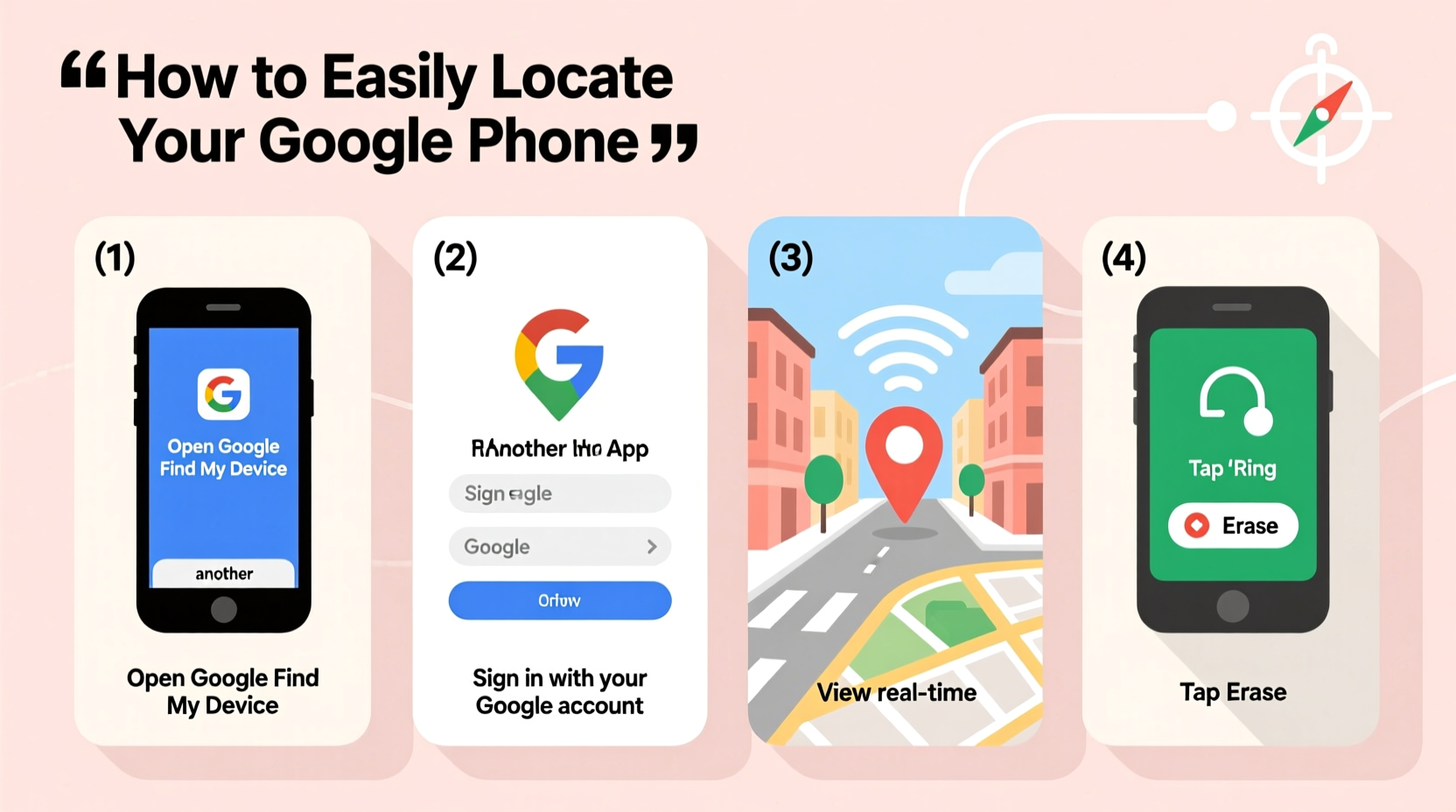
Find My Device (FMD) is Google’s official service for locating lost Android phones. It uses a combination of GPS, Wi-Fi, and mobile network signals to determine your device’s last known location. As long as your phone is powered on, connected to the internet, and has location services enabled, FMD can pinpoint its whereabouts on a map.
The system works across all Android devices signed into a Google account. No additional app installation is required—just ensure that “Location” and “Find My Device” are activated in your phone’s settings. Once enabled, you can access your device from any web browser or another Android phone via the Find My Device app.
“Over 70% of lost Android phones are recovered within the first hour if Find My Device is properly set up.” — Dr. Alan Reeves, Mobile Security Researcher at CyberShield Labs
Step-by-Step Guide to Locating Your Google Phone
If you’ve realized your phone is missing, act fast. The sooner you initiate tracking, the higher your chances of recovery. Follow this timeline-based process:
- Stay Calm and Retrace Your Steps
Take 30 seconds to think where you last had the phone. Check common spots: pockets, bags, car seats, desks. Sometimes it's closer than you think. - Use Another Device to Access Find My Device
Open a web browser on a laptop, tablet, or friend’s phone and go to findmydevice.google.com. Sign in with the same Google account linked to your lost phone. - View Your Phone’s Location
If active, a map will display your phone’s current or last known location. A blue dot indicates real-time position; a gray dot means it’s offline but was recently active. - Play a Sound (Even on Silent Mode)
Click “Play Sound” on the dashboard. Your phone will ring at maximum volume for five minutes—even if it’s set to silent or vibrate. Useful when searching indoors. - Lock Your Device Remotely
Select “Secure Device” to lock it with a PIN and display a custom message (e.g., “Reward if returned. Call 555-1234”). This protects your data without erasing it. - Use Emergency Location Sharing (If Theft Is Suspected)
In cases of theft, enable location sharing with trusted contacts so they can help monitor movement. - Erase Data as a Last Resort
If recovery seems unlikely and sensitive data is at risk, choose “Erase Device.” This resets the phone to factory settings—but disables further tracking.
Essential Pre-Loss Setup Checklist
Recovery success depends heavily on preparation. Most people only think about tracking after losing their phone—too late if features weren't enabled. Use this checklist to ensure your device is always ready:
- ✅ Enable “Location Services” under Settings > Location
- ✅ Turn on “Find My Device” in Settings > Google > Find My Device
- ✅ Ensure your Google account is signed in and synced
- ✅ Keep screen lock (PIN, pattern, or biometric) active
- ✅ Allow background location access for critical apps
- ✅ Regularly charge your phone or carry a power bank
- ✅ Share emergency access with a trusted family member via Google Family Link
Do’s and Don’ts When Your Phone Is Missing
| Do’s | Don’ts |
|---|---|
| Act immediately—within minutes matters | Don’t delay hoping it will turn up on its own |
| Use multiple devices to check Find My Device | Don’t repeatedly call your phone if stolen—could alert thief |
| Notify nearby places (café, gym, taxi company) | Don’t publicly post that your phone is lost on social media |
| Enable remote lock with contact info | Don’t erase your phone until all options are exhausted |
| Report to authorities if stolen with IMEI number | Don’t ignore notifications from Find My Device |
Real Example: Recovering a Phone Left in an Uber
Sophie, a marketing consultant in Austin, left her Pixel 6 in the back seat of an Uber after a late meeting. She noticed 20 minutes later while checking emails on her laptop. Instead of panicking, she opened findmydevice.google.com, saw the car was still moving slowly through traffic, and used the “Play Sound” feature to confirm it was with the driver. She then called the ride-share support line, provided the GPS coordinates from FMD, and the driver located the phone under the seat. Within 45 minutes, it was returned.
This case highlights how speed, proper setup, and understanding the tools lead to successful outcomes. Had Sophie not had location enabled or waited hours to act, the result might have been different.
Troubleshooting Common Issues
Sometimes, Find My Device doesn’t work as expected. Here’s how to address frequent problems:
- Phone Not Showing Up? It may be turned off, out of battery, or disconnected from the internet. Wait and refresh periodically—the moment it reconnects, you’ll see its location.
- Location Inaccurate? Weak GPS signal or indoor positioning can cause drift. Zoom out on the map to look for patterns in recent movements.
- Can’t Lock or Erase? These commands require the phone to come online. They queue automatically and execute once connectivity resumes.
- Not Seeing Recent Activity? Check if location history was disabled. Go to Google Account > Data & Personalization > Location History to verify.
Frequently Asked Questions
Can I locate my phone if it’s turned off?
No real-time tracking is possible when the phone is off. However, Find My Device displays the last known location before shutdown. If the phone powers back on and connects to the internet, you’ll receive an updated location.
Does airplane mode disable tracking?
Yes. Airplane mode disables cellular, Wi-Fi, and Bluetooth—cutting off internet access needed for tracking. However, if GPS remains on and Wi-Fi auto-connects later (e.g., at home), the device may reappear when it reconnects.
Is Find My Device free to use?
Absolutely. Find My Device is a free service included with every Google account. There are no subscriptions or hidden fees. Just make sure your device meets the minimum Android version (Android 4.0+).
Conclusion: Be Prepared Before You Lose Your Phone
Recovering a lost Google phone isn’t a matter of luck—it’s about preparation and swift action. With Find My Device properly configured, you gain a reliable lifeline to locate, secure, or erase your device from anywhere in the world. The key is setting it up before you need it. Take five minutes today to verify your settings, share access with someone you trust, and bookmark the recovery page. That small effort could save you stress, data loss, and hundreds in replacement costs tomorrow.




 浙公网安备
33010002000092号
浙公网安备
33010002000092号 浙B2-20120091-4
Comments
No comments yet. Why don't you start the discussion?