
Filing taxes is rarely enjoyable, but one bright spot for many taxpayers is the anticipation of a refund. Whether you're using that money for debt repayment, savings, or a much-needed vacation, knowing when it will arrive—and whether anything might delay it—is essential. Fortunately, tracking your tax refund has never been easier, thanks to digital tools provided by the IRS and state agencies. With the right approach, you can stay informed every step of the way and avoid common pitfalls that slow down processing.
When Will Your Refund Be Available to Track?
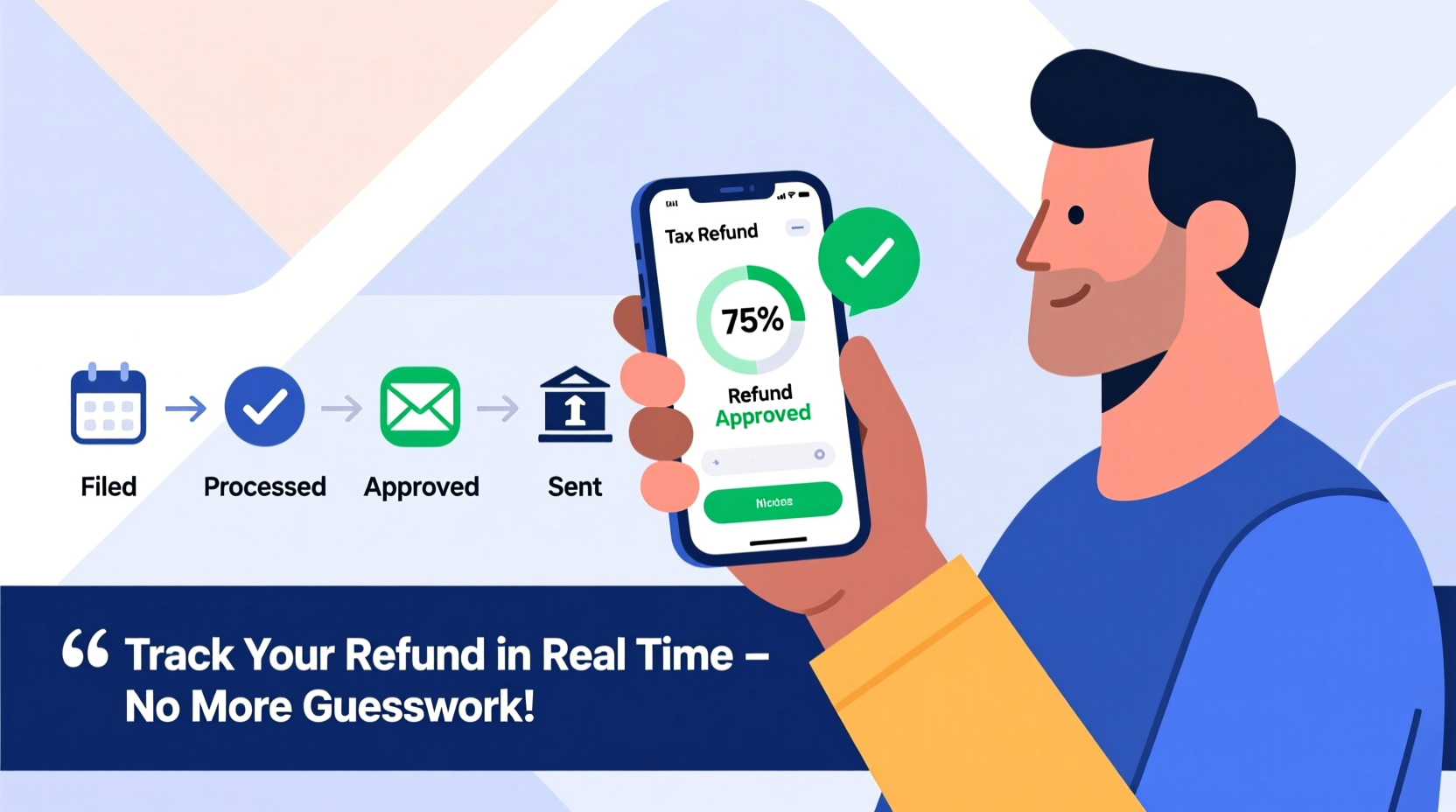
The IRS typically begins accepting tax returns in mid-January each year. Once you file—whether electronically or by mail—the agency starts processing your return. However, tracking isn't immediate. For e-filed returns, the IRS recommends waiting at least 24 hours before checking your refund status. If you mailed a paper return, allow up to four weeks before initiating a search.
The “Where’s My Refund?” tool on the IRS website is the primary resource for federal refund tracking. It updates once per day, usually overnight, so checking multiple times in a single day won’t yield new information. The system provides three key stages: Return Received, Refund Approved, and Refund Sent. Each phase offers clarity about where your refund stands in the pipeline.
Step-by-Step Guide to Tracking Your Federal Refund
- File your tax return. Ensure all forms are accurate and submitted completely. E-filing accelerates processing time significantly.
- Wait at least 24 hours after IRS confirmation. If you e-filed, wait one day; if you mailed it, wait four weeks.
- Visit the official IRS “Where’s My Refund?” tool. Access it at irs.gov/refunds.
- Enter required details: your Social Security number, filing status, and the exact refund amount shown on your return.
- Review the status update. You’ll see one of three messages indicating progress.
- Check back only once daily. Frequent checks don’t speed things up and may trigger security locks.
- Note the refund delivery method. The tool will tell you whether your refund was deposited or mailed, along with the date.
This process applies only to federal refunds. State refund tracking must be done separately through your state’s department of revenue website.
Understanding the Three Stages of Refund Processing
| Status | What It Means | Typical Timeline |
|---|---|---|
| Return Received | The IRS has received your return and begun processing it. | 1–3 weeks after e-filing; longer for paper returns. |
| Refund Approved | Your refund has passed review and is authorized for issuance. | Within 1–2 weeks after \"Received\" status. |
| Refund Sent | The IRS has dispatched your payment via direct deposit or mail. | Direct deposit: 1–5 business days after approval. Check: 7–10+ days. |
Delays beyond these timelines often stem from errors, identity verification issues, or claims involving certain credits like the Earned Income Tax Credit (EITC) or Additional Child Tax Credit (ACTC), which require additional review under the PATH Act.
“Taxpayers who claim certain refundable credits should expect a delay in early February disbursements due to mandatory anti-fraud reviews.” — Internal Revenue Service, Official Guidance
Common Reasons for Delays and How to Avoid Them
Even with accurate filings, some factors can extend processing time. Being aware of them helps set realistic expectations.
- Math errors or incomplete forms: Double-check all entries before submitting.
- Claiming EITC or ACTC: Refunds involving these credits aren’t released before mid-February, even if filed early.
- Identity verification requests: The IRS may send a letter asking for documentation to confirm your identity.
- Amended returns: Form 1040-X takes up to 16 weeks to process and cannot be tracked using “Where’s My Refund?”
- Incorrect bank details: Wrong routing or account numbers lead to failed direct deposits and reissuance delays.
Tracking Your State Tax Refund
Federal tracking tools do not cover state refunds. Each state operates independently, but most offer online portals similar to the IRS system. To find your state’s refund tracker:
- Search “[Your State] + tax refund status” (e.g., “California tax refund status”).
- Navigate to the official state Department of Revenue or Taxation website.
- Locate the refund inquiry section and enter your SSN, filing status, and expected refund amount.
State processing times vary. Some states, like Oregon and Wisconsin, provide weekly update schedules. Others, such as New York and Texas, offer real-time tracking. Paper filers should anticipate longer waits—often 6–8 weeks.
Mini Case Study: Sarah’s Smooth Refund Experience
Sarah, a freelance graphic designer from Colorado, filed her 2023 taxes in late January using tax preparation software. She opted for e-filing and direct deposit into her local credit union account. Two days after submission, she checked “Where’s My Refund?” and saw “Return Received.” By day six, the status changed to “Refund Approved,” and two days later, it read “Refund Sent.” The funds appeared in her account the following morning.
Her success came down to accuracy and timing. She avoided claiming complex credits that trigger holds, used verified financial data, and chose the fastest delivery method. When asked what helped most, she said: “I didn’t panic when I didn’t see updates immediately. I waited, stayed patient, and trusted the system.”
Checklist: Ensure a Fast and Traceable Refund
- ✅ File electronically using IRS-approved software or a CPA.
- ✅ Double-check all personal and financial information for accuracy.
- ✅ Choose direct deposit and verify your bank account and routing numbers.
- ✅ Wait 24 hours (e-file) or 4 weeks (paper) before checking status.
- ✅ Bookmark the official IRS refund tracker and your state’s equivalent.
- ✅ Monitor email and mail for any IRS correspondence requesting additional info.
- ✅ Keep a copy of your return for reference when tracking.
Frequently Asked Questions
Why hasn’t my refund status updated in over a week?
The IRS updates the “Where’s My Refund?” tool once every 24 hours, usually overnight. No change doesn’t mean a problem exists. If no progress appears after 21 days (for e-files) or six weeks (for paper), contact the IRS for assistance.
Can someone else check my refund status for me?
No. The tool requires sensitive personal data only the taxpayer should know. Sharing this information risks identity theft. Consider using a tax professional during filing, but avoid giving them ongoing access to your refund tracker.
What if my refund was sent but I haven’t received it?
If the tool says “Refund Sent” but the money hasn’t arrived, first confirm the deposit date and your bank details. Contact your bank to see if the deposit was rejected. If more than five business days have passed (for direct deposit) or three weeks (for checks), call the IRS at 800-829-1954 to initiate a trace.
Stay Informed, Stay Empowered
Tracking your tax refund doesn’t need to be stressful or mysterious. With the right tools, a little patience, and attention to detail, you can confidently navigate the process from filing to funding. Understanding the timeline, avoiding common errors, and knowing where to look empowers you to take control of your financial timeline. Whether this is your first return or your fiftieth, staying proactive makes all the difference.




 浙公网安备
33010002000092号
浙公网安备
33010002000092号 浙B2-20120091-4
Comments
No comments yet. Why don't you start the discussion?