
Facebook collects and uses location data in multiple ways — from showing nearby events to personalizing ads based on where you’ve been. While this can enhance your experience, it also raises valid concerns about privacy and data control. Many users are unaware of how much location information they’re sharing or how simple it is to adjust these settings. Taking a few minutes to review and customize your location preferences ensures you benefit from relevant features without compromising your personal boundaries.
Why Location Settings Matter on Facebook
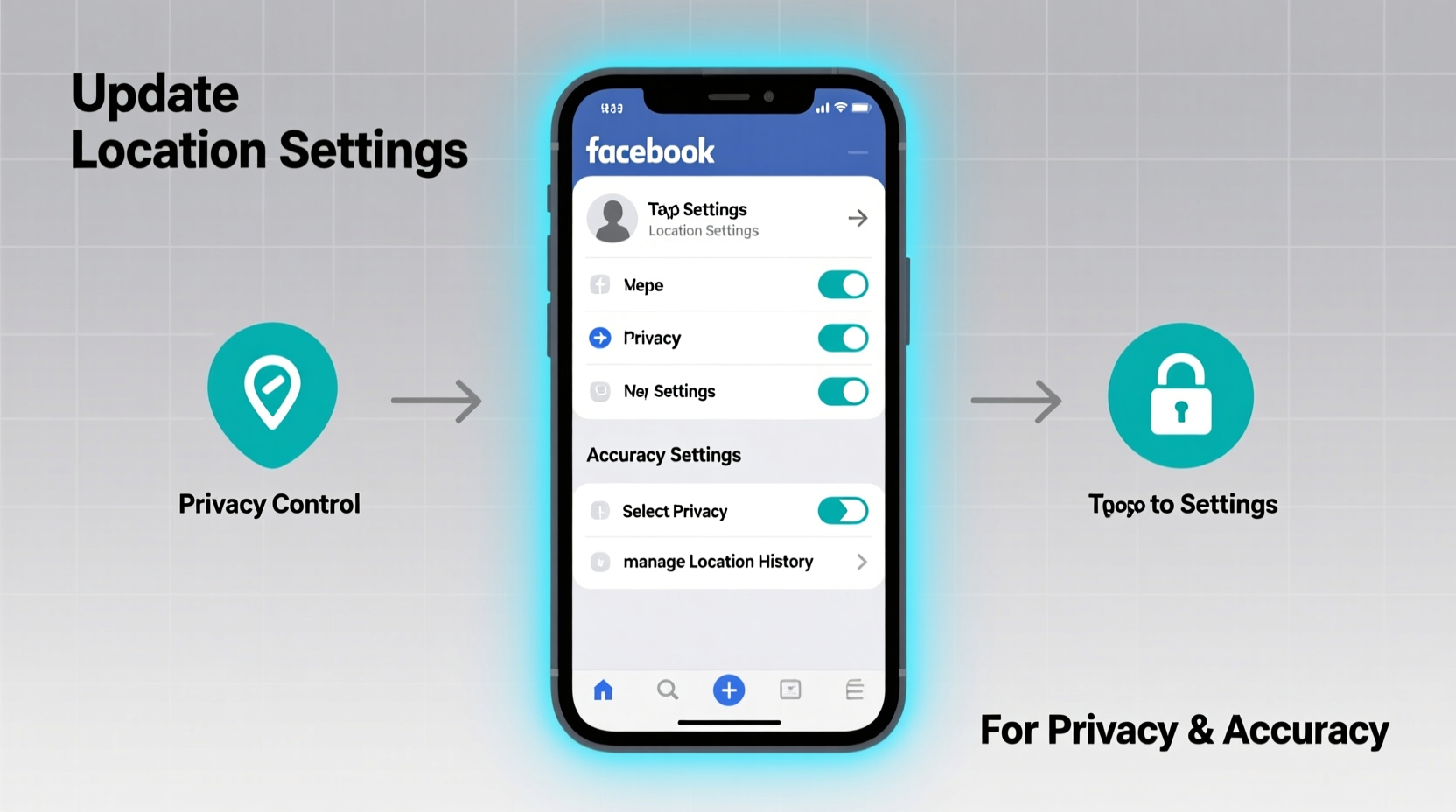
Location data powers several Facebook functions: targeted advertising, friend suggestions, event discovery, check-ins, and more. When enabled, your smartphone’s GPS, Wi-Fi signals, and mobile networks help Facebook determine your whereabouts. This information isn’t just used when you're actively using the app — background activity can still log your movements if permissions allow.
Without proper management, your location history could reveal patterns like your home address, workplace, daily commute, or favorite hangouts. Cybersecurity experts warn that unchecked location sharing increases risks of stalking, identity theft, or unwanted tracking by third parties.
“Users often underestimate how revealing location data can be. A week of movement logs can expose far more than a single photo.” — Dr. Lena Patel, Digital Privacy Researcher at CyberSecure Institute
Step-by-Step: How to Update Your Location Settings on Facebook
Whether you're using an iPhone, Android device, or desktop browser, managing your location is straightforward. Follow this timeline to gain full control:
- Open the Facebook App or Website: Log in to your account via the mobile app (recommended) or desktop.
- Navigate to Settings & Privacy: Tap your profile picture (mobile) or click the dropdown arrow (desktop), then select “Settings & Privacy,” followed by “Settings.”
- Select “Location”: In the left sidebar (desktop) or under “Audience and Visibility” (mobile), tap “Location.”
- Adjust “Location Access”: Choose whether Facebook can access your device’s location:
- Never: No location tracking at any time.
- Only While Using the App: Tracks only during active sessions.
- Always: Allows background tracking (not recommended for most users).
- Review “Location History”: If enabled, disable it here to stop Facebook from storing past locations. You can also delete existing history.
- Manage “Nearby Friends”: This feature lets friends see your real-time location. Toggle it off unless temporarily needed.
- Check Ad Preferences: Go to “Ads” > “Ad Preferences” > “Location” to limit ad targeting based on your city, region, or ZIP code.
Do’s and Don’ts: Best Practices for Location Management
| Do’s | Don’ts |
|---|---|
| ✅ Regularly audit your location permissions every 3–6 months | ❌ Leave “Always” location access enabled indefinitely |
| ✅ Use “Location History” pause option when traveling or on vacation | ❌ Share real-time location publicly via status updates |
| ✅ Turn off Nearby Friends after temporary use (e.g., meeting up) | ❌ Assume turning off GPS disables all tracking — apps may still infer location via IP or Wi-Fi |
| ✅ Clear stored location history periodically | ❌ Ignore notifications asking for location access; always evaluate necessity |
Real Example: Protecting Privacy After a Move
Sophia relocated from Chicago to Denver for a new job and wanted a fresh start online. She noticed that even after updating her profile city, Facebook kept suggesting local groups and services in Illinois. Upon investigation, she discovered her old neighborhood was still visible in ad preferences and that her phone had granted Facebook “always-on” location access.
She followed the step-by-step guide above: disabled background location, turned off Location History, and cleared prior data. Within hours, recommendations shifted to Denver, and irrelevant ads from her former city disappeared. More importantly, her digital footprint no longer betrayed her previous residence — a crucial detail for personal safety as she settled into a new community.
Essential Checklist for Managing Facebook Location Settings
- ☑️ Verify current location access setting on both device and Facebook app
- ☑️ Disable “Location History” or set it to paused
- ☑️ Delete previously stored location data
- ☑️ Turn off “Nearby Friends” unless actively coordinating with someone
- ☑️ Review and adjust ad preferences based on location
- ☑️ Audit other connected apps that may have location permissions through Facebook
- ☑️ Repeat this process quarterly or after major life changes (move, travel, etc.)
Frequently Asked Questions
Can Facebook track my location even if I turn it off?
Not directly through GPS, but indirect methods like IP address, tagged posts, Wi-Fi networks, or friend check-ins can still provide approximate location clues. Disabling location services significantly reduces precision tracking, but complete anonymity requires additional steps like using a trusted VPN and limiting geotagged content.
Will disabling location affect my ability to see local events or news?
It may reduce automatic suggestions, but you can still manually follow local pages, join neighborhood groups, or search for nearby events. The trade-off is slightly less convenience for greater privacy — and you retain control over what you choose to engage with.
How do I stop Facebook from saving my past locations?
Go to Settings > Location > Location History and toggle it off. Then tap “Clear Location History” to remove accumulated data. Once disabled, Facebook will no longer store your movement patterns over time.
Maintaining Long-Term Control Over Your Data
Your digital presence should reflect your current lifestyle and comfort level — not outdated defaults. Facebook’s default settings often prioritize engagement over privacy, which means proactive management is essential. Beyond location, consider reviewing camera access, microphone permissions, and app login authorizations regularly.
Privacy isn’t about hiding; it’s about choosing what to share and with whom. By taking ownership of your location settings, you align your online experience with your real-world boundaries. Small adjustments today prevent larger issues tomorrow — whether it's unsolicited attention, misleading ads, or unintentional exposure.
“Privacy settings aren't one-time fixes. They're part of ongoing digital hygiene, just like updating passwords or clearing cache.” — Mark Tran, Senior Analyst at OpenWeb Security
Take Action Today for a Safer, Smarter Facebook Experience
You don’t need technical expertise to protect your privacy — just awareness and a few deliberate actions. Spend 10 minutes now reviewing your Facebook location settings. Disable unnecessary access, clear old data, and set habits to revisit these controls regularly. Your future self will appreciate the foresight.




 浙公网安备
33010002000092号
浙公网安备
33010002000092号 浙B2-20120091-4
Comments
No comments yet. Why don't you start the discussion?