
Backlinks remain one of the most influential ranking factors in search engine optimization. Google interprets quality inbound links as signals of trust, authority, and relevance. However, not all backlinks are created equal. Some can boost your domain authority, while others may harm your rankings or even trigger penalties. To optimize your link profile, you must first know which sites are linking to you, assess their quality, and take strategic action. This guide walks through proven methods to discover and analyze backlinks with precision and purpose.
Why Backlink Analysis Matters for SEO
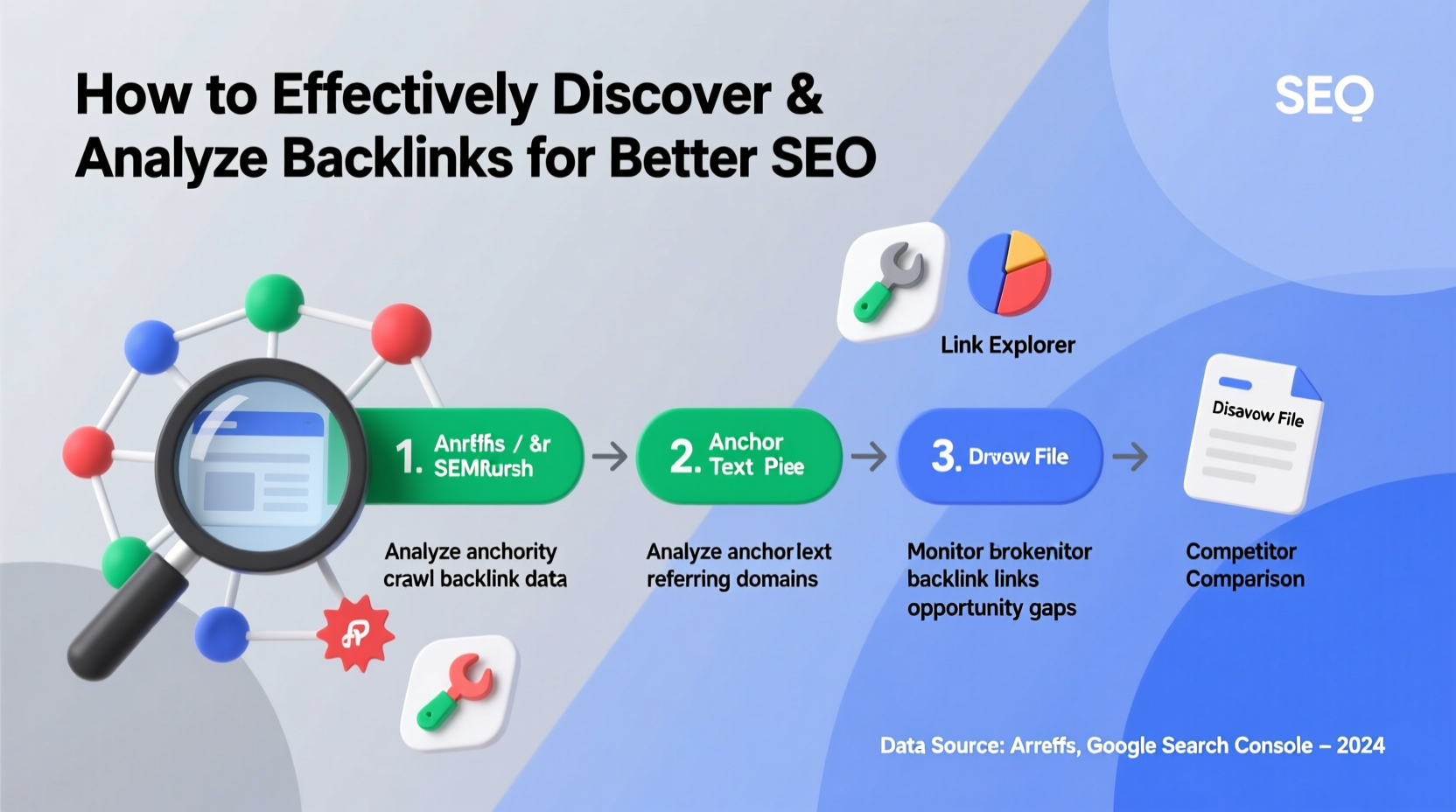
Understanding your backlink profile isn’t just about counting links—it’s about evaluating their impact on your site’s credibility and visibility. A strong backlink profile consists of diverse, authoritative, and contextually relevant links from trustworthy domains. Conversely, a profile cluttered with spammy or low-quality links can drag down your rankings.
Regular backlink audits help you:
- Identify toxic links that may harm your SEO
- Uncover high-performing referral sources
- Discover new outreach opportunities
- Monitor competitor link-building strategies
- Reclaim lost or broken backlinks
“Backlinks are like votes of confidence from other websites. But just as in elections, not every vote carries the same weight.” — John Mueller, Google Search Advocate
Step-by-Step Guide to Discovering Your Backlinks
Finding every backlink pointing to your site requires reliable tools and a systematic approach. Here’s how to do it efficiently:
- Use Google Search Console (GSC)
GSC is a free tool provided by Google and offers verified data directly from the search engine. Navigate to the “Links” report under “External Links” to view top linking sites, top linked pages, and anchor text distribution. - Leverage Third-Party SEO Tools
Platforms like Ahrefs, SEMrush, Moz, and Majestic offer more comprehensive backlink databases than GSC. These tools crawl billions of webpages and index millions of backlinks. For example:- Ahrefs: Known for its massive index and detailed spam score metrics
- SEMrush: Offers competitive backlink gap analysis
- Moz Link Explorer: Provides Domain Authority (DA) and Spam Score
- Run a Site-Specific Search Query
Use Google’s search operator:link:yourwebsite.com. While limited in scope, this shows some of the publicly indexed backlinks Google recognizes. - Check Competitor Backlinks
Enter your competitors’ domains into the same tools to identify where they’re earning links. This reveals potential partnership or guest posting opportunities. - Set Up Regular Monitoring
Enable alerts in your chosen tool to receive notifications when new backlinks are detected—positive or negative.
Analyzing Backlink Quality: What to Look For
Once you’ve compiled your backlink list, the next step is evaluation. Not all backlinks contribute positively. Focus on these key indicators:
| Factor | High-Quality Signal | Red Flag |
|---|---|---|
| Domain Authority (DA)/Domain Rating (DR) | DA/DR above 50 from reputable sources | Below 20, especially from unknown blogs |
| Content Relevance | Link comes from a related industry or niche | From unrelated or foreign-language spam sites |
| Link Type | Dofollow, editorially placed within content | Noindexed, paid, or from comment sections |
| Traffic & Engagement | Site receives organic traffic and shares content | Zero traffic, thin content, or doorway pages |
| Anchor Text | Natural variation (brand, URL, generic) | Over-optimized exact-match keywords |
Prioritize links that come from editorial contexts—such as news articles, expert roundups, or resource lists—over those embedded in footers, directories, or automated blog networks.
Mini Case Study: Recovering from a Toxic Backlink Profile
A mid-sized e-commerce brand noticed a sudden 40% drop in organic traffic over three months. An audit using Ahrefs revealed over 2,300 backlinks from gambling forums, adult sites, and PBNs (Private Blog Networks). Many were acquired years earlier through a now-defunct SEO agency.
The team exported the full backlink list, filtered by spam score (>70), irrelevant niche, and low DR (<15), resulting in a disavow file of 1,800 URLs. After submitting the disavow file via Google Search Console and cleaning up remaining redirect chains, traffic recovered within eight weeks and surpassed previous levels after four months.
This case underscores the importance of periodic backlink reviews—even if your site has been stable for years.
Actionable Checklist: Backlink Audit Process
Follow this checklist to conduct a thorough backlink analysis:
- Connect your site to Google Search Console and export external link data
- Import your domain into Ahrefs, SEMrush, or Moz to gather full backlink inventory
- Filter links by referring domain quality (DA/DR > 30 preferred)
- Flag links from suspicious sources (e.g., casino, pharmacy, adult sites)
- Analyze anchor text distribution for over-optimization
- Review top-performing pages receiving the most quality backlinks
- Compare your profile against 2–3 main competitors
- Compile a disavow file for harmful links using Google’s format
- Submit the disavow file via Google Search Console
- Schedule quarterly backlink audits moving forward
FAQ
How often should I audit my backlink profile?
At minimum, perform a full backlink audit every quarter. If you're recovering from a penalty or undergoing aggressive link-building campaigns, monthly checks are advisable.
Can good backlinks offset bad ones?
Google generally ignores low-quality links rather than penalizing sites outright. However, an overwhelming number of spammy links may raise red flags. It’s safer to disavow clearly toxic links rather than rely on dilution through good ones.
Should I remove or disavow every low-quality backlink?
No. Only disavow links that are clearly manipulative, spammy, or from banned networks. For others, consider requesting removal via email to the webmaster first. Use disavow as a last resort.
Conclusion: Turn Backlink Insights into SEO Growth
Effective backlink discovery and analysis isn’t a one-time task—it’s an ongoing component of technical SEO health. By regularly monitoring who links to you, understanding why they do, and acting decisively on harmful connections, you protect and enhance your site’s authority. The goal isn’t just to accumulate links, but to cultivate a clean, credible, and resilient backlink ecosystem.
Start today: pull your latest backlink report, filter out the noise, and focus on building relationships that earn natural, high-value links. Over time, this disciplined approach will compound into stronger rankings, greater visibility, and sustainable organic growth.




 浙公网安备
33010002000092号
浙公网安备
33010002000092号 浙B2-20120091-4
Comments
No comments yet. Why don't you start the discussion?