
Travel should be about discovery, not anxiety. Yet, one of the most common concerns among globetrotters—especially in crowded airports, train stations, or hostels—is the risk of luggage tampering or outright theft. While locks and tracking devices help, an often-overlooked but highly effective layer of protection is the secure luggage cover. These durable, full-wrap encasements act as both a physical barrier and a visual deterrent. When used correctly, they can significantly reduce the chances of your bag being targeted. This guide breaks down how secure luggage covers work, how to choose the right one, and how to integrate them into a comprehensive anti-theft strategy.
Why Luggage Covers Are More Than Just Protection From Scratches
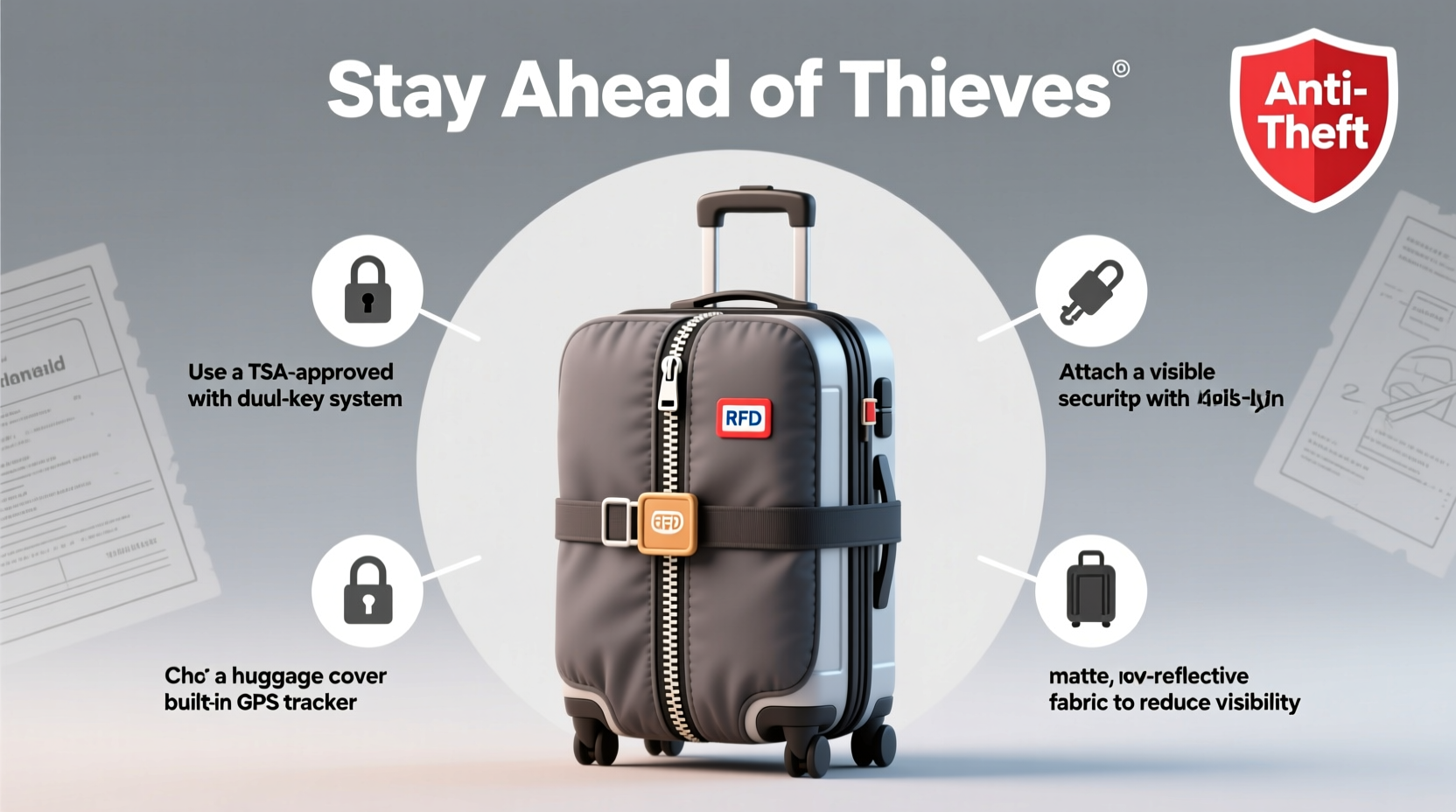
Luggage covers are typically made from stretchable, reinforced fabric like spandex-polyester blends or ripstop nylon, designed to fully envelop your suitcase. While many travelers use them solely to shield their bags from scuffs during transit, their security benefits are substantial. A tightly fitted cover makes it difficult for thieves to unzip your bag quickly and discreetly. It also conceals brand logos and suitcase color, making your luggage less identifiable and therefore less appealing to opportunistic thieves who target high-end brands.
Security experts emphasize that speed and visibility are critical in theft scenarios. Most airport or baggage claim thefts happen in seconds. A cover forces would-be thieves to spend extra time cutting or removing the material, increasing their chance of being noticed. As TSA-certified lock manufacturer Travel Sentry notes: “Any delay introduced by a physical barrier reduces the likelihood of a successful tamper attempt.”
“Thieves look for easy targets. A luggage cover adds friction—both literally and psychologically—that makes your bag less attractive.” — Michael Tran, International Travel Security Consultant
Choosing the Right Secure Luggage Cover: Key Features to Look For
Not all luggage covers offer the same level of protection. To maximize theft prevention, focus on these essential features:
- Material Strength: Opt for covers made from puncture-resistant fabrics like ripstop nylon or those with PVC coating. Avoid thin, purely decorative materials.
- Lock Compatibility: Choose a cover with built-in zipper pull loops or locking points that allow you to secure it with a TSA-approved padlock.
- Tight Fit: The cover should stretch snugly around your suitcase without sagging. Loose covers can be lifted or cut more easily.
- Visibility Reduction: Solid colors or non-descript patterns are better than transparent or logo-emblazoned designs that reveal your suitcase brand.
- Integrated Alarm (Optional): Some premium covers come with motion-sensor alarms that sound if someone tries to lift or open your bag.
Step-by-Step: How to Use a Luggage Cover for Maximum Theft Prevention
A luggage cover is only effective when used correctly. Follow this sequence to ensure optimal protection:
- Pack and Close Your Suitcase: Ensure zippers are fully closed and contents are secured inside.
- Slide On the Cover: Stretch the cover over your suitcase from top to bottom, ensuring no gaps at corners or handles.
- Secure All Openings: If the cover has a zipper or Velcro closure at the bottom, fasten it completely.
- Lock the Zippers: Use a TSA-approved lock through the zipper pulls of your suitcase. For added security, loop the lock through the luggage cover’s designated holes if available.
- Add Identification Discreetly: Attach your contact tag to the inside handle or under the cover—never externally where it can be copied.
- Inspect Before and After Transit: Check the cover for signs of tampering upon arrival. Any cuts, loose stitching, or misalignment could indicate attempted access.
Do’s and Don’ts of Using Luggage Covers for Security
| Do’s | Don’ts |
|---|---|
| Use a cover with lockable zipper tabs | Leave expensive items in outer pockets |
| Choose neutral-colored, non-branded covers | Use flimsy, loosely fitting materials |
| Combine with RFID-blocking pouches for documents | Attach external ID tags showing your name and address |
| Inspect the cover post-flight for damage | Rely solely on the cover without additional locks |
| Store the cover clean and dry after trips | Use a damaged or torn cover—it compromises integrity |
Real-World Example: How a Luggage Cover Prevented Theft in Bangkok
In 2023, Sarah Lin, a freelance photographer traveling through Southeast Asia, left her checked bag unattended for 15 minutes in a Bangkok hostel common area while checking in. Her suitcase—a black hard-shell model—was wrapped in a dark gray luggage cover with a built-in combination lock. Surveillance footage later showed two individuals approaching the bag, attempting to unzip it. The cover resisted initial pulling, and when one tried to slice it with a small blade, the reinforced fibers slowed the process. Within 30 seconds, other guests entered the room, prompting the suspects to flee. Though the cover had a small tear, nothing was stolen.
Sarah later commented: “I almost skipped the cover to save space. But seeing how it bought me time—and drew attention—made me realize it wasn’t just about scratches. It was my first line of defense.”
Integrating Luggage Covers Into a Broader Anti-Theft Strategy
No single tool guarantees 100% protection. For maximum security, combine your luggage cover with other proven tactics:
- Use TSA Locks: Even with a cover, always lock your zippers. The combination of lock and cover creates layered resistance.
- Limit Valuables in Checked Luggage: Keep passports, electronics, jewelry, and cash in your carry-on.
- Tag Smartly: Use digital luggage tags with QR codes that don’t expose personal data.
- Track Your Bag: Consider a Bluetooth or GPS tracker placed *inside* the suitcase, beneath the lining, so it can’t be easily removed.
- Vary Your Routine: Don’t always place your bag in the same spot at hotels or transport hubs—predictability invites risk.
Frequently Asked Questions
Can luggage covers be cut easily?
Basic spandex covers can be sliced with a sharp blade, but high-quality models made from ripstop or coated fabrics resist cutting far better. Look for models advertised as “anti-theft” or “slash-proof” for enhanced durability.
Are luggage covers allowed by airlines?
Yes, all major airlines permit luggage covers. However, TSA agents may remove them during security screening if they need to inspect your bag. Reapply the cover once cleared, especially before connecting flights.
Do I still need a lock if I have a luggage cover?
Absolutely. A cover alone isn’t a substitute for a lock. Together, they create a dual-layer system: the cover hides and resists access, while the lock provides certified tamper evidence.
Final Thoughts: Small Investment, Big Peace of Mind
Preventing luggage theft doesn’t require extreme measures—just smart, consistent habits. A secure luggage cover is a low-cost, lightweight addition to your travel gear that pays dividends in protection and confidence. It won’t stop every determined thief, but it dramatically reduces your risk by eliminating the “easy target” factor. When combined with locks, smart packing, and awareness, it becomes part of a holistic approach to safer travel.
As global mobility increases, so do opportunities for petty crime. But prepared travelers don’t just react—they anticipate. Wrap your suitcase, lock it down, and move through the world with greater assurance. Your next trip shouldn’t start with a missing bag.




 浙公网安备
33010002000092号
浙公网安备
33010002000092号 浙B2-20120091-4
Comments
No comments yet. Why don't you start the discussion?