
In an age where digital memories often live buried in cloud folders, there’s profound beauty in making them tangible again. Handmade ornaments carry emotional weight on their own—but when paired with near-field communication (NFC) technology, they become interactive vessels of memory. Imagine hanging a Christmas tree ornament that, when tapped with a smartphone, plays your grandmother’s voice recounting a holiday story from 1978. This fusion of craft and technology transforms keepsakes into living legacies.
The process is more accessible than most assume. With basic materials, a few digital tools, and careful planning, you can create heirloom-quality ornaments that speak across generations. This guide walks through the entire workflow—from selecting the right NFC chip to recording, uploading, and embedding audio—so each ornament becomes a seamless bridge between tactile tradition and modern storytelling.
Selecting the Right NFC Chip and Tools
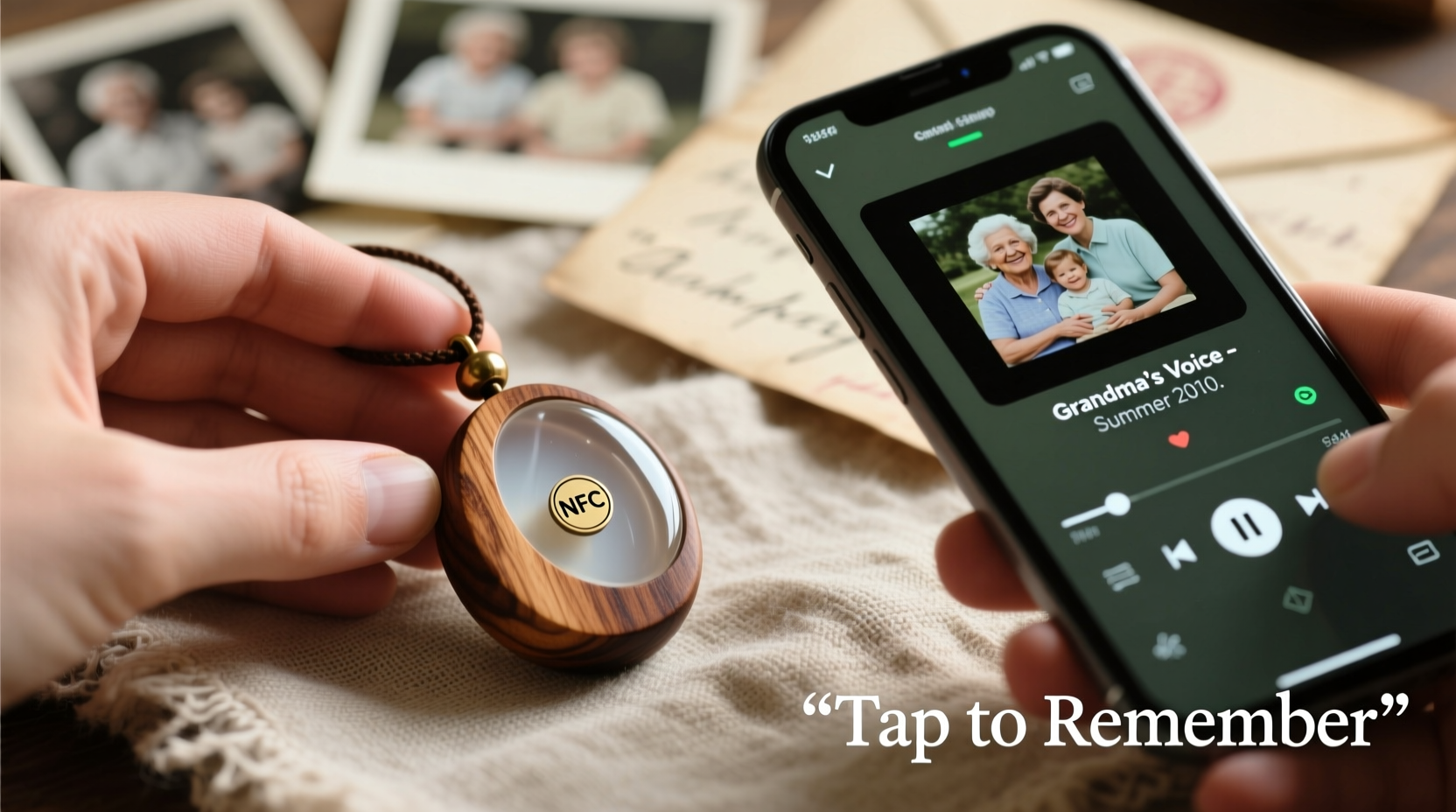
NFC chips are small integrated circuits capable of storing URLs or short data strings. When scanned by an NFC-enabled smartphone (most Android devices and iPhones 7 and newer), they trigger actions—like opening a web link. For this project, the chip will point to a hosted audio file containing your family memory.
Not all NFC tags are created equal. Some are designed for industrial use, others for consumer applications like smart posters or access control. For embedding in delicate handmade ornaments, choose slim, adhesive-backed NTAG213 or NTAG215 chips. These are widely compatible, inexpensive (under $1 per unit in bulk), and capable of storing URLs efficiently.
| Chip Type | Memory Capacity | Best For | Limitations |
|---|---|---|---|
| NTAG213 | 144 bytes | Short URLs, small ornaments | Limited space; URL must be very concise |
| NTAG215 | 504 bytes | Longer links, multiple recordings | Slightly thicker; may require deeper embedding |
| NTAG216 | 888 bytes | Future-proofing, metadata storage | Overkill for simple audio links |
You’ll also need an NFC writing app. On Android, “NFC Tools” (by wakdev) offers full read/write functionality. On iOS, Apple restricts background scanning, but apps like “NFC TagWriter by NXP” work well for programming tags when manually opened.
Recording and Hosting the Audio Memory
The heart of this project lies in the audio clip. It could be a grandparent’s recipe narration, a child’s first poem, or a parent singing a lullaby. The key is clarity, emotional resonance, and brevity—ideally under two minutes.
Use a quiet room and a decent microphone. Most smartphones have sufficient built-in mics if held close and used in a noise-free environment. Record in a lossless format like WAV or high-bitrate MP3 (192kbps or higher). Avoid background music unless it’s part of the memory itself—voice clarity is paramount.
Once recorded, host the file online. You cannot store audio directly on the NFC chip—it only holds a pointer. Therefore, upload the clip to a reliable, long-term hosting platform. Options include:
- Google Drive: Share as “Anyone with the link can view,” then copy the direct download link.
- SoundCloud: Free tier allows public or unlisted uploads with persistent URLs.
- Dropbox: Generate a public link; ensure it points to the raw file, not a preview page.
- Personal website or blog: Ideal for greater control and permanence.
“Audio has a unique power to preserve identity. A voice carries inflection, pause, emotion—things text can’t capture.” — Dr. Lena Patel, Digital Archivist & Oral Historian
After uploading, shorten the URL using a service like Bitly. This reduces the risk of exceeding the NFC chip’s storage limit and improves scan reliability. Test the shortened link on multiple devices before proceeding.
Step-by-Step Guide: Embedding the Chip into the Ornament
This phase blends craftsmanship with precision. Whether your ornament is wood, ceramic, resin, or felt, the goal is to conceal the chip while maintaining NFC readability. Metal and thick conductive materials can block signals, so placement is critical.
- Plan the location: Choose a spot on the ornament where a phone will naturally rest when tapped—typically the back or base. Avoid edges where chips might detach.
- Prepare the cavity: If working with wood or soft material, drill a shallow hole just larger than the chip (usually 2–3mm deep). For resin, pour around the chip during casting. In fabric ornaments, sew a small internal pocket.
- Test before sealing: Place the chip in position and scan it with your phone to confirm it opens the audio link. Do this before gluing or encasing.
- Secure the chip: Use non-conductive adhesive—such as epoxy, hot glue, or fabric glue—to fix the chip in place. Avoid metal-based epoxies.
- Seal and finish: Apply any final coatings—varnish, paint, or sealant—ensuring they don’t contain metallic pigments that could interfere with signal transmission.
- Final test: After curing, scan again. Signal strength should remain strong. If not, reposition or use a higher-memory chip next time.
Real Example: The Holiday Memory Tree
Sarah, a high school art teacher from Vermont, created a “Memory Tree” for her family’s 2023 holiday gathering. Each year, she makes one new ornament tied to a shared experience. That year, she embedded NFC chips into five hand-painted wooden stars, each linked to an audio clip.
One star contained her late father’s voicemail from Christmas 2015: “Just calling to say I love you all. Don’t eat all the peppermint bark before I get there.” Another played her daughter’s kindergarten recital of “Jingle Bells” on recorder—off-key but cherished.
She used NTAG215 chips, hosted files on SoundCloud with unlisted links, and shortened them via Bitly. The chips were recessed into the back of each star and sealed with matte varnish. During dinner, guests passed phones around, tapping ornaments and laughing, crying, remembering.
“It turned our tree into a conversation starter,” Sarah said. “Even my teenage nephew put his phone down and listened to Grandpa’s old jokes.”
Do’s and Don’ts for Long-Term Success
To ensure these memory ornaments remain functional for years, follow best practices that balance durability with technological accessibility.
| Do | Don’t |
|---|---|
| Use URL shorteners to conserve chip memory | Use long, unshortened Google Drive links |
| Host audio on stable platforms with permanent URLs | Rely on social media posts or temporary links |
| Test the NFC scan at every stage | Assume the chip works after initial write |
| Label the chip type and link in a family archive | Forget where you stored the original audio |
| Avoid placing chips near metal or foil elements | Embed chips in metallic paint or aluminum frames |
“Technology should serve memory, not complicate it. The simplest solutions often last the longest.” — Miguel Torres, Interaction Designer & Museum Tech Consultant
Frequently Asked Questions
Can iPhones read these NFC tags?
Yes, but with limitations. iPhones require the user to open the Shortcuts app or a dedicated NFC reader to scan tags until iOS 18, which introduces background scanning for certain tag types. For broader compatibility, pair the NFC tag with an automation shortcut labeled “Play Family Memory” to streamline playback.
What happens if the hosting link expires?
If the audio file is deleted or the hosting service shuts down, the NFC tag will fail. To prevent this, back up the audio in multiple locations (e.g., personal website, cloud drive, physical USB stored with the ornament). Consider using archival services like the Internet Archive for critical recordings.
Can multiple people access the audio, or is it private?
Access depends on your hosting settings. Use “unlisted” rather than “public” links on platforms like SoundCloud or YouTube to keep clips discoverable only by those with the URL. Avoid password protection, as it breaks the seamless tap-to-play experience.
Checklist: Building Your Memory Ornament
- ☐ Choose or make an ornament suitable for embedding
- ☐ Record a clear, meaningful audio clip (under 2 minutes)
- ☐ Upload the audio to a reliable hosting platform
- ☐ Generate a direct-access link and shorten it
- ☐ Purchase NTAG213 or NTAG215 NFC chips (adhesive-backed preferred)
- ☐ Install an NFC writing app on your smartphone
- ☐ Write the shortened URL to the chip and test it
- ☐ Plan and prepare the embedding location on the ornament
- ☐ Secure the chip with non-conductive adhesive
- ☐ Seal and finish the ornament without blocking the chip
- ☐ Perform a final scan test
- ☐ Document the link and chip details in a family archive
Conclusion: Where Craft Meets Legacy
Handmade ornaments have always been more than decoration—they’re emblems of time, love, and continuity. By integrating NFC technology thoughtfully, you deepen their significance. No longer static objects, they become portals to voices from the past, laughter from childhood, promises whispered across decades.
This isn’t about novelty. It’s about preservation. As families grow and generations pass, the textures of memory fade. But a simple tap on a wooden star can bring a lost voice back into the room. That moment—when technology dissolves and emotion remains—is where true connection lives.




 浙公网安备
33010002000092号
浙公网安备
33010002000092号 浙B2-20120091-4
Comments
No comments yet. Why don't you start the discussion?