
Smart glasses have evolved from futuristic novelties into practical, stylish devices that blend seamlessly into daily life. Among their most compelling features is the ability to deliver immersive, high-quality audio without traditional headphones. Whether you're walking through the city, working remotely, or exercising outdoors, smart glasses with integrated audio offer a discreet and comfortable way to enjoy your favorite music. But to truly unlock their potential, it’s essential to understand how they work, how to optimize sound quality, and how to integrate them effectively into your lifestyle.
Understanding Smart Glasses Audio Technology
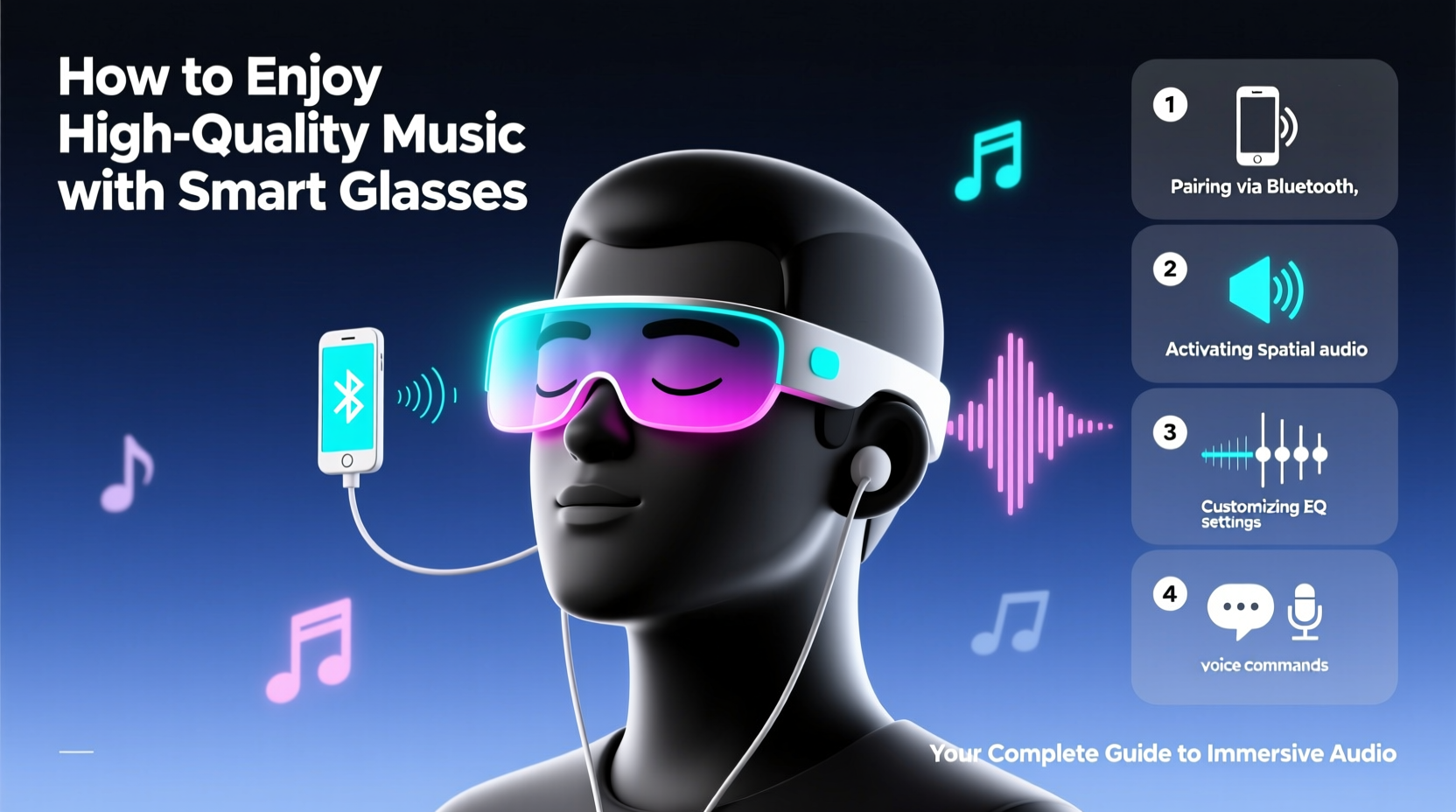
Unlike conventional earbuds or over-ear headphones, smart glasses use open-ear audio delivery systems such as bone conduction or directional speakers. These technologies project sound toward your ears while keeping them uncovered, allowing ambient noise to pass through. This design enhances situational awareness—ideal for cyclists, runners, or urban commuters who need to stay alert.
Bone conduction transmits vibrations through the cheekbones directly to the inner ear, bypassing the eardrums. Brands like Bose and Shokz use this method in select models. Alternatively, many newer smart glasses—including those from Ray-Ban (Meta) and Amazon’s Echo Frames—use forward-firing mini speakers positioned near the temples. These direct sound precisely into the ear canal while minimizing audio leakage.
“Open-ear audio isn’t just about convenience—it’s a safety innovation. Users maintain environmental awareness while enjoying rich, spatial sound.” — Dr. Lena Torres, Audio Ergonomics Researcher at MIT Media Lab
Choosing the Right Smart Glasses for Music Quality
Not all smart glasses prioritize audio fidelity equally. Some focus more on camera functionality or voice assistant integration, while others are engineered specifically for superior sound. When selecting a pair, consider the following key factors:
- Driver type and placement: Look for models with balanced armature drivers or dynamic micro-speakers positioned close to the ears.
- Audio codecs supported: Advanced codecs like AAC or aptX improve Bluetooth streaming quality, especially on Android or iOS devices.
- Noise management: While most smart glasses don’t include active noise cancellation, some offer passive shielding or adaptive volume based on surroundings.
- Battery life: Audio playback drains power quickly; aim for at least 4–6 hours of continuous music use.
| Model | Audio Technology | Bluetooth Codecs | Music Battery Life | Best For |
|---|---|---|---|---|
| Ray-Ban Meta | Open-directional speakers | AAC, SBC | Up to 6 hours | Everyday wear & social sharing |
| Shokz OpenRun Pro | Bone conduction | aptX, SBC | Up to 10 hours | Athletes & outdoor enthusiasts |
| Echo Frames (Gen 2) | Temple-mounted speakers | SBC | Up to 3 hours | Voice-first users |
| Bose Tempo Smart Sunglasses | Proximity voice delivery | AAC | Up to 5.5 hours | High-fidelity audio seekers |
Optimizing Sound Quality: A Step-by-Step Guide
Getting the most out of your smart glasses’ audio doesn’t stop at purchase. Fine-tuning both hardware and software settings can dramatically improve your listening experience.
- Ensure Proper Fit: Ill-fitting glasses shift speaker alignment, reducing bass response and stereo separation. Adjust the frame so the speakers sit just above your ears.
- Use High-Quality Source Files: Stream lossless tracks via services like Tidal, Apple Music (Lossless), or Qobuz when possible. Compressed MP3s limit dynamic range.
- Update Firmware Regularly: Manufacturers often release audio profile improvements. Check companion apps (e.g., Ray-Ban Stories, Shokz App) monthly.
- Adjust EQ Settings: Use your smartphone’s equalizer or third-party apps like Poweramp or Boom to boost mids and highs, compensating for lack of bass due to open-ear design.
- Minimize Wind Interference: In windy environments, use wind shields (available as accessories) or switch to lower treble settings to reduce distortion.
Real-World Listening: A Day in the Life
Jamila, a freelance graphic designer in Portland, uses her Ray-Ban Meta glasses during morning walks and client calls. She starts her day with a curated playlist streamed from Spotify over Bluetooth. Because she values both creativity and safety, she keeps one eye—and ear—on traffic while still enjoying layered instrumentals.
During remote meetings, she relies on the dual-mic system to ensure clear voice transmission. Later, while sketching outside a café, she switches to a podcast using spatial audio mode. The directional speakers prevent sound leakage, so nearby patrons don’t hear her content. At dusk, she activates the automatic volume limiter in low-light conditions to protect hearing after prolonged use.
Her routine demonstrates how smart glasses support multitasking without compromising audio quality or personal safety—a balance difficult to achieve with traditional headphones.
Essential Checklist Before Using Smart Glasses for Music
- ✅ Confirm Bluetooth compatibility with your primary device (iOS/Android)
- ✅ Charge fully before first use (especially important for initial firmware updates)
- ✅ Install the manufacturer’s app for customization options
- ✅ Test audio balance and volume limits in a quiet environment
- ✅ Clean speaker grilles weekly with a dry microfiber cloth to prevent clogging
- ✅ Set up voice assistant shortcuts for hands-free control
- ✅ Enable “Do Not Disturb” modes during focused listening sessions
Frequently Asked Questions
Can I use smart glasses for workouts without damaging them?
Yes, many models—including Shokz and Ray-Ban Meta—are sweat-resistant (IPX4 rated or higher). However, avoid submerging them or exposing them to excessive moisture. Wipe them down after intense exercise.
Is the audio private? Can others hear my music?
To an extent. Modern smart glasses minimize sound leakage through beamforming technology and proximity tuning. However, in very quiet rooms, someone standing close might catch faint audio. Lower volume and use EQ adjustments to reduce outward projection.
How does battery life affect music playback performance?
As battery depletes, audio processing power may drop, leading to reduced clarity or stuttering. For critical listening, keep charge above 30%. Consider carrying a portable charging case if available.
Maximizing Your Experience: Final Recommendations
To fully enjoy high-quality music through smart glasses, treat them not just as wearable tech but as personalized audio companions. Customize EQ profiles for different genres—jazz benefits from warm mids, while electronic music gains from enhanced presence in the upper frequencies. Explore apps that simulate surround sound or binaural effects tailored for open-ear systems.
Additionally, be mindful of volume levels. Since smart glasses don’t seal the ear canal, users often increase volume in noisy areas, risking long-term hearing damage. Follow the 60/60 rule: listen at no more than 60% volume for no longer than 60 minutes at a time before taking a break.
“The future of personal audio lies in integration—not isolation. Smart glasses represent a shift toward context-aware listening that complements, rather than blocks, our environment.” — Kai Renner, Senior Product Designer at Sonos
Start Listening Smarter Today
Smart glasses offer a revolutionary way to experience music—one that combines freedom, safety, and style. By choosing the right model, optimizing settings, and using them mindfully, you can elevate your daily soundtrack without sacrificing awareness or comfort. Whether you’re discovering new music on a commute or enhancing your creative flow, these devices put high-fidelity sound where it belongs: seamlessly into your world.




 浙公网安备
33010002000092号
浙公网安备
33010002000092号 浙B2-20120091-4
Comments
No comments yet. Why don't you start the discussion?