
Heirloom ornaments—whether a tarnished silver locket, a chipped porcelain angel, or a hand-stitched Christmas tree topper—carry more than aesthetic value. They hold memory, lineage, love, and sometimes grief. When we pass these objects to children, we’re not just handing over an item—we’re offering a quiet invitation into family history. Yet many adults hesitate, fearing they’ll burden a child with sadness, confuse them with abstract concepts like “legacy” or “loss,” or accidentally minimize their own feelings in the process. The truth is, children are far more capable of nuanced emotional understanding than we often assume—especially when given age-appropriate language, space to ask questions, and permission to feel ambivalently. This article offers grounded, psychologically informed strategies for translating emotional weight into meaningful connection—not heaviness.
Why “emotional weight” matters—and why kids notice it even when we don’t speak it
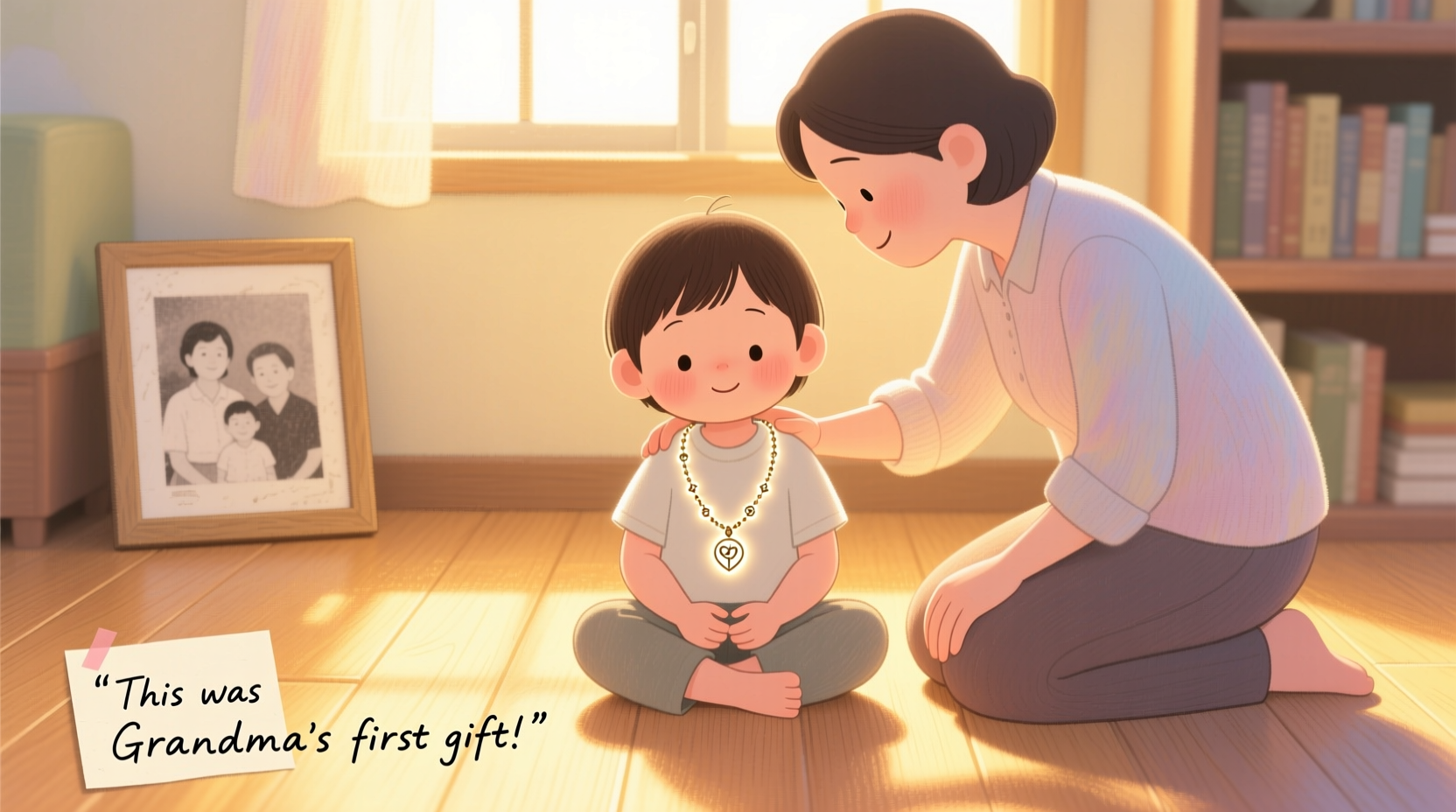
Children sense emotional resonance long before they understand its source. A grandmother’s pause before opening a velvet box, the way a parent’s voice softens while holding a brass bell, or the deliberate placement of a certain ornament on the mantel—all register. Research in developmental psychology confirms that by age 4–5, children begin recognizing objects as “memory anchors.” A 2022 longitudinal study published in Child Development found that children who engaged in guided storytelling around family objects demonstrated 37% stronger narrative coherence and 29% higher empathy scores at age 8 compared to peers who did not. Emotional weight isn’t something to shield children from—it’s relational scaffolding. When we avoid naming the feeling behind an object (“This belonged to Great-Aunt Clara, who loved baking”), we unintentionally teach children that emotion is too dangerous or complicated to discuss. What they internalize instead is silence—not safety.
Developmentally appropriate language: Matching words to cognitive stage
There is no universal “right age” to begin this conversation—but there *is* a right *way*, calibrated to how children think and process meaning at different stages. Avoid metaphors like “carrying someone’s heart” (too abstract for under-7s) or phrases like “she’s watching over us” (which may trigger anxiety in sensitive children). Instead, anchor meaning in concrete, sensory, and relational terms.
| Age Range | What They Understand | Language That Works | What to Avoid |
|---|---|---|---|
| 3–5 years | Objects as extensions of people; comfort through routine and touch | “This necklace felt warm in Grandma’s hands when she wore it. Now it feels warm in yours.” “We hang this star every year because it reminds us of her laugh.” |
“She’s gone forever.” “This is very valuable.” Abstract spiritual claims without context |
| 6–9 years | Beginning grasp of time, continuity, and cause-effect; curiosity about origins | “This spoon was used at your great-grandfather’s wedding breakfast in 1947—before TVs or cell phones existed!” “The crack here happened the day your aunt dropped it laughing. We kept it because it shows how much fun they had.” |
Overloading with dates or names. Minimizing (“It’s just a spoon”). Implying obligation (“You *must* keep this safe.”) |
| 10+ years | Capacity for layered meaning, historical thinking, and personal agency | “This ring belonged to three generations of women who chose their own paths—even when it wasn’t easy. What kind of choices matter to you?” “Would you like to add your own note to the box where we keep these things? You decide what goes in.” |
Assuming they’ll automatically care. Withholding context to “protect” them. Using guilt or duty as motivation. |
A step-by-step approach: From first touch to ongoing meaning-making
Introducing inherited ornaments shouldn’t be a one-time “lesson.” It’s a living practice—one that unfolds across moments, not minutes. Follow this gentle, repeatable sequence to build trust and understanding:
- Invite curiosity, not reverence: Place the ornament within reach—not on a pedestal. Say, “I’d love to show you something my mom gave me. Would you like to hold it?” Let them explore texture, weight, sound, and temperature before any story begins.
- Anchor in one concrete detail: Name *one* tangible fact—not a biography. “This has a tiny dent on the bottom,” or “The ribbon is faded blue, like the sky on your birthday last year.” Keep attention grounded in the present sensory experience.
- Share one human moment—not a full life story: “Your great-grandmother wore this brooch the day she got her driver’s license,” or “We played music and danced with this bell every New Year’s Eve.” Focus on joy, resilience, or ordinary humanity—not loss or tragedy.
- Pause and listen—not interpret: After sharing, stay quiet for 10 seconds. Then ask, “What do you notice?” or “What does this make you wonder?” Resist finishing their sentences or correcting assumptions. Their interpretation is valid data—not a test to pass.
- Offer choice in continuity: “Would you like to help hang this next year?” or “Do you want to draw a picture of how it looks in your hand?” Agency transforms passive inheritance into active belonging.
Mini case study: The cracked teacup and the 7-year-old question
When Maya’s mother handed her a delicate floral teacup—chipped along the rim—her first words were, “Why is it broken?” Her mother paused. She’d planned to say, “Because your great-grandmother dropped it during the war, and she kept it anyway to remember how hard things were.” But seeing Maya’s focused frown, she shifted. “That chip happened when she was laughing so hard she couldn’t hold it,” she said. “She loved tea, but she loved laughter more.” Maya ran her finger over the chip. “Can I use it for hot chocolate?” Her mother nodded. The next week, Maya drew a picture: two stick figures—one with curly hair, one with straight—pouring steaming mugs into each other’s cups. On the back, she wrote, “Laughing cup. For hot chocolate. And stories.” The cup now lives on Maya’s shelf—not behind glass, but beside her favorite book. The emotional weight didn’t vanish. It softened, warmed, and became part of her daily rhythm.
What not to do: Common pitfalls and their gentle alternatives
Well-intentioned adults often unintentionally create distance or anxiety around heirlooms. Here’s how to recognize and reframe those patterns:
- Pitfall: “This is priceless—you must never drop it.”
Why it backfires: Assigns fear, not meaning. Children equate “priceless” with danger, not significance.
Better: “This feels special to me because it reminds me of her kindness. If it breaks, we’ll still remember that—and maybe glue it together, like she did.” - Pitfall: Over-explaining grief or trauma tied to the object.
Why it backfires: Projects adult emotional labor onto a child who lacks context or coping tools.
Better: “Some parts of her story are for grown-ups to hold right now. But this part—the way she sang off-key while stirring soup—that’s for everyone.” - Pitfall: Using the ornament as a moral benchmark (“She would’ve wanted you to be kind”).
Why it backfires: Turns legacy into pressure, not inspiration.
Better: “She told funny jokes. Do you have a joke you’d like to tell me?” (Then later, “That made me think of her.”) - Pitfall: Hiding the object until the child is “old enough.”
Why it backfires: Teaches that emotion is hidden, fragile, or shameful.
Better: Keep it visible but accessible—on a low shelf, in a basket of “story things.” Let familiarity precede explanation.
“The most powerful heirlooms aren’t the ones preserved perfectly—they’re the ones that get held, questioned, repaired, and reimagined across generations. Children don’t need to inherit reverence. They need to inherit relationship.” — Dr. Lena Torres, Clinical Child Psychologist and author of Objects of Belonging: How Family Artifacts Shape Identity
FAQ: Real questions parents ask—and thoughtful answers
What if my child says, “I don’t like it” or “It’s ugly”?
That’s not rejection—it’s honesty. Respond with warmth and curiosity: “Thank you for telling me that. What part feels uninteresting to you?” Often, it’s the color, size, or unfamiliarity—not the sentiment. Invite co-creation: “Would you like to paint a new design on a copy?” or “Could we take a photo and turn it into a sticker for your notebook?” Disliking the object doesn’t mean rejecting the person. It means the child is practicing authentic self-expression—a skill worth honoring.
How do I talk about ornaments linked to painful history—like immigration, illness, or estrangement?
Lead with humanity, not hardship. Focus on agency and resilience: “They carried this spoon across an ocean in a small suitcase because food reminded them of home,” or “She carved this wooden bird while learning to walk again after being sick—so it’s full of patience and hope.” Avoid vague terms like “hard times.” Name specific strengths: courage, creativity, tenderness, stubbornness. Let the child absorb the emotional tone *you* model—not the facts alone.
My child wants to give the ornament away—or sell it. Is that okay?
Yes—if handled with respect. Ask: “What makes you want to share it with someone else?” or “Who do you imagine would enjoy it?” This opens space for values discussion: What makes something meaningful? Who decides? Consider co-creating a “passing ceremony”: writing a short note, taking a photo, or choosing a new home together. Legacy isn’t about possession—it’s about intentionality. A child who chooses thoughtfully is engaging deeply with the concept of stewardship.
Conclusion: Turning weight into warmth
Inherited ornaments are not relics. They are quiet teachers—of continuity, of imperfection, of love that persists beyond presence. When we explain their emotional weight with clarity, humility, and attunement, we do far more than preserve an object. We model how to hold complexity: how joy and sorrow can live in the same silver chain, how memory can be tender without being heavy, how belonging is built not through perfection—but through shared attention, honest words, and the courage to say, “This matters to me, and I wonder what it might mean to you.” Start small. Hold the ornament in your hand. Breathe. Then ask your child: “What do you feel when you hold this?” Listen—not to answer, but to witness. In that exchange, something precious passes—not just metal or cloth, but the unbroken thread of human connection.




 浙公网安备
33010002000092号
浙公网安备
33010002000092号 浙B2-20120091-4
Comments
No comments yet. Why don't you start the discussion?