
Pixar’s Inside Out 2 continues its groundbreaking exploration of human emotion by diving deeper into the psychological landscape of adolescence. Building on the foundation laid in the original film, this sequel introduces new emotional complexities, expands its cast of personified feelings, and confronts the turbulent transition from childhood to teenage years. For viewers seeking more than surface-level entertainment, understanding the narrative structure and thematic depth enhances both appreciation and personal reflection. This guide unpacks the core story elements, symbolic characters, and universal themes that make Inside Out 2 a resonant experience for audiences of all ages.
The Evolution of Riley’s Inner World
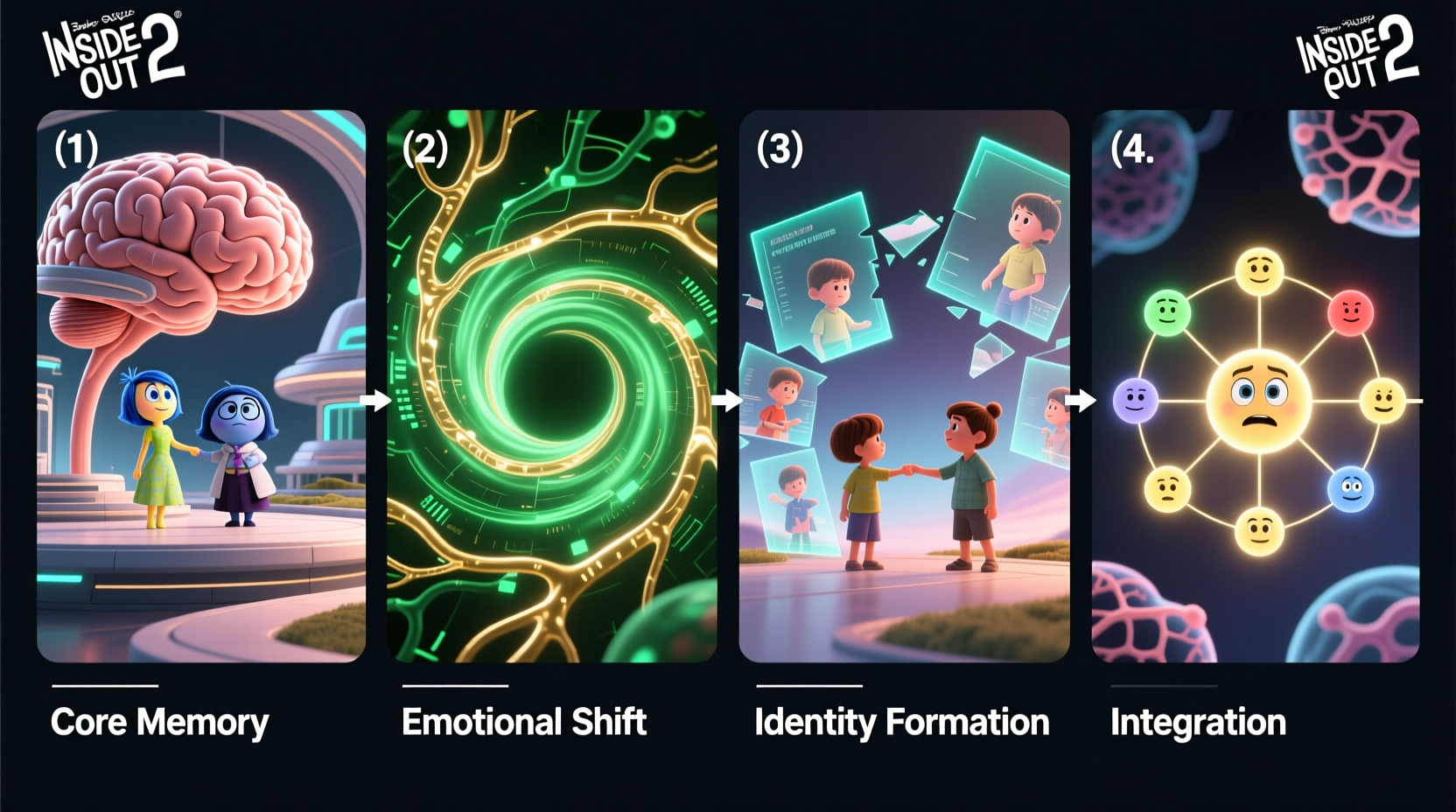
In the first Inside Out, we were introduced to Riley’s mind as a control center operated by five primary emotions: Joy, Sadness, Fear, Anger, and Disgust. The simplicity of that system mirrored her childhood mindset—one defined by clear emotional responses and stable identity. Inside Out 2 disrupts this balance as Riley enters adolescence. Her brain undergoes what the film metaphorically depicts as an “upgrade,” introducing new emotions such as Anxiety, Envy, Embarrassment, and Ennui.
This shift isn’t just narrative flair—it reflects real developmental psychology. As children grow into teens, their cognitive and emotional processing becomes more complex. Self-awareness increases, social comparison intensifies, and future-oriented thinking begins to dominate. The arrival of Anxiety as a central character is particularly telling. She doesn’t appear randomly; she emerges when Riley faces high-pressure situations—joining a competitive hockey camp, navigating new friendships, and fearing rejection.
Core Themes and Their Real-World Relevance
Inside Out 2 transcends typical animated storytelling by embedding clinically accurate concepts within a compelling narrative. Three major themes stand out: identity formation, emotional multiplicity, and the role of anxiety in adolescent development.
Identity Formation Under Pressure
Riley’s sense of self fractures throughout the film. Old personality islands—like Friendship, Hockey, and Honesty—begin to crumble as new social demands challenge her values. This mirrors Erik Erikson’s theory of psychosocial development, where adolescence is marked by the crisis of identity vs. role confusion. The film captures how external expectations (from peers, coaches, parents) can distort internal authenticity.
Emotional Multiplicity and Integration
Where the first film emphasized Joy learning to accept Sadness, the sequel shows Joy grappling with Anxiety—not as an enemy, but as a misguided protector. The message is clear: no emotion should be fully suppressed. Even uncomfortable feelings serve adaptive functions. Anxiety, while overwhelming, often stems from a desire to prepare, protect, or succeed.
“Adolescence isn’t about eliminating difficult emotions—it’s about integrating them into a coherent self.” — Dr. Lisa Damour, Clinical Psychologist and Author of Under Pressure
The Normalization of Mental Health Struggles
By personifying Anxiety and showing her hijacking decision-making processes, the film destigmatizes mental health challenges. It illustrates how anxiety doesn’t mean weakness; it means caring deeply in a world full of uncertainty. This representation offers validation for young viewers who may feel broken for experiencing stress or self-doubt.
New Emotions and What They Represent
The introduction of secondary emotions adds narrative richness and psychological nuance. Each new character symbolizes a distinct aspect of teenage inner life:
| Emotion | Symbolic Function | Real-World Parallel |
|---|---|---|
| Anxiety | Future-focused threat detection | Performance pressure, social fear |
| Envy | Social comparison and desire | Jealousy over others’ success or popularity |
| Embarrassment | Self-monitoring in social contexts | Fear of judgment or humiliation |
| Ennui | Existential boredom or apathy | Teenage disengagement or mood swings |
These emotions don’t replace the originals—they complicate them. Disgust still reacts to social missteps, but now works alongside Envy when Riley feels excluded. Fear amplifies Anxiety’s warnings. The interplay between old and new emotions demonstrates how psychological systems evolve rather than reset during growth.
Step-by-Step Guide to Deep Viewing
To fully appreciate Inside Out 2, passive watching isn’t enough. Engage with the film actively using this structured approach:
- First Watch – Focus on Plot and Emotion: Allow yourself to connect with the story emotionally. Notice moments that trigger empathy, tension, or recognition.
- Second Watch – Track Emotional Shifts: Choose one scene (e.g., Riley at hockey tryouts) and map which emotions take control and why. Note transitions in tone and decision-making.
- Analyze Symbolism: Examine visual metaphors—the collapsing Personality Islands, the fog of confusion, the memory vault expansion. What do they represent psychologically?
- Pause and Reflect: After key scenes, pause and ask: “When have I felt like this?” Link fictional experiences to personal memories.
- Discuss with Others: Share interpretations with friends or family. Compare how different viewers relate to Anxiety, Joy, or Sadness.
A Mini Case Study: Understanding Anxiety Through Maya’s Reaction
Consider Maya, a 13-year-old viewer who watched Inside Out 2 before her school debate competition. In the film, Anxiety floods Riley’s mind with worst-case scenarios—forgetting lines, being laughed at, failing publicly. Maya recognized the same spiral in herself the night before her event.
After the film, she discussed it with her counselor, saying, “I always thought my anxiety was broken, but in the movie, it was trying to protect her. That made me see mine differently.” With this reframing, she began managing her symptoms not by suppression, but by acknowledging their intent: to prepare and prevent harm. She used breathing techniques and positive rehearsal—strategies aligned with cognitive-behavioral therapy—while honoring the emotion’s purpose.
This example illustrates the film’s power: transforming internal conflict into compassionate self-understanding.
Checklist: Maximizing Your Viewing Experience
- ☐ Watch in a quiet environment to catch subtle dialogue and background details
- ☐ Identify which emotion dominates your reactions during tense scenes
- ☐ Note any Personality Island collapses or rebuilds in Riley—and reflect on your own
- ☐ Discuss post-film insights with a friend, child, or therapist
- ☐ Journal about one moment where you saw yourself in Riley or her emotions
- ☐ Revisit scenes involving memory changes—observe how perspective alters recollection
Frequently Asked Questions
Is Inside Out 2 appropriate for young children?
While the film is rated PG, its themes are most relevant to pre-teens and teenagers. Younger children may find Anxiety’s intensity unsettling. Parents are encouraged to watch together and discuss the emotions presented, especially if their child is approaching adolescence.
Can this film be used in educational or therapeutic settings?
Yes. Educators and therapists have begun using clips from both Inside Out films to teach emotional regulation, mindfulness, and cognitive restructuring. The visual metaphors provide accessible entry points for discussing mental health without clinical jargon.
Does Joy regain control by the end? Is that realistic?
Joy doesn’t “regain control” in a hierarchical sense—instead, she learns to collaborate with Anxiety and other emotions. This reflects emotional maturity: leadership isn’t about dominance, but integration. A balanced mind isn’t perpetually joyful; it’s one where all emotions contribute appropriately.
Conclusion: A Mirror for the Mind
Inside Out 2 is more than a sequel—it’s a cultural milestone in emotional literacy. By visualizing the chaos and beauty of growing up, it invites viewers to look inward with curiosity rather than judgment. Whether you’re a teenager navigating identity, a parent seeking understanding, or an adult reflecting on your past, the film offers profound insights into how emotions shape who we are.
Understanding its story and themes isn’t just about analyzing a movie. It’s about recognizing the unseen forces within us all and learning to live with them more compassionately. The next time anxiety flares or embarrassment strikes, remember: these aren’t flaws. They’re parts of you, trying their best.




 浙公网安备
33010002000092号
浙公网安备
33010002000092号 浙B2-20120091-4
Comments
No comments yet. Why don't you start the discussion?