
Perfume is more than a fragrance—it's an extension of identity, memory, and mood. Yet, despite its emotional value, many people unknowingly shorten the lifespan of their favorite scent through improper use and storage. The key to preserving both the integrity and longevity of your perfume lies not just in where you keep it, but in how you apply it. Mastering the art of the spritz can dramatically reduce waste, slow down oxidation, and ensure each bottle lasts longer while delivering consistent performance.
From technique to timing, every detail matters. Whether you own a rare vintage eau de parfum or a daily signature scent, understanding the science behind evaporation, skin chemistry, and spray dynamics empowers you to make every drop count.
The Science Behind Perfume Longevity
Perfumes are complex blends of essential oils, alcohol, and fixatives. Their shelf life—typically 3 to 5 years—is influenced by exposure to light, heat, air, and humidity. Once opened, repeated spraying introduces oxygen into the bottle, accelerating oxidation. This process alters the chemical composition, dulling top notes and muting sillage over time.
The method of application plays a surprisingly large role in this degradation. A heavy-handed press on the atomizer releases more liquid than necessary, increasing product loss and exposing the remaining fragrance to greater air exchange. In contrast, controlled, precise spritzing minimizes these risks.
“Most consumers don’t realize that how they spray affects both performance and preservation. A single, well-placed spritz is often more effective—and economical—than three haphazard ones.” — Dr. Lila Moreau, Fragrance Chemist & Olfactory Consultant
Mastering the Art of the Perfume Spritz
Applying perfume isn't merely about covering yourself in scent; it's about strategic placement for maximum diffusion with minimal waste. The goal is to achieve lasting aroma without oversaturating your skin or environment.
1. Use Short, Controlled Bursts
Aim for one-second sprays rather than long presses. Most modern atomizers dispense 0.05 to 0.1 ml per pump. Over-spraying leads to buildup, which not only wastes product but can overwhelm the senses and degrade faster due to excess alcohol evaporation.
2. Target Pulse Points Strategically
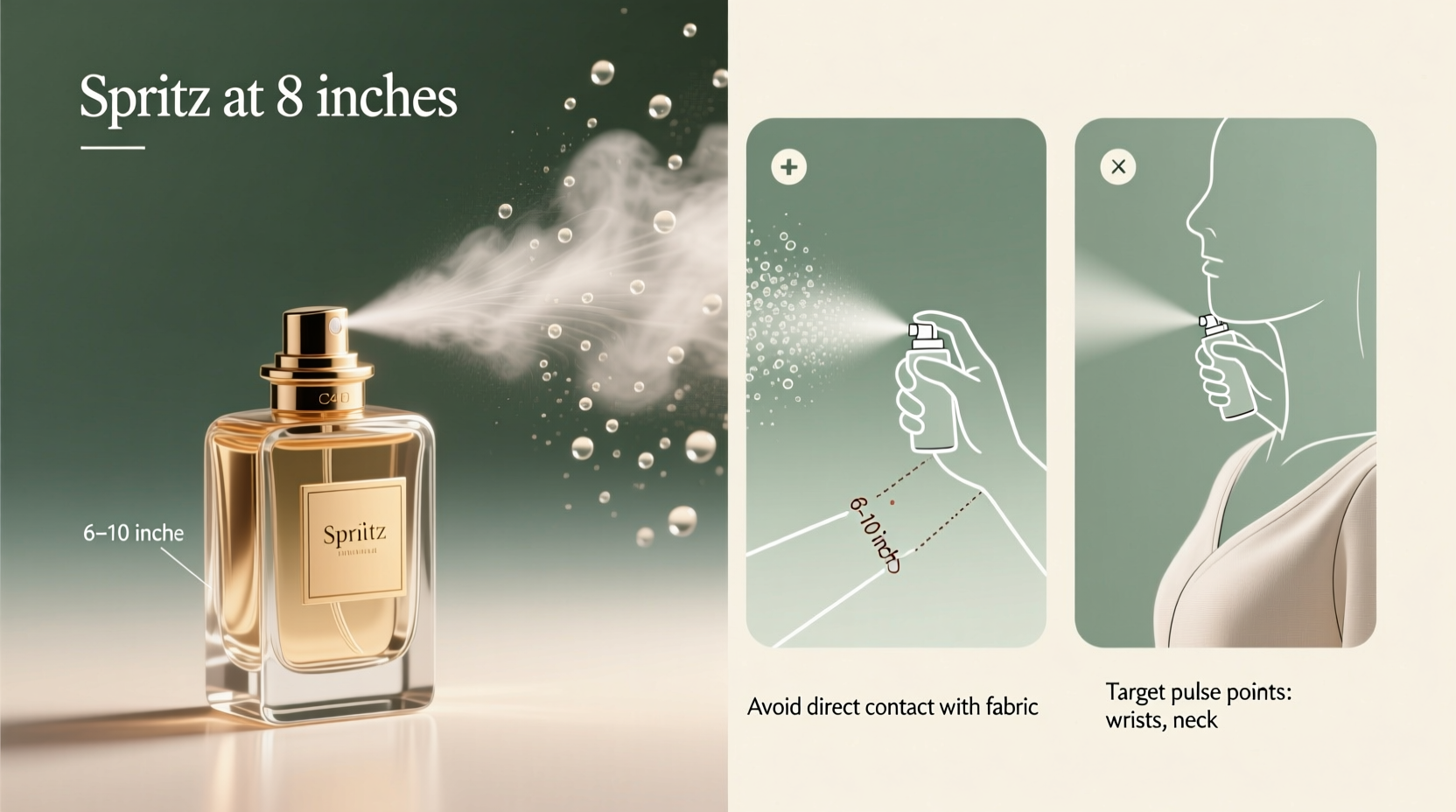
Pulse points generate warmth, helping to diffuse fragrance naturally throughout the day. Focus on areas like the wrists, base of the throat, behind the ears, and inner elbows. Avoid rubbing wrists together after application, as friction breaks down aromatic molecules and reduces longevity.
3. Spray from a Distance
Hold the bottle 7–10 inches (18–25 cm) from your skin. This allows the mist to disperse evenly, creating a light veil rather than a concentrated pool. Closer sprays increase liquid deposition, leading to faster evaporation and inconsistent wear.
4. Layer Before Spraying
Apply an unscented moisturizer or matching body oil before spraying. Hydrated skin holds fragrance longer, reducing the need for reapplication. For optimal results, choose fragrance-free lotions to avoid scent interference.
5. Use the \"Walk-Through\" Method for Sillage
To enhance projection without dousing yourself, spray once into the air and walk through the mist. This distributes fragrance lightly across clothing and hair, creating a subtle aura. Ideal for strong extrait concentrations or bold oriental scents.
Storage Habits That Complement Smart Spritzing
No spritz technique can compensate for poor storage. Even the most careful application will fail if the bottle is exposed to degrading elements. Proper storage preserves the formula between uses, ensuring each spritz delivers the intended olfactory experience.
| Factor | Best Practice | Avoid |
|---|---|---|
| Light | Store in original box or dark cabinet | Sunlight or bathroom windowsills |
| Temperature | Cool, stable environment (68–72°F / 20–22°C) | Hot cars, steamy bathrooms, radiators |
| Humidity | Dry space with low moisture | Shower-side shelves or damp drawers |
| Air Exposure | Keep cap tightly closed; minimize unnecessary testing | Leaving uncapped or sampling multiple times daily |
For collectors or those who rotate fragrances seasonally, consider storing backups in a dedicated drawer lined with acid-free tissue paper. Some connoisseurs even use small silica gel packs nearby (not touching the bottle) to absorb ambient moisture.
Step-by-Step Guide: Maximizing Each Bottle
Follow this routine to extend your perfume’s life from opening to final drop:
- Unbox thoughtfully: Remove the outer packaging but retain the box. Store the bottle inside it when not in use to block UV rays.
- Prime the atomizer: On first use, press the nozzle 3–5 times into the air to establish consistent spray pattern. Do this away from fabric to prevent staining.
- Apply mindfully: Choose 1–2 pulse points per application. One spritz per location is usually sufficient.
- Refrigerate off-season scents: For perfumes used only in summer or winter, store them in a sealed container in the fridge. Cold slows oxidation. Allow warming to room temperature before use.
- Rotate bottles: Alternate between 2–3 favorites weekly to reduce air exposure in any single bottle.
- Track usage: Note the opening date on the bottom with a soft label. This helps monitor freshness and detect changes in scent profile.
- Use decanters sparingly: While convenient, transferring to smaller bottles increases oxidation risk. Only decant what you’ll use within 3 months.
Real Example: How Sarah Doubled Her Niche Perfume’s Lifespan
Sarah, a fragrance enthusiast from Portland, owned a limited-edition 50ml bottle of a niche floral-woody scent priced at $180. Initially, she applied two heavy sprays to each wrist and neck daily, finishing the bottle in under four months. After learning about controlled spritzing, she adjusted her routine: one short spray behind each ear and one at the collarbone, stored the bottle in its box inside a bedroom drawer, and avoided wearing it during workouts.
The result? The same volume lasted nearly nine months—more than double the original duration—with no loss in projection or complexity. “I didn’t realize I was drowning in scent,” she said. “Now, people notice it more because it’s balanced, not overpowering.”
Frequently Asked Questions
Can I extend my perfume’s life by refrigerating it?
Yes, but selectively. Refrigeration slows oxidation and is ideal for perfumes you don’t use regularly, especially citrus or green compositions prone to fading. Always seal the bottle in an airtight bag to prevent odor contamination. Bring it to room temperature before applying, as cold fragrance won’t diffuse properly on cool skin.
Does spraying on clothes last longer than on skin?
Often, yes. Fabric fibers absorb and hold fragrance longer than skin, which heats up and evaporates scent more quickly. However, some dyes and synthetic fabrics may react with alcohol or oils, causing stains or altered scent profiles. Test on an inconspicuous area first. Natural fibers like cotton, wool, and silk are safest.
Why does my perfume smell different after six months?
This is likely due to oxidation or exposure to environmental factors. Top notes (citrus, herbs) fade first, leaving heavier base notes (vanilla, musk, woods) dominant. If the scent turns sour, sharp, or flat, the fragrance has degraded. Proper storage and minimized air contact help prevent this shift.
Checklist: Daily & Long-Term Care Routine
- ☑ Apply only 1–2 spritzes per wear
- ☑ Store in original box, away from sunlight
- ☑ Keep bottle upright to protect the atomizer mechanism
- ☑ Cap tightly after every use
- ☑ Avoid spraying in humid environments (e.g., post-shower steam)
- ☑ Rotate between multiple bottles to limit air exposure
- ☑ Clean nozzle monthly with a soft cloth (dampened with water if needed)
- ☑ Track opening date for freshness awareness
Advanced Tips for Collectors and Connoisseurs
For those with extensive collections, additional precautions preserve investment value and sensory fidelity:
- Limit sampling: Avoid testing multiple perfumes in one session. Each spray introduces air into the bottle. Instead, sample one scent per day.
- Use clean hands: Oils, lotions, or previous fragrances on fingers can contaminate the nozzle or alter future sprays.
- Invest in travel cases: Hard-shell cases with foam inserts protect bottles from heat, light, and breakage during transit.
- Monitor batch codes: Some vintage perfumes improve with age, but most do not. Research your specific fragrance to determine optimal aging window.
Remember: extending perfume life isn’t about deprivation—it’s about intentionality. A well-placed spritz lingers in memory far longer than a cloud of excess.
Conclusion: Make Every Spritz Count
Your favorite perfume deserves more than casual use—it deserves stewardship. By refining your spritz technique, respecting storage fundamentals, and applying fragrance with purpose, you preserve not just the liquid in the bottle, but the experience it delivers. These habits transform fleeting moments into lasting impressions, both on your skin and in your collection.
Start today: take one bottle, assess its current condition, and apply the principles outlined here. Notice the difference in longevity, balance, and presence. Small changes compound into significant savings and deeper enjoyment. Perfume is an art—treat its application and preservation as such.




 浙公网安备
33010002000092号
浙公网安备
33010002000092号 浙B2-20120091-4
Comments
No comments yet. Why don't you start the discussion?