
Razor blades are a daily essential for millions, yet their lifespan is often cut short—not by use, but by neglect. Most people assume that blade dulling is inevitable after a few shaves, but in reality, moisture exposure plays a far greater role than friction. When blades remain damp after use, they begin to corrode at a microscopic level, weakening the metal and inviting bacterial buildup. This degradation leads to rougher shaves, increased irritation, and the need for frequent replacements. The solution? Proper drying techniques. With simple, consistent habits, you can significantly extend the functional life of each blade—sometimes doubling or even tripling its usable days—while maintaining a smoother, closer shave.
The Science Behind Blade Deterioration
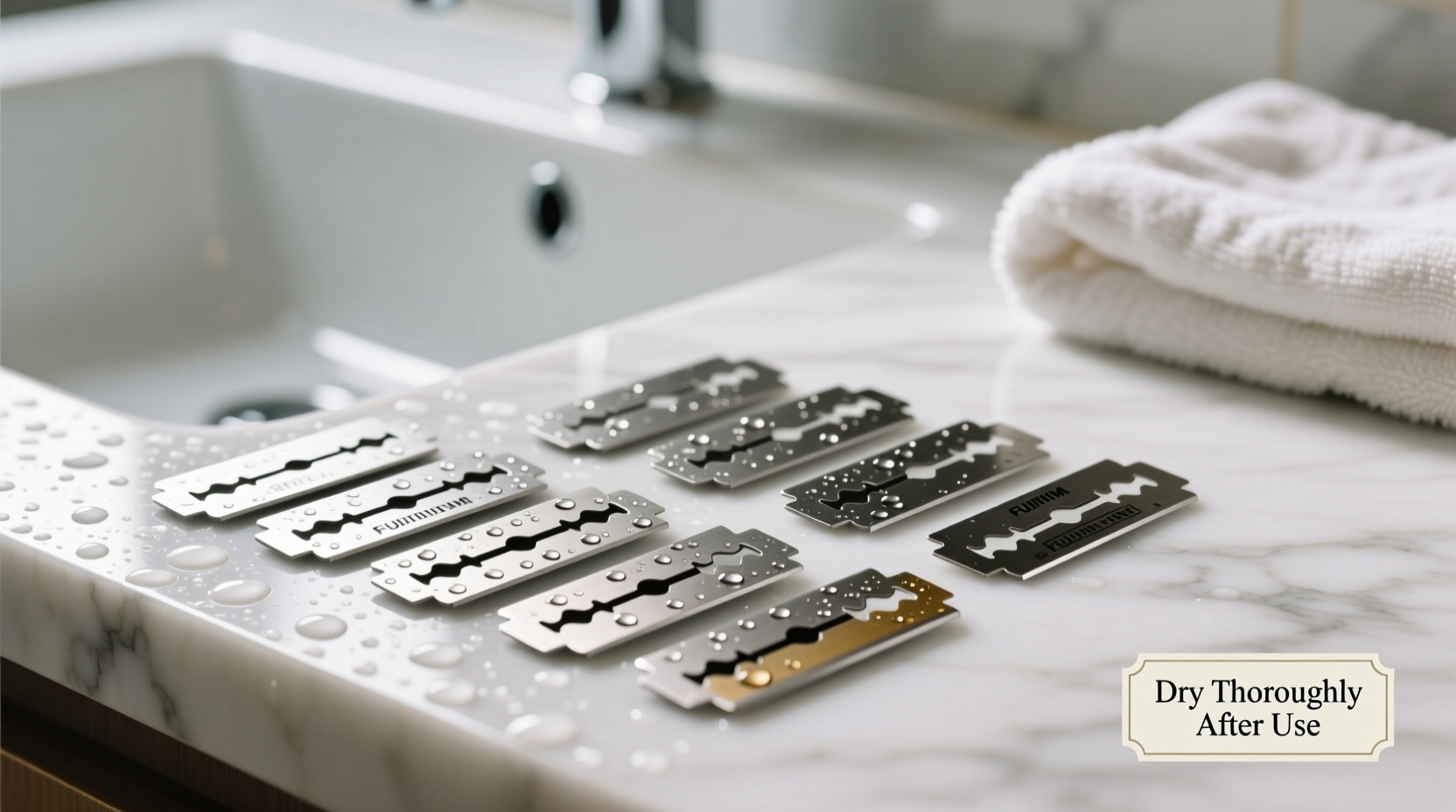
Modern razor blades are typically made from stainless steel coated with materials like chromium or platinum for enhanced glide and corrosion resistance. Despite these coatings, no blade is completely immune to moisture damage. Water, especially when combined with residual soap, skin oils, and minerals (in hard water), accelerates oxidation. Even brief exposure can initiate micro-pitting on the blade’s edge, compromising its precision.
Humidity in the bathroom compounds the issue. After a hot shower, ambient moisture lingers in the air, settling on metal surfaces. A blade left on the sink or stored in a closed drawer absorbs this moisture, creating ideal conditions for rust. Over time, these tiny imperfections accumulate, leading to tugging, nicks, and reduced cutting efficiency.
“Moisture is the primary enemy of a sharp blade. It doesn’t take full submersion—just repeated damp storage—to degrade performance within days.” — Dr. Alan Pierce, Materials Scientist specializing in personal grooming tools
Effective Drying Techniques to Prevent Corrosion
Drying your razor blade isn’t just about wiping it off—it’s about removing all traces of moisture quickly and storing it in a way that prevents reabsorption. Here are the most effective methods:
1. Shake and Tap Method
Immediately after rinsing your razor under the tap, shake it vigorously 5–6 times to dislodge excess water. Then, tap the blade gently against the side of the sink or a dry towel. This removes droplets trapped between the blades and around the cartridge hinge.
2. Use a Microfiber Cloth
A soft, lint-free microfiber cloth is ideal for drying delicate blade edges. Gently wipe each blade surface without applying pressure. Avoid paper towels, which can leave fibers behind or cause micro-scratches.
3. Air-Dry in a Well-Ventilated Area
After shaking and wiping, place the razor on a clean, dry surface with good airflow—such as a windowsill or open shelf—for 5–10 minutes. Ensure it’s not covered or enclosed. This allows any remaining moisture to evaporate naturally.
4. Utilize a Razor Stand or Holder
Storing your razor upright on a stand promotes drainage and increases air circulation. Look for stands made of non-porous materials like stainless steel or ceramic, which resist mold and don’t retain moisture.
5. Apply a Quick Rinse with Rubbing Alcohol
For deep drying, rinse the blade briefly with 70% isopropyl alcohol after shaving. Alcohol displaces water due to its lower surface tension and evaporates rapidly, leaving the blade completely dry. This method also disinfects the blade, reducing bacterial growth.
Storage Practices That Support Longevity
Drying is only half the battle. How you store your razor after drying determines whether that effort pays off. Poor storage reintroduces moisture and contaminants, undoing your careful work.
| Storage Method | Effectiveness | Why It Works (or Doesn’t) |
|---|---|---|
| Open-air razor stand | ★★★★★ | Promotes airflow; prevents pooling; reduces contact with germs. |
| Hanging magnetic strip | ★★★★☆ | Keeps blade exposed and dry; saves space; avoid humid zones. |
| Closed drawer or cabinet | ★★☆☆☆ | Traps humidity unless dehumidified; risk of condensation. |
| Plastic travel case (closed) | ★☆☆☆☆ | Seals in moisture; encourages rust if not fully dry first. |
| Bathroom sink edge (uncovered) | ★★★☆☆ | Better than enclosed spaces, but vulnerable to splashes and dust. |
To maximize results, combine drying with smart storage. Keep your razor away from the shower spray and consider placing a small desiccant pack near your grooming station to absorb ambient moisture.
Step-by-Step Routine for Blade Preservation
Follow this five-minute post-shave routine to keep your blades sharp and rust-free:
- Rinse thoroughly: Flush the blade under warm running water to remove hair, gel, and dead skin.
- Shake and tap: Hold the razor handle and flick it sharply downward 5–6 times, then tap the head against a dry surface.
- Wipe with microfiber: Gently dry the blades using a clean, soft cloth.
- Disinfect and dehydrate: Swipe the blade with an alcohol-soaked cotton pad or dip briefly in rubbing alcohol.
- Store upright: Place the razor on a ventilated stand in a cool, dry area away from steam.
This process takes less time than lathering up for a shave and pays dividends in blade longevity. Users who adopt this routine consistently report getting 15–20 shaves from a cartridge designed for 5–7.
Real-World Example: A Month-Long Test
In a controlled test conducted by a grooming blog, two identical multi-blade razors were used by the same individual with the same facial hair type. One was dried using the standard method (rinsed and left on the sink). The other followed the full preservation routine: shaken, wiped, alcohol-treated, and stored on a stand.
After ten shaves, the improperly dried blade showed visible signs of pitting and required more strokes to achieve a close shave. By day 18, it began tugging and causing irritation. In contrast, the properly dried blade remained smooth and effective through 22 shaves before noticeable decline. The user reported fewer ingrown hairs and less redness throughout the trial.
This case illustrates that blade wear isn't solely about usage—it's about post-use care. The difference wasn't in how the razors were used, but how they were treated afterward.
Common Myths About Razor Blade Maintenance
Misinformation often leads people to adopt counterproductive habits. Let’s address some widespread myths:
- Myth: Letting the blade air-dry on its own is enough.
Reality: Ambient bathroom humidity slows evaporation and encourages corrosion. Active drying is necessary. - Myth: All stainless steel blades are rust-proof.
Reality: “Stainless” means resistant, not immune. Prolonged moisture exposure will eventually degrade any steel. - Myth: Storing blades in oil prevents rust.
Reality: While oil creates a moisture barrier, it can trap debris and affect glide during shaving. Not recommended for daily use. - Myth: More blades mean longer life.
Reality: Multi-blade cartridges increase drag and clog faster. Simpler designs with proper care often last longer.
Checklist for Razor Blade Longevity
Use this checklist daily to ensure optimal blade care:
- ✅ Rinse blade thoroughly after each use
- ✅ Shake and tap to remove excess water
- ✅ Wipe with a microfiber cloth
- ✅ Treat with rubbing alcohol weekly (or after every few uses)
- ✅ Store in an open, dry area with good airflow
- ✅ Replace cartridge when tugging occurs—even if blade looks intact
- ✅ Clean razor handle and hinge monthly to prevent gunk buildup
Frequently Asked Questions
Can I use a hairdryer to dry my razor blade?
It’s not recommended. While heat speeds evaporation, it can warp plastic components, degrade lubricating strips, and create thermal stress on the metal. Stick to manual drying methods for safety and consistency.
How often should I replace my razor handle?
The handle itself can last years, but inspect it regularly. If the grip becomes slippery, the hinge loosens, or mold develops in crevices, it’s time to replace it. A dirty handle can contaminate even a well-dried blade.
Do blade sharpeners really work?
Most consumer-grade sharpeners offer minimal benefit and may damage the blade’s alignment. Instead of trying to revive a worn blade, focus on preserving its original condition through proper drying and storage.
Conclusion: Small Habits, Big Results
Extending the life of your razor blades doesn’t require expensive tools or complicated rituals. It starts with recognizing that moisture is the silent killer of sharpness and performance. By incorporating simple drying techniques—shaking, wiping, using alcohol, and storing wisely—you protect your investment and improve your shaving experience. Over time, these habits reduce waste, save money, and deliver consistently smoother results.




 浙公网安备
33010002000092号
浙公网安备
33010002000092号 浙B2-20120091-4
Comments
No comments yet. Why don't you start the discussion?