
Choosing where to live is one of the most impactful decisions you can make. It affects your daily routine, career opportunities, relationships, mental health, and long-term financial stability. Yet many people move based on impulse, job transfers, or temporary circumstances without fully considering whether the location aligns with their lifestyle and goals. The right place doesn’t just offer convenience—it supports who you are and who you want to become.
Finding that ideal spot requires more than scrolling through real estate listings or checking weather averages. It demands introspection, research, and strategic planning. This guide walks you through a proven, structured process to help you identify the best possible location for your next chapter—whether you're relocating across town or across the country.
Step 1: Clarify Your Lifestyle Priorities
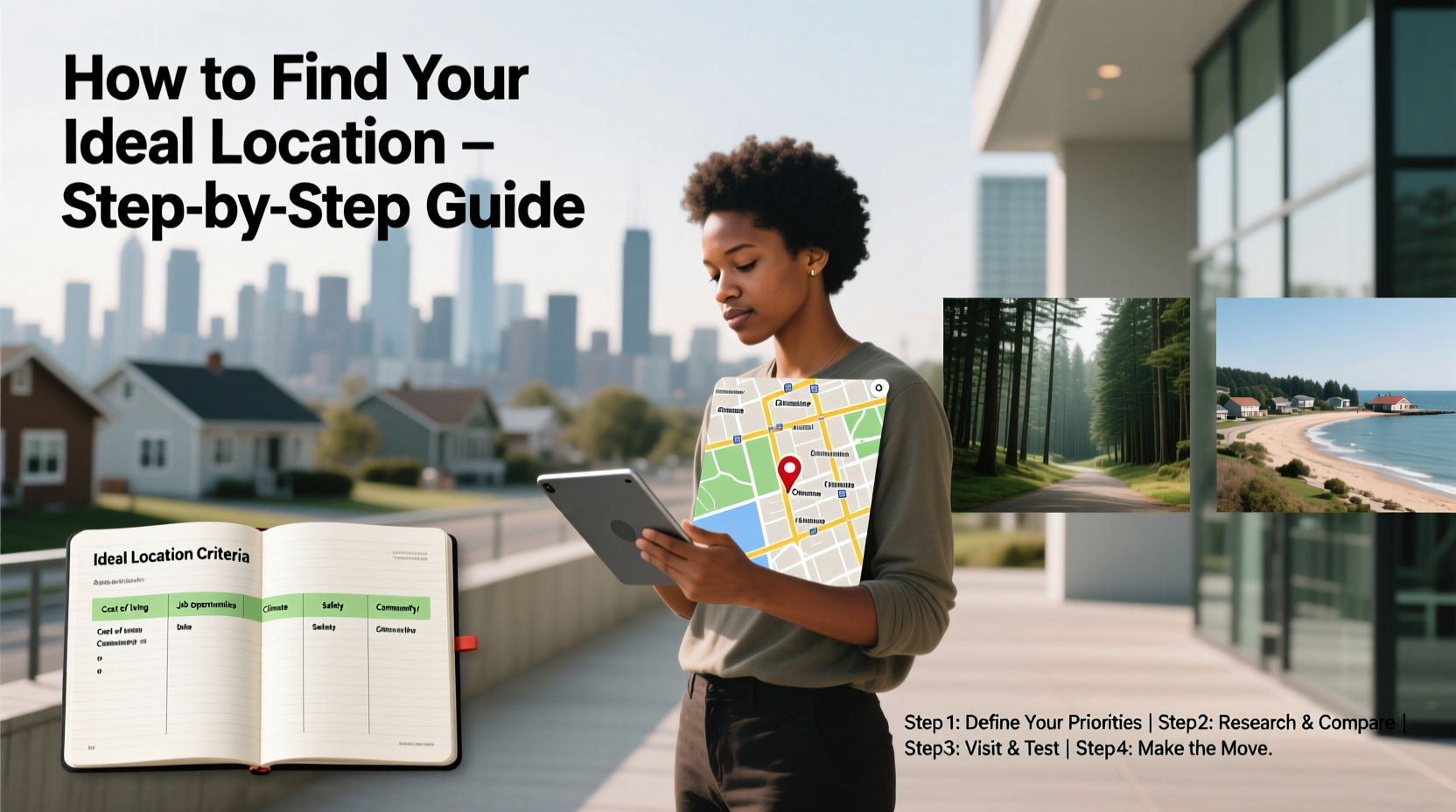
Before evaluating cities or neighborhoods, start with yourself. What kind of life do you want to lead? The answer shapes every other decision in this process. Too often, people focus on surface-level factors like cost of living or job markets without first asking what truly matters to them.
Consider these core categories:
- Climate & Environment: Do you thrive in four distinct seasons or prefer year-round warmth? Are mountains, oceans, or open plains important?
- Urban vs. Rural: Do you need walkability, cultural events, and public transit—or peace, space, and lower density?
- Safety & Community: How important is low crime? Do you value tight-knit neighborhoods or diverse, anonymous city life?
- Career Access: Is proximity to industry hubs essential, or can you work remotely full-time?
- Cost of Living: Can you afford homeownership, or must you rent within a strict budget?
- Social Life: Are you seeking LGBTQ+ friendly spaces, expat communities, or religious affiliations?
Step 2: Research and Shortlist Potential Locations
With your priorities defined, begin gathering data on locations that match. Use tools like Niche.com, U.S. News Best Places to Live, or Numbeo for comparative insights on safety, affordability, healthcare, and education.
Create a shortlist of 5–7 places that meet your criteria. For each, collect specific details:
| Factor | What to Investigate |
|---|---|
| Cost of Living | Rent/mortgage, utilities, groceries, transportation |
| Tax Burden | State income tax, property tax, sales tax |
| Job Market | Industry presence, unemployment rate, remote work culture |
| Commute Times | Average drive/public transit duration to major employment zones |
| School Quality | If applicable, check GreatSchools.org ratings |
| Healthcare Access | Hospital rankings, specialist availability |
“People underestimate how much local policy affects quality of life—things like tenant protections, bike infrastructure, and public funding for parks.” — Dr. Lena Torres, Urban Sociologist at Portland State University
A Real Example: From Burnout to Balance
Sarah, a marketing manager in Chicago, felt overwhelmed by long commutes and high expenses. After reflecting, she realized her top needs were access to nature, affordable housing, and a growing tech scene for future opportunities. She shortlisted Boise, Asheville, and Burlington.
Boise stood out for its outdoor recreation and rising remote-work community. But after visiting, Sarah found the social scene limited for single professionals. Asheville had charm but high rental competition. Burlington offered lake access, strong community programs, and proximity to Boston—a compromise that balanced tranquility and connectivity. Six months later, she reports better sleep, more hiking, and lower stress.
Step 3: Build and Test a Budget for Each Location
Dreaming about a place is easy. Living there sustainably is harder. Translate your research into a realistic monthly budget.
Start with your current net income. Then estimate expenses in each target city using updated data from:
- Governing.com’s state tax calculators
- Bankrate’s cost-of-living tool
- Zillow or RentCafe for average rents
Don’t forget hidden costs: HOA fees, parking permits, higher insurance premiums in hurricane-prone areas, or heating bills in northern climates.
Step 4: Visit Before You Commit
No amount of online research replaces firsthand experience. Schedule a 3–7 day trip to your top 2–3 contenders. Treat it like a trial run:
- Stay in a rental apartment, not a hotel.
- Use public transit or drive during rush hour.
- Visit local grocery stores, parks, and coworking spaces.
- Talk to residents—at coffee shops, gyms, or community centers.
- Attend a local event or meetup to gauge community vibe.
Note subtle cues: Is the air clean? Are sidewalks well-maintained? Do people seem friendly or rushed? These small signals add up to daily comfort.
Step 5: Make Your Decision Using a Scoring System
When emotions run high, use objective scoring to break ties. Assign weights to your key factors based on importance.
| Criteria | Weight (1–10) | Score Boise | Score Burlington | Score Asheville |
|---|---|---|---|---|
| Cost of Living | 9 | 7 | 5 | 6 |
| Job Market | 8 | 6 | 8 | 7 |
| Outdoor Access | 10 | 9 | 8 | 9 |
| Safety | 7 | 8 | 9 | 7 |
| Social Fit | 8 | 5 | 8 | 7 |
| Total (Weighted) | 246 | 272 | 241 |
In this example, even though Boise scored higher on affordability and nature, Burlington wins overall due to stronger performance in weighted categories like job market and social fit.
Essential Checklist: Your Relocation Roadmap
- Define your top 3 lifestyle non-negotiables
- Research 5–7 potential cities using cost, safety, and climate data
- Compare tax implications and healthcare access
- Create a detailed monthly budget for each location
- Visit your top 2–3 choices for 3+ days
- Interview locals and explore neighborhoods off the beaten path
- Score each option using weighted criteria
- Make a decision—and set a moving date
Frequently Asked Questions
How do I choose between two great cities?
When options are close, revisit your personal values. One might support your career better; another might enhance well-being. Ask: “Where will I feel most like myself?” Sometimes intuition, informed by data, is the best guide.
Should I move somewhere with more job opportunities even if I don’t love it?
Only if you have an exit strategy. A high-opportunity city can be a launchpad. But if the environment drains you daily, burnout may offset professional gains. Consider remote roles based in desirable locations instead.
Is it worth moving for quality of life if it means a pay cut?
Often, yes. Studies show that beyond a certain income threshold (~$75k/year), happiness correlates more strongly with time freedom, low stress, and community than salary size. If the new location reduces expenses (e.g., no car needed, cheaper housing), your purchasing power may actually increase despite lower earnings.
Take the Next Step With Confidence
Finding the right place to live isn’t about chasing perfection—it’s about alignment. The ideal location doesn’t exist on a list of “best cities”; it exists at the intersection of your values, resources, and vision for the future. By following a methodical approach, you turn an overwhelming decision into a clear, empowering journey.
You don’t need to have everything figured out. You just need to start—with honesty, curiosity, and a plan. Whether you’re dreaming of mountain views, city energy, or suburban calm, the right place is waiting. Map your priorities, test your assumptions, and take the leap with confidence.




 浙公网安备
33010002000092号
浙公网安备
33010002000092号 浙B2-20120091-4
Comments
No comments yet. Why don't you start the discussion?