
In an age where information is more accessible than ever, the desire to read without financial strain has led many to search for free PDF books online. However, not all sources are created equal. While some websites offer genuine public domain or open-licensed content, others distribute copyrighted material illegally or expose users to malware and phishing scams. Knowing how to distinguish trustworthy platforms from risky ones is essential for both legal compliance and digital safety.
The good news is that a wealth of high-quality, legally available PDF books exists across academic repositories, government archives, and nonprofit digital libraries. With the right tools and awareness, readers can build personal collections of literature, textbooks, research papers, and self-help guides—all at no cost and with peace of mind.
Understanding Legal vs. Illegal Free PDF Sources
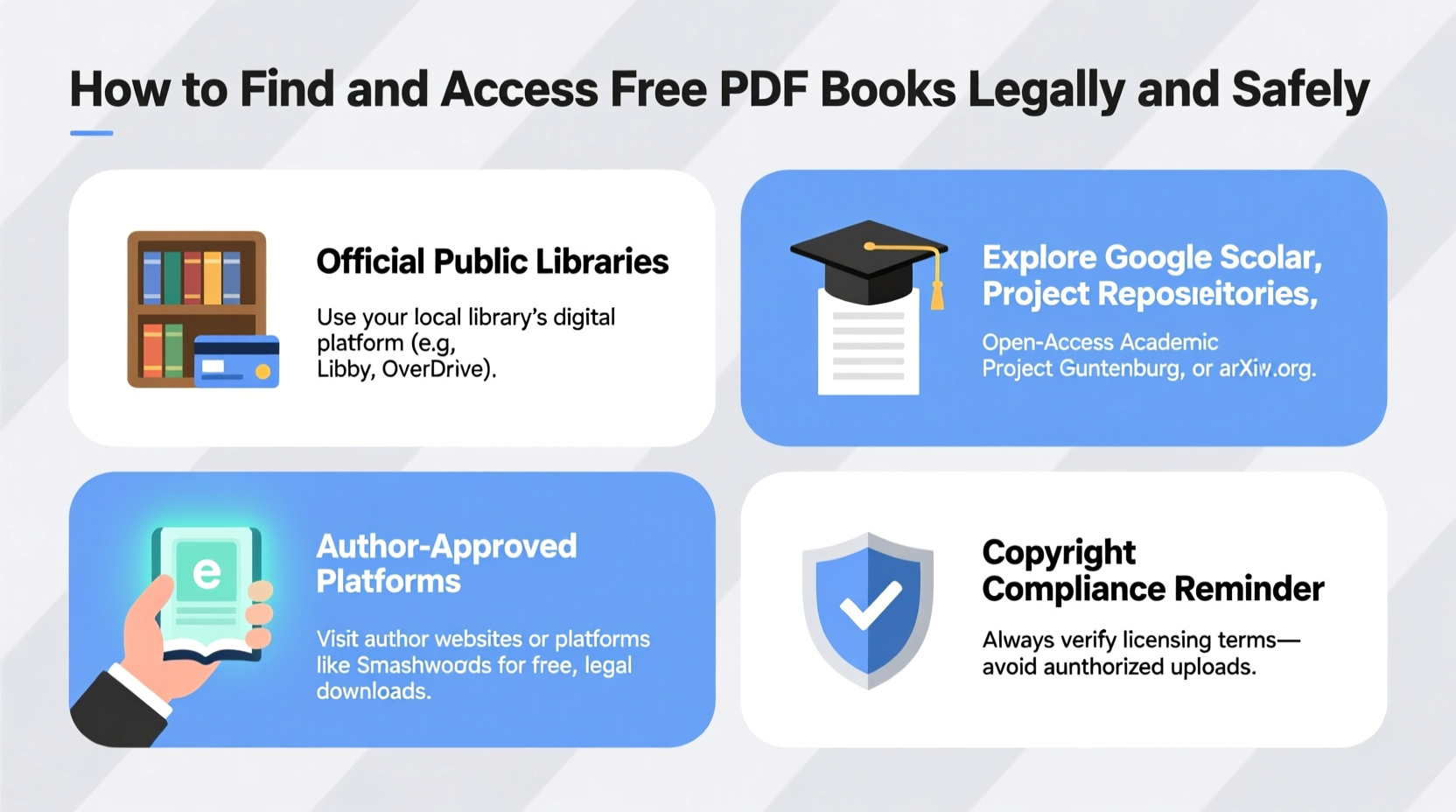
Before diving into where to find free PDFs, it's crucial to understand what makes a source legal. Legitimate platforms typically host books that fall into one of three categories: public domain works, Creative Commons-licensed content, or materials published with institutional permission (such as university research).
Public domain books are those whose copyright has expired—usually due to age—or were never protected by copyright in the first place. In most countries, works published before 1928 are generally considered public domain. These include classic novels by authors like Jane Austen, Mark Twain, and Fyodor Dostoevsky.
Creative Commons (CC) licensed books are modern publications shared under flexible copyright terms. Authors may allow redistribution, modification, or commercial use depending on the license type (e.g., CC BY, CC BY-NC). Always check the specific license conditions before downloading or sharing.
On the other hand, sites offering recent bestsellers, academic textbooks, or paywalled journals for free—especially without publisher authorization—are likely operating outside the law. These platforms often rely on piracy networks and may embed malicious scripts in downloadable files.
“Access to knowledge should never come at the expense of ethics or security. Use only verified, rights-compliant sources when sourcing digital books.” — Dr. Lena Torres, Digital Literacy Researcher, University of Toronto
Top Trusted Platforms for Free Legal PDF Books
Several reputable organizations provide vast catalogs of free, downloadable PDF books. Below is a curated list of reliable resources categorized by content type:
| Platform | Type of Content | Key Features | Website |
|---|---|---|---|
| Project Gutenberg | Classic literature, public domain texts | Over 70,000 free eBooks; plain text and PDF formats | gutenberg.org |
| Open Library | Broad collection including modern out-of-print titles | Lending model similar to physical libraries; requires account | openlibrary.org |
| Internet Archive | Books, scanned magazines, historical documents | Massive archive with borrowing system and full downloads | archive.org |
| Directory of Open Access Books (DOAB) | Peer-reviewed academic books | Rigorous quality control; ideal for researchers | doabooks.org |
| Google Books (Limited Previews & Full Public Domain) | Mixed: previews, snippets, full public domain works | Searchable database with direct PDF download option for eligible titles | books.google.com |
Step-by-Step Guide to Safely Download Free PDF Books
Finding free PDFs isn’t enough—you must also ensure your device and data remain secure during the process. Follow this sequence to minimize risk while maximizing access:
- Start with trusted domains. Limit searches to known educational (.edu), governmental (.gov), or nonprofit (.org) websites. Avoid random .com sites with excessive ads or pop-ups.
- Use advanced search operators. On Google, type queries like
site:archive.org \"The Art of War\" filetype:pdfto target specific sites and file types. - Verify the publication date and authorship. Confirm the book’s details match authoritative records to avoid counterfeit or mislabeled versions.
- Scan downloaded files. Before opening any PDF, run it through antivirus software or upload it to VirusTotal.com for analysis.
- Avoid registration traps. Never enter credit card information or grant app permissions to download a free book. Legitimate services do not require payment for public domain content.
- Respect usage rights. Even if a book is free, adhere to its license—don’t redistribute or sell CC-NC (non-commercial) works.
Common Risks and How to Avoid Them
The allure of instant access can lead users to unsafe corners of the web. Illicit PDF-sharing forums frequently host infected files disguised as popular titles. A 2023 cybersecurity report found that over 40% of pirated e-book downloads contained embedded malware capable of stealing passwords or encrypting files for ransom.
- Red flags include: aggressive ad banners, redirects to unknown sites, requests for surveys or payments, and URLs with misspellings (e.g., “freepdfbookss.net”).
- Never enable macros in a PDF unless absolutely certain of its origin. Malicious code can execute automatically.
- Stick to HTTPS-enabled sites. The padlock icon in your browser indicates encrypted communication, reducing interception risks.
“I once downloaded a ‘free’ psychology textbook from a third-party site. It installed keylogging software that compromised my email and banking logins. I now only use Open Library and DOAB.” — Marcus Reed, graduate student, Portland State University
Checklist: Safe and Legal PDF Book Hunting
Use this checklist every time you search for a free PDF to stay compliant and protected:
- ✅ Confirm the book is in the public domain or openly licensed
- ✅ Search within trusted platforms (e.g., Project Gutenberg, Internet Archive)
- ✅ Check the URL for legitimacy and HTTPS encryption
- ✅ Avoid sites demanding personal information or payments
- ✅ Scan the downloaded file with antivirus software
- ✅ Respect licensing terms for reuse or distribution
- ✅ Bookmark reliable sources for future use
FAQ: Common Questions About Free PDF Books
Are all free PDF books illegal?
No. Books in the public domain, those released under open licenses (like Creative Commons), or officially published by institutions (e.g., WHO reports, NASA manuals) are legally free to download and share.
Can I get in trouble for downloading a free PDF from a sketchy site?
Potentially, yes. If the book is under active copyright and distributed without permission, you could face legal consequences depending on your country’s laws. More commonly, you risk malware infection or data theft.
Why do some books say 'free' but still ask me to create an account?
Legitimate digital libraries like Open Library use accounts to manage lending periods, much like physical libraries. This does not imply illegality—as long as no payment is required and the service is transparent about its operations.
Conclusion: Read Freely, But Read Responsibly
Access to knowledge should be universal, but not at the cost of legality or digital safety. By relying on established platforms, understanding copyright status, and applying basic cybersecurity practices, anyone can enjoy thousands of free PDF books without compromise. Whether you're studying, researching, or simply exploring new ideas, prioritize integrity and caution in your search.




 浙公网安备
33010002000092号
浙公网安备
33010002000092号 浙B2-20120091-4
Comments
No comments yet. Why don't you start the discussion?