
Finding genuine friendships as an adult can feel like searching for a needle in a haystack. Work, family, and routines often leave little room for social expansion. Yet human connection remains essential—not just for happiness, but for mental and emotional well-being. The good news? Building local relationships doesn’t require charisma or luck. With intentional effort and the right strategies, it’s possible to cultivate real friendships close to home.
Why Local Friendships Matter
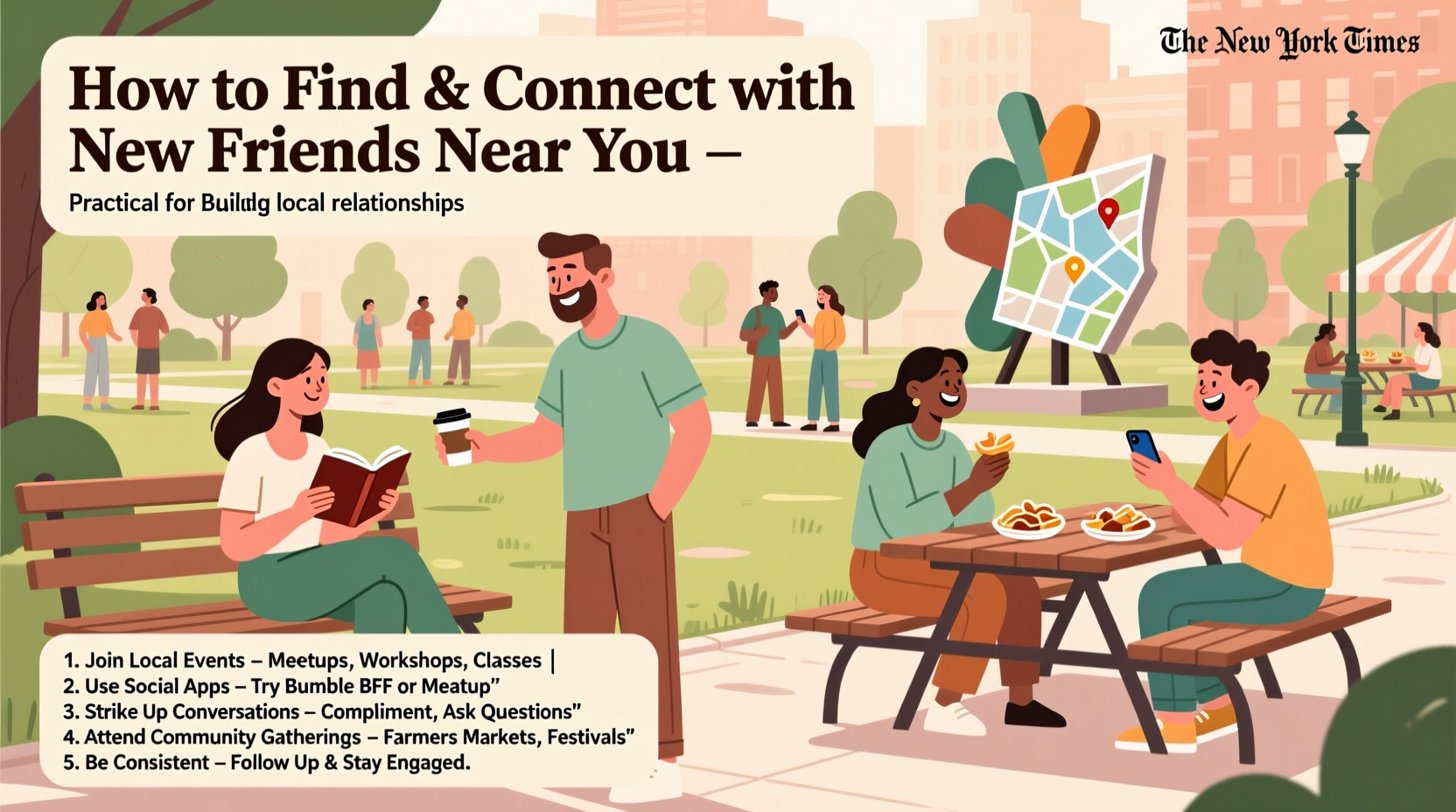
While digital connections offer convenience, face-to-face relationships provide deeper emotional support and shared experiences. Local friends are the ones who show up when your car breaks down, join you for weekend hikes, or meet for coffee on a tough day. Proximity enables spontaneity and consistency—two key ingredients in lasting bonds.
Research from the American Psychological Association shows that people with strong local social networks report lower stress levels, better resilience, and improved life satisfaction. Unlike online interactions, in-person friendships reinforce trust through body language, tone, and repeated contact.
Step-by-Step Guide to Finding Friends Nearby
Building new friendships follows a predictable pattern: exposure, interaction, repetition, and deepening. Follow this timeline to move from stranger to friend.
- Week 1–2: Audit Your Current Social Landscape – List everyone you interact with regularly (neighbors, coworkers, gym members). Identify low-hanging opportunities for deeper connection.
- Week 3–4: Join One Local Activity – Choose a group aligned with your interests: book club, running group, volunteer shift, or community class.
- Month 2: Initiate Conversations – Speak to at least one new person per event. Ask open-ended questions (“What brought you here?”).
- Month 3: Suggest a One-on-One Meetup – Invite someone from the group to coffee or a walk. Keep it casual and low-pressure.
- Month 4+: Nurture the Connection – Exchange numbers, follow up after meetings, and alternate initiating plans.
Where to Meet New People in Your Area
The best places to make friends are those where people gather around shared interests. Avoid passive environments (like waiting rooms) in favor of interactive ones.
| Venue | Best For | Tips to Maximize Success |
|---|---|---|
| Community Centers | All ages, skill-building classes | Take beginner-level courses—easier to bond over shared learning. |
| Parks & Trails | Outdoor enthusiasts, pet owners | Walk the same route weekly; greet familiar faces by name. |
| Volunteer Organizations | Empathetic, values-driven individuals | Commit to recurring shifts to build familiarity. |
| Coffee Shops & Co-working Spaces | Creatives, remote workers | Sit at communal tables; comment on nearby laptops or books. |
| Religious or Spiritual Groups | Those seeking deeper connection | Attend small group meetings, not just large services. |
How to Turn Acquaintances into Real Friends
Most friendships begin as repeated encounters. What transforms a familiar face into a true friend is vulnerability and consistency.
- Share something personal – Mention a challenge you’re facing or a recent win. This encourages reciprocity.
- Follow up – If someone mentions a job interview or sick pet, ask about it next time you meet.
- Be the initiator – Research shows most people want to be invited but hesitate to extend invitations themselves.
- Show up reliably – Consistency builds trust faster than intensity.
“Friendship is born not from grand gestures, but from showing up again and again in small, meaningful ways.” — Dr. Lena Patel, Social Psychologist, University of Michigan
Mini Case Study: How Maria Built a Local Circle in Six Months
Maria, 34, moved to Denver for a new job and knew no one. She felt isolated despite a busy work schedule. In her first month, she visited three different meetup groups: a hiking club, a Spanish conversation night, and a cooking class. The hiking group had the most consistent turnout.
She began smiling and greeting the same people each week. On the fourth hike, she asked two women about their favorite trails. A week later, she texted one to ask if they wanted to grab lunch before the next event. They did. Over the following months, they started planning hikes together outside the group. Within six months, Maria had three close friends she saw regularly—all from one activity.
Her strategy? Show up consistently, initiate gently, and invest in the most responsive connections.
Common Pitfalls to Avoid
Even with good intentions, missteps can slow friendship development. Recognize these common mistakes:
- Overcommitting early – Avoid suggesting weekend trips with someone you’ve just met. Start with short, public meetups.
- Taking rejection personally – Someone declining an invitation may be busy, not uninterested.
- Only connecting online – Texting keeps a thread alive, but in-person time builds closeness.
- Expecting reciprocity immediately – Some people take longer to open up. Patience is part of the process.
Checklist: Building Local Friendships in 90 Days
Use this actionable checklist to stay on track:
- ☐ Identify 2–3 local venues or events aligned with your interests
- ☐ Attend each at least twice to establish familiarity
- ☐ Initiate conversations with at least 3 new people
- ☐ Exchange contact info with 1–2 potential friends
- ☐ Plan one casual one-on-one meetup (coffee, walk, etc.)
- ☐ Follow up within a week with a message or invite
- ☐ Repeat positive interactions every 2–3 weeks
- ☐ Reflect monthly: Who feels like a promising connection?
FAQ: Common Questions About Making Local Friends
How long does it take to make a real friend?
Studies suggest it takes about 50 hours of shared time to move from acquaintance to casual friend, and over 200 hours to become a close friend. Regular, low-key hangouts add up quickly.
What if I’m shy or introverted?
Introverts often form deeper bonds because they listen well and share thoughtfully. Focus on one-on-one settings or small groups. Prepare a few questions in advance to ease conversation flow.
Can I make friends through apps?
Yes, but choose wisely. Apps like Bumble BFF or Meetup are designed for platonic connections. Avoid platforms primarily used for dating. Always meet in public and let someone know your plans.
Conclusion: Start Small, Stay Consistent
Finding and connecting with new friends near you isn’t about dramatic changes or forced networking. It’s about showing up where people gather, engaging with curiosity, and nurturing the connections that feel reciprocal. You don’t need to become outgoing or attend every event—just commit to one consistent effort each week.
Every friendship begins with a single “hello.” That next conversation could lead to someone who celebrates your wins, listens without judgment, and becomes a steady presence in your life. Take the first step today—join that class, say hi to your neighbor, or reply to that community board post. Your next friend might be closer than you think.




 浙公网安备
33010002000092号
浙公网安备
33010002000092号 浙B2-20120091-4
Comments
No comments yet. Why don't you start the discussion?