
Coral reefs are among the most biodiverse ecosystems on Earth, and gorgonian corals—commonly known as sea fans—are some of their most visually striking components. While live coral is protected in most regions due to environmental regulations, dead coral fans can be legally collected in certain areas under specific conditions. For divers, beachcombers, and natural history collectors, identifying truly dead specimens is essential to avoid ecological harm and legal consequences. This guide provides clear, actionable information on how to locate, assess, and ethically handle dead coral fans.
Understanding Coral Fans: Biology and Ecology
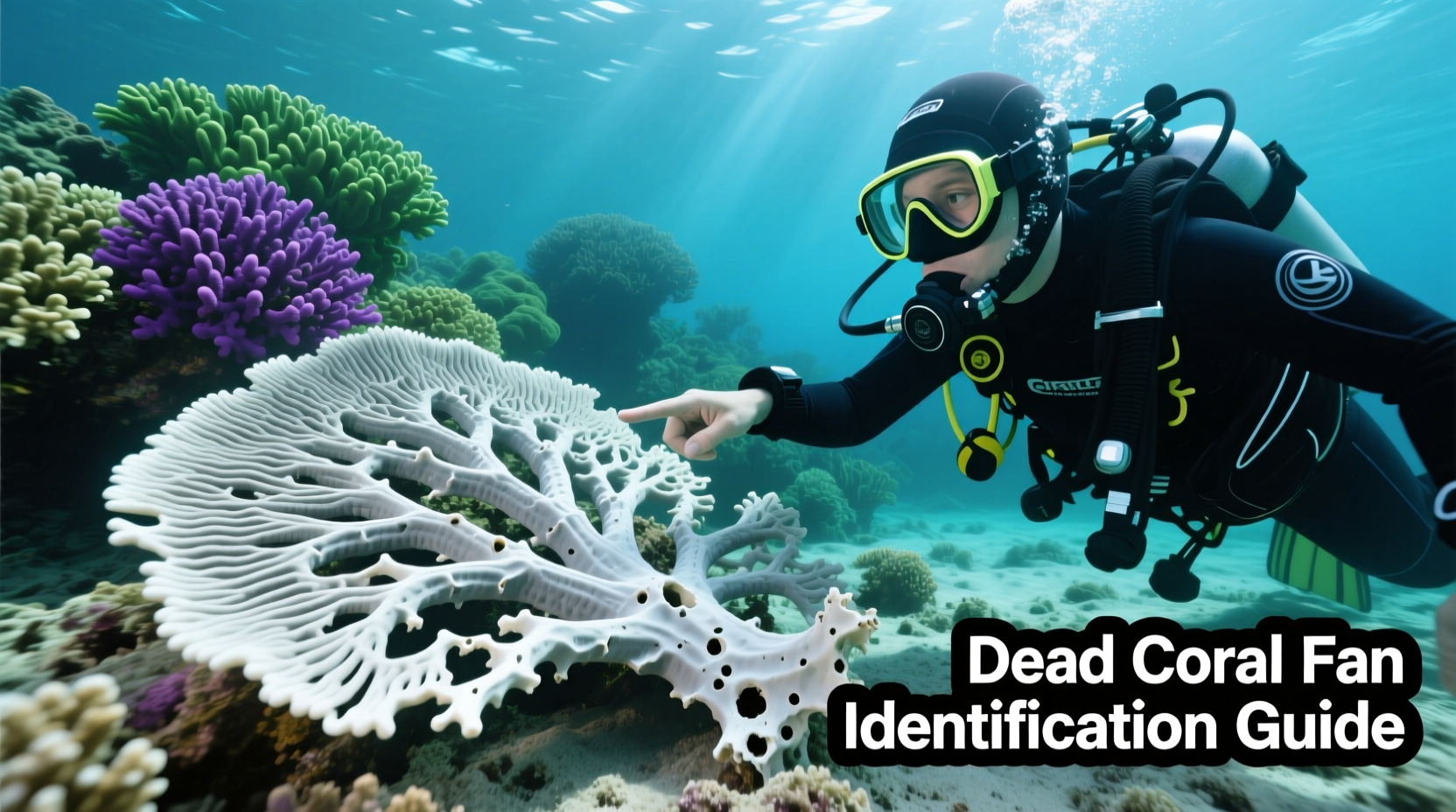
Sea fans belong to the order Gorgonacea, a group of soft corals with flexible skeletons made of a protein called gorgonin or calcified material. Unlike stony corals, which build massive reef structures, gorgonians grow in fan-like formations that sway with ocean currents. They host symbiotic algae (zooxanthellae) and tiny polyps that feed on plankton, making them active participants in reef health.
When a coral fan dies, the living tissue recedes, leaving behind its internal skeleton. The key challenge for collectors is distinguishing between recently deceased specimens and those long dead—both of which may appear bleached or white but differ significantly in fragility and legal status.
“Collecting live or recently dead coral contributes to reef degradation. Only fully degraded, detached, and skeletal remains should ever be considered for removal.” — Dr. Lena Torres, Marine Ecologist, Scripps Institution of Oceanography
Field Identification: Signs of a Dead Coral Fan
Accurate identification begins with visual and tactile assessment. A truly dead coral fan will show no signs of biological activity and will typically exhibit several key characteristics:
- Color: Uniformly white, gray, or beige—no traces of purple, red, yellow, or brown pigmentation.
- Texture: Brittle, chalky, or eroded surface; absence of mucus or slime when touched.
- Smell: No organic odor. Freshly dead or decaying fans emit a faint fishy or sulfuric scent.
- Fouling: Heavy accumulation of algae, barnacles, or encrusting organisms indicates prolonged submersion without tissue cover.
- Attachment: Detached from substrate. If still rooted in rock or reef, it may be alive or recently dead and should not be removed.
Where and When to Search
The best locations for finding dead coral fans are influenced by wave action, depth, and local marine dynamics. Focus efforts in these zones:
- Shoreline drift lines: After storms, waves often wash dislodged coral debris ashore. Check rocky coves and sandy beaches near reef systems.
- Back reef slopes: Areas just behind the main reef crest accumulate fallen fragments due to surge and erosion.
- Sandy seabeds adjacent to reefs: Look for scattered skeletons lying loose in sand patches, especially after seasonal weather shifts.
- Shallow rubble zones: These are natural collection points for broken coral, where decomposition is advanced.
Timing matters. Late winter and early spring often yield the highest volume of dead coral debris due to winter storm activity in tropical regions. Avoid diving during spawning seasons or bleaching events, as stressed corals are more vulnerable.
Ethical and Legal Considerations
Even if a coral fan is clearly dead, collection is not universally permitted. Many countries and marine protected areas prohibit the removal of any coral material—dead or alive—to prevent incentive-based harvesting and ecosystem disruption.
| Region | Legal Status of Dead Coral Collection | Permit Required? |
|---|---|---|
| Florida, USA | Prohibited without FWC permit | Yes |
| Australia (Great Barrier Reef) | Strictly prohibited | No exceptions |
| Mexico (Caribbean coast) | Allowed in limited quantities for personal use | Sometimes |
| Philippines | Generally illegal; enforcement varies | Yes |
| Hawaii, USA | Dead coral may be collected non-commercially in small amounts | No, but rules apply |
Always consult local authorities or marine parks before collecting. When in doubt, leave the specimen in place. Ethical collecting means prioritizing reef resilience over personal acquisition.
Step-by-Step Guide to Safe and Responsible Collection
If you’re in a region where collecting dead coral fans is permitted, follow this protocol to ensure accuracy and minimize impact:
- Observe from a distance: Approach slowly and avoid kicking up sediment. Scan for movement—polyps retract when disturbed, indicating life.
- Inspect closely: Use gloves to gently touch the surface. Living tissue feels slightly rubbery; dead skeletons are dry and crumble easily.
- Check for attachment: Never break or pry a fan from rock. Only collect fully detached pieces lying freely on sand or rubble.
- Assess structural integrity: If the fan breaks apart under light pressure, it’s likely old and fully mineralized—safe to collect.
- Document and report: Note location, depth, and condition. Some citizen science programs welcome such data for reef monitoring.
- Limit quantity: Take only one or two small specimens for personal study. Avoid bulk collection.
Preservation and Storage Tips
Once collected, proper handling ensures your specimen remains intact and educational. Follow these steps:
- Rinse thoroughly with fresh water to remove salt and debris.
- Soak in a 10% bleach solution for 24 hours to eliminate organic residue and prevent odor.
- Rinse again and air-dry in a shaded, ventilated area—never in direct sunlight, which can cause discoloration.
- Store in a padded container away from humidity to prevent mold or weakening.
Mini Case Study: A Collector’s Mistake in the Florida Keys
In 2021, a recreational diver collected several white coral fans from a shallow reef near Key Largo, believing them to be dead due to their pale color. Weeks later, photos posted online drew criticism from marine biologists who identified residual tissue and recent breakage patterns. The fan had been bleached due to thermal stress but was still alive. The collector returned the specimens and reported the incident to the Florida Fish and Wildlife Conservation Commission, which used the case in outreach campaigns about coral identification.
This example underscores the risk of misidentification and the importance of conservative judgment. Pale does not always mean dead.
FAQ
Can I collect dead coral fans from my local beach?
It depends on local laws. In many coastal states and countries, removing any coral—dead or alive—is illegal. Check with your state’s Department of Environmental Protection or equivalent authority before collecting.
How long does it take for a coral fan to become “fully dead”?
After tissue loss, complete decomposition of organic material can take 6 months to 2 years, depending on water temperature, wave exposure, and microbial activity. A fan is typically safe to collect only after it has fully detached and shows no signs of recent breakage.
Are there sustainable alternatives to collecting real coral?
Yes. High-quality resin replicas and 3D-printed models are available for display and education. These mimic natural specimens without impacting marine ecosystems.
Final Checklist Before You Dive
- Do:
- ✔ Research local laws and protected areas
- ✔ Carry a waterproof ID guide for gorgonians
- ✔ Collect only loose, fragmented, and fully bleached specimens
- ✔ Document your findings for science or personal records
- Don’t:
- ✘ Break off pieces from attached structures
- ✘ Collect fans with any hint of color or soft tissue
- ✘ Assume all white corals are dead
- ✘ Remove large quantities, even if legal
Conclusion: Respect the Reef, Preserve the Memory
Finding and identifying dead coral fans requires patience, knowledge, and a deep respect for marine ecosystems. When done responsibly, collecting can support education and appreciation for ocean life. But every decision underwater carries weight. By applying careful observation, adhering to regulations, and prioritizing conservation, divers and collectors alike can honor the beauty of coral reefs without compromising their survival.




 浙公网安备
33010002000092号
浙公网安备
33010002000092号 浙B2-20120091-4
Comments
No comments yet. Why don't you start the discussion?