
In an increasingly connected world, confirming the identity behind a mobile number is essential—especially when dealing with international contacts. Spain, with over 50 million mobile subscriptions, follows unique telecommunications standards that can make number verification both straightforward and complex depending on your approach. Whether you're reconnecting with an old contact, verifying a business partner, or ensuring the legitimacy of a service provider, knowing how to properly locate and authenticate a Spanish mobile number is crucial. This guide provides actionable, legally compliant strategies to help you do just that.
Understanding Spanish Mobile Number Format
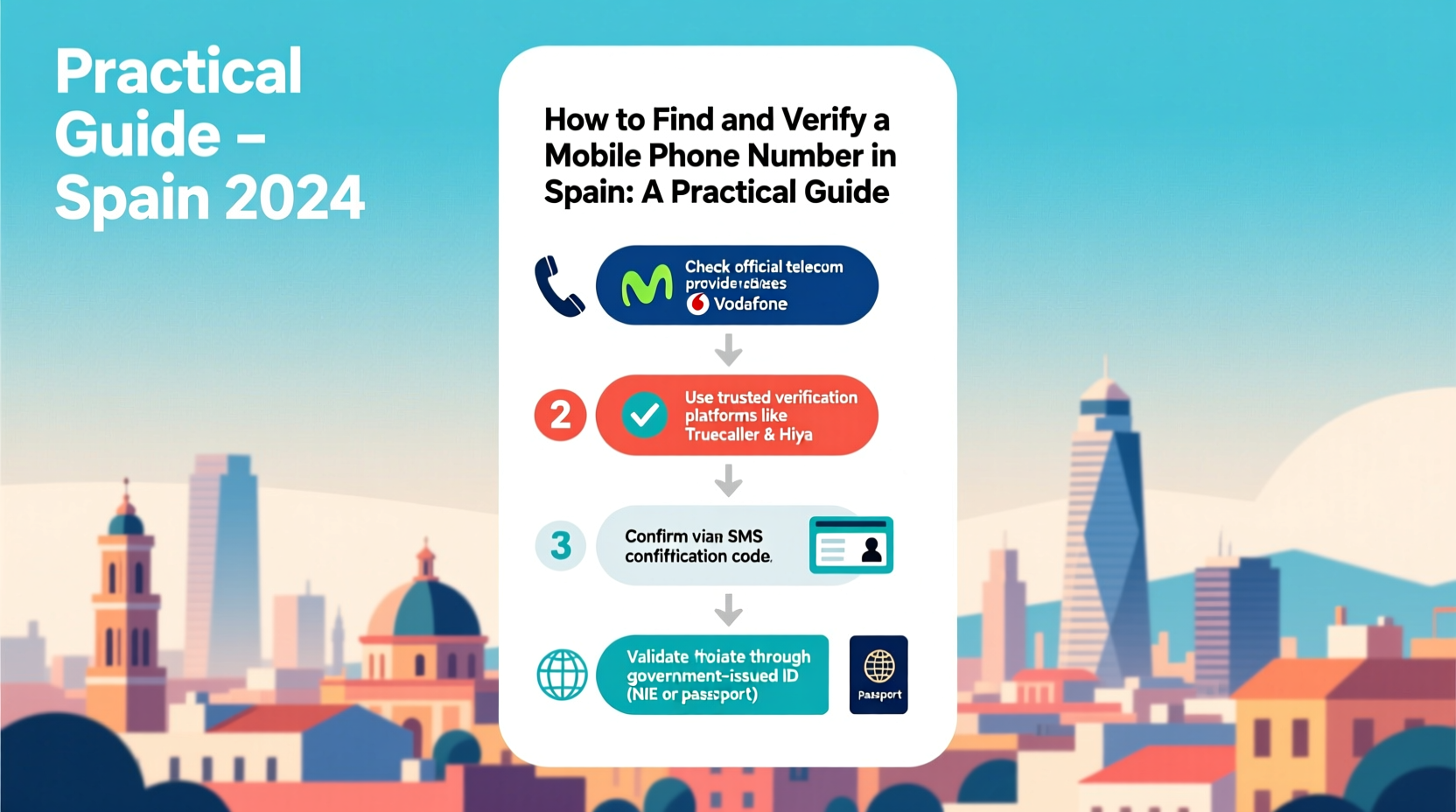
Before attempting to find or verify a number, it's important to recognize how Spanish mobile numbers are structured. Most mobile numbers in Spain follow a consistent format:
- Country code: +34 (used when dialing from abroad)
- National prefix: 6 or 7 (all mobile numbers start with 6 or 7)
- Length: 9 digits after the country code (e.g., +34 612 345 678)
Landlines typically begin with 8 or 9 and may vary by region, but mobile lines are uniformly national and not tied to geographic areas. This makes them portable across providers and locations, adding complexity to reverse lookups.
Step-by-Step Guide to Finding a Spanish Mobile Number
Finding a mobile number requires combining public resources, communication tools, and ethical judgment. Here’s a reliable sequence of actions:
- Start with known information: Gather any details you have—full name, city, company, email address, or social media profiles. These can act as anchors for deeper searches.
- Use Spanish search engines: Google.es often yields better local results than global domains. Try queries like “nombre completo + teléfono móvil + ciudad” (full name + mobile phone + city).
- Leverage professional networks: LinkedIn profiles frequently list contact details, especially for business professionals in Spain. Use filters to narrow by location and industry.
- Check company websites: If the person works for a Spanish business, their contact info might appear in team directories or press releases.
- Utilize reverse lookup services: While limited due to privacy laws, platforms like Truecaller or CocoFinder may show user-reported numbers.
- Contact mutual acquaintances: If appropriate, reach out through shared connections rather than cold-contacting.
Note: Direct access to carrier databases is restricted under Spain’s data protection laws. Never attempt to bypass these regulations using third-party hacking tools or paid “dark web” services—they are illegal and often fraudulent.
How to Verify a Spanish Mobile Number Legally
Verification ensures that a number belongs to the person you believe it does. Unlike some countries, Spain enforces strict privacy rules under the Agencia Española de Protección de Datos (AEPD), limiting what personal data can be accessed.
The most effective verification methods rely on direct interaction and cross-referencing:
- SMS confirmation: Send a short message asking the recipient to confirm their identity. For example: “Hola, this is [your name]. Confirm if this is [person’s name]?”
- Voice call: A brief call allows you to assess language fluency, accent, and responsiveness—key indicators of authenticity.
- Video chat: Request a quick FaceTime or WhatsApp video call, especially for high-stakes interactions like remote hiring or property rentals.
- Cross-check with official documents: In formal contexts (e.g., contracts), request a copy of ID (DNI/NIE) alongside the number.
“Due diligence in number verification protects against fraud and builds trust. Always prioritize consent and transparency.” — Carlos Méndez, Cybersecurity Consultant, Madrid
Do’s and Don’ts When Handling Spanish Phone Numbers
| Do’s | Don’ts |
|---|---|
| Use +34 when calling or searching internationally | Assume all +34 numbers are active or legitimate |
| Verify via two-factor methods (call + SMS) | Purchase bulk phone data from unverified vendors |
| Respect response times—Spaniards often reply later in the day | Spam unknown numbers with repeated messages |
| Use WhatsApp for verification—it’s widely adopted in Spain | Share personal phone numbers publicly without consent |
| Document consent if collecting numbers for business | Ignore GDPR and LOPDGDD compliance requirements |
Real Example: Verifying a Rental Contact in Barcelona
Maria, a digital nomad from Canada, found an apartment listing in Barcelona advertised on a local forum. The landlord provided a mobile number starting with +34 6XX XXX XXX but no verifiable website. To avoid scams common in short-term rentals, Maria took the following steps:
- She searched the number on Truecaller and found it registered under a first name matching the landlord’s profile.
- She sent a WhatsApp message introducing herself and requesting a video tour.
- The landlord responded within hours and agreed to a 10-minute Zoom call showing the apartment interior.
- Maria then asked for a copy of the owner’s NIE (foreign ID) and the property tax receipt (IBI), which were shared securely via encrypted email.
By combining number verification with document checks, Maria confirmed the legitimacy of the contact before wiring a deposit. Her caution prevented a potential €1,200 loss.
Essential Tools for Number Verification
While no tool guarantees 100% accuracy, several platforms can support your efforts:
- Truecaller: Offers caller ID and spam detection. Works best when users have opted into public listings.
- Sync.me: Integrates with phone contacts to display names and profiles linked to numbers.
- Google Voice Search: Dialing the number and recording a voice query like “Who owns +34 6XX XXX XXX?” can sometimes yield indexed mentions.
- Spanish business registries: For corporate numbers, check the Registro Mercantil (Commercial Registry) at registradores.org.
Always remember: these tools supplement, not replace, personal verification. Relying solely on automated results increases risk.
Frequently Asked Questions
Can I look up a Spanish mobile number for free?
Yes, but with limitations. Free options include Google searches, social media checks, and apps like Truecaller (basic tier). However, comprehensive background checks involving official records are not publicly accessible due to privacy laws.
Are +34 numbers safe to answer?
Most are legitimate, but scam calls exist. Be cautious with unsolicited calls claiming to be from banks, government agencies, or tech support. Hang up and call back through official channels if in doubt.
What should I do if a number is inactive?
Numbers in Spain can be deactivated after 6–12 months of non-use. If a previously working number no longer connects, it may have been reassigned or dropped. Avoid assuming the original owner still uses it.
Final Checklist: Verify Any Spanish Mobile Number
- Confirm the number starts with +34 followed by 6 or 7 and seven more digits.
- Search the number on Google and Truecaller.
- Check associated names on social media (LinkedIn, Instagram, Facebook).
- Send a brief SMS or WhatsApp message introducing yourself.
- Make a voice or video call to confirm identity and language match.
- If for business, document consent and retain proof of communication.
- Avoid sharing the number publicly unless authorized.
Conclusion
Finding and verifying a mobile phone number in Spain doesn’t require advanced technology—just patience, attention to detail, and respect for privacy norms. By understanding the structure of Spanish numbers, using ethical search techniques, and confirming identities through direct engagement, you can confidently navigate personal and professional communications across borders. Whether you’re arranging travel, closing a deal, or reconnecting with someone from the past, these practices protect you from misinformation and fraud.




 浙公网安备
33010002000092号
浙公网安备
33010002000092号 浙B2-20120091-4
Comments
No comments yet. Why don't you start the discussion?