
In today’s hyper-connected world, “Big B” could mean anything: a towering monument like the Burj Khalifa, a celebrity such as Beyoncé, or even a local legend known only in niche circles. The challenge isn’t just knowing who or what Big B is—it’s actually finding them efficiently and accurately. Whether you're a traveler tracking iconic sites, a journalist sourcing a public figure, or an enthusiast chasing rare cultural experiences, this guide delivers a structured, field-tested approach to locating major landmarks and prominent individuals.
Understanding What \"Big B\" Means in Context
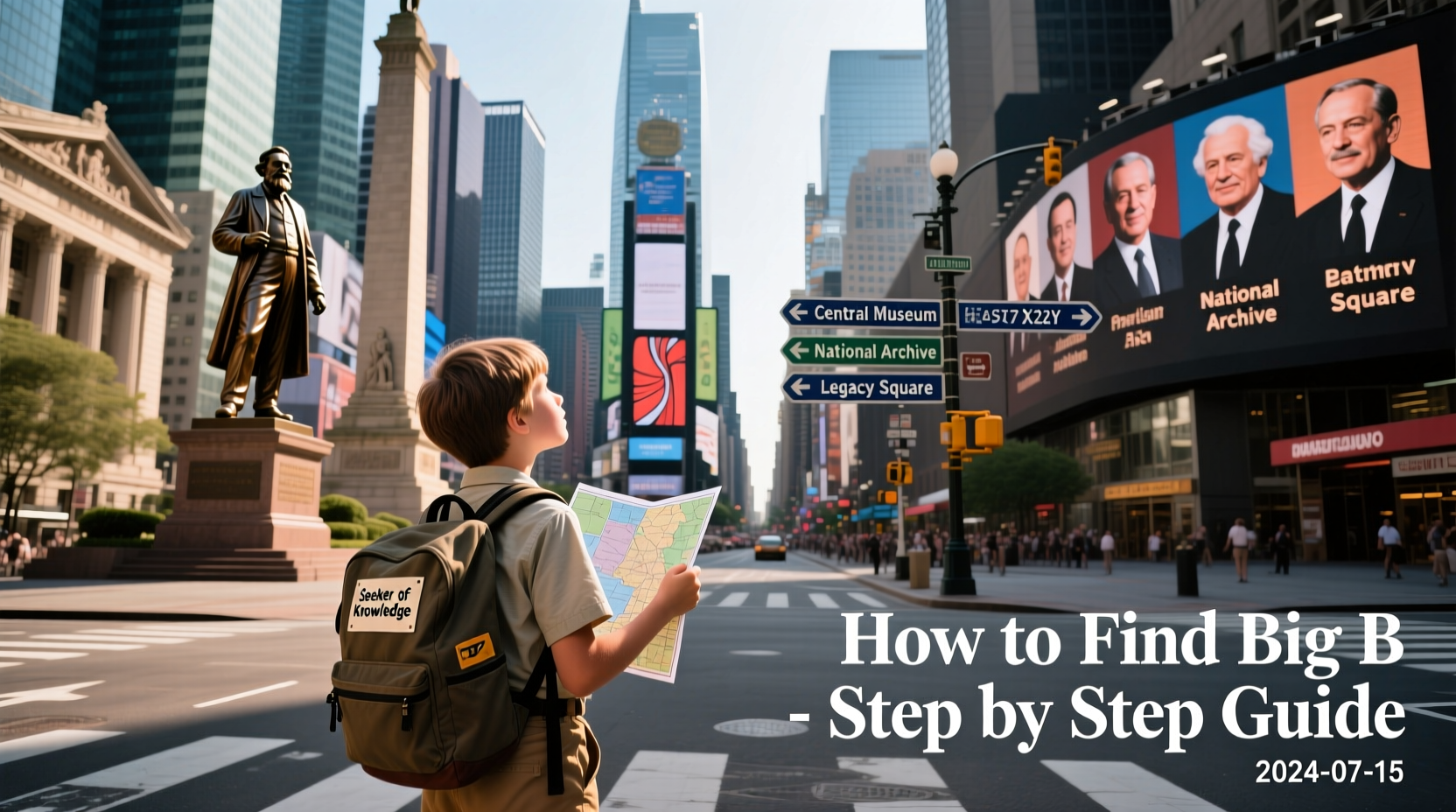
The term “Big B” is intentionally ambiguous. It often serves as slang for something or someone of great significance—physically, culturally, or socially. Before launching any search, clarity on context is essential:
- Geographical landmarks: Statues, towers, natural wonders, historical sites.
- Public figures: Celebrities, politicians, influencers, artists.
- Cultural icons: Symbols, traditions, or institutions recognized widely within a community.
Misidentifying the category leads to wasted effort. For example, searching for “Big B” in Mumbai may yield Bollywood actor Amitabh Bachchan (affectionately called Big B), while in Chicago it might refer to the historic Board of Trade Building.
Step-by-Step Guide to Locating Major Landmarks and Figures
Finding Big B—whatever form it takes—requires more than typing a name into a search engine. A methodical process increases accuracy and saves time.
- Define the target precisely. Is it a physical structure, a person, or an event? Write down identifying features: full names, alternate titles, construction dates, affiliations, or visual markers.
- Use authoritative sources first. Start with government tourism boards, official websites, academic databases, or verified social media profiles. Avoid unverified forums at this stage.
- Leverage geolocation tools. Google Maps, satellite imagery, and GPS coordinates are invaluable. Zoom in on exact addresses or plot points using latitude and longitude when available.
- Cross-reference multiple platforms. Compare data from Wikipedia, OpenStreetMap, official press releases, and news archives to confirm consistency.
- Engage local knowledge. Reach out to local historians, tour guides, or community groups. On-the-ground insight often reveals access routes, lesser-known entrances, or updated statuses (e.g., closures).
- Verify accessibility and permissions. Some landmarks require permits; certain individuals may not be publicly reachable. Confirm visitation rules or contact protocols ahead of time.
- Document your findings. Keep notes on sources, discrepancies, and final confirmation details. This builds credibility if you’re reporting or sharing results.
Real Example: Locating the “Big B” Water Tower in Boise, Idaho
A tourist planning to photograph the famous “Big B” water tower faced conflicting information online. Some blogs claimed it was demolished; others gave outdated GPS coordinates. By following the steps above, they succeeded:
- Confirmed the structure still existed via Ada County property records.
- Used Google Earth’s historical imagery to track changes over time.
- Contacted the Boise City Public Works Department for precise location and access advice.
- Visited during daylight hours with proper safety precautions.
The result? A clear photo and accurate blog post that corrected widespread misinformation.
Essential Tools and Resources
The right tools dramatically improve success rates. Below is a comparison of key platforms based on reliability, ease of use, and depth of information.
| Tool | Best For | Pros | Limitations |
|---|---|---|---|
| Google Maps | Landmark navigation, street view | Real-time updates, user photos | May lack detail in remote areas |
| Wikipedia | Background research, historical data | Well-sourced, multilingual | Vulnerable to edits; verify citations |
| OpenStreetMap | Off-grid locations, hiking trails | Community-driven, highly detailed | Less polished interface |
| LinkedIn / Official Websites | Locating public figures professionally | Verified profiles, contact options | Personal info often restricted |
| Library of Congress / National Archives | Historic landmarks, cultural figures | Authoritative, digitized records | Can be time-intensive to navigate |
Common Pitfalls and How to Avoid Them
Even experienced researchers make mistakes when hunting for high-profile targets. Awareness prevents setbacks.
- Assuming online info is current. Renovations, relocations, or cancellations happen without immediate web updates.
- Relying solely on crowdsourced data. Platforms like Yelp or TripAdvisor offer opinions, not facts.
- Ignoring legal boundaries. Trespassing on private property or violating privacy laws can have serious consequences.
- Overlooking linguistic nuances. Names may be spelled differently across regions or languages (e.g., “Beyoncé” vs. “Beyonce” in URLs).
“Accuracy begins with skepticism. Cross-check every claim—even those from seemingly reliable sources.” — Dr. Lena Torres, Geospatial Researcher, University of Colorado
Checklist: Preparing to Find Big B
Before heading out or diving deep online, run through this checklist to ensure readiness:
- ☐ Define whether Big B is a person, place, or symbol.
- ☐ Gather all known identifiers (name variants, coordinates, affiliations).
- ☐ Identify at least three authoritative sources to consult.
- ☐ Check recent news or announcements related to Big B.
- ☐ Determine if special access, permits, or appointments are needed.
- ☐ Prepare backup plans in case of closure or unavailability.
- ☐ Document your search process for future reference.
Frequently Asked Questions
Can I find a person labeled “Big B” legally and ethically?
Yes, but only through public channels. Do not attempt to access private residences, use surveillance tools, or exploit personal data. Stick to official interviews, public appearances, professional directories, and verified social media.
What if the landmark I’m seeking has no digital footprint?
Some rural or indigenous sites aren’t well-documented online. In these cases, contact local museums, tribal offices, or regional tourism councils. Respect cultural sensitivities—some places may be sacred or off-limits to visitors.
How do I know if the information I found is trustworthy?
Apply the “three-source rule”: confirm critical details across at least three independent, reputable outlets. If only one source mentions a fact, treat it as unverified until further evidence emerges.
Final Thoughts and Call to Action
Finding Big B is more than a scavenger hunt—it’s an exercise in precision, patience, and ethical inquiry. Whether you're standing beneath a skyscraper inscribed with a bold “B” or tracing the legacy of a cultural titan, the journey matters as much as the destination. With the right mindset and methodology, anyone can locate even the most elusive landmarks and figures.
Now it’s your turn. Pick a “Big B” that’s intrigued you—map it, research it, find it. And when you do, share your story. The next explorer might rely on your experience to light their way.




 浙公网安备
33010002000092号
浙公网安备
33010002000092号 浙B2-20120091-4
Comments
No comments yet. Why don't you start the discussion?