
In open world games, exploration is often rewarded—not just with loot or experience, but with narrative depth, environmental storytelling, and hidden challenges. While visual clues like unusual rock formations or cracked walls are common indicators of secrets, one of the most underutilized tools for discovery lies not in sight, but in sound. Game designers embed audio cues—subtle shifts in music, ambient noise, or mechanical sounds—to guide attentive players toward concealed paths, rooms, or Easter eggs. Mastering the art of listening can transform your gameplay from passive traversal to active investigation.
Unlike visual markers that can be missed during fast travel or chaotic combat, sound cues persist across environments and often behave differently near hidden zones. Whether it’s a faint echo beneath your feet, a distorted melody in the wind, or silence where there should be noise, these auditory hints are intentional design choices meant to reward observant players. This article breaks down how to detect, interpret, and act on sound-based clues to uncover secret areas others overlook.
Why Sound Cues Matter in Open World Design
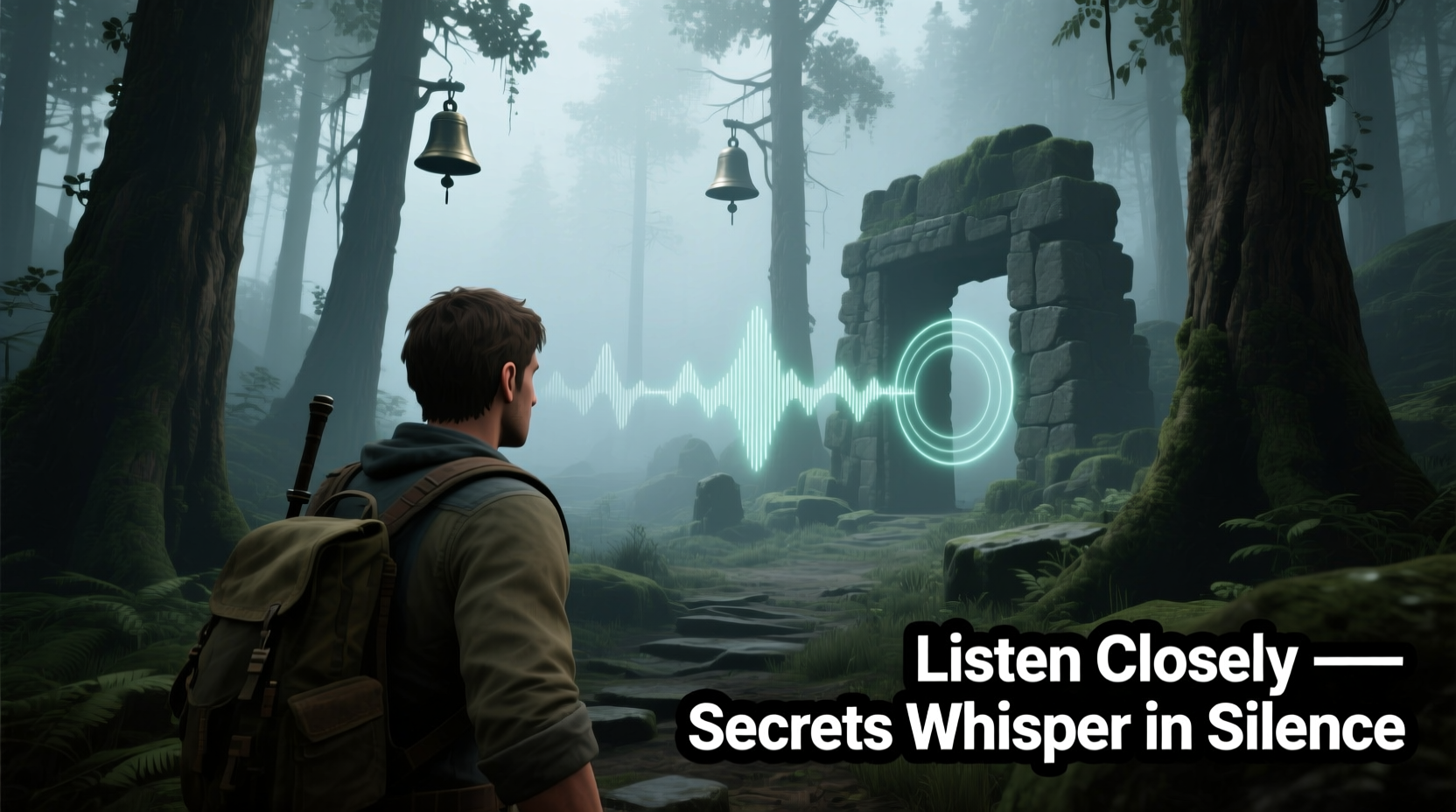
Open world games thrive on immersion. To make vast landscapes feel alive, developers layer complex soundscapes: rustling leaves, distant animal calls, shifting weather patterns, and dynamic music systems. Within this richness, subtle anomalies stand out to trained ears. These deviations aren’t bugs—they’re breadcrumbs.
Sound cues serve multiple purposes beyond atmosphere. They create tension, signal danger, or indicate progress. But they also function as navigation aids. In games like The Legend of Zelda: Breath of the Wild, audio changes when Link approaches ancient Sheikah technology. Similarly, in Horizon Zero Dawn, the hum of buried machinery grows louder near hidden vaults. These cues are designed to pique curiosity without breaking immersion.
“Players who listen deeply engage more fully with the world. Audio is not background—it’s part of the puzzle.” — Lena Torres, Senior Sound Designer at Emberforge Studios
The human brain excels at pattern recognition. When ambient bird songs suddenly stop, or a low-frequency drone pulses from a cave wall, your subconscious registers something amiss. That instinct is worth trusting. Developers rely on psychological responses to sound to guide players organically, avoiding intrusive map icons or quest markers.
Step-by-Step Guide to Detecting Hidden Areas Through Audio
Finding secrets via sound isn’t guesswork—it’s a repeatable process rooted in awareness and patience. Follow this sequence to maximize your chances of discovery:
- Enter Quiet Mode: Pause combat, disable fast travel, and walk slowly. Use stealth movement if available. Noise from attacks or sprinting masks critical audio details.
- Isolate the Environment: Eliminate distractions. Turn off external music or commentary. Use headphones for directional audio clarity.
- Establish a Baseline: Spend 30–60 seconds absorbing the normal soundscape. Note recurring elements: wind patterns, insect chirps, water flow, or background score loops.
- Scan for Anomalies: Move through the area while listening for deviations. Examples include repeating tones, unnatural silences, echoes, or layered frequencies that don’t belong.
- Follow the Gradient: If a sound intensifies in a certain direction, move toward its peak volume. Use lateral steps to triangulate its source.
- Test Physical Interaction: Near suspected locations, interact with walls, floors, or objects. Listen for hollow thuds, resonance, or trigger sounds indicating a mechanism.
- Document Findings: Mark the location on your mental map. Return later with tools (e.g., bombs, sonar pulses) if access requires progression.
Common Types of Sound Cues and What They Mean
Not all audio signals are obvious. Some are engineered to blend into the environment until you know what to listen for. Below is a breakdown of frequent cue types and their likely implications:
| Cue Type | Description | Possible Meaning |
|---|---|---|
| Looped Tones | A short, repeating chime or beep (e.g., every 2 seconds) | Proximity to a technological or magical device; may indicate a puzzle node |
| Sudden Silence | Birds stop singing, insects cease chirping within a small radius | Natural fear response to danger or hidden predators; could mask a lair entrance |
| Directional Echoes | Your voice or footsteps bounce oddly, suggesting enclosed space behind terrain | Hollow wall or tunnel; potential breakable surface |
| Music Shift | Background score changes tone—becomes eerie, suspenseful, or melodic | Narrative significance; possible shrine, grave, or lore container nearby |
| Sub-Bass Hum | Low-frequency vibration felt more than heard | Buried machinery, power source, or dormant AI system |
| Vocal Whispers | Faint voices speaking in an unknown language or repeating keywords | Easter egg, cursed item, or ghostly encounter zone |
Understanding context is crucial. A looping tone in a sci-fi game might signify a data terminal, whereas in a fantasy title, it could represent a trapped spirit. Always consider genre conventions when interpreting cues.
Real Example: Uncovering the Lost Shrine in Elden Ring
In the Lands Between, many hidden areas defy visual detection. One such example is the concealed entrance to the Murkwater Cave shrine, located near a cliffside path southwest of the Weeping Everground. On first inspection, the rock face appears solid. However, players who dismount their steed and walk slowly along the edge notice a distinct audio shift: the usual cricket-like ambient sounds drop out over a three-meter stretch.
Further testing reveals that jumping against the wall produces a deeper, resonant thud compared to surrounding stone. By equipping a hammer weapon and striking the surface, the wall collapses, revealing a narrow passage leading to a forgotten chapel with a usable Site of Grace and rare incense.
This discovery was initially shared by a player on Reddit who described spending 20 minutes “listening like a bat” before attempting interaction. The absence of sound—a negative cue—was the key. It illustrates how silence, when contrasted against expectation, becomes its own form of signal.
Essential Listening Checklist for Gamers
To consistently identify and exploit sound cues, adopt these habits during exploration:
- Wear high-quality stereo headphones for precise directional audio
- Lower in-game music volume slightly to prioritize ambient sounds
- Pause frequently to reset auditory focus, especially after combat
- Use in-game tools that enhance hearing (e.g., Batman’s detective mode, Assassin’s Eagle Sense)
- Revisit old areas after unlocking new abilities—previously silent zones may now emit cues
- Take notes on suspicious locations even if inaccessible immediately
- Play at night or in quiet rooms to minimize external interference
Do’s and Don’ts of Audio-Based Exploration
| Action | Do | Don't |
|---|---|---|
| Movement | Walk slowly, pause often, rotate character to scan surroundings | Sprint continuously or fast-travel through unexplored zones |
| Audio Setup | Use closed-back headphones with good bass response | Rely solely on TV speakers or low-end earbuds |
| Response to Cues | Approach cautiously, test interactions gradually | Assume every odd sound leads to treasure—some are red herrings |
| Game Settings | Adjust audio balance to favor ambience over dialogue/music | Keep all sliders at default without personal calibration |
Remember, not every anomaly leads to a reward. Some sounds are atmospheric flourishes—like the lonely piano note in Red Dead Redemption 2 that plays randomly near abandoned homes. Still, treating each deviation as a potential clue sharpens your instincts over time.
FAQ
Can I find secret areas using sound cues without headphones?
It’s possible, but significantly harder. Headphones provide spatial precision essential for locating directional sounds. Stereo separation helps determine whether a cue originates from the left, right, above, or behind you—critical for triangulation.
Are sound-based secrets present in all open world games?
No, but they are increasingly common in titles emphasizing exploration and environmental storytelling. Games developed by FromSoftware, Nintendo, and Naughty Dog frequently use sophisticated audio design to guide players subtly.
What if I have hearing impairments? Are these secrets accessible?
Many modern games offer visual alternatives, such as subtitles for audio cues, vibration feedback, or UI indicators. Check accessibility settings—titles like God of War Ragnarök include detailed sound visualization options. Developers are improving inclusivity, though gaps remain.
Mastery Begins with Attention
Finding secret areas through sound isn’t about luck—it’s about cultivating presence. In a gaming culture that often prioritizes speed, completion rates, and meta-strategies, slowing down to truly listen feels counterintuitive. Yet that very slowness unlocks layers of design most players never experience.
Every footstep, gust of wind, and musical phrase is part of a larger system engineered to communicate with you. When you hear a glitch in the rhythm of nature, a whisper where none should be, or a silence too perfect to ignore, you’re not just playing the game—you’re conversing with its creators.
Start applying these techniques today. Revisit a familiar map with fresh ears. Walk where you once ran. Listen where you once fought. You’ll be surprised how much the world has been trying to tell you.




 浙公网安备
33010002000092号
浙公网安备
33010002000092号 浙B2-20120091-4
Comments
No comments yet. Why don't you start the discussion?