
Chopping peppers is a common task in kitchens around the world, yet many home cooks struggle with slipping skins, scattered seeds, and uneven cuts. A poorly chopped pepper not only creates unnecessary cleanup but can also affect cooking times and flavor distribution. With the right tools, technique, and mindset, this everyday chore can become quick, efficient, and even enjoyable. The goal isn’t just speed—it’s precision, consistency, and minimizing waste.
Whether you're preparing a stir-fry, stuffing peppers, or dicing for salsa, mastering the art of pepper prep elevates both your cooking experience and results. This guide breaks down the most effective methods, backed by culinary logic and real-world testing, so you can approach any pepper—bell, jalapeño, or poblano—with confidence.
Selecting the Right Tools
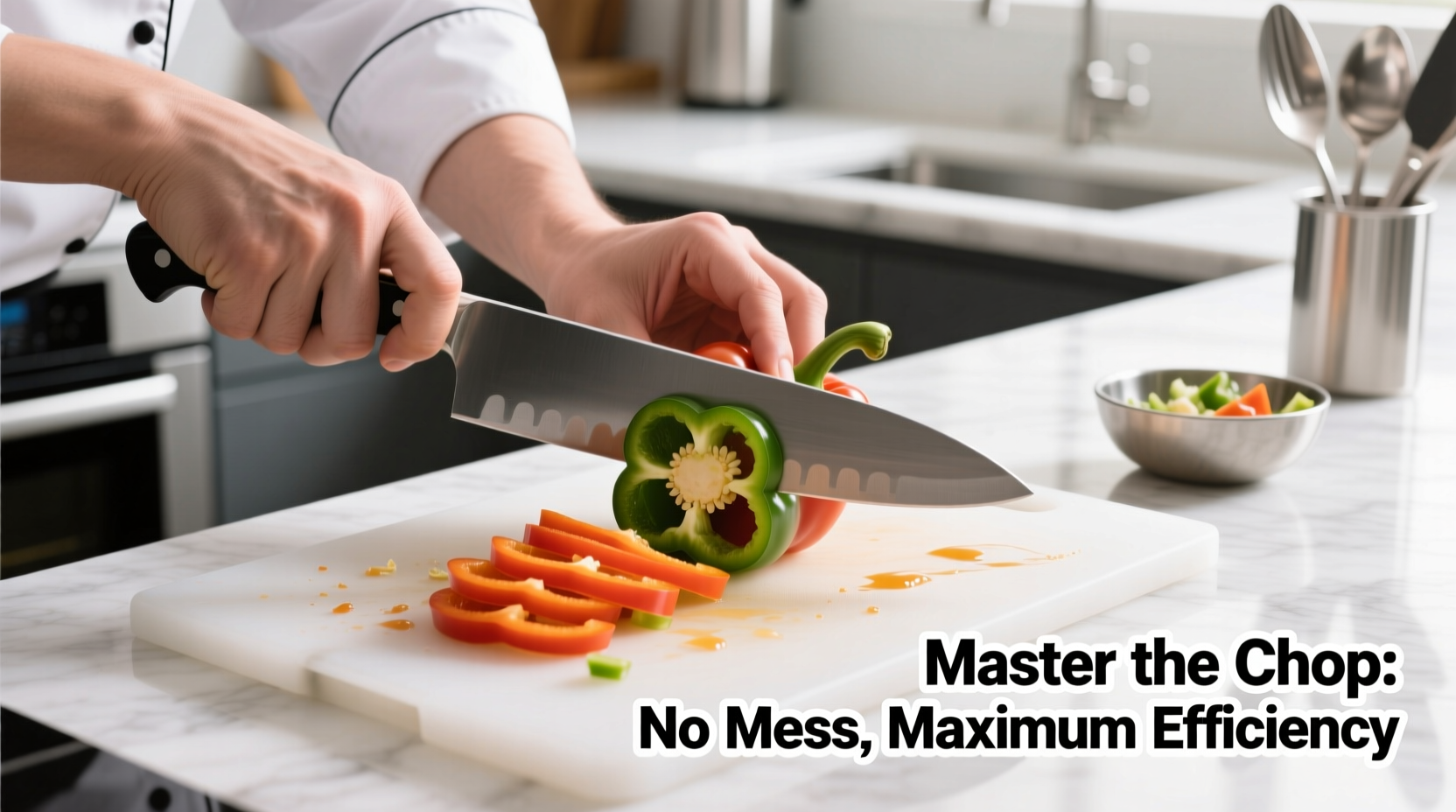
The foundation of clean, efficient chopping starts before the knife ever touches the pepper. Using appropriate equipment ensures control, reduces slippage, and protects your fingers. Not all knives are created equal, and neither are cutting boards.
- A sharp chef’s knife (6–8 inches): A dull blade crushes instead of slicing, making it harder to cut through the taut skin and increasing the chance of slipping. A sharp edge glides cleanly.
- Stable cutting board: Choose a non-slip surface. Wooden boards offer good grip, while rubber-backed plastic boards prevent sliding. Avoid glass or metal, which damage blades and let produce skid.
- Bowl or container nearby: Have a receptacle ready to catch seeds, stems, and scraps—this keeps your workspace clean from the start.
Step-by-Step Guide to Chopping Peppers Without Mess
Follow this methodical process to maintain control and minimize debris. It works for all varieties of peppers, with minor adjustments for size and heat level.
- Wash and dry the pepper: Remove dirt and wax. Pat dry to improve grip and prevent slipping on the board.
- Cut off the stem end: Place the pepper upright on the board. Slice horizontally just below the stem. Discard or compost the top.
- Remove the core and seeds: Lay the pepper flat. Use the tip of your knife to cut along the inner white ribs, which hold the seeds. These ribs are bitter and tough—removing them improves texture. Scoop out seeds and membranes into a bowl using your knife or fingers.
- Flatten the pepper halves: Open the pepper like a book. Press gently to flatten it against the board for easier slicing.
- Slice or dice as needed: Cut lengthwise into strips for julienne, then rotate and dice crosswise for cubes. For thin slices, cut vertically from edge to edge.
- Transfer immediately: Move chopped pieces directly into a mixing bowl or pan to avoid cluttering your workspace.
This sequence minimizes juice runoff, keeps seeds contained, and allows for uniform cuts that cook evenly. The key is working in stages: stabilize, core, slice, contain.
Do’s and Don’ts When Handling Peppers
| Do | Don’t |
|---|---|
| Use a sharp knife for clean cuts | Use a dull blade that crushes the flesh |
| Work over a bowl to catch seeds | Chop directly on the counter without containment |
| Wear gloves when cutting hot peppers | Touch your face or eyes after handling chilies |
| Dry peppers after washing | Leave them wet, causing slippage |
| Store scraps in a compost bin | Let trimmings pile up mid-prep |
Following these guidelines prevents common frustrations and enhances safety. One overlooked mistake is failing to remove the inner pith—while edible, it has a rubbery texture and can harbor bitterness, especially in older peppers.
Real Example: From Frustration to Efficiency
Consider Maria, a home cook preparing fajitas for her family. She used to spend ten minutes wrestling with slippery bell peppers, scattering seeds across the counter, and ending up with uneven chunks that burned in spots during cooking. After learning the flattening technique and using a rimmed tray beneath her cutting board, her prep time dropped to four minutes. Her peppers cooked uniformly, cleanup was nearly instant, and she reported feeling more confident in the kitchen overall.
“I didn’t realize how much time I was wasting until I changed one small thing—working over a bowl,” she said. “Now I don’t dread chopping peppers anymore.”
Expert Insight on Knife Technique
“The way you hold the pepper matters as much as how you hold the knife. Anchor it with your fingertips curled under, and let the knife do the work in smooth rocking motions. Precision comes from stability, not force.” — Chef Rafael Mendez, Culinary Instructor at New Orleans Institute of Cooking
Proper hand positioning reduces fatigue and increases accuracy. The claw grip—curling your knuckles inward while guiding the blade with your fingertips—protects your fingers and promotes consistent cuts. Combined with a sharp knife, this technique makes repetitive dicing safer and faster.
Tips for Specific Pepper Types
Different peppers require slight modifications to maximize efficiency and safety.
- Bell peppers: Large and firm, ideal for flattening after coring. Their thick walls yield clean, chunky dice perfect for roasting or grilling.
- Jalapeños and serranos: Wear disposable gloves. Slice lengthwise, scrape out seeds with the knife tip, then mince finely. Use a paper towel to handle afterward if gloves aren’t available.
- Poblanos and anaheims: Often roasted first, but when raw, treat like bell peppers. Their thinner walls mean gentler pressure is needed to avoid crushing.
- Small hot peppers (habanero, Scotch bonnet): Work in a well-ventilated area. Consider using a small cookie sheet as a splash guard. Never use your hands to remove seeds—use a spoon or small knife.
FAQ
Can I chop peppers ahead of time?
Yes. Diced peppers store well in an airtight container in the refrigerator for 3–5 days. For longer storage, freeze them—though they’ll soften when thawed, making them better suited for cooked dishes than salads.
Why do my peppers slide around when I cut them?
This usually happens if the pepper isn’t stable on the board. Try cutting a thin slice off one side to create a flat base before proceeding. Also, ensure your cutting board isn’t slick—place a damp cloth underneath to anchor it.
Is it safe to touch my face after cutting jalapeños?
No. Capsaicin, the compound that makes peppers hot, can linger on skin and cause burning sensations, especially around the eyes and lips. Always wash your hands thoroughly with soap and water—or use vinegar—after handling hot peppers. Gloves are strongly recommended.
Final Checklist for Mess-Free Pepper Chopping
- Wash and dry the pepper thoroughly
- Secure a non-slip cutting board
- Gather a sharp knife and a bowl for scraps
- Remove the stem and core, scraping out seeds and ribs
- Flatten the pepper halves before slicing
- Dice or slice using controlled, even strokes
- Transfer chopped pieces immediately to a container
- Clean your hands and tools promptly, especially after hot peppers
Conclusion
Chopping peppers doesn’t have to be messy or tedious. With the right tools, a clear method, and attention to detail, you can transform this routine task into a seamless part of your meal prep. The benefits go beyond cleanliness—they include better flavor, improved texture, and greater confidence in the kitchen. Once you’ve mastered the fundamentals, you’ll wonder why you ever struggled.




 浙公网安备
33010002000092号
浙公网安备
33010002000092号 浙B2-20120091-4
Comments
No comments yet. Why don't you start the discussion?