
Selecting the right Apple Watch 9 band is more than a fashion statement—it’s about aligning functionality, comfort, and personal expression. With the Apple Watch Series 9 offering advanced health tracking, seamless connectivity, and a sleek design, the band you choose plays a crucial role in how well it integrates into your daily life. Whether you're dressing for the boardroom, the gym, or a weekend hike, the perfect band enhances both usability and aesthetic harmony.
Understand Your Lifestyle Needs
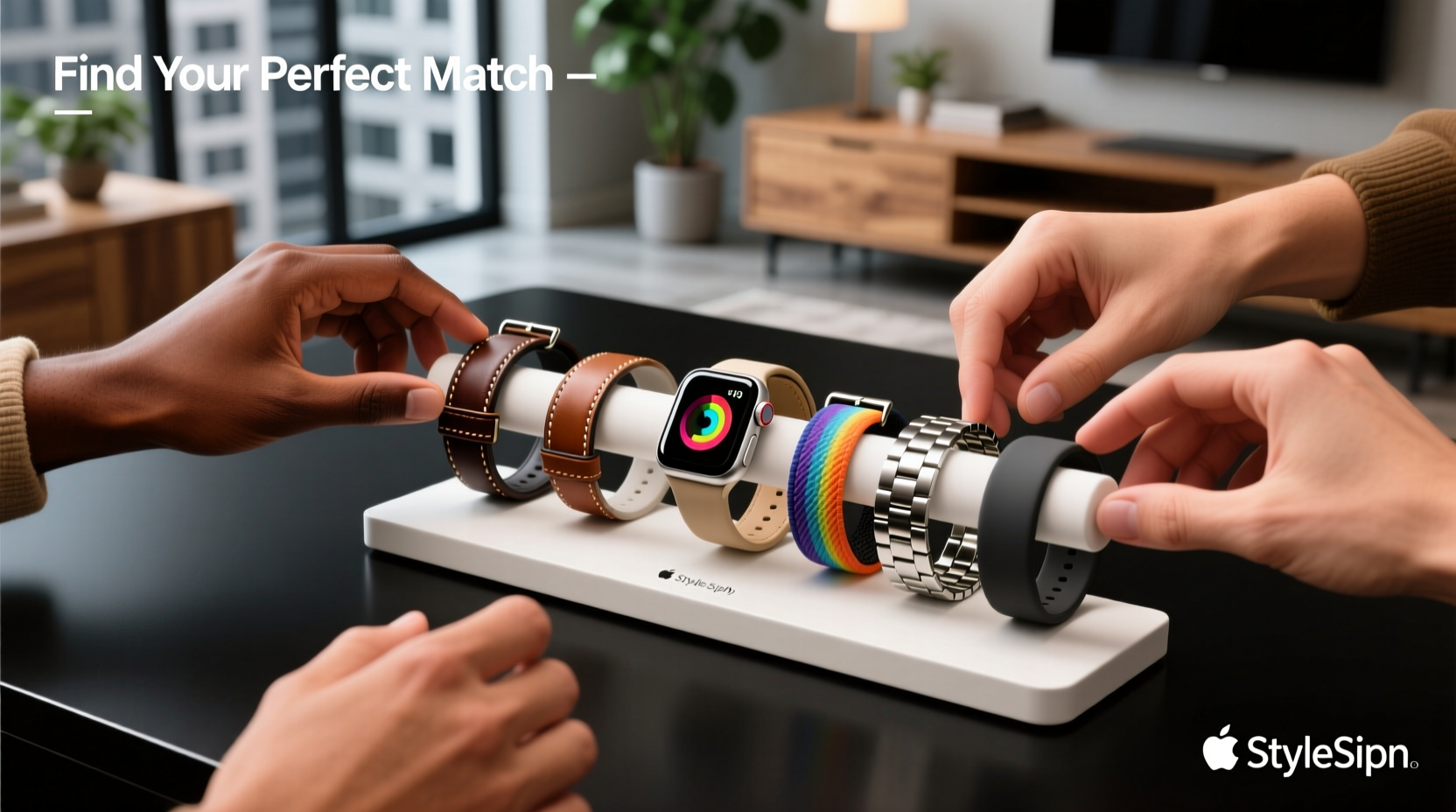
The first step in choosing the ideal band is evaluating how you use your Apple Watch. A band suitable for an office environment may not hold up during intense workouts or outdoor adventures. Consider your typical day: do you spend hours at a desk, commute frequently, work out regularly, or travel often? Each scenario calls for different materials and fastening systems.
- Office professionals may prefer leather, stainless steel, or Milanese loop bands for a polished appearance.
- Fitness enthusiasts benefit from sport loops, nylon, or fluoroelastomer bands that are sweat-resistant and breathable.
- Outdoor adventurers should look for rugged options like nylon seatbelt-style or titanium links that withstand dust, moisture, and impact.
Material Matters: Pros and Cons of Common Band Types
Apple and third-party manufacturers offer a wide range of materials, each with distinct advantages and limitations. Understanding these helps avoid discomfort or premature wear.
| Material | Pros | Cons | Best For |
|---|---|---|---|
| Fluoroelastomer (Sport Band) | Durable, water-resistant, easy to clean | Can feel plasticky; less breathable in heat | Athletes, swimmers, active users |
| Sport Loop (Nylon) | Lightweight, breathable, soft on skin | Absorbs sweat; requires frequent washing | All-day wear, sensitive skin, warm climates |
| Leather | Elegant, ages beautifully, comfortable over time | Not water-resistant; degrades with sweat exposure | Formal settings, casual evenings |
| Stainless Steel | Premium look, durable, adjustable links | Heavier; can pinch hairs; cold in winter | Business attire, formal occasions |
| Milanese Loop | Magnetic closure, breathable, sleek finish | Can snag on fabrics; higher price point | Hybrid lifestyles, tech-savvy professionals |
“Your band should complement your routine, not fight against it. The best choice feels invisible after a few hours.” — Daniel Reeves, Wearable Design Consultant
Step-by-Step Guide to Choosing the Right Band
Follow this practical sequence to narrow down your options efficiently:
- Assess your primary use case: Is it fitness, work, travel, or social events?
- Measure your wrist: Use a soft tape measure. Apple bands fit wrists from 145mm to 220mm, but some third-party brands vary.
- Check compatibility: Ensure the band fits the 41mm or 45mm Apple Watch 9 model you own.
- Test comfort factors: Consider weight, breathability, and clasp security. Try virtual previews or visit an Apple Store if possible.
- Evaluate maintenance needs: Will you wash it weekly? Avoid leather if you won’t maintain it properly.
- Match to wardrobe: Choose neutral tones (black, silver, beige) for versatility or bold colors for personality.
- Purchase and trial: Buy one high-use band first, test for 3–5 days, then expand your collection.
Real-Life Example: Matching Bands to Personal Style
Take Sarah, a graphic designer who splits her time between remote work, client meetings, and weekend trail runs. She owns three bands: a navy Sport Loop for home and casual outings, a silver Milanese Loop for presentations, and a black Nike Sport Band for runs. By rotating them, she maintains device hygiene, avoids material fatigue, and ensures her watch complements her outfit without compromise.
She notes: “I used to wear the same band every day and ended up with irritated skin and a dull-looking watch. Now, switching bands takes seconds, and my Watch feels fresh and intentional.”
Expert Tips for Long-Term Comfort and Durability
Beyond aesthetics, long-term comfort hinges on proper care and informed selection. Sweat, UV exposure, and friction degrade materials faster than expected, particularly with daily wear.
- Clean fabric bands weekly with mild detergent and air dry completely.
- Avoid direct sunlight when storing metal or leather bands to prevent fading or warping.
- Inspect clasps and connectors monthly for wear, especially on link-style bands.
- Alternate between two or more bands to extend the lifespan of each.
“The most overlooked factor in wearable comfort is airflow. Breathable weaves reduce moisture buildup, which prevents odor and skin irritation.” — Dr. Lena Patel, Dermatologist specializing in wearable tech
Checklist: Before You Buy Your Next iWatch 9 Band
Use this quick-reference checklist to ensure your selection meets all criteria:
- ✅ Confirmed compatibility with Apple Watch 9 size (41mm or 45mm)
- ✅ Matches at least three outfits in your regular rotation
- ✅ Suitable for your most common activity (e.g., gym, office, travel)
- ✅ Easy to clean and maintain based on your routine
- ✅ Weight feels balanced on your wrist (not too heavy or flimsy)
- ✅ Closure mechanism is secure and easy to use (buckle, magnet, pin)
- ✅ Made from hypoallergenic materials if you have sensitive skin
Frequently Asked Questions
Can I use third-party bands with my Apple Watch 9?
Yes, many third-party bands are compatible as long as they match the lug size (20mm or 22mm depending on your Watch size). Look for brands with strong reviews and precise engineering to avoid wobbling or poor fit.
How often should I replace my iWatch band?
With regular use, expect 6–12 months for sport bands and 12–18 months for leather or metal. Signs it’s time to replace include fraying, discoloration, weakened clasp, or persistent odor despite cleaning.
Are expensive bands worth the investment?
For everyday reliability and longevity, yes. Premium bands from Apple or certified partners use higher-grade materials and undergo rigorous testing. While third-party options can be cost-effective, cheaper bands may degrade faster or cause skin irritation.
Final Thoughts: Make Your Watch Work for You
Your Apple Watch 9 is a personal device—one that tracks your health, connects you to what matters, and reflects your identity. The band is not just an accessory; it’s the bridge between technology and lifestyle. Taking time to select the right one ensures comfort throughout the day, enhances your confidence, and protects your investment.
Start by identifying your top priorities: durability, elegance, breathability, or ease of use. Then experiment with one or two styles that align with those values. Over time, you’ll develop a rotation that supports every facet of your life—effortlessly.




 浙公网安备
33010002000092号
浙公网安备
33010002000092号 浙B2-20120091-4
Comments
No comments yet. Why don't you start the discussion?