
Snake ring bracelets have surged in popularity for their elegant, coiled design and timeless appeal. Inspired by ancient symbolism and modern craftsmanship, these pieces wrap around the wrist with fluid grace. However, their unique structure—often featuring no clasp and relying on precise diameter rather than standard band sizes—makes proper fit essential. A poorly sized snake ring can slip off unexpectedly or leave indentations from being too tight. Getting it right means understanding your wrist dimensions, the metal’s flexibility, and how the design interacts with your anatomy.
Unlike traditional bangle or chain bracelets, snake rings are typically solid or semi-rigid, shaped into a continuous spiral that slides over the hand. Because of this, selecting the correct size isn’t just about aesthetics—it affects comfort, wearability, and longevity. Whether you're buying for yourself or gifting someone special, precision matters. Below is a comprehensive guide to help you determine the ideal fit with confidence.
Understanding Snake Ring Sizing Mechanics
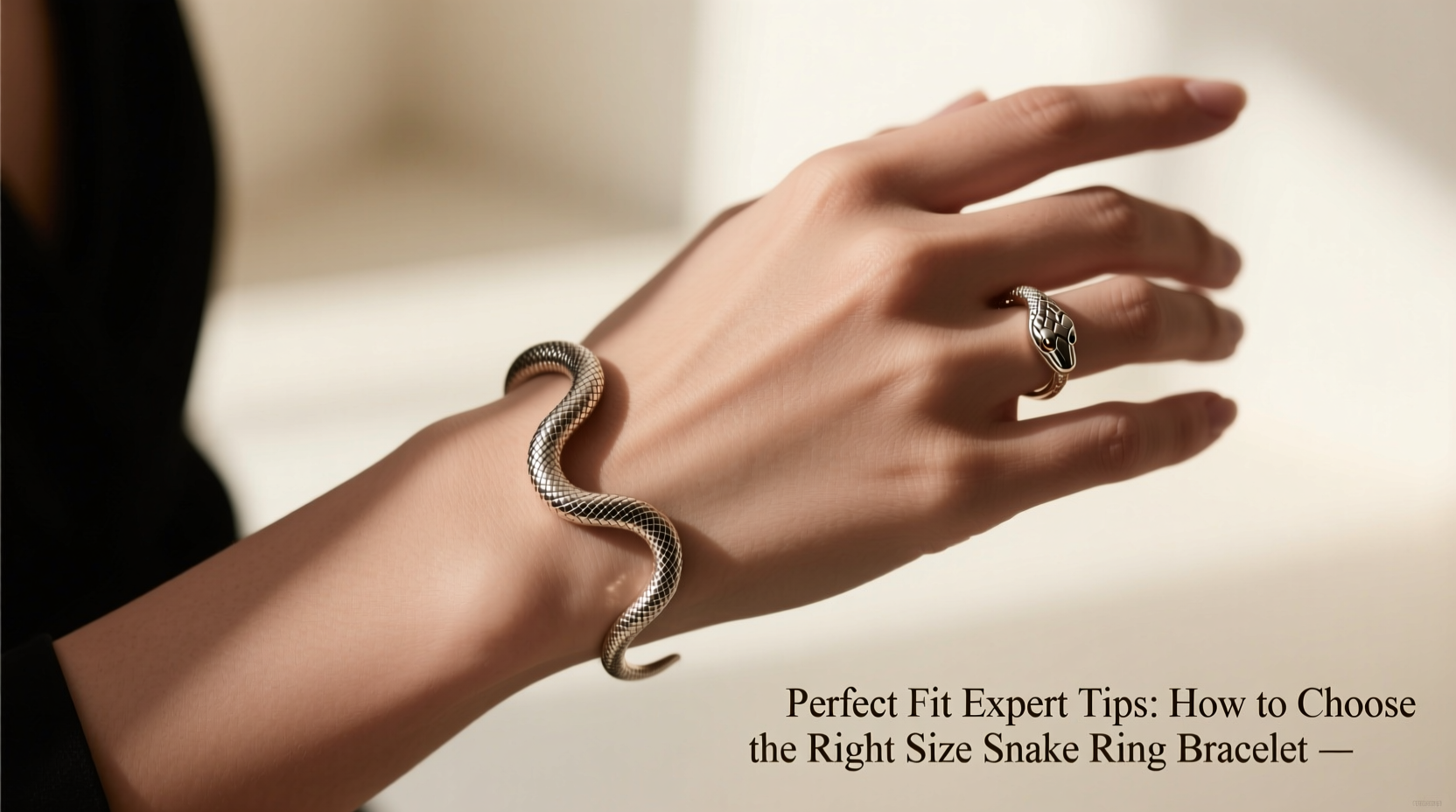
Most snake ring bracelets are sized based on internal diameter, measured in millimeters or inches. This differs from standard ring sizes used for finger jewelry. The diameter must be large enough to slide over the knuckles but snug enough to stay securely on the wrist without rotating excessively.
The average adult wrist circumference ranges from 6 to 7.5 inches (15–19 cm), but hand width—particularly across the knuckles—is what determines whether a snake ring can be put on and removed comfortably. A common mistake is measuring only the wrist and ignoring hand proportions. For instance, someone with slender wrists but wide hands may struggle with a ring sized only for the wrist.
Step-by-Step Guide to Measuring for a Perfect Fit
- Gather tools: Use a flexible tape measure or a non-stretch string and ruler.
- Measure hand width: Close your hand as if slipping on a ring. Measure the distance across the knuckles (excluding the thumb).
- Convert to diameter: Divide the measurement by π (approximately 3.14). This gives the minimum inner diameter needed.
- Add a small tolerance: Add 1–2 mm for comfort, especially if the ring has intricate detailing that could catch during wear.
- Verify with sample: If purchasing online, request a sizing gauge from the jeweler or order a low-cost test piece in silver before investing in gold or platinum.
This method ensures the ring glides over the hand smoothly while resting securely once on the wrist. It’s particularly useful when shopping remotely, where trying on isn’t an option.
Material and Design Impact on Fit
The type of metal and structural design influence both sizing and comfort. Thicker bands require slightly larger diameters due to reduced flexibility. Conversely, thinner, more malleable metals like sterling silver can conform slightly to the wrist shape over time.
| Metal Type | Flexibility | Recommended Tolerance | Fitting Notes |
|---|---|---|---|
| Sterling Silver | High | +1 mm | Can adjust slightly; ideal for first-time buyers |
| 14K Gold | Medium | +1.5 mm | Durable but less forgiving; precision critical |
| Titanium | Low | +2 mm | Rigid; requires exact hand-width measurement |
| Stainless Steel | Low to Medium | +1.5 mm | Scratch-resistant; minimal stretch over time |
Additionally, consider design elements such as head size (the sculpted snake head) and coil thickness. Larger heads add weight and may cause rotation if the fit isn’t secure. Multi-coil designs distribute pressure more evenly but demand greater initial clearance to slide on.
“Snake rings are deceptively simple. Their seamless form hides complex ergonomics. I’ve seen customers return pieces not because they were ‘bad quality,’ but because they skipped proper hand measurements.” — Lena Moretti, Master Jewelry Designer at Aurelia Atelier
Real-Life Example: Sarah’s Sizing Challenge
Sarah, a 32-year-old teacher, ordered a rose gold snake ring online after falling in love with its sleek design. Her wrist measures 6.5 inches, so she assumed a 22mm diameter would suffice. When it arrived, she couldn’t get it past her knuckles. Frustrated, she contacted the seller, who advised her to measure her closed hand width. She discovered it was 3.1 inches (about 79mm), requiring a minimum inner diameter of 25mm. After exchanging the piece, the new size slid on effortlessly and felt balanced throughout the day.
This case illustrates why wrist-only measurements fail. Without considering hand anatomy, even accurate-looking numbers can lead to poor fit.
Checklist: How to Choose the Right Size Snake Ring Bracelet
- ✅ Measure the widest part of your hand when clenched (across knuckles)
- ✅ Convert circumference to diameter using π (pi ≈ 3.14)
- ✅ Add 1–2 mm depending on metal rigidity
- ✅ Consider weight distribution if the design includes a prominent head or gemstones
- ✅ Test fit with a similar-sized ring if possible
- ✅ Consult the brand’s sizing chart—never assume universal standards
- ✅ Ask for a physical sizing tool if buying from a reputable jeweler
Avoid These Common Fitting Mistakes
Even experienced jewelry buyers make errors when selecting snake rings. Here are frequent pitfalls and how to avoid them:
- Assuming one size fits all: Some brands use proprietary sizing. Always cross-reference with actual measurements.
- Ignoring temperature effects: Cold hands shrink slightly; warm hands expand. Measure at room temperature.
- Overlooking dominant hand differences: Your dominant hand may be slightly larger due to muscle development.
- Buying gift sizes blindly: If gifting, discreetly borrow a well-fitting ring from the recipient’s collection to match diameter.
FAQ: Common Questions About Snake Ring Sizing
Can a snake ring be resized after purchase?
Generally, no. Most snake rings are made from solid metal loops without seams, making traditional resizing impossible. Some jewelers may offer replacement in a different size, especially if purchased directly from the brand. Always check return policies before buying.
How do I know if my snake ring is too loose?
If the ring rotates constantly, slips down toward your hand without support, or can be pulled off with minimal resistance, it’s likely too large. A properly fitted snake ring should stay in place with moderate friction and require slight effort to remove.
Are there adjustable snake ring designs?
True snake rings are designed to be seamless, but some modern variations include hidden hinges or flexible joints for easier wear. These aren’t traditional but offer practicality for those with wider hands. Be aware that added mechanisms may affect durability and aesthetic purity.
Final Thoughts: Confidence Starts with Comfort
A perfectly fitted snake ring bracelet does more than complete an outfit—it becomes an extension of your personal style. When sized correctly, it moves naturally with your hand, feels secure, and draws compliments without discomfort. Taking the time to measure properly, understand materials, and respect anatomical nuances transforms what might seem like a simple accessory into a lasting heirloom.
Jewelry should enhance your life, not complicate it. By applying these expert-backed methods, you ensure every wear is effortless and elegant. Whether you’re drawn to the serpent’s symbolic power or simply its graceful silhouette, the right fit makes all the difference.




 浙公网安备
33010002000092号
浙公网安备
33010002000092号 浙B2-20120091-4
Comments
No comments yet. Why don't you start the discussion?