
Snakeskin sandals are a timeless fashion staple—bold in texture, elegant in design, and versatile enough to elevate both casual and formal outfits. But no matter how striking the pattern or premium the material, a poorly fitting pair can turn a stylish choice into a daily discomfort. The key to making the most of your investment lies not just in aesthetics, but in fit. Unlike standard leather or fabric footwear, snakeskin’s unique structure and limited stretch demand a more thoughtful approach to sizing. Understanding how to measure your foot correctly, interpret brand-specific sizing, and evaluate support features ensures you walk confidently—both in style and comfort.
Why Fit Matters More with Snakeskin Sandals
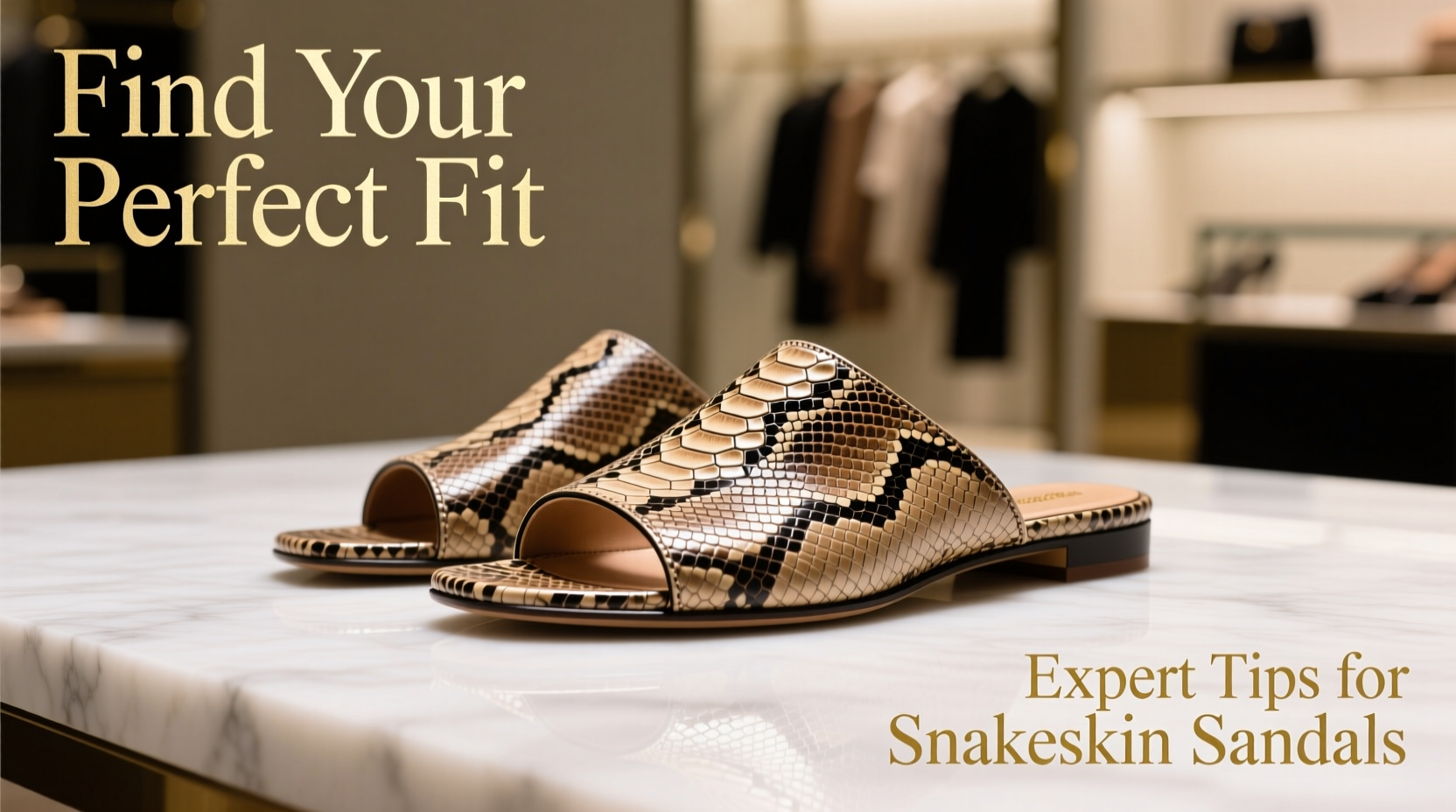
Snakeskin is a natural exotic leather derived from reptiles, prized for its durability, water resistance, and distinctive scale pattern. However, it behaves differently than traditional calfskin or suede. One of its defining traits is minimal elasticity. Once shaped, snakeskin does not stretch significantly over time, meaning that if your sandal feels tight on day one, it likely will remain so.
This lack of give increases the importance of precision in sizing. A slightly narrow fit can lead to blisters, pressure points, and long-term foot fatigue. Conversely, oversized sandals compromise stability, especially on uneven terrain. The open design common in many snakeskin styles—straps, cutouts, slingbacks—means there's less structural support to compensate for poor fit.
“With exotic leathers like snakeskin, fit accuracy is non-negotiable. You can’t ‘break them in’ like regular shoes.” — Marcus Lin, Footwear Design Consultant at LuxeStep Studios
Step-by-Step Guide to Measuring Your Feet at Home
Many people assume they know their shoe size—but feet change over time due to age, weight fluctuations, pregnancy, or even prolonged standing. To ensure accuracy, measure your feet every six months, especially before investing in high-end footwear.
- Gather supplies: Use a ruler, blank paper, pencil, and a flat surface. Wear the type of socks you’d typically pair with sandals (usually none).
- Trace your foot: Stand barefoot on the paper, shifting weight evenly. Have someone trace the outline while you stand naturally.
- Measure length: Use the ruler to draw straight lines from the heel to the longest toe. Measure in centimeters and inches.
- Check width: Measure across the widest part of the forefoot. Compare this to standard width charts (B for medium women, D for medium men).
- Repeat for both feet: Most people have one foot slightly larger. Always size for the bigger foot.
- Compare to brand charts: Don’t rely solely on US/UK/EU size labels. Refer directly to the manufacturer’s measurement guide.
Key Fit Factors Beyond Size: Arch Support, Strap Placement, and Heel Hold
Size alone doesn’t guarantee comfort. Three structural elements determine how a snakeskin sandal performs during extended wear:
- Arch support: Flat sandals may look sleek, but without proper arch contouring, they contribute to plantar fasciitis or foot strain. Look for subtle elevation or removable insoles.
- Adjustable straps: Ankle or instep straps with multiple buckle holes allow micro-adjustments for swelling or different sock thicknesses.
- Heel cup depth: A shallow heel cup leads to slippage. Deep, contoured heels keep your foot stable, especially important in slingback or slide styles.
When trying on, walk on a hard surface. Pay attention to heel lift—if it rises more than 5mm, the fit is too loose. Also, check for pinching at the ball of the foot or toes rubbing against the front band.
Brand Sizing Variations: What You Need to Know
Not all size 8s are created equal. Luxury brands using exotic leathers often follow European standards, which can run narrower or longer than American counterparts. Below is a comparison of popular snakeskin sandal brands and their typical fit behavior:
| Brand | Fit Tendency | Width Profile | Recommended Adjustment |
|---|---|---|---|
| Stuart Weitzman | Runs narrow | B (Medium) | Consider half size up or wide option |
| Jimmy Choo | Runs small | C/D (Semi-wide) | Size up by half |
| Tory Burch | True to size | B (Medium) | No adjustment needed for average feet |
| Sergio Rossi | Runs long | A/B (Narrow-Medium) | Consider shorter length or insole padding |
| Naturalizer (Exotic Line) | Generous fit | C/D/E (Wide options) | Stick to true size or down half if narrow foot |
Real Example: How Sarah Found Her Ideal Pair
Sarah, a marketing executive based in Austin, had been searching for the perfect snakeskin slides for months. She loved the aesthetic but kept experiencing heel slippage and arch pain after short walks. After visiting three boutiques and returning five online orders, she consulted a specialty footwear fitter at a luxury department store.
The fitter measured her feet and discovered her right foot was a full half-size longer than her left, and her arch height fell into the “high” category—something standard sandals rarely accommodate. Based on this, she recommended a Jimmy Choo pair with a cushioned insole and deeper heel cup, sized up to a 9.5 to accommodate her longer foot, paired with a silicone heel grip for the smaller left foot.
The difference was immediate. Not only did the sandals stay secure, but she could wear them through full workdays without discomfort. Sarah now prioritizes professional fittings for any exotic leather purchase.
Checklist: Before You Buy Your Snakeskin Sandals
- ✅ Measure both feet at home (or get professionally fitted)
- ✅ Check brand-specific size chart—not just generic conversions
- ✅ Confirm return policy for online purchases
- ✅ Evaluate adjustability of straps and closure type
- ✅ Assess insole quality—cushioned vs. flat
- ✅ Try walking on a hard surface to test heel hold and toe space
- ✅ Consider orthotic compatibility if you use custom inserts
Frequently Asked Questions
Can I stretch snakeskin sandals if they feel tight?
Unlike smooth leather, snakeskin has very limited stretch potential. While a professional cobbler might gently expand the width using a shoe stretcher, the process risks damaging the delicate scale pattern. It’s better to get the correct size from the start.
Do snakeskin sandals run differently for men and women?
Yes. Women’s snakeskin sandals often prioritize slim silhouettes, which can reduce toe box space. Men’s styles tend to have broader lasts and sturdier construction. Always refer to gender-specific size guides—unisex claims are rare and often misleading with exotic leathers.
How do I know if my sandal has enough support for all-day wear?
Press the insole with your thumb. If it compresses deeply and doesn’t rebound quickly, it lacks resilience. Look for layered construction: a firm midsole with a soft top layer. Also, ensure the outsole provides slight traction—especially important if the sandal has a heel.
Final Tips for Long-Term Comfort and Style
Once you’ve found the right fit, maintain it. Store snakeskin sandals in breathable cloth bags away from direct sunlight to prevent drying and cracking. Clean with a specialized exotic leather wipe, and condition every few months to preserve flexibility. Avoid exposing them to excessive moisture—snakeskin is water-resistant but not waterproof.
Remember, the perfect pair should feel secure from the first step. There’s no need to endure discomfort for fashion. With careful measurement, brand awareness, and attention to structural details, you can enjoy the bold elegance of snakeskin sandals without sacrificing comfort.




 浙公网安备
33010002000092号
浙公网安备
33010002000092号 浙B2-20120091-4
Comments
No comments yet. Why don't you start the discussion?