
Navigating a sea of identical vehicles in a sprawling parking lot can turn a simple errand into a frustrating scavenger hunt. While smartphone apps and built-in GPS features help, they aren’t foolproof—especially when batteries die or signals drop. Relying solely on technology leaves you vulnerable. The truth is, finding your car quickly is less about gadgets and more about strategy, observation, and preparation. With the right blend of low-tech tricks and smart tools, you can locate your vehicle with confidence, whether you're in a multi-level garage, a crowded festival lot, or an unfamiliar city.
Use Environmental Landmarks Strategically
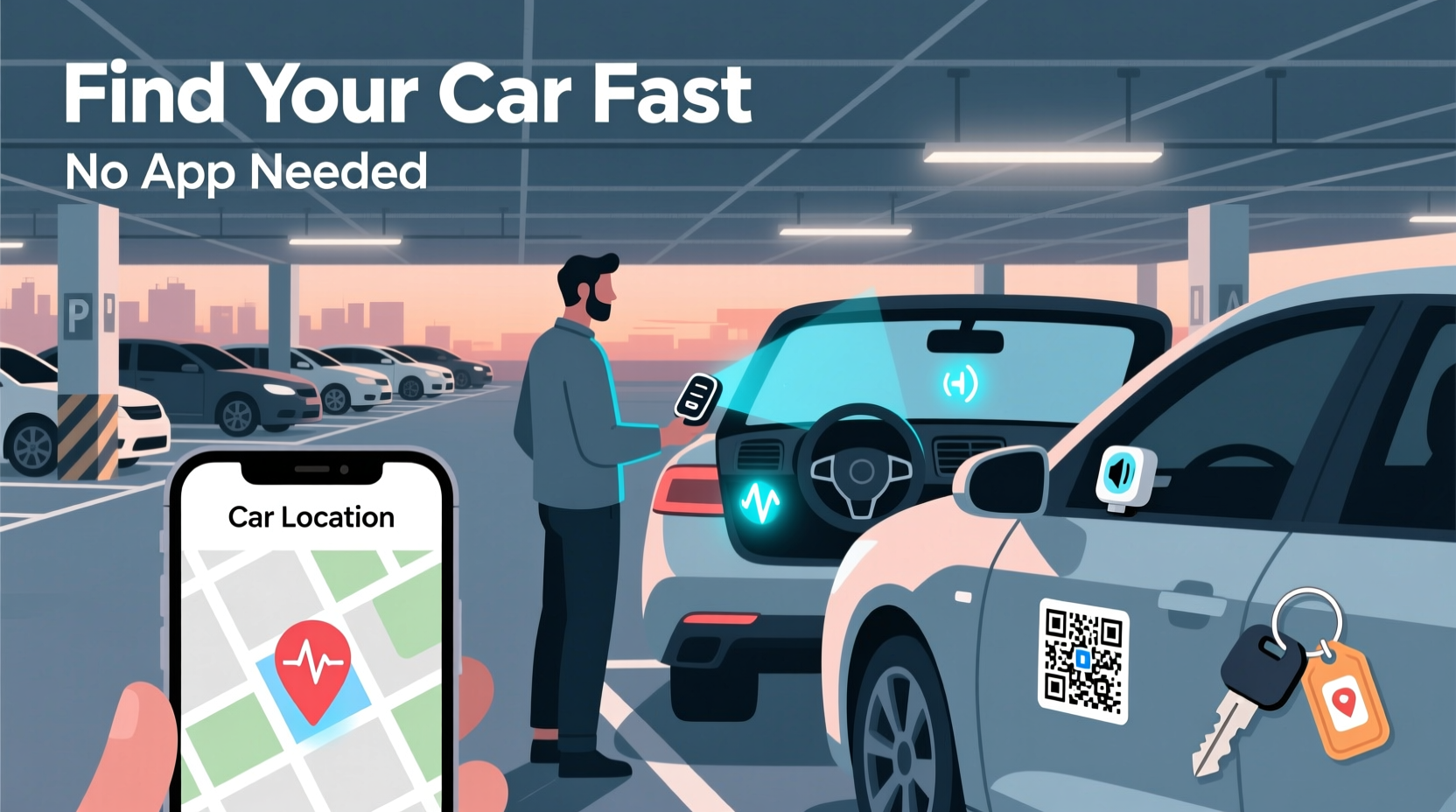
One of the most reliable ways to remember where you parked is to anchor your location to fixed, visible landmarks. Instead of relying on memory alone, actively engage with your surroundings when pulling into a spot. Look for permanent structures or distinctive features near your car: a red fire hydrant, a unique sculpture, a vending machine, or even the pattern of ceiling beams in a garage. These serve as mental signposts that remain unchanged while cars come and go.
For example, if you park near a staircase with bright yellow handrails on Level B3, note it not just as “near stairs,” but as “left of yellow-handrail stairs, two spots past the support pillar.” The more specific the detail, the easier it is to reverse-engineer your path later.
Leverage Physical Markers and Personal Habits
Creating your own physical markers can dramatically improve recall. If you regularly park in large lots, consider placing a small, distinctive object on your dashboard—like a bright sunshade, a uniquely colored air freshener, or a magnetic marker on the roof (if safe and legal). These act as visual beacons from a distance.
Another effective habit is to develop a consistent parking ritual. Always park facing a certain direction, or aim for spaces near corners or ends of rows. This reduces randomness and builds pattern recognition over time. For instance, if you always try to park near a wall or barrier, your car will often be at the edge of a section, making it easier to trace back.
“People underestimate spatial memory. When paired with intentional observation, it’s one of the fastest ways to relocate a vehicle.” — Dr. Lena Torres, Cognitive Psychologist specializing in environmental navigation
Smart Tools That Go Beyond Standard Apps
While many rely on smartphone GPS pins, several dedicated tools offer more reliability and precision:
- Bluetooth trackers: Devices like Tile or Samsung SmartTag attach to your keychain or undercarriage. When you’re within ~100 feet, your phone can trigger a ringtone—even if the car is out of sight.
- Smart key fobs with alarms: Many modern vehicles include remote honk-and-blink functions. Press the lock button three times to activate an audible and visual signal.
- Dedicated parking watches: Some smartwatches (e.g., Garmin or Apple Watch) allow voice memos or location tagging the moment you park, syncing with your phone’s GPS.
- OBD-II parking savers: Plug-in devices that record your last stop automatically and can be accessed via an app—even without phone GPS.
These tools are especially useful in underground garages where GPS fails, as Bluetooth and motion-based triggers don’t require satellite signals.
Step-by-Step Guide to Finding Your Car Without Technology
When tech fails, follow this five-step process to systematically retrace your steps:
- Pause and orient yourself: Stand still upon returning to the parking area. Avoid walking randomly. Identify major zones (entrances, elevators, stairwells).
- Recall entry point: Remember where you entered the lot or garage from. Most people subconsciously park closer to entrances.
- Reconstruct your path: Walk back along the route you took to the store or venue. Use storefronts, signage, or floor markings as memory triggers.
- Scan by level and section: In multi-level garages, start on the floor you believe you parked on. Move in expanding concentric circles from central points like elevators.
- Listen for clues: Remote unlock your car. Even if you can’t see it, the sound of doors unlocking or lights flashing may guide you.
Comparison of Parking Recall Methods
| Method | Reliability | Setup Required | Best For |
|---|---|---|---|
| Mental landmark recall | High (if practiced) | Low | Daily drivers, familiar locations |
| Smartphone GPS pin | Medium | Medium | Occasional trips, open-air lots |
| Bluetooth tracker | High | High (device purchase) | Frequent travelers, urban areas |
| Remote honk & blink | Medium-High | Low | Noisy or dimly lit areas |
| Physical marker (magnet, tag) | High | Low-Medium | Large events, festivals, rentals |
Real-World Example: Navigating a Stadium Parking Maze
During a major football game, Maria parked in a temporary field lot with no row letters or numbers. Her phone died before she could set a GPS pin. Instead, she remembered passing a food truck with a giant taco sign and noted her car was two spots from a blue traffic cone. On return, she walked back toward the stadium exit, scanning for the taco truck. Once spotted, she moved parallel to it and found her car within 90 seconds. She credited her success to taking 10 seconds to observe her environment before locking the door.
This case highlights how observational awareness trumps reliance on digital tools—especially in high-traffic, transient environments where infrastructure is minimal.
Parking Checklist: What to Do Before You Walk Away
Before leaving your car, run through this quick checklist to ensure easy retrieval later:
- ✅ Note the nearest landmark (sign, pole, structure)
- ✅ Check if your car faces north/south/east/west (use shadows or phone compass)
- ✅ Activate a Bluetooth tracker or set a GPS pin
- ✅ Mentally visualize your car’s position relative to fixed objects
- ✅ Attach or adjust a visible marker if needed (sunshade, magnet)
Spending 15–20 seconds on these steps can save 10–15 minutes of searching later.
Frequently Asked Questions
What if I forget everything and can’t find my car?
Start by contacting security or parking management. Many lots have surveillance systems that can locate your vehicle by license plate or section. Alternatively, use your car’s alarm system by calling a friend to remotely unlock it via a connected app.
Are GPS pins accurate enough in parking garages?
GPS accuracy drops significantly indoors or underground. While some phones use Wi-Fi or cellular triangulation, results can be off by dozens of feet. For best results, combine GPS with physical cues or use a Bluetooth-based solution.
Can I use voice assistants to mark my parking spot?
Yes. Say “Hey Siri, drop a pin here” or “OK Google, save my parking location” as you leave your car. These commands use your phone’s last known coordinates and can be retrieved later—even offline in some cases.
Conclusion: Make Parking Stress-Free with Simple Habits
Finding your car doesn’t have to be a game of chance. By combining observational discipline, smart habits, and selective use of tools, you can eliminate one of modern life’s minor but persistent frustrations. Whether you’re using a $30 Bluetooth tag or simply training yourself to notice your environment, the key is consistency. The next time you park, take a breath, look around, and anchor your location in both memory and reality. Over time, these small actions compound into effortless recall.




 浙公网安备
33010002000092号
浙公网安备
33010002000092号 浙B2-20120091-4
Comments
No comments yet. Why don't you start the discussion?