
A zipper splitting on your favorite jacket can feel like the end of its life. Whether it's a beloved winter coat, a vintage denim jacket, or a trusted hiking shell, a malfunctioning zipper doesn’t have to mean retirement. The good news: most zipper issues are repairable with simple tools and techniques you likely already have at home. With a bit of patience and the right approach, you can restore function without spending money on replacements or professional tailoring.
Zippers fail for many reasons—misaligned teeth, worn sliders, broken stops, or fabric stress near the track. But understanding the anatomy of a zipper and diagnosing the root cause is half the battle. This guide walks through real-world fixes, tested by tailors, outdoor gear technicians, and everyday problem-solvers, so you can confidently tackle a split zipper and extend the life of your go-to outerwear.
Understanding Why Zippers Split
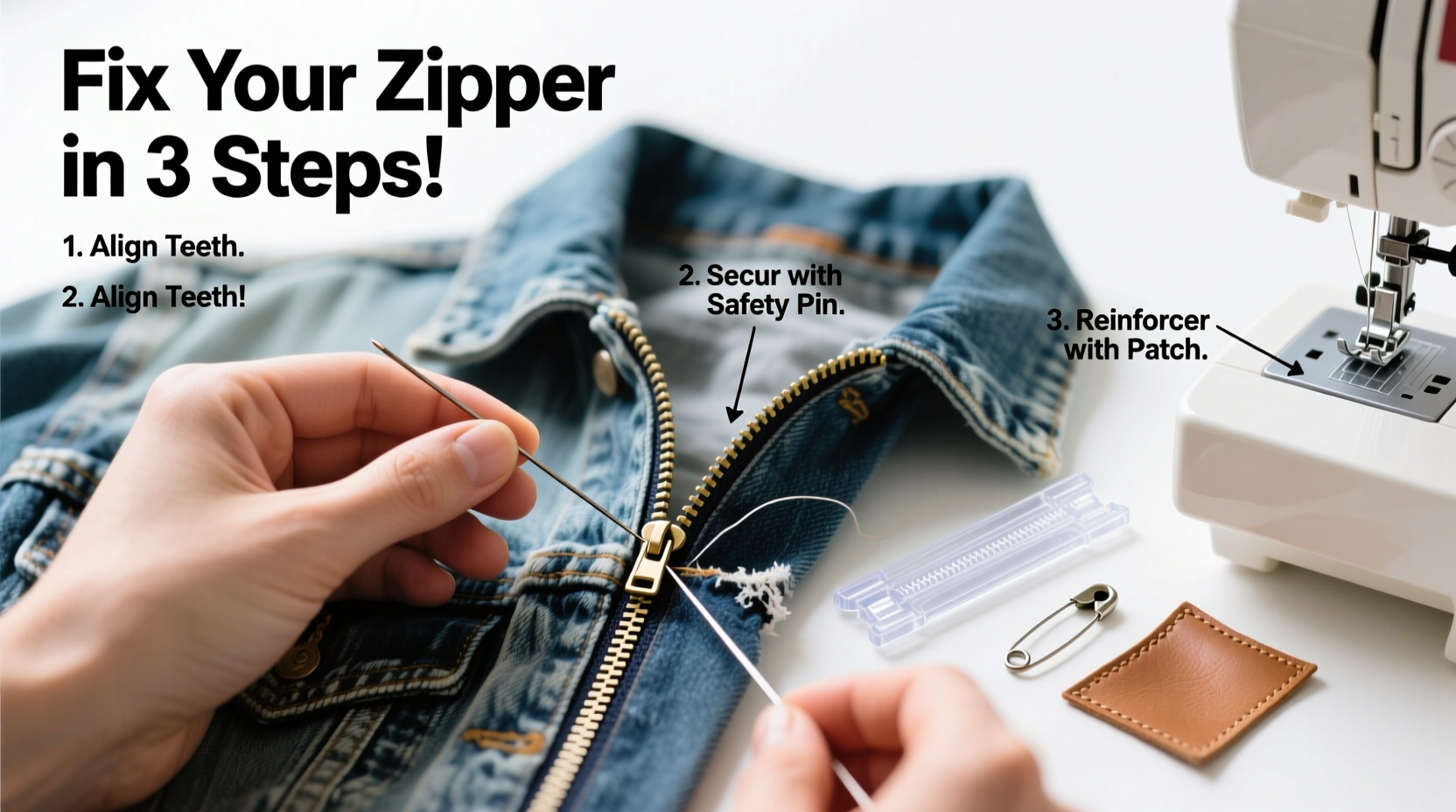
Before attempting any fix, it’s important to identify why the zipper failed in the first place. A zipper isn’t just a slider moving up and down—it’s a mechanical system made of interlocking teeth (or coils), a pull tab, a slider mechanism, and stoppers at both ends. When one component fails, the whole system can collapse.
- Misalignment: The two sides of the zipper don’t meet evenly, preventing the slider from closing properly.
- Slider wear: Over time, the metal or plastic slider weakens and loses tension, allowing the chain to separate under pressure.
- Missing or damaged stopper: The small metal or plastic piece at the top or bottom that prevents the slider from coming off. If broken, the slider slips off and the zipper splits.
- Frayed tape or stressed stitching: The fabric holding the zipper can tear, especially if overstuffed or pulled unevenly.
- Dirt or debris: Lint, sand, or wax buildup can jam the slider, forcing it to skip teeth.
Knowing which issue you're dealing with determines your solution. For example, cleaning and lubricating may solve a stiff slider, while a missing stopper requires reattachment or replacement.
Step-by-Step Guide to Fixing a Split Zipper
Most split zippers can be fixed in under 30 minutes using household items. Follow this sequence based on common failure points.
- Assess the Damage
Unzip fully and lay the garment flat. Check if the slider still grips both sides, if teeth are bent or missing, and whether the stopper is intact. - Clean the Zipper Teeth
Use an old toothbrush to gently scrub away dirt. For stubborn grime, dampen the brush slightly with rubbing alcohol or mild soap. Dry thoroughly before proceeding. - Lubricate the Slider
Rub a graphite pencil tip along the teeth, or use a small amount of bar soap, petroleum jelly, or specialized zipper lubricant. Avoid WD-40—it can degrade nylon coils over time. - Realign the Teeth
If the slider has come off but the teeth are intact, manually align the two sides. Use tweezers or needle-nose pliers to straighten bent teeth. - Reattach the Slider
Open the slider to its widest point and carefully slide it onto the aligned teeth from the bottom. Ensure both sides feed into the slider grooves evenly. - Test the Zipper
Slowly zip up and down. If it catches or separates, repeat alignment and lubrication steps. - Reinforce the Stopper (if missing)
If the bottom stopper is gone, use a narrow stitch with strong thread to create a new barrier. Alternatively, crimp a small piece of metal (like a paperclip) across the back of the teeth.
This process works best when the zipper teeth are mostly undamaged and the slider is functional. If the slider is cracked or won’t close tightly, replacement may be necessary.
When to Replace the Slider or Entire Zipper
Sometimes, the damage is beyond a quick fix. If the slider body is cracked, the internal spring is broken, or the teeth are severely stripped, replacing the slider or entire zipper becomes the only viable option.
To replace a slider:
- Remove the old slider by sliding it off the track (if possible) or cutting it off with wire cutters.
- Match the new slider to the zipper type (metal, coil, or plastic) and size (measured in #3, #5, #8, etc.). Hardware stores and online retailers sell generic replacement sliders.
- Slide the new one onto the track from the bottom and test functionality before securing the stopper.
For full zipper replacement:
- Unpick the stitching holding the old zipper using a seam ripper.
- Measure the length and type of the original zipper to find an exact match.
- Pin the new zipper in place, aligning the teeth precisely with the garment edges.
- Sew it in using a zipper foot on a sewing machine or by hand with a backstitch for durability.
This is more advanced but often worth it for high-value jackets. As tailor Marcus Reed explains:
“Replacing a zipper takes 20 minutes for a pro, but saves a jacket that might cost $200 to replace. It’s sustainability in action.” — Marcus Reed, Master Tailor, Brooklyn Garment Repair
Practical Hacks for Emergency Fixes
Not every fix needs to be permanent. Sometimes, you just need to get through the day—here are clever, temporary solutions used by travelers, hikers, and parents alike.
- The Key Ring Trick: If the pull tab breaks off, thread a small key ring through the slider’s hole. Now you have a new grip to open and close the zipper.
- Safety Pin Lock: When a zipper won’t stay up (common on coats), thread a safety pin through the fabric just above the zipper stop and hook it into the pull tab. It acts as a manual lock.
- Bobby Pin Reinforcement: For a slider that keeps slipping, bend a bobby pin into a “U” shape and clip it around the base of the slider. This adds tension and helps keep the zipper closed.
- Straw Method: Cut a small piece of plastic drinking straw and slide it over the separated zipper tape near the slider. It acts as a temporary guide to help realign the teeth.
These are not long-term fixes but can buy you time until you’re home or at a repair shop.
Do’s and Don’ts of Zipper Maintenance
Prevention is the best repair. Regular care significantly extends zipper lifespan. The following table outlines key practices to adopt—and avoid.
| Do’s | Don’ts |
|---|---|
| Zip up garments before washing to reduce stress on teeth | Force a stuck zipper—this worsens misalignment |
| Lubricate zippers every few months with wax or soap | Use oil-based lubes like WD-40 on nylon coil zippers |
| Store jackets unzipped to relieve tension on the track | Overstuff pockets or bags, which strains the zipper |
| Inspect stitching around zippers quarterly for fraying | Ignore small snags—they often lead to bigger tears |
| Use both hands when zipping to apply even pressure | Carry heavy loads on zipper pulls (e.g., hanging bags by them) |
Simple habits make a big difference. One study by the Outdoor Industry Association found that 78% of jacket failures began with ignored zipper issues that could have been caught early.
Real Example: Saving a Winter Parka After a Ski Trip
During a ski weekend in Colorado, Sarah noticed her insulated parka’s zipper wouldn’t stay closed past the chest level. By the third day, it had split completely, exposing her to freezing winds. With no tailor nearby, she improvised.
Using a small multitool from her pack, she first cleaned ice and snow from the zipper teeth. She then applied lip balm as a lubricant (the closest thing to wax available). Realizing the bottom stopper was cracked, she used a tiny screw from her tool to press the two metal sides together, effectively recreating the stopper. She finished by threading a safety pin through the pull tab and fabric above to lock it in place.
The fix held for the remainder of the trip. Once home, she replaced the slider with a spare from an old backpack. Total cost: $0. Time invested: 15 minutes. The parka, which retails for $220, remained in regular use for another three winters.
Sarah’s story highlights a crucial point: immediate action prevents minor issues from becoming total failures.
FAQ: Common Questions About Fixing Split Zippers
Can I fix a zipper without sewing?
Yes, in many cases. Lubrication, realignment, and temporary hardware fixes (like using a key ring or safety pin) require no sewing. However, replacing a stopper or zipper entirely usually involves stitching for durability.
What if only one side of the zipper moves?
This typically means the slider is misaligned or one side of the tape is detached from the garment. Check the stitching along the non-moving side. If loose, resew it with a needle and strong thread. Then realign the teeth and test the slider.
How do I know what size zipper slider to buy?
Zipper sizes are labeled (e.g., #3, #5, #8) and refer to the width of the closed teeth in millimeters. Measure your existing slider or take it to a fabric store for matching. Coil zippers also vary by tooth material—nylon, Vislon, or metal—so match accordingly.
Checklist: How to Fix a Split Zipper in 7 Steps
Keep this checklist handy for quick reference:
- ✅ Inspect the zipper for damage and identify the issue
- ✅ Clean the teeth with a toothbrush and mild cleaner
- ✅ Lubricate with pencil graphite, soap, or zipper wax
- ✅ Realign separated teeth using tweezers or pliers
- ✅ Slide the zipper mechanism back onto the track (from the bottom)
- ✅ Test movement slowly; re-lubricate if needed
- ✅ Reinforce or replace the stopper if missing
Following these steps systematically increases your chances of success, even without prior experience.
Conclusion: Save Your Jacket, One Zipper at a Time
A split zipper doesn’t have to spell the end for your favorite jacket. With basic tools, a little know-how, and prompt attention, most zipper problems are reversible. From emergency hacks on the trail to proper maintenance at home, these strategies empower you to extend the life of your clothing, reduce waste, and save money.
Every repaired zipper is a small act of sustainability. Instead of discarding garments over a fixable flaw, you preserve craftsmanship, memory, and utility. Next time a zipper gives you trouble, pause before tossing it out. Roll up your sleeves, grab a safety pin or a pencil, and give it a second chance.




 浙公网安备
33010002000092号
浙公网安备
33010002000092号 浙B2-20120091-4
Comments
No comments yet. Why don't you start the discussion?