
There’s nothing more frustrating than hanging your Christmas lights only to notice that some bulbs glow brightly while others flicker weakly or appear dimmer—sometimes even on the same strand. Inconsistent brightness ruins the visual harmony of holiday displays and can signal deeper electrical issues. While it may seem like a minor cosmetic flaw, uneven lighting often points to problems with voltage distribution, bulb compatibility, wiring integrity, or connection quality. The good news is that most cases are fixable with careful inspection and targeted adjustments. This guide walks you through diagnosing the root causes and applying reliable solutions so your lights shine evenly and safely throughout the season.
Understanding Why Brightness Varies on One Strand
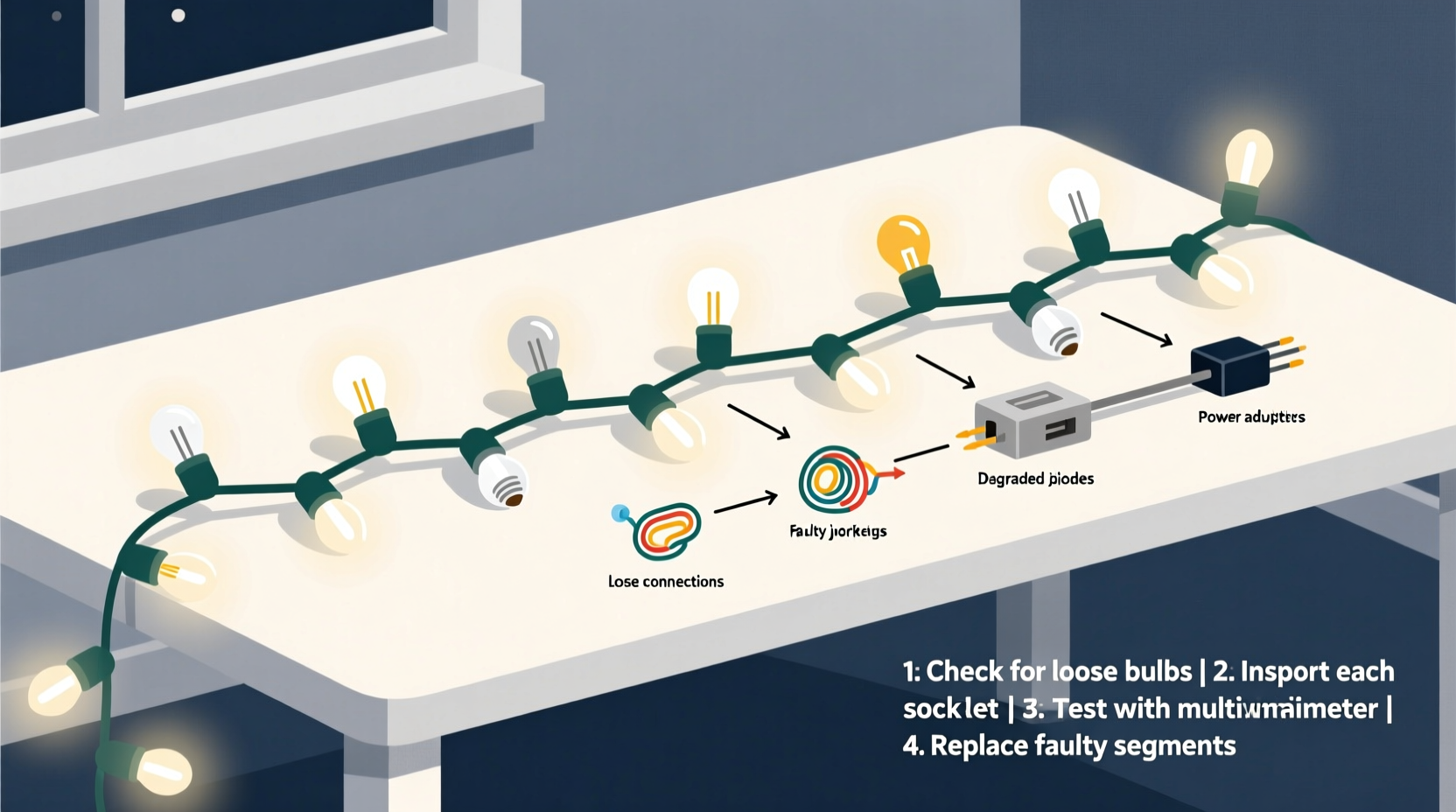
Christmas light strings—especially incandescent types—are typically wired in series, meaning electricity flows from one bulb to the next in a continuous loop. If one component underperforms, it affects the entire circuit downstream. LED strands may use series-parallel configurations, but inconsistencies still arise due to design limitations or manufacturing variances.
The primary reasons for uneven brightness include:
- Voltage drop along the strand: Longer strings experience reduced voltage at the end, causing trailing bulbs to glow dimmer.
- Mismatched or non-uniform bulbs: Mixing different bulb types, wattages, or colors—even within the same brand—can create brightness disparities.
- Loose or corroded connections: Poor contact in sockets or plug-in connectors disrupts current flow.
- Faulty shunts in incandescent bulbs: When a filament breaks, a shunt should activate to keep the circuit closed—but if it fails, nearby bulbs receive altered voltage.
- Damaged wires or insulation: Internal wire breaks or fraying reduce conductivity.
- Power supply issues: Using an undersized transformer or overloading outlets leads to inconsistent output.
Identifying which factor applies to your setup is key to restoring uniform illumination.
Step-by-Step Guide to Diagnose and Fix Uneven Lighting
Follow this systematic approach to isolate and resolve brightness issues on a single string of Christmas lights.
- Unplug the lights and inspect visually. Check for cracked bulbs, bent socket contacts, exposed wires, or discoloration near the plug. Replace any visibly damaged components before proceeding.
- Test each bulb individually (for incandescent sets). Use a bulb tester or multimeter to verify continuity. A failed shunt will prevent proper current bypass and affect neighboring bulbs’ brightness.
- Ensure all bulbs match in type, color temperature, and rating. Even subtle differences—such as mixing warm white with cool white LEDs—can make some appear brighter. Refer to packaging labels for specifications.
- Clean socket contacts with a dry cloth or electrical contact cleaner. Corrosion or dirt buildup increases resistance and reduces power delivery.
- Check the male and female connectors between sections. Wiggle them gently while powered (with caution) to see if brightness fluctuates—a sign of intermittent connection.
- Measure voltage at both ends of the strand (if possible). Use a digital multimeter to test AC voltage at the first and last sockets. A drop exceeding 10–15% indicates excessive resistance or undersizing.
- Replace suspect bulbs with known-good ones from the same batch. Swap out any dim or flickering bulbs systematically to identify faulty units.
- Plug the strand directly into a wall outlet—bypassing extension cords or power strips. This eliminates external variables affecting performance.
Common Fixes Based on Light Type
Different technologies require tailored approaches. Here's how to address brightness issues based on whether you're dealing with incandescent or LED lights.
For Incandescent Mini Lights
These classic bulbs rely on precise voltage distribution. Over time, shunt failure becomes common. If one bulb burns out and the shunt doesn’t close the circuit, the remaining bulbs draw higher voltage, leading to premature burnout and erratic brightness.
To correct this:
- Use a light keeper pro tool to send a surge through the strand, potentially activating dormant shunts.
- Manually check each bulb by removing and testing continuity.
- Replace any darkened or blackened bulbs immediately—they’re likely drawing excess current.
For LED Christmas Lights
LEDs consume less power but are sensitive to driver performance and resistor consistency. In cheaper strands, poor-quality resistors or inconsistent chip binning cause visible brightness variation.
Solutions include:
- Verify that all LEDs are the same model and color temperature (e.g., 2700K vs. 3000K).
- Avoid daisy-chaining too many strands together—many manufacturers recommend no more than three connected in series.
- Inspect the inline rectifier or transformer box. If warm or buzzing, replace it with a compatible unit rated for your total load.
Do’s and Don’ts: Best Practices Table
| Do | Don’t |
|---|---|
| Use bulbs from the same production batch | Mix different brands or models on one strand |
| Clean socket contacts regularly | Force bulbs into tight sockets |
| Limit daisy-chained strands to manufacturer specs | Connect more than 3–5 strands without additional power injection |
| Store lights coiled loosely with tissue paper | Leave lights plugged in unattended or overnight |
| Use a surge-protected outlet | Use indoor-rated lights outdoors |
Real-World Example: Fixing a Problematic Patio String
Mark installed a 100-bulb LED string along his deck railing. After two seasons, he noticed the first third glowed normally, but the rest were noticeably dim. He followed standard checks: verified the plug was secure, tried a different outlet, and confirmed no break in continuity. Still, the issue persisted.
Upon closer inspection, Mark found that the last 30 bulbs used slightly bluer LEDs—likely replaced after a storm damaged part of the strand. He had used spare bulbs from another set, assuming they’d match. They didn’t.
He ordered a replacement section from the original manufacturer and spliced it in using waterproof connectors. Once installed, the entire strand lit evenly. The lesson? Consistency matters—not just electrically, but optically. Even small deviations in LED hue or lumen output become glaring when viewed side by side.
Expert Insight: What Professionals Recommend
“Uniform brightness starts with consistent components. Whether it’s filament thickness in incandescents or binning standards in LEDs, mismatched parts are the top cause of uneven lighting.” — Daniel Reyes, Electrical Technician & Holiday Lighting Installer, 12+ years experience
“For long runs, consider splitting the power feed—injecting voltage mid-strand instead of relying solely on end-to-end conduction. It’s a game-changer for commercial displays.” — Lisa Tran, Outdoor Lighting Designer
Checklist: How to Ensure Even Brightness
Use this checklist before installing or troubleshooting your lights:
- ☐ Confirm all bulbs are identical in type, color, and brightness rating
- ☐ Inspect every socket for debris, corrosion, or loose contacts
- ☐ Test the entire strand on a known-working outlet
- ☐ Avoid mixing old and new bulbs—even from the same product line
- ☐ Limit chain length according to manufacturer guidelines
- ☐ Replace damaged wires or connectors promptly
- ☐ Store lights properly off-season to prevent internal wear
- ☐ Consider upgrading to commercial-grade strings with regulated drivers
Frequently Asked Questions
Can I mix warm white and cool white bulbs on the same strand?
No. While both may have the same lumen output, their perceived brightness differs due to color temperature. Warm white (2700K) appears softer and dimmer compared to cool white (5000K), creating visual inconsistency. Always use matching color temperatures.
Why do my lights get dimmer the longer they stay on?
This can indicate overheating components or a failing driver (in LEDs). It may also result from voltage sag caused by overloaded circuits. Unplug the strand and let it cool. If the problem recurs, replace the string or consult an electrician if hardwired.
Is there a way to boost brightness at the end of a long string?
Yes—this technique is called “power injection.” Run a separate insulated wire from the power source to the midpoint or far end of the strand, connecting it to the positive and negative lines. This ensures full voltage reaches distant bulbs. Use weatherproof connectors for outdoor applications.
Final Thoughts and Action Steps
Inconsistent brightness doesn’t mean your Christmas lights are doomed. With methodical testing and attention to detail, most issues can be resolved without replacing the entire strand. Start with the simplest explanations—loose bulbs, dirty contacts, or mixed replacements—then move toward electrical diagnostics if needed. Prioritize safety: always unplug before handling, and never attempt repairs on wet or damaged cords.
For future installations, invest in higher-quality strings designed for consistent output. Look for features like constant-current drivers, thick-gauge wiring, and sealed connectors. And when storing lights, take care to prevent tangles and stress on wires—simple precautions now extend usability for years.
If you’ve successfully fixed uneven lighting on your holiday display, share your story. Your experience could help others achieve that perfect, glowing look—bright, balanced, and beautiful from end to end.




 浙公网安备
33010002000092号
浙公网安备
33010002000092号 浙B2-20120091-4
Comments
No comments yet. Why don't you start the discussion?