
Glasses are essential for millions of people, whether for vision correction, screen protection, or style. But over time, the constant opening and closing of frames leads to loosened hinges—especially at the temples where stress is highest. When that happens, your lenses may wobble, slip down your nose, or even fall apart entirely. While many assume a precision screwdriver is required to tighten them, most people don’t keep a micro-tool kit handy. The good news? You don’t need one. With common household items and a bit of patience, you can stabilize loose hinges quickly and effectively.
This guide walks through practical, proven methods to secure your glasses without specialized tools. From temporary fixes to longer-term solutions, these approaches are accessible, cost-effective, and reliable—whether you're at home, traveling, or stuck in a meeting with slipping frames.
Understanding Why Hinges Loosen
Glass hinges are small mechanical joints designed for repeated movement. Most metal and plastic frames use miniature screws to connect the temple (arm) to the front chassis. Over time, daily flexing causes these screws to gradually loosen due to vibration, temperature changes, and material fatigue. Even high-end frames aren't immune.
Plastic frames often rely on tension-based hinges without screws, which can stretch out and lose grip. Metal frames with screws may have tiny Phillips or hex heads, but stripping or losing these screws makes re-tightening difficult—especially without the right tool.
The key isn’t always tightening—it’s stabilization. Sometimes, the screw is already as tight as it can be, but the hinge still feels loose because the threads are worn or the frame has warped slightly. In such cases, reinforcement or friction-based fixes work better than torque.
“Even premium eyewear experiences wear at the hinge points after six months of regular use. It’s not a defect—it’s physics.” — Dr. Alan Reeves, Optical Engineer & Frame Design Consultant
Household Items That Can Replace a Screwdriver
You don’t need a jeweler’s toolkit to address loose hinges. Many everyday objects provide enough leverage and precision to adjust tiny screws. The trick is finding something narrow, rigid, and with a tip shape that matches the screw head.
| Household Item | Best For | Effectiveness | Caution |
|---|---|---|---|
| Paperclip (unfolded) | Slotted screws | Medium | May bend under pressure; use thicker gauge if possible |
| Pin or needle | Very small screws | Low–Medium | Fragile; easy to slip and scratch frame |
| Nail file (metal edge) | Slotted screws on metal frames | High | Avoid emery side; use only smooth metal edge |
| Butter knife (tip) | Wider slotted screws | Low | Too bulky for most; risk damaging finish |
| Teeth of a comb | Phillips screws (rare fit) | Low | Only works with specific tooth spacing |
| Staple (straightened) | Emergency slotted adjustment | Low | Weak; best for minor tweaks |
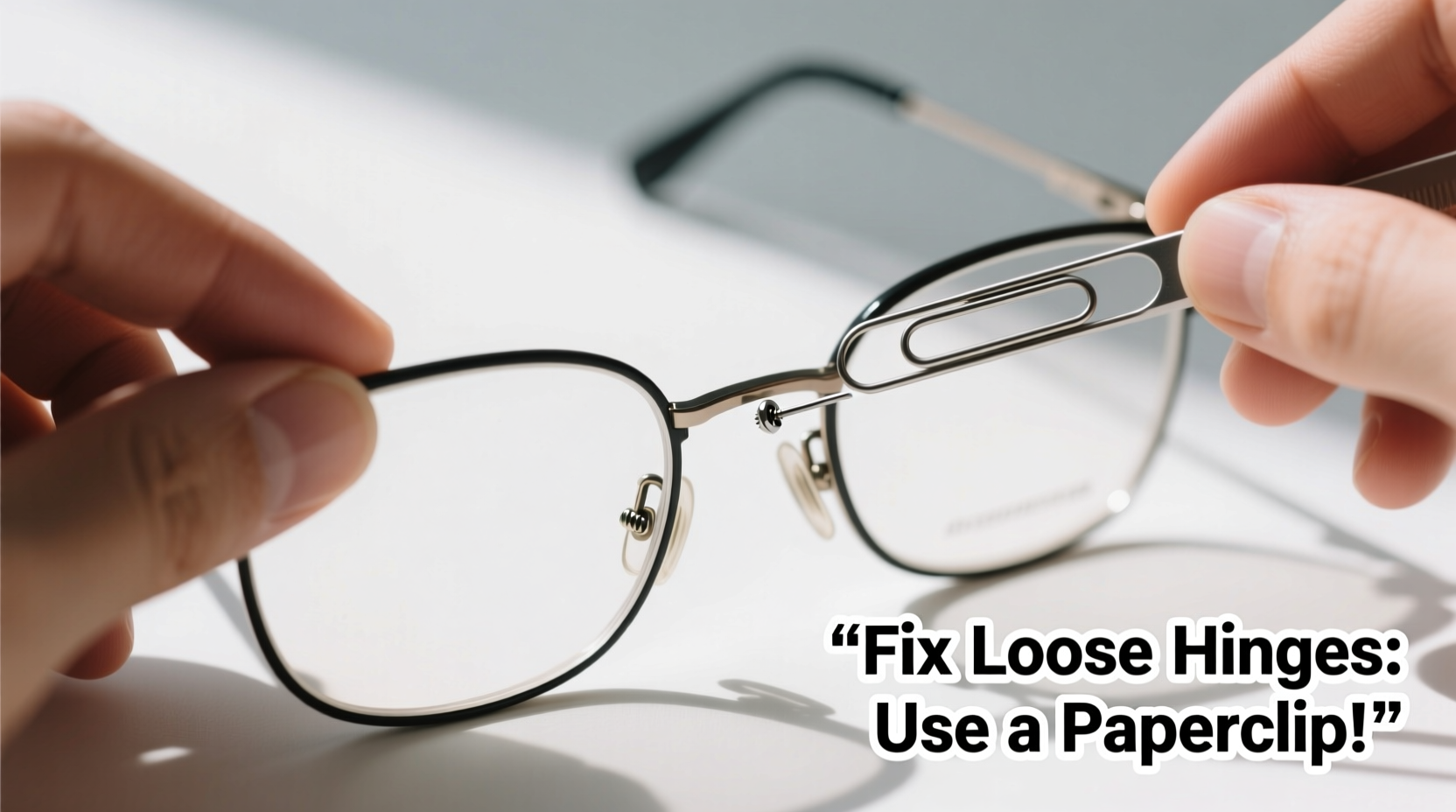
The nail file and paperclip are the most reliable options. A metal nail file offers rigidity and a thin profile, while a sturdy paperclip can be bent into a small L-shape for better control. Test the fit gently before applying force to avoid stripping the screw head.
Step-by-Step: How to Tighten Screws Without a Screwdriver
Follow this sequence to safely tighten hinge screws using common tools:
- Inspect the hinge: Determine whether the looseness comes from a missing, stripped, or simply loose screw. Hold the frame steady and wiggle the temple gently to assess movement.
- Choose your tool: Select the best household item based on screw type. For slotted screws, use a nail file or unfolded paperclip. For Phillips, try a fine needle or pin.
- Stabilize the frame: Place the glasses on a soft surface like a cloth or towel. Grip the front piece firmly with one hand to prevent twisting.
- Align the tool: Insert your makeshift driver straight into the screw slot. Angling increases the risk of slipping and damaging the screw head.
- Turn clockwise: Apply gentle, steady pressure and rotate to the right. One full turn often makes a noticeable difference. Do not over-tighten—this can strip threads or crack the frame.
- Test movement: Open and close the temple slowly. There should be slight resistance but no wobble. Repeat on the other side for balance.
If the screw turns freely without tightening, the threads may be damaged. In that case, skip to reinforcement methods below.
Reinforcement Techniques When Screws Won’t Hold
Sometimes, tightening isn’t enough. Worn threads or stretched plastic housings mean the screw won’t stay put. Instead of replacing parts, use low-risk reinforcement strategies to add grip and stability.
Use Clear Nail Polish as a Thread Locker
Nail polish acts like a temporary thread-locking compound. It fills microscopic gaps in the screw housing and creates friction when dry.
Apply one small drop into the screw hole, insert the screw, and tighten gently. Let it cure for 10–15 minutes before adjusting or wearing. This method adds weeks of stability and is easily reversible—nail polish dissolves with acetone or alcohol if future repairs are needed.
Wrap the Screw with Foil or Wire
If the screw spins without gripping, wrap its shaft with a tiny piece of aluminum foil or copper wire from an electrical strand (about 1–2mm thick). This increases diameter and improves thread engagement.
Steps:
- Remove the screw completely.
- Cut a small strip of foil (2mm x 5mm).
- Wrap it tightly around the screw threads just below the head.
- Reinsert and tighten gently.
The added bulk helps the screw bind more securely in the worn housing. Avoid over-wrapping, which can crack the frame when tightened.
Bend the Temple Slightly for Tension
On metal frames, carefully bending the temple arm inward at the hinge can restore tension. This doesn’t fix the screw but compensates for looseness by increasing contact pressure.
Use your fingers to apply gentle upward pressure near the hinge. Test frequently by opening and closing. The goal is subtle resistance—not stiffness. Over-bending can snap the metal or misalign the frame.
Mini Case Study: Fixing Glasses During a Business Trip
Sarah, a sales consultant, was halfway through a client presentation when her left temple began drooping. She had no tools, no spare glasses, and couldn’t leave the room. Remembering a tip from a friend, she used a bobby pin from her travel kit to tighten the hinge screw.
She straightened the pin, inserted it into the slotted screw, and gave it two careful turns clockwise. The wobble stopped immediately. After discreetly testing the hinge, she continued her pitch without interruption. Later, she applied clear nail polish to lock the screw in place until she could visit an optician.
Sarah’s experience highlights how a simple, improvised fix can preserve both function and professionalism—even under pressure.
Checklist: Quick Actions to Stabilize Loose Hinges
- ✅ Inspect both hinges for visible looseness or missing screws
- ✅ Find a suitable household tool (nail file, paperclip, pin)
- ✅ Gently tighten any loose screws using clockwise rotation
- ✅ Apply a drop of clear nail polish into the screw hole for added grip
- ✅ Wrap a stripped screw with foil if it won’t hold
- ✅ Adjust temple tension by slight bending (metal frames only)
- ✅ Avoid forcing movements that increase wobble
- ✅ Schedule a professional tune-up within 2–3 weeks
This checklist ensures you address both immediate symptoms and underlying instability. Even successful DIY fixes benefit from professional follow-up.
When to Seek Professional Help
While home remedies are effective for minor issues, some problems require expert attention. Visit an optician or optical repair shop if:
- The screw is completely missing and the hole is stripped.
- The frame is cracked near the hinge.
- Plastic temples have warped or split.
- Adjustments cause pain or discomfort when worn.
- One lens sits significantly higher than the other after fixing.
Most optical stores offer free minor adjustments, including screw replacement and alignment checks. They have micro-screwdrivers, thread-locking agents, and spare hardware. Taking advantage of this service extends your glasses’ lifespan and prevents recurring issues.
FAQ
Can I use super glue to fix a loose hinge?
No. Super glue is too brittle and permanent. It can damage the frame, make future repairs impossible, and may come into contact with skin or eyes. Use removable solutions like nail polish instead.
How often should I check my glasses for loose hinges?
Inspect them every 2–3 weeks, especially if you handle them frequently or wear them all day. Early detection prevents further damage and keeps your glasses aligned.
What if I lose a screw completely?
Temporary fixes include wrapping the remaining screw or using a tiny drop of hot glue to stabilize the joint. However, visit an optical store as soon as possible—they usually carry universal micro-screws and can replace it in minutes.
Conclusion
Loose hinges don’t have to mean broken glasses or an urgent trip to the optician. With everyday tools and smart techniques, you can restore stability quickly and confidently—no tiny screwdriver required. Whether you’re using a nail file to tighten a screw or reinforcing threads with foil, these solutions empower you to maintain your eyewear independently.
The key is acting early. Small wobbles become big problems if ignored. By incorporating regular inspections and simple maintenance, you protect your vision, comfort, and investment in quality frames.




 浙公网安备
33010002000092号
浙公网安备
33010002000092号 浙B2-20120091-4
Comments
No comments yet. Why don't you start the discussion?